Welcome back to Wall Power. I’m Marion Maneker.
In today’s
issue, we’re going to look at the innovative gift from the Henry and Rose Pearlman Foundation to LACMA, MoMA, and the Brooklyn Museum. The Pearlmans wanted their art collection to be seen by as many people as possible, and this gift brings the works to highly accessible museums in the country’s largest population centers—while also ensuring that they will circulate to institutions that don’t have access to works by some of the greatest artists of post-impressionism and
modernity. Plus, up top, Julie Davich looks at a rediscovered Indigenous artist.
Before we get there, a quick note: On Wednesday, I offered an analysis of ARTDAI data pertaining to the top 50 artists at the largest auction houses during the first half of the year. ARTDAI has compiled a second report covering mid-tier auction houses. Reply to this email, or send me a note at Marion@puck.news,
if you want access to that report, or if you want me to write a future Inner Circle piece focusing on what’s selling in those houses. As ever, I greatly appreciate the feedback. We’re always looking out for you! |
|
|
A MESSAGE FROM OUR SPONSOR |
The first steps towards a masterpiece starts with a dream. The all-electric BMW i7 – the
evolution of brilliance. Learn more at BMWUSA.com |
|
|

| Julie Brener Davich
|
|
Harvard historian Philip Deloria discovered the colored-pencil drawings
of his great-aunt Mary Sully, a mostly self-taught Dakota Sioux artist, in a suitcase in his parents’ basement when he was a high-school student in the 1970s. Without the internet, he wasn’t able to get far in discerning what they were. Thirty years later, though, he looked at them anew, and embarked on a journey of scholarship that resulted in a book, Becoming Mary Sully, and a solo exhibition for his aunt last year at the Met, where it garnered positive press.
(Holland Cotter called the show “rich” and the book “terrific.”)
The exhibition, conceived by Met curator Sylvia Yount and then-Minneapolis Institute of Art curator Jill Ahlberg Yohe, featured 25 of Sully’s drawings alongside Native items from the Met’s collection and archival
family material. The show then traveled to Mia, where it’s on view through next month. It’s an unusual art world success story, given that no galleries have been involved—at least not yet—but that’s not for lack of trying.
Sully was born Susan Deloria, but took the moniker Mary after her mother, and added the surname Sully after her great-grandfather, the portrait painter Thomas Sully. Altogether, the Deloria family found 134 of the drawings she called
“personality prints.” Each depicts a celebrity of her day, like Babe Ruth, Amelia Earhart, and Fred Astaire, or an idea, like Husbands in the USA and Gossip. When the Ford Foundation Gallery wanted to include a work by Sully in its show Reverberations earlier this year, they called up the Mary Sully Foundation and were thrilled to discover she had done a piece based on Henry Ford.
According to the foundation, Alice Walton has also shown interest in buying Sully’s works based on figures in medical history—perhaps Clara Barton or Florence Nightingale—to display at her eponymous medical school near Crystal Bridges.
Each of Sully’s works followed a vertical format of three horizontal panels atop one another—the widest 19 inches, the tallest about 13 inches. The top panel is the most representational; the middle panel
abstracts the forms and colors of the top panel into modernist geometric patterns; and the bottom panel derives from patterns found in Native art forms like quilting and beadwork. They were all executed between the 1920s and 1940s on Sully’s long drives back and forth between New York, where she lived with her anthropologist sister, and their home state of South Dakota.
Philip Deloria’s wife, Peggy Burns, who established the Mary Sully Foundation, told me that she has
heard from a half-dozen gallerists interested in representing Sully’s works. Instead of pursuing a traditional commercial model, however, the foundation has been selling works at $250,000 a pop to museums like the Whitney and the Toledo Museum of Art. (Several more sales to institutions, some overseas, are nearing completion.) That income has supported the foundation’s work of promoting Sully’s legacy, as well as scholarships and grants for emerging Native artists.
In addition to the show
on display in Minneapolis, about 10 of Sully’s works will be on view at the ICA Boston, in October, as part of the show An Indigenous Present, co-curated by the artist Jeffrey Gibson. Her drawings will open the exhibition alongside works by Ojibwe painter George Morrison. The ICA describes the artists as “two important forebearers in the development of contemporary Indigenous art.” |
|
|
Henry and Rose Pearlman’s grandson has developed an innovative plan to
exit their collection from Princeton and divvy up the works across the country on a rotating basis. It may provide an economic and community-engagement model for foundations to follow. |
|
|
On Monday, news emerged that the Henry and Rose Pearlman Foundation was making an
innovative gift of the majority of its 73 works of art to three prestigious museums: the Los Angeles County Museum of Art, the Museum of Modern Art, and the Brooklyn Museum. The recipients have formed a partnership where works by some of the most famous 19th and early 20th century artists—Vincent van Gogh, Paul Cézanne, Amedeo Modigliani, Paul Gauguin, Edgar Degas, and Chaïm Soutine, among
others—will be parceled out to each of the museums. But the arrangement also comes with a unique twist: There is a mutual understanding that if any of the works are to be put into storage, they will immediately become available to one of the other partner museums first, and then to a wider group of institutions that might borrow them for special shows.
LACMA will receive the fewest works, only six, but they are among the most prominent—including a Manet and the star of
the collection, van Gogh’s Tarascon Stagecoach, from 1888. Indeed, there was a point when the Pearlman Foundation thought of selling the van Gogh to expand its activities in other areas. But in the end, the trustees thought doing so would deprive the collection of one of its main points of entry. |
|
|
A MESSAGE FROM OUR SPONSOR |
The first steps towards a masterpiece starts with a dream. The all-electric BMW i7 – the
evolution of brilliance. Learn more at BMWUSA.com |
|
|
MoMA, for its part, will receive a trove of 28 works, primarily paintings and
watercolors by Cézanne, the proto-modern painter. MoMA already has 25 Cézannes, and the gift will greatly enhance the museum’s holdings. The Brooklyn Museum will get 29 works, including a very rare Modigliani stone head, and works by the rest of the named artists.
The gift, and the informal alliance, highlight a notable shift in the museum landscape. Much of the world’s great art is concentrated in just a few institutions, and that imbalance is getting more pronounced. At the
same time, there is a huge public appetite for art—often in places that are not served by major “encyclopedic” museums. But there are real challenges to getting that art in front of people who are not on vacation in New York, Paris, Berlin, etcetera.
When I heard the Pearlman Foundation had made this donation, two thoughts sprang to mind. The first was that the consortium idea echoed other art sharing initiatives that Wall Power has covered in the Inner Circle. (Upgrade your subscription
here if you want to read my conversation with Anne Kraybill of Art Bridges.) The second was that I was surprised to see that the Pearlman Foundation works, which had been at the Princeton University Art Museum for 50 years, were being donated to other institutions only months before the unveiling of that newly rebuilt museum in late October.
After speaking to
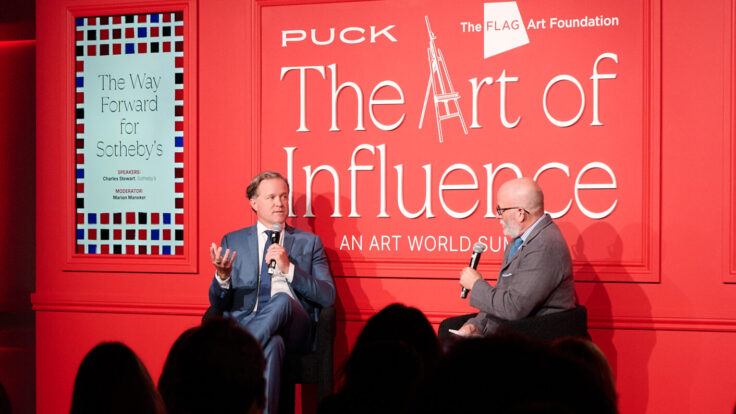
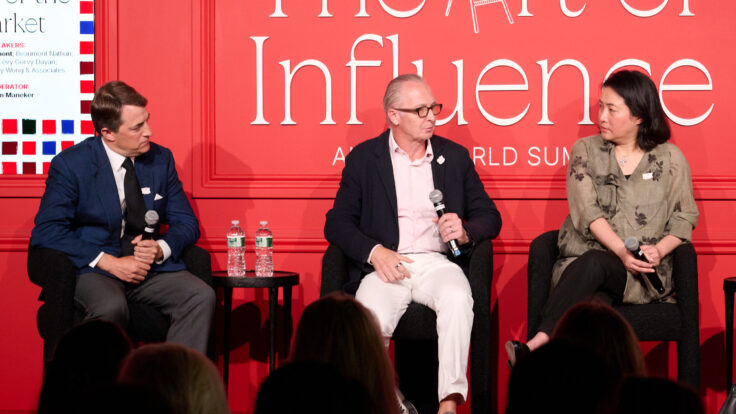
Henry Pearlman’s grandson—and the foundation’s president—Daniel Edelman, and Brooklyn Museum director Anne Pasternak (who will be appearing on a panel about museums at Puck’s one-day
Art of Influence summit on September 15), I learned why the Pearlman works were moving out of Princeton, and into three museums in major metropolitan centers. These selections are the product of not only the particular interests and ethos of Henry Pearlman, but also the current economics of running and managing art museums. |
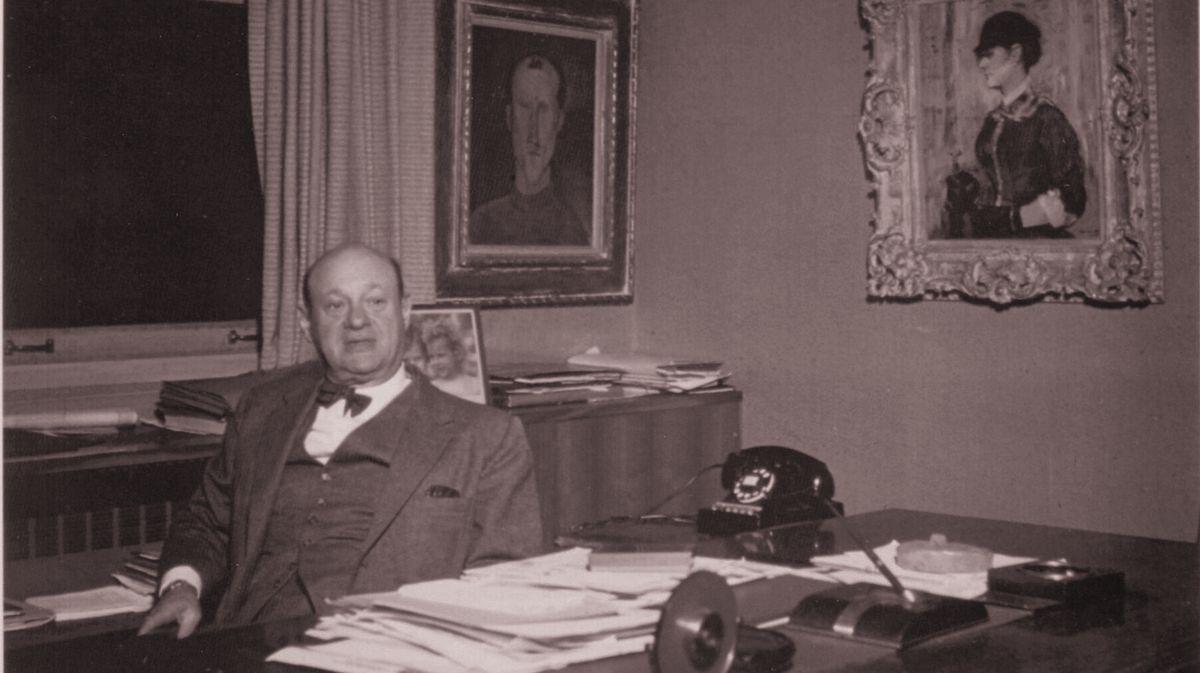
Henry Pearlman was a successful mid-20th century entrepreneur who built a marine
refrigeration business in Brooklyn, then a major shipping entrepôt. Early on, he began collecting Old Master and American realist paintings, until 1945, when he bought his first work by Chaïm Soutine. Around the same time, he met Oskar Kokoschka, the Austrian expressionist painter, who became a friend and advisor.
In the 1950s, the Pearlmans were lending some of their artworks to museums—which, in turn, led to them establishing the foundation, and a tradition of
circulating the Pearlman pictures throughout American museums. Although successful, Pearlman did not have endless resources to buy anything that became available, and he had richer competitors among his contemporaries. He assembled his collection through focus, patience, determination, and dealmaking. “My grandparents had populist values,” Edelman told me this week, explaining why his grandfather had given his art to a foundation and wanted the works to move around and be seen.
When
Pearlman died unexpectedly in 1974, he was in the middle of planning a large touring exhibition at the Brooklyn Museum that would end up traveling through the Northeast. Rose, Henry’s widow, discovered that the foundation didn’t have the resources to maintain the collection and keep shouldering the expense of making loans. The collection ended up at the Princeton University Art Museum, where conservators, scholars, and generations of art history students have had access to the
works for 50 years.
Princeton was a great steward of the foundation’s collection, but squirreling it away at an Ivy League school in a central New Jersey town didn’t square with the Pearlman legacy. “It’s not our audience,” Edelman said. “By geography and the nature of the university, it was less accessible.” In recent years, the Princeton art museum has been closed while a new building has been under construction, giving Edelman the impetus to find a solution that would better fulfill
his grandparents’ goals as collectors. “Engagement with audiences is changing,” he told me. “The whole issue of owning art is changing.” |
|
|
For the last decade or more, Edelman has been visiting museums and discussing loans
with curators, aiming to have the foundation’s work engage with objects in the museums' permanent collections—all while the rising insurance and shipping costs made it increasingly difficult to circulate his grandfather’s art. |
“Truly the Worst Business
Model”
|
One irony of the current museum landscape is that more art is being concentrated in the
few museums that have the infrastructure and funding to maintain and manage the lending of the works. Edelman found that if he wanted to get his grandfather’s art in front of people who would otherwise never have a chance to see it, he would have to donate it to museums in the richest cities. “The public doesn’t realize how much lending we do, or how much we tour our exhibitions,” Pasternak pointed out to me on a call this week. “Insuring these artworks costs a fortune. Few museums have the
teams, the know-how, and the financial wherewithal” that a place like Brooklyn does.
Edelman also wanted to find stewards who had the same commitment to diversity. “We’ve had a great opportunity to expand access to these works,” he said. “We’ve gotten these works in front of people who don’t normally get a chance to see them.” He wanted to see that continue. “You walk into the Brooklyn Museum, and it is the most diverse audience you will see in any museum.”
The Brooklyn Museum,
Pasternak said, “is a meeting point of class, race, and a wide range of cultures.” Yes, that’s a function of Brooklyn’s astonishing diversity, but it’s also something Pasternak and her predecessor, Arnold Lehman, cultivated. The museum pioneered free access more than a quarter-century ago, and it’s one of the few museums that maintains a pay-what-you-wish policy—which means half of the visitors to the Brooklyn Museum are getting in for free. “It is truly the worst business
model,” Pasternak admits.
At LACMA, Edelman recognized the museum was developing a real facility and strategy for getting its art in front of communities that might not travel to the center of Los Angeles. And, of course, director Michael Govan, who is opening his new building next year, has become a leading voice in how museums can cooperatively share art. Finally, for Edelman, there was the fact that both Los Angeles and Brooklyn are communities where many
artists—established and aspiring—live. Having his grandfather’s art easily accessible to artists seemed like a big win. And, of course, if you want your art seen, the endless parade of tourists at MoMA certainly helps.
I don’t think the choice was easy for Edelman. After all, he’s been working on this project with real effort and interest for some time. But rather than create too many restrictions on the use of the foundation’s art, he hopes he has found museum directors who share his
family’s vision. Notably, he’s not trying to control the future of these artworks. “I’m much more excited by the many different stories you can tell with this art,” he said. “Art needs to keep changing and moving.” |
There’s a slow-motion remaking of the art world taking place this summer. This week we
got news that Kasmin Gallery is becoming Olney Gleason, and Clearing Gallery will be closing. Few in the art world can find any of this surprising, coming amid a long two and a half years of downshifting sales. I say “downshifting,” because it’s not clear that the number of sales is diminishing, so much as the value of sales. Put another way, costs are constrained, because buyers are interested in lower-priced works. And, as Magnus Resch reminded me this morning, rent
is the single biggest cost for most small- and medium-sized galleries. (It’s my understanding that Kasmin’s main space is rented.)
As the dollar volume of sales decreases, rent—including for art fairs—becomes a larger issue. It will be interesting to see how this plays out over the rest of the summer and into the fall.
More on Sunday,
M |
|
|
The ultimate fashion industry bible, offering incisive reportage on all aspects of the business and its biggest
players. Anchored by preeminent fashion journalist Lauren Sherman, Line Sheet also features veteran reporter Rachel Strugatz, who delivers unparalleled intel on what’s happening in the beauty industry, and Sarah Shapiro, a longtime retail strategist who writes about e-commerce, brick-and-mortar, D.T.C., and more. |
|
|
Finally, a media podcast about what’s actually happening in the media—not the oversanitized,
legal-and-standards-approved version you read online. Join Dylan Byers, Puck’s veteran media reporter, as he sits down with TV personalities, moguls, pundits, and industry executives for raw, honest, sometimes salacious conversations about the business of media and its biggest egos. New episodes publish every Tuesday and Friday. |
|
|
Need help? Review our FAQ page or contact us for assistance. For brand partnerships, email ads@puck.news. You received this email because you signed up to receive emails from Puck, or as part of your Puck account associated with {{customer.email}}. To stop receiving this newsletter and/or manage all your email preferences, click here. |
Puck is published by Heat Media LLC. 107 Greenwich St, New York, NY 10006
|
|
|
|