{{ 'now' | timezone: 'America/New_York' | date: '%b %d, %Y' }} |
|
|
|
Hi, and welcome back to Line Sheet. I finally got to go to Vera Persiani. Also, happy 90th
anniversary to Sant Ambroeus. No one does avocado on dry toast (sliced ultra-thin, Mickey Drexler–style) like you.
I’m still in Milan for a couple more days and will have a report from a souped-up Salone del Mobile at the end of the week. On the fashion front, I’ve already passed through installations by Prada, Loro Piana, Hermès, Gucci, Issey Miyake, and Jil Sander, but there’s so much more: Saint Laurent, Balenciaga, J.W. Anderson, Isabel Marant, Chloé
(tomato chair), Stone Island, and Bottega Veneta are all staging stuff, too. Tomorrow, my plan is to go to things on my “For Me” list that have nothing to do with my day job. If you have one suggestion, let me know. And thank you to Bradley, Kelsey, Asad, and many others for guiding me!
There is so much to
see. Unlike a Fashion Week, which is overscheduled but exclusive, Salone is undisciplined, chaotic, and the socializing is actually fun. There’s also just so many people whom you and I know here. (Best moment of the week thus far was running into Luar’s Raul Lopez at Knoll’s party at Bar Nico. He comes to Salone because he likes it; that’s the only reason.) I was lucky enough to attend Hanya Yanagihara’s final T magazine party at Villa Necchi
Campiglio, as well.
Tonight, I’m hosting a dinner with our ShopMy friends at Sandi, one of the loveliest restaurants in the city. I’ll share more soon, but until then, enjoy Malique “Malique@puck.news” Morris’s update on Outdoor Voices, one of the dinkiest companies we cover, but also one of the most fascinating. Malique’s got the scoop on how it’s been going since the
return of founder Ty Haney under the ownership of a licensing firm. Malique also looks at a pretty weird lawsuit against Stella McCartney and LVMH.
Also mentioned in this issue: Reese Witherspoon, Stella Bugbee, Vanessa Friedman, Jo Ellison, Sam’s Club, Radhika Jones, Samira Nasr, Elisa Lipsky-Karasz, Apartamento,
Kristina O’Neill, Nick Haramis, Givenchy, Asad Syrkett, Amy Astley, Martina Mondadori, Paul Cournet, Piero Portaluppi, California Pizza Kitchen, Andrew Dershaw, Amandine Ohayon, Ida Simonsen, Cory Baker, Ashley Merrill, Marc Merrill, Breana Teubner,
Harper’s Bazaar, Maureen Chiquet, Laurent Kleitman, Marie-Hélène Chenut, Yonca Dervisoglu, Fabrizio Freda, Pat McGrath, Lululemon, Leanne Shapton, Thessaly La Force, Erik Maza, and more… |
Two Things You Should
Know…
|
- T
mag editor dish and more: The most interesting business-y thing about Milan Design Week is not the proliferation of fashion-sponsored installations and exhibits, which feels very Art Basel, but the opportunity for even sorta design-adjacent media brands. The big players are Martina Mondadori’s Cabana (she is the queen of a certain slice of the Italian design world and happens to share an investor with Puck, Standard Investments); Apartamento (run
by cool-guy types who also have a book imprint and just launched another project, Album, with former Capsule editor Paul Cournet); and the Arc Digest universe (Amy Astley, probably the most successful global editor-in-chief at Condé Nast right now, also hired a great editor, Asad Syrkett, to run the Italian edition). Most of
these brands are doing multiple events. Apartamento, for its part, has something on pretty much every night, from their Reference Library project with Jil Sander to the launch of a book with Belgian design studio Muller Van Severen.
The T magazine party remains the hottest invite, mostly because it seems to
really be the only party in town that is actually hard to get into. Last night, outgoing T editor-in-chief Hanya Yanagihara was fully glowing as guests paid their respects while overlooking the pool. Yanagihara has been hosting her party at Villa Necchi Campiglio, architect Piero Portaluppi’s iconic rationalist
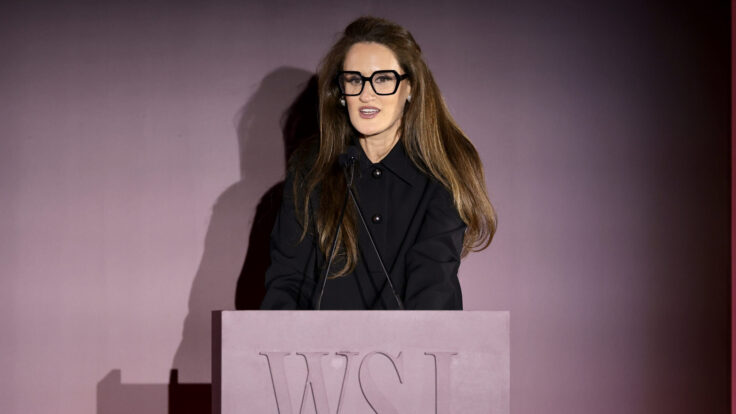
house, for the past nine years. It’s a good party, for real. No celebs. And somehow, it never rains even though they don’t have the budget to hire the LVMH shaman. (WSJ. did a party last night, also. Great for them to have a presence at Salone. Not great to counterprogram the most-coveted invite of the week.)
Anyway, I was there to hear what people were saying about who might replace Yanagihara. Everyone is cheering for current editor-at-large Nick
Haramis because we all like him, as do advertisers. (They’re really putting him in front of the camera these days, too.) Externally, I hear a pair of former WSJ. colleagues—Elle Decor’s Elisa Lipsky-Karasz and Sotheby’s Kristina O’Neill—are both still in the mix. Harper’s Bazaar’s Samira
Nasr is not. I was told that Nasr’s old Vanity Fair boss, former editor-in-chief Radhika Jones, is also somehow in the conversation. Jones used to run the books department at The New York Times, and she understands the culture of the place, but like… let’s hope they don’t go there.
Thessaly La Force is also in the mix. The Times welcome wagon committee should also look at AD’s Syrkett, who has amazing taste and
would please the design community, which thinks they own this job even though fashion accounts for most of the advertising. Another close observer hoped that World of Interiors’ Emily Tobin applied. New York Review of Books arts editor Leanne Shapton is rumored to have submitted her application. Could New York’s Erik Maza still have a chance?
The most compelling idea, from my view, is Jo
Ellison, who runs How to Spend It at the Financial Times. Ellison is a great editor, How to Spend It is the best supplement around, she has amazing taste, and understands how to do a lot, weekly, on a shoestring budget. That said, she’s British, and unlikely to plug into the Times’s own Severance-style culture. Plus, I am not sure there is room in that building for Styles editor Stella Bugbee and Ellison—and
fashion critic Vanessa Friedman. Anyway, this should start to get more fun now!
|
|
|
|
A MESSAGE FROM OUR SPONSOR |
Agentic commerce isn’t a future concept. It’s already reshaping how people shop. Static storefronts are giving way to
guided, conversational experiences that don’t just surface products. They drive decisions and conversion in real time. Swap’s Agentic Commerce 101 breaks down what’s real and what it means for brands right now. Inside: |
• What agentic commerce is and why most AI tools don’t qualify • Why AI discovery platforms aren’t built to convert for your brand • Why owning your AI experience and your data is becoming non-negotiable |
|
|
|

| Malique Morris
|
|
- Strange lawsuit of the
day: Andrew Dershaw, the senior vice president of wholesale and head of Americas at Stella McCartney, is suing the brand, LVMH (its former minority shareholder), and Amandine Ohayon, its former C.E.O. (and current C.E.O. of Givenchy), for “whistleblower retaliation.” In a lawsuit filed on Monday, Dershaw accused Stella McCartney of strong-arming American retailers into price increases by withholding around $850,000 in shipments, and canceling at
least $75,000 in orders with Nordstrom, despite the brand’s chief digital officer allegedly warning executives that the practice was illegal. (The lawsuit cites an €18 million fine that Loewe had to pay European regulators for violating “anti-competitive resale-price restrictions” in the region.) Dershaw, who’s been at Stella McCartney for 14 years, alleged that the company cut his bonus by $44,000 when he refused to “facilitate the scheme.”
Dershaw also accused the company of pay
discrimination, alleging that it gave him a lesser title and salary base than his European predecessor, Ida Simonsen, and claims he developed depression and anxiety disorder as a result and is on medically prescribed leave. The pay discrimination allegation is very complicated. (It’s going to be hard for an American male executive to be convincing when most women in this country still make less than their counterparts.) “There’s a certain type of European elite who
believes that American workers should be grateful just to be in the room,” Dershaw said in a statement. “I watched it for fourteen years. The titles went to Europeans, the pay went to Europeans, the protections went to Europeans. I was expected to deliver and stay quiet, and when I didn’t, they came after me.”
As for the pricing stuff, it’s interesting. I asked Eriq Gardner, Puck’s resident legal mind, whether Dershaw has a case. Eriq said the pricing-scheme allegation
could be problematic, if this were actually an antitrust case. As he noted, suppliers generally have broad latitude to set wholesale prices, but the legal risk rises if they are coercing distributors over downstream resale prices. The trouble, he cautioned, is that Dershaw’s allegations about price restraints are still pretty murky.
In any event, that’s not quite the claim here. Dershaw is really pleading for whistleblower retaliation, so the central question will be whether he had a
genuine, reasonable belief that the conduct was unlawful—and whether he suffered consequences after raising it. (A Stella McCartney spokesperson said the brand is “an equal-opportunity workplace that treats all employees fairly and with respect” and that they are reviewing the claims. LVMH didn’t return a request for comment by deadline.)
|
|
|
|
And now for that Ty Haney check-in… |
|
|
|
Ty Haney returned to Outdoor Voices last summer to relaunch the brand and, if all went
according to plan, surpass $100 million in annual sales. Now its exercise dress is sold in Sam’s Club at a huge markdown. The new owner says that is a good thing. |
|
|
|
When Ty Haney announced last July that she was returning to relaunch Outdoor Voices, I was
prepared for all sorts of surprises—bold proclamations, personnel boomerangs, investor relations snafus, endless press appeals, etcetera. After all, Haney’s career in the fashion industry has been as short as it has been punchy and unpredictable. In 2013, while in her 20s, she launched the once-beloved, color-coordinated workout gear brand for a girlboss generation before eventually suffering the consequences of her operational inexperience (bad fundraising decisions, ceding too much control)
and clashing with board chair Mickey Drexler.
Haney resigned in 2020 and watched from the sidelines as serial entrepreneur Ashley Merrill, founder of D.T.C. pajama line Lunya and wife of Riot Games co-founder Marc Merrill, bought the company and subsequently ran it into the ground. In June 2024, after Merrill had closed stores and laid off most of the staff, she begrudgingly sold the business to Consortium Brand Partners, a licensing
firm, which brought Haney back last year. At the time, Consortium founder and managing partner Cory Baker told me that he would expand Outdoor Voices into swimwear, loungewear, and footwear, all while preserving its brand equity. |
|
|
|
A MESSAGE FROM OUR SPONSOR |
Agentic commerce isn’t a future concept. It’s already reshaping how people shop. Static storefronts are giving way to
guided, conversational experiences that don’t just surface products. They drive decisions and conversion in real time. Swap’s Agentic Commerce 101 breaks down what’s real and what it means for brands right now. Inside: |
• What agentic commerce is and why most AI tools don’t qualify • Why AI discovery platforms aren’t built to convert for your brand • Why owning your AI experience and your data is becoming non-negotiable |
|
|
|
So perhaps my biggest surprise came mere months into Haney II, when OV’s renowned exercise dress
began selling at Sam’s Club for $22, 78 percent below its normal retail price. “It’s like they ran to the bargain basement before they built back up a brand that people would be excited to get a bargain on,” one experienced D.T.C. brand-builder acknowledged. But Baker recently defended the decision to me without equivocation. “If you show me your brand that says, No, I don’t want to sell more products to more customers and more retailers, I’ll show you a brand that never actually makes
money, period,” he said. “We’re less focused on cachet and more focused on great products for a customer who wants it.”
Maybe the Sam’s Club tie-up shouldn’t have surprised me as much as it did. Consortium Brand Partners also owns post-prime brands like Reese Witherspoon’s Draper James, Jonathan Adler, and California Pizza Kitchen. Haney told me last year that she was aiming to surpass $100 million in annual sales, but Outdoor Voices’ full-year revenue peaked at $90 million in 2020. Lauren previously reported that the brand’s annual sales dropped to around $60 million in 2021 and 2022. According to Consumer Edge, Outdoor Voices’ credit and debit card sales in the U.S. have fallen around 30 percent year over year for the last three quarters. Baker disputed these numbers as inaccurate
but declined to share his own figures.
Baker did say that with retail partnerships like Sam’s Club and international expansion into South Korea and Mexico, “there’s no reason” the brand can’t get to $100 million in annual sales over the next year. He added that sales at Sam’s Club are 50 percent above the initial target. “If you’re precious about growth, then you will not see profitability,” Baker said. |
Haney now has two other ventures to juggle as well. In 2021, she co-founded the rewards platform TYB with
former Walmart and Gap Inc. executive Breana Teubner, raising $11 million last June. At a TYB event last fall aimed at courting brand partners, Haney said the company had signed 350 brands, amassed more than 1 million members, and driven $100 million in gross merchandise volume. The missing piece is TYB’s take rate. Depending on that cut, the business could be generating anywhere from roughly $1 million to $10 million in annual revenue.
Then there’s Joggy, the wellness
brand that Haney co-founded in 2024, built around $40 12-packs of zero-sugar energy drinks. That effort has been more complicated. Last October, the investment firm Sinco sued Haney, alleging that she attempted to dilute the company’s equity in Joggy after it helped secure emergency financing for a wholesale
order at Target. (Haney declined to comment on matters involving TYB or Joggy.)
With the OV relaunch, Haney has created a multiverse of all these businesses. Outdoor Voices sells Joggy merch and features the drinks in its ads while courting loyal customers on TYB. She may not be running ops at Outdoor Voices, but as the creative force, the brand’s attempted renaissance will rest on her shoulders. Haney herself is likely the draw for many customers; there’s something about her that stirs
people up. She’s cool and aspirational and really lives the active lifestyle she’s selling. That’s a net positive in an activewear industry that has room for multiple winners, but requires enduring brand positioning. However, she’s yet to scale and then maintain a successful business. |
|
|
|
There are also hurdles that could preclude Outdoor Voices from reconnecting with the urbane female audience
that it captured in those earliest days. The new products are probably too trendy in a market dominated by activewear upstarts like Set Active, Adanola, and even Sporty & Rich, which tend to appeal to Millennial and Gen Z women with sleek, unfussy, stealth-wealth-coded wares. Baker’s penchant for the mass market also poses a risk. For a company that already went belly-up once, the odds of getting it right the second time are extremely low. |
Former Chanel exec Marie-Hélène Chenut and Mandarin Oriental C.E.O. Laurent
Kleitman are joining the Kering board. Maureen Chiquet, the former global C.E.O. of Chanel, and Google exec Yonca Dervisoglu are on their way out. [Inbox]
Moncler is one of the few luxury brands killing it in Asia. Its parentco, which also owns Stone Island, reported first-quarter earnings today and noted that revenues for the flagship brand in the region were up 22 percent year over year, offsetting a 1 percent
decline in Europe. Otherwise, the group’s revenue was up 12 percent year over year, to €881 million at constant exchange rates. [Reuters]
Ferragamo made Fabrizio Frieda, the former Estée Lauder president and C.E.O., a “special strategic advisor.” He’ll help the brand find a new C.E.O. and
might score a seat on the parent company’s board. Maybe this means the family isn’t looking to sell the business. [WWD]
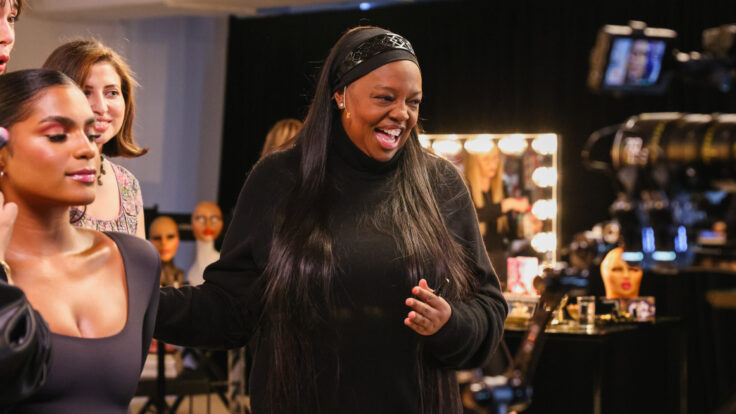
Pat McGrath Labs is out of bankruptcy with a new owner, Miami-based investment firm GDA Luma, which is infusing $65 million into the business. McGrath is staying on as chief creative
officer, certainly a better role for a visionary like her than C.E.O., but is giving up equity and licensing her intellectual property, alas. [BoF] |
Until tomorrow,
Lauren
P.S.: We use affiliate links because we are a business. We may make
a couple bucks off them. |
|
|
|
Puck fashion correspondent Lauren Sherman and a rotating cast of industry insiders take you deep behind the scenes of this
multitrillion-dollar biz, from creative director switcheroos to M&A drama, D.T.C. downfalls, and magazine mishaps. Fashion People is an extension of Line Sheet, Lauren’s private email for Puck, where she tracks what’s happening beyond the press releases in fashion, beauty, and media. New episodes publish every Tuesday and Friday. |
|
|
|
An essential, insider-friendly Hollywood tip sheet from Matthew Belloni, who spent 14 years in the trenches at The
Hollywood Reporter and five before that practicing entertainment law. What I’m Hearing also features veteran Hollywood journalist Kim Masters, as well as a special companion email from Eriq Gardner, focused on entertainment law, and weekly box office analysis from Scott Mendelson. |
|
|
|
Need help? Review our
FAQ page or contact us for assistance. For brand partnerships, email ads@puck.news.
You received this email because you signed up to receive emails from Puck, or as part of your Puck account associated with {{customer.email}}. To stop receiving this newsletter and/or manage all your email preferences, click here. |
Puck is published by Heat Media LLC. 107 Greenwich St., New York, NY 10006 |
|
|
|
|