 |
|
Hi, and welcome back to Line Sheet. By the time you read this, I’ll be at Frenchette having a martini to celebrate the start of New York Fashion Week with the CFDA and Todd Snyder. Then there’s the Mytheresa cocktail party at Temple Bar. Then Maria Cornejo’s dinner. Then definitely five or six things I’m not invited to…
On Friday, the real work begins, so please send through any and all Fashion Month coverage requests. (Especially ones that have nothing to do with Fashion Month.) We’re going to have a great time.
Mentioned in this issue: Zac Posen, Richard Dickson, Chanel, Jenna Lyons, the Galliano doc, Scott Sternberg, Edward Enninful, McQueen, Telfar Clemens, Kanye, the Farfetch disaster, the Donna Karan disaster, Luca Solca, Sabato De Sarno, the Schnabels, Sidney Toledano, Neiman Marcus, Agnes Chu, Anna, and many, many more…
|
|
|
- On the Neiman Marcus Group removing itself from the Farfetch situation: Yesterday, the department store announced that it was terminating its “commercial partnership” with the beleaguered, now Coupang-controlled Farfetch, which means NMG-owned Bergdorf Goodman will not be moving onto the Farfetch platform. (Did Farfetch ever wire the $200 million it was going to invest in NMG, even though it was the one doing the work for NMG? My sources say yes, and that Farfetch remains a “common equity minority investor” in NMG. What a world.)
The obvious takeaway here: I’m sure it’s all quite bewildering for the many people who worked on this deal, but Neiman Marcus Group must be thrilled that the decision to transition Bergdorf onto Farfetch’s platform was delayed, and thus never consummated—otherwise they’d be wrapped up in this mess beyond the equity investment.
In the meantime, there are still so many unanswered questions around Farfetch. Who will buy Violet Grey? Who will buy New Guards Group, and what will even be left? Where is the (also FF-owned) sneaker resale site Stadium Goods left in all of this? Who in the industry is comfortable working with Farfetch at this point? Will Coupang buy YNAP, too, and roll them up? Maybe there’s one other thing, too, but I can’t remember.
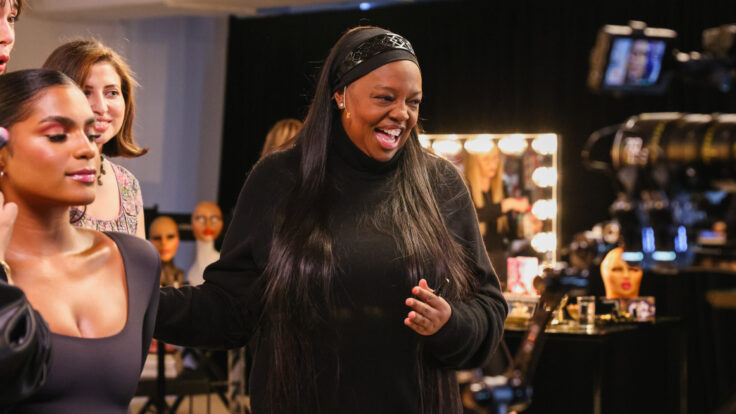
- R.I.P. magazines? For real this time?: Edward Enninful really went all out on his final British Vogue cover, shoving 40 women, from Oprah to Amber Valletta, into one image. I don’t want to be a Debbie Downer—really, I don’t!—but I wish he would have just chosen one person and created the most beautiful, most memorable, most powerful image possible. That would have shown his editorial prowess! Anyway, it’s still a feat. He got all 40 subjects to sit together, in person, for the Steven Meisel shoot. All the greats—Pat McGrath on makeup, Guido Palau on hair, Jin Soon on nails—showed up. My favorite Enninful cover will always be his first: the Adwoa Aboah portrait. But regardless of where you land, this marks the end of an era of image-making.
- Saw the Galliano doc: As someone who lives in Los Angeles and is friends with people in the Academy (hi, Spencer) and also people who cover movies (hi, Amanda) I have screener envy. This time, however, it is I who received the screener for High & Low, the forthcoming documentary about John Galliano, directed by Kevin Macdonald and produced by gone-but-not-forgotten Condé Nast Entertainment. (Minor Line Sheet celebrity Agnes Chu, the former head of CNE, and several of her team members are listed as producers. Vogue’s Mark Guiducci is listed as a consulting producer.) I’m not going to get into the mechanics of the film, which tracks Galliano’s life from birth, as I am sure it will be covered ceaselessly upon its release in the U.S., U.K., and Ireland on March 8. (I might also write more about it.)
For now, I will simply tell you that the documentary is very much worth watching, for a number of pivotal reasons. Galliano’s ascent, most notably during his tenure as creative director at Dior, is portrayed in perfect parallel with the rapid rise of European luxury. If you want to truly understand how the industry took its modern form, High & Low offers an incredibly vivid and accurate explainer. The most lucid example comes in the form of a scene backstage after a show in the early 2000s, when Galliano is being interviewed by Tim Blanks as other reporters flitter about. In the course of the conversation, Galliano weakly mentions that his father’s funeral occurred the day before, and that LVMH chairman and C.E.O. Bernard Arnault had graciously arranged a private jet to take him to the service and back to Paris so he wouldn’t miss his bow. I shuddered.
Also, the film does an honest job of capturing who Galliano was, who Galliano is, and even how he got into trouble in 2011 (i.e., the drunken, antisemitic outbursts). I left the film believing that he did not know what he was talking about when he said all those awful things. But I am also unsure that he truly understands, or has the capacity to understand, why they were so hurtful.
Galliano expresses his emotions through his art. For decades, the people around him were so in love with his creations that they allowed him to treat them, and others, poorly. The unlearning of that behavior—especially for a person whose childhood wounds made empathy so complex—might be a life-long journey. There is a particularly tender scene during a visit to the Dior archives, an embrace between Galliano and an old assistant with whom he shares a devastating memory, that shows how much the people there loved him, despite what a monster he could be.
Finally, pay close attention to the three men featured in the documentary who play central roles in Galliano’s adult life: his boyfriend, Alexis Roche; his longtime designer partner, Steven Robinson, who died in 2007 of a drug overdose; and Sidney Toledano, the longtime C.E.O. of Dior. I am so glad Toledano, who recently stepped back from his role as C.E.O. of the LVMH Fashion Group, agreed to be interviewed at length for this. It’s easy to blame the money guys for Galliano’s troubles, and they certainly fed the inferno. But they also supported Galliano’s art, and I thought that Toledano, who is Jewish and shares his reaction to the 2011 incident, was very human. If you see High & Low, please let me know. I’d love to hear what you think.
- On What Goes Around Comes Around owing Chanel $4 million in damages: A few months ago, I told you about an upcoming trial in which Chanel was suing New York secondhand retailer What Goes Around Comes Around (WGACA), accusing it of selling counterfeit goods, promotional items that weren’t authorized to be sold, and generally misrepresenting the brand. This week, the jury ruled in favor of Chanel on all four counts: trademark infringement, false association, unfair competition, and false advertising.
Whether or not any of the items sold were counterfeit in the truest sense of the word is debatable—WGACA claims that the bags in question were from Chanel but voided in the company’s database. But the jury still thinks the secondhand retailer is in the wrong. The second phase of the trial is around damage assessment, and there is a chance WGACA could be on the hook for even more money. At this point, usually the parties settle, Susan Scafidi, academic director at the Fashion Law Institute at Fordham University, told me. They’ve been going at this since 2018, there are 400 docket entries, and I’m sure everyone wants it to be over.
Will WGACA and others be scared off of selling Chanel? That’s the ultimate goal, I would say. Chanel has the resources to take on resellers in court, and therefore can influence how other brands approach the market from now on. If brands are emboldened by Chanel’s success, it could certainly increase litigation. Still, no company can truly control the secondary market. Until a brand like Chanel comes up with its own secondhand strategy, others will continue to fill the void.
|
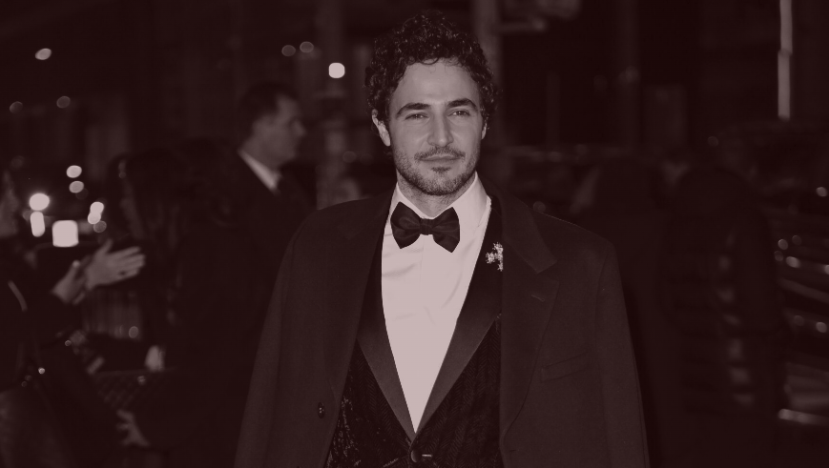 |
| Fade to Zac |
| The innumerable thoughts and open questions surrounding Zac Posen’s inexplicable appointment at Old Navy. |
|
|
|
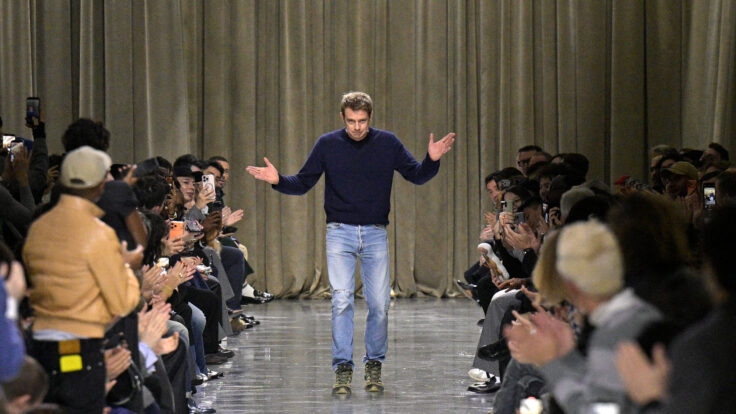
| On Monday morning, I was sitting at my desk, watching the rain drench the cactuses and succulents, when I got a text from an Old Navy employee. It was a screenshot of an email from Gap Inc. C.E.O. Richard Dickson, welcoming Zac Posen, of ball gowns and Brooks Brothers, to the company. Posen’s titles would be creative director of Gap Inc.—the parent company of Gap, Old Navy, Banana Republic, and Athleta—and chief creative officer of Old Navy. After some quick reporting, I gleaned that Posen would serve as sort of a thought partner to Dickson, in an almost advisory role, at the parent company. The Old Navy job, though, was day-to-day. Design, merchandising, and marketing would now report to Posen. And, yes, he was moving to San Francisco.
This was the move the world was waiting for from Dickson, who joined Gap Inc. from Mattel in the savior C.E.O. role in August of last year. He was advised by one of my sources to “fire everyone.” And yet, the supposedly doomed Banana Republic team is still there. (Layoffs have yet to commence.) And no one—no one!—could have imagined the play would be for Posen.
I spent the next three days discussing this appointment with dozens of people—people who work at Gap Inc., who worked at Gap Inc., high-fashion friends, apparel industry lifers, etcetera—and everyone was freaking out. How did Posen, a post-wunderkind and former it-boy type who closed his failed business in 2019, land this gig? Back then, Vanessa Friedman declared that “Even ‘Project Runway’ Couldn’t Save Zac Posen,” a reference to his brief stint as a judge on the reality show.
Posen’s six-year stint designing women’s clothing at Brooks Brothers ended in 2020 when the company was acquired out of bankruptcy by Authentic Brands Group (ABG) and Simon Property Group. More recently, he started designing red carpet and custom gowns again, but the world from which he emerged in 2001—as a dandyish Alexander McQueen intern, St. Ann’s brat, and university dropout—no longer exists. Fashion will never be that quaint again. |
|
|
| So why did Dickson choose him? After all, Old Navy remains the second-largest retailer of clothing in the country, and the largest in certain categories, but it is a utilitarian retailer that competes against Amazon, Walmart, Target, and Shein. As one former Gap Inc. executive asked me: How will Posen, a celebrity designer, born and bred in Soho, best friend of Lola and Stella Schnabel, be able to “assess what is going to be worn in Kentucky 18 months from now?”
Also, the once-invincible Old Navy has been struggling for the past couple of years on account of increased cheap-chic competition and poor merchandising choices. Sales picked up at the end of 2023, but the brand remains the most important problem to solve in the Gap Inc. portfolio. I assumed that innovation would come from a change in strategy, not design. Why not sic Posen on also-struggling Banana Republic, where his fine dressmaking skills may be put to good use? I, for one, am relieved he isn’t taking on the Gap brand, the most precious in the portfolio. As much as it pains me to say it, Gap should be looking at Abercrombie & Fitch, which is making bank by selling super-trendy clothes to the TikTok generation rather than worrying about preserving brand heritage.
Like anyone, Posen deserves a chance. While best known for heavily constructed runway and red carpet looks, he does have six years of corporate apparel-retail experience. He is ambitious and determined. It can’t all be about his fame, or charm—or even his talent. (I reviewed his collections for Style.com for a few years; I questioned his taste level a few times, but there’s no doubting he’s a real designer, as they say.) Dickson must believe he has commercial chops. This isn’t Isaac Mizrahi for Target circa 2003. This also isn’t a Barbie collaboration. This is an $8 billion-a-year-in-sales business. |
|
|
| The appointment could simply be about Dickson being a fast mover and deciding that Posen was the best option, even though there are dozens of unknown designers, and many known ones, who seem like a better fit for massive Old Navy. Scott Sternberg, of the cultish brands Band of Outsiders and Entireworld, comes to mind. So does Telfar Clemens, who designed a fantastic collection for Gap, only for it to be canceled when the group signed a deal with Kanye West.
But if Dickson is looking for someone with flair, fame, and financial savvy—and I think that’s what he is looking for—it sure sounds like he was looking for Jenna Lyons. I’m told by multiple sources that Dickson, who posted a photo of Lyons on his personal Instagram a few months back, did attempt to recruit the former J.Crew creative director, but the talks never advanced. One reason is almost certainly money. Lyons is expensive. A creative director at Lyons’ level probably expects something in the vicinity of the low-to-mid seven figures. On the other hand, Gap Inc. executives estimated Posen’s annual salary to be between $700,000 and $1.1 million. (A Gap rep did not respond to a request for comment.)
Another reason the Lyons talks may have not advanced is disposition. Since leaving J.Crew in 2017, Lyons has launched an eyelash line. She has become a Real Housewife. She has consulted for the branding agency arm of a private equity firm. She seems to enjoy her free agency. (Perhaps there will be a Gap brand collaboration in the future.)
For now, though, Dickson is betting on Posen: not only to steer Old Navy, but to steer him. From talking with executives who have worked with him at different points in his career, I know that Dickson is more than capable of getting things done. But I also know that he has never been in the driver’s seat before. |
|
|
| The Kering full-year results are out. Last year was tough across the board, with sales down 4 percent. Gucci performed as expected. (Sales of Sabato’s products aren’t included in these numbers.) Wholesale revenue at Saint Laurent, Bottega, and the clumped-together “other Houses” (McQueen, Balenciaga) were down by double digits. This year is going to be tough, too, as the group continues to invest in an effort to make it all better. Luca Solca rates the stock “market perform.” According to the company presentation, 2024 priorities include Gucci (duh), doubling down on owned beauty (double duh), and “fueling high-potential adjacent businesses.” You should go through the slides. [Inbox]
Probably worth reading this 2003 profile of Galliano. I misread the title as “The Fatalist,” but it is actually called “The Fantasist.” Both things can be true. [The New Yorker]
A new generation of E.I.C.s—Sarah Ball, Willa Bennett, Lindsay Peoples, Sally Holmes, and Nikki Ogunnaike—discuss what it’s like to edit a magazine. Congrats to Tina Brown for delivering a fantastic quote. Congrats to Leah Chernikoff and Stella Bugbee, great editors in their own right, who taught and mentored three out of five of these women. I love everyone involved. Also, congrats to the editor-in-chief who was complaining so loudly about not being included that it got back to me. You do not edit a style magazine! I wish everyone the very best. [The Washington Post]
What percentage of people interviewed by Anna Wintour tell her that they want to be the next editor-in-chief of Vogue? (I would call this tactic pulling an Anna Wintour.) [New York Times]
Two of my favorite women had a chat. [Financial Times]
How does a sweatsuit brand lose $50 million on $37 million in sales? [BoF]
Michèle Lamy is on the cover of the new magazine, Family Style. [Instagram]
More earnings news: Tapestry beat expectations (great for the deal), Capri reported after the market closed today so I didn’t have time to squeeze it in here, and Ralph Lauren did really well, too. [WWD, Barron’s]
The Donna Karan New York relaunch is not good. It is hollow and meaningless. Do not let Annie Leibovitz photographs of beautiful supermodels fool you. Buy Urban Zen instead. Or old Donna on The RealReal. [The Hollywood Reporter]
Puppets and Puppets founder Carly Mark can’t make a ready-to-wear line work in the U.S. (understandably, it’s really difficult for anyone and her clothes are not exceptional IMO), but don’t worry: She can still afford to have Katie Hillier, the most important handbag designer of the past 20 years, design accessories. [New York Times]
Costa Brazil is the first of the shuttered Amyris brands to relaunch. [BoF]
And finally… Did you know that Beka is coming to America? |
|
|
Until Monday,
Lauren |
|
|
|
| FOUR STORIES WE’RE TALKING ABOUT |
 |
|
 |
|
 |
| Estée in Distress |
| Can America’s most prestigious beauty conglomerate get with the times? |
| RACHEL STRUGATZ |
|
 |
| Culp Fiction |
| Chronicling the final days of the GE empire. |
| WILLIAM D. COHAN |
|
|
|
|
|
 |
|
|
|
Need help? Review our FAQs
page or contact
us for assistance. For brand partnerships, email ads@puck.news.
|
|
You received this email because you signed up to receive emails from Puck, or as part of your Puck account associated with . To stop receiving this newsletter and/or manage all your email preferences, click here.
|
|
Puck is published by Heat Media LLC. 227 W 17th St New York, NY 10011.
|
|
|
|