Hi, and welcome back to Line Sheet. There’s no one I’d rather talk to about T.J. Maxx (or
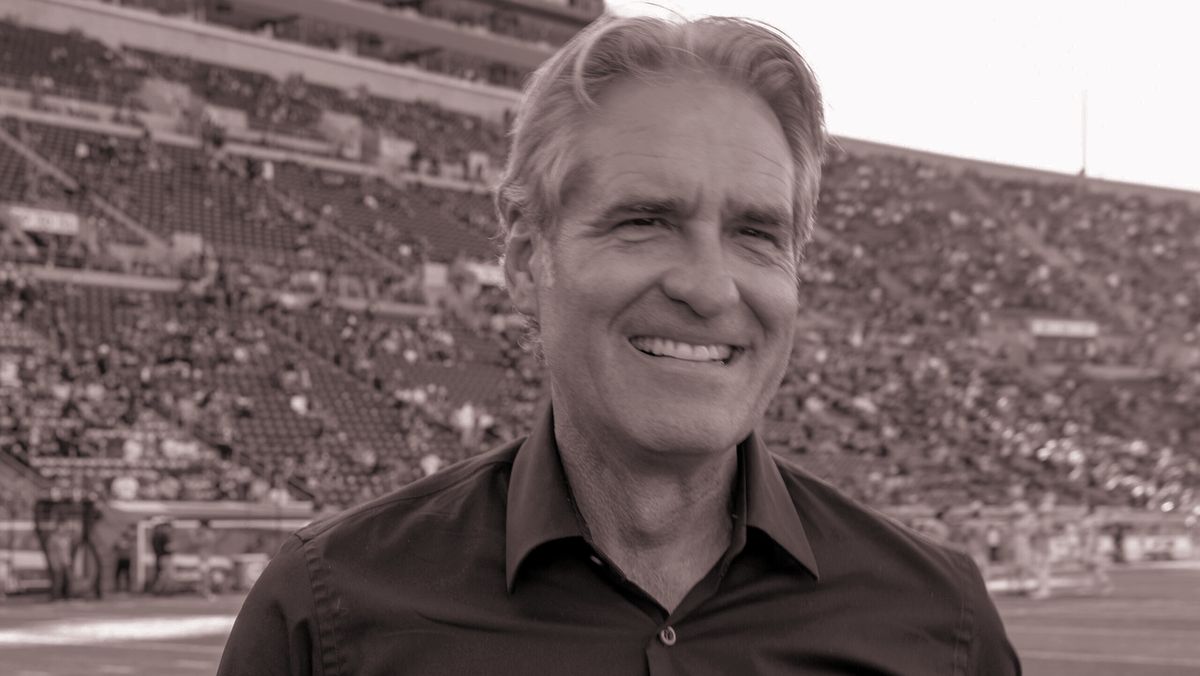
TK Maxx, if you’re reading this from Dulwich), the future of Nike, or the fate of Lululemon than Guggenheim Partners retail analyst bigwig Simeon Siegel. Today, he and Sarah Shapiro sit down to get into all of that and more. Enjoy.
Up top, I address the bombshell news that GQ editor Will Welch is leaving Condé Nast to work with Pharrell in Paris. I also preview W
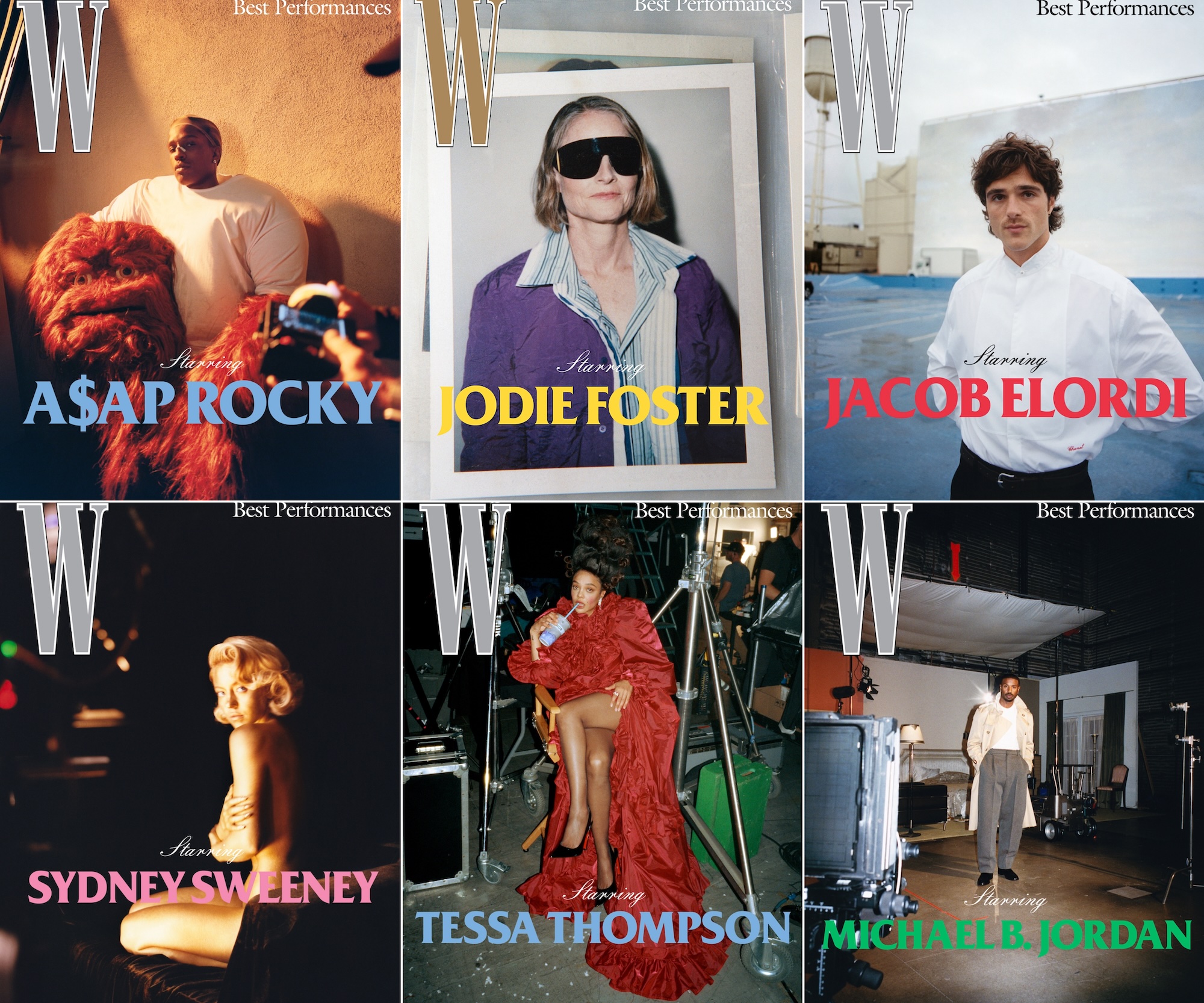
magazine’s Best Performances issue, which includes a Tyrone Lebon–directed movie-thing (and, of course, a party this weekend at the Chateau Marmont).
Mentioned in this issue: Simeon Siegel, Nike, Lululemon, T.J. Maxx, Will Welch, GQ, Pharrell, Sam Hine, Willa Bennett, Sara Moonves, Condé Nast, W, Tyrone Lebon, Birkenstock,
Coach, Kevin Hart, Olivia Nuzzi, and more…
|
Two Things You Should
Know…
|
- Everyone
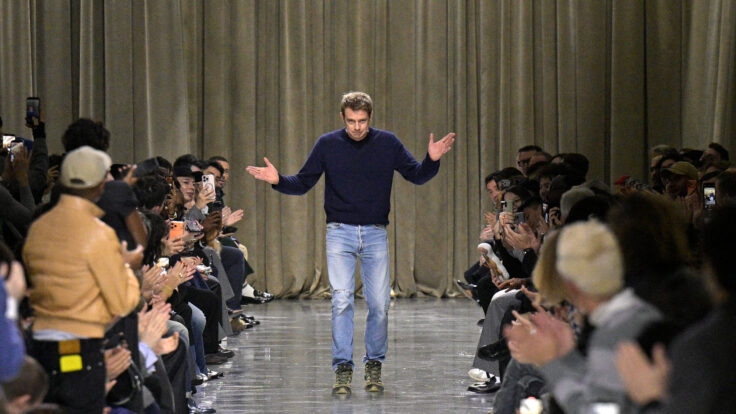
is moving to Paris!: Including Will Welch, GQ’s top editor, who announced this morning that he is leaving Condé Nast to join Pharrell and supermanager-C.E.O. Penni Thow at a yet-to-be-named holding company where he’ll work across the celebrity designer-musician’s various businesses. We’ll get into the Pharrell of it all, and Welch’s role in that business, in another issue. (Note that this gig is not with LVMH, or Louis Vuitton, but rather
for Pharrell, a frequent Welch cover star who was once named GQ Designer of the Year.) His last day at GQ is February 15.Welch’s endgame was always a kind of unknown: He is only in his mid-40s, but has been working at GQ for 19 years, and in the editor-in-chief role for the past eight. During his tenure, he transformed GQ from an increasingly out-of-touch everyman’s bible to a niche publication for fashion obsessives, reflecting the
way the culture was moving. (In her piece on Welch’s exit, New York Times reporter Jessica Testa called his iteration of the brand both eccentric and subversive.)
Welch also hustled like none other, cooking up advertiser-friendly events like the Global Creativity Awards. But really, it was starting to feel like a
dead end. Many thought he might be in line to succeed Anna Wintour in the chief content officer role, and perhaps he’ll return to the fold when (and if) she ever steps down. For now, though, he’s taking what could end up being a sort of nebulous job to hang out until the next real thing comes along.
The internal succession list is probably short. As I’ve previously noted, Sam Hine is a young workhorse beloved by brands and the staff. He also has a star
quality, and he could be the right guy if this evolves into essentially a party promoter gig. He also clearly wants the job. But can he make a magazine and manage a P&L? Zach Baron, the magazine’s senior special projects editor, is one of the few grown-ups left, and has the presence and curiosity to lead. Adam Baidawi, Welch’s deputy, based out of London, is also a contender—although everything would depend on his current relationship with Wintour and
if he’s her kind of guy. If so, Baidawi might be the most likely internal option.
I’m told that Condé Nast plans to run a proper search, which has not yet begun. (Of course, they did not respond to a request for comment.) This could be another situation where the obvious choice (Hine) is already effectively made before any outside candidate steps into Roger Lynch’s office. But I’d argue that GQ is a wild card. Unlike the Vogue gig, or even Vanity
Fair, there are a lot of qualified people who will want this job. I’m sure the committee will talk to plenty of alumni—WSJ’s Sarah Ball, Cosmopolitan’s Willa Bennett, Highsnobiety’s Noah Johnson—but also the Chris Blacks and Michael Sebastians of the world. Early betting is on Bennett, “who is malleable and climby enough in the Mark Guiducci/Chloe Malle
mold,” as one peanut gallerist noted.
I’d also argue that, even though it still feels pretty lame, there is some more external goodwill around Condé Nast at the moment, no matter what is happening behind the scenes, because of many of the early decisions—decent and terrible—made by Guiducci at Vanity Fair. Whatever you think about the Olivia Nuzzi catastrophe, people are paying attention to the magazine again, and some of his other strategic
moves—including partnering with LACMA on the Oscars party—have made a lot of sense. More on this very soon, I’m sure. Condé Nast’s internal revenue summit is next week, so there may be some more news on what’s happening with the lesser brands: Glamour, et al.
|
|
|
A MESSAGE FROM OUR SPONSOR
|
|
|
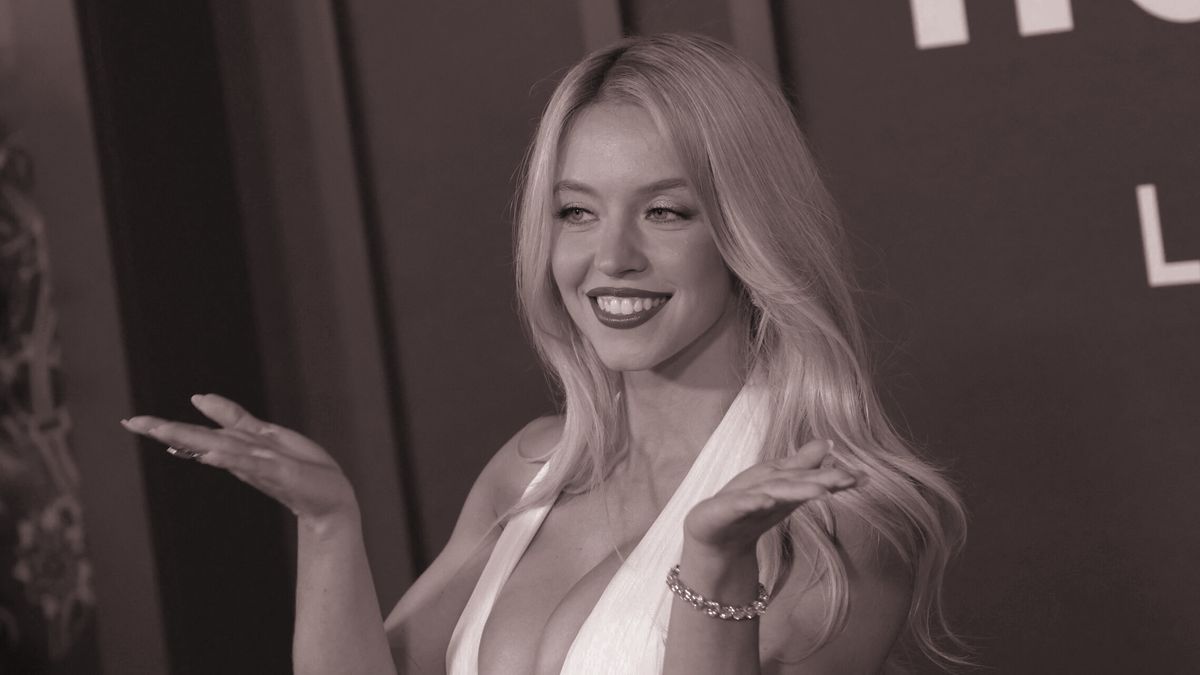
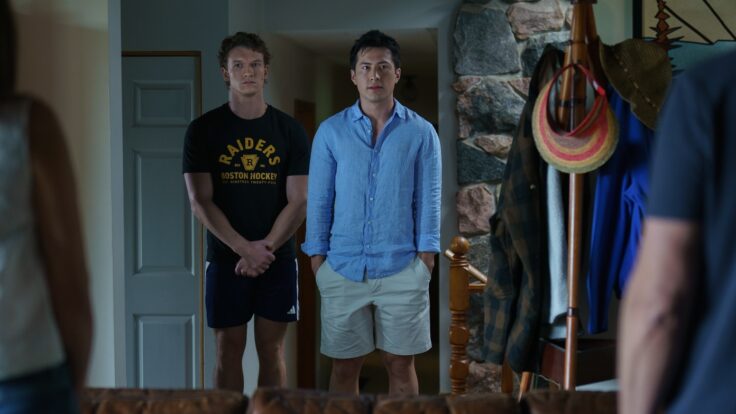
- Another reason not to work at Condé: Sara Moonves pulled something off at W this week that would not have been possible had she ended up returning to Condé to run American Vogue or Vanity Fair. For the magazine’s annual Best Performances issue, which was launched by Stefano Tonchi some 15 years ago, Moonves enlisted fashion’s most in-demand photographer, Tyrone Lebon, to make a movie of sorts: a series of staged
casting videos where 34 of the year’s Oscar hopefuls played out imagined scenarios. Lebon, who hasn’t done an editorial in a decade, spent four days on a soundstage with the likes of Elle Fanning, Jacob Elordi, Sean Penn, Jodie Foster, and Mia Goth, resulting in said reel; 16 covers, styled by Moonves; and features all written by her conspirator in the project, Lynn Hirschberg.
|
Photos: Tyrone Lebon/W Magazine
|
- Let’s
see how much these things actually get shared around the internet—it’s been fun to watch all the brand creative directors (Jonathan, Matthieu, etcetera) posting their respective looks. But there really isn’t anyone else creating content at this scale, with this sort of ambition, in what’s left of the magazine world. I’m not sure there’s another annual cover reveal, other than Vanity Fair’s Hollywood issue, that is still anticipated.
|
And now on to the main event…
|
|
|
In a world of hyperbole—“Nike is spiraling!” “Lululemon is a mess!”—analyst Simeon Siegel is
a proponent of taking the long, and larger, view. A conversation with the retail realist.
|
|
|
When I need to decipher what Wall Street really thinks about retail business, analyst Simeon
Siegel is my first call. As a senior managing director of retail and e-commerce at Guggenheim Partners, he’s made a career of cutting through the noise to find what actually matters—highlighting the trends, turnarounds, and brands worth watching while identifying the C.E.O.s most likely to imminently pursue other interests.
Plus, he’s always good for a contrarian take on the industry freak-out du jour. So what if Nike’s shares were down 19 percent in 2025?
Simeon will remind you that the company had revenues of $47 billion, more than almost all of its competitors combined. Yes, maybe Lululemon bungled its market position as an athleisure leader. But they’re still outperforming the so-called “hot” brands. And if you want to have a conversation about how T.J. Maxx is actually one of the top disruptors in retail, Simeon is your guy.
As 2025 was drawing to a close, Simeon and I spoke about retail’s major players and what’s just around the corner. As always, our conversation has been lightly edited and condensed.
|
Sarah Shapiro: Nike’s declining stock and negative headlines suggest the company is in trouble. What’s actually happening?
Simeon Siegel: The problem with retail is we all have opinions, and opinions aren’t always right. Nike’s stock told us the company is in free fall. Headlines tell us they can’t get the product to work and are giving up all their market share. The problem? It’s just not true. When Nike loses, it’s still winning. When Nike supposedly hasn’t sold anything, it still sold $47 billion—more than almost all its competitors combined.
|
|
|
A MESSAGE FROM OUR SPONSOR
|
|
|
What’s actually happening is they’re facing significant challenges in China and ongoing degradation there, while seeing meaningful improvement in North America over the last two quarters. There’s nuance here about mindshare versus market share, hype versus revenue—but [board member] Tim Cook buying Nike shares at the end of December 2025 is putting his money where his mouth is, looking at the stock movement, and saying enough’s enough.
Does Nike really need merchandise innovation when they have the marketing budget to amplify whatever works?
Nike has done something impressive: They’ve used marketing to create the perception that wearing Nikes makes you run faster, jump higher, look better. That perception is rooted in technology, but it’s equally or more rooted in marketing prowess.
Being able to come up with the latest product every time is very difficult. Being able to make a rhyming product with what’s working? That’s more science than art—a formula you can replicate as long as you have the budget to reverse engineer and storytell. When Nike slows is when a competitor comes up with something special—like Adidas’s Ultra Boost in the mid-2010s or Hoka and On Running recently. But Nike comes back when they put out a rhyming product.
|
The Lululemon Masterclass
|
Is Lululemon encountering similar issues? They’re getting attacked for missing trends, like matching sets, while Alo Yoga and others seem to be winning.
Looking at Lululemon right now is a masterclass in what it means to win in retail. People tell me constantly that Lululemon missed on matching sets; that when you walk into their store, it’s boring; that Alo Yoga is hitting trends while Lululemon can’t catch a break. They forget that Lululemon’s business is still so much bigger.
The beauty of retail is that it starts from zero every year. Lululemon started at zero last year and got to $10 billion, including $6.5 billion in the U.S. People are obviously buying the product. And revenue is the only measure of how big a brand is. There are many measures of how healthy a brand is, but revenue measures size. Lululemon is still much larger than its competitors “hitting the latest trends.”
The real question is: What does it mean to win? My research has found that $3 billion to $4 billion in the U.S. appears to be the recurring brand saturation level—where brands hit healthy ubiquity. C.E.O.s have made careers breaking through glass ceilings, so when there’s a slowdown, they push through. But inevitably those brands almost always come back down. Nike’s the exception. I think Lululemon is a strong brand—it’s just overstretched.
|
What about Coach and Tapestry’s portfolio strategy?
Coach has had one of the absolute best brand turnarounds in retail history. They’ve re-elevated their brand, convinced customers to spend more, and buy more units. They capitalized on luxury getting too expensive post-Covid and took share from accessible competition like Michael Kors.
But Tapestry, the platform, hasn’t borne fruit. They haven’t been able to take Coach’s success and parlay it into another brand. Whether they can remains a work in progress, but thus far, Tapestry has been the story of Coach, not a portfolio.
|
|
|
You’re a Birkenstock fan. Is the company just in a long trend cycle?
Birkenstock is
dramatically smaller than is known. It’s smaller than Crocs, Hoka, Ugg—obviously dramatically smaller than other footwear businesses. But it’s growing really nicely, and to be able to sell double-digit units, to keep giving more volume—that’s impressive.
They benefit from something both accidental and by design: Almost all their inventory starts with the same footbed. The sole is the same across product categories. That’s a tremendous advantage. They’ve benefited from creating a brand
around comfort more than being far out on the fashion risk spectrum.
|
T.J. Maxx’s Invisibility Cloak
|
You call T.J. Maxx one of retail’s greatest disruptors. How can a company with minimal technology and no e-commerce be disruptive?
I think about Amazon being the number one disruptor across retail and TJX being number two—and I only half-jokingly say that. TJX will do around $60 billion this year globally. The whole conversation around department-store demise has been the boon of off-price.
T.J. wins because they don’t have e-commerce, not in spite of it. They’ve become a beautifully invisible place for brands to sell. Once that Michael Kors handbag walks out of T.J. Maxx, it’s just a Michael Kors handbag—not a T.J. Maxx product. Not having it broadcast daily on a website makes it dramatically less margin-dilutive.
The most powerful thing T.J. Maxx did was create the “Maxxinista” concept. They convinced the world that discount shopping wasn’t something to hide—it was a badge of honor. They’ve convinced us that hunting through the racks is exciting in itself. The revenues speak for themselves.
|
What We’re Reading… and Looking At…
|
Clothes should fit right! To make sure yours do, read Becky Malinsky’s incredibly thorough conversation with the talented tailor Malisa Browman-Ackermann. She explains how to talk to a tailor, the right length for shirts and jeans, and other incredibly useful tips. [5 Things You Should Buy]
Kevin Hart cut a deal with Authentic Brands Group. [Inbox]
Kaitlin Phillips tracks where creative directors and Tiina Laakkonen went on holiday, highlights Paul Thomas Anderson’s recommended films from Este Haim’s wedding weekend, her favorite J.A. Dior items, and the state of designer diaper bags. Overall, a super enjoyable read of everything you might have missed while on your own holiday. [Gift Guide]
The Face editor-in-chief Matthew Whitehouse is leaving the magazine, and Jonny Lu is joining as creative director. [Inbox]
Emilia Petrarca looks at the current trends in engagement rings and the diamond industry, from old-mine to lab-grown, and how we got to Taylor Swift’s old-mine cut. [ New Yorker]
Casey Lewis, the authority on teen culture, recounts all of the trends from 2025. There’s so much more than “six-seven.” [ After School]
|
Until tomorrow,
Lauren
P.S.: We use affiliate links because we are a business. We may make
a couple bucks off them.
|
|
|
Puck fashion correspondent Lauren Sherman and a rotating cast of industry insiders take you deep behind the scenes of this
multitrillion-dollar biz, from creative director switcheroos to M&A drama, D.T.C. downfalls, and magazine mishaps. Fashion People is an extension of Line Sheet, Lauren’s private email for Puck, where she tracks what’s happening beyond the press releases in fashion, beauty, and media. New episodes publish every Tuesday and Friday.
|
|
|
Puck’s daily art market email, anchored by industry expert Marion Maneker, offers unparalleled access to the mega-auctions and
galleries, elite buyers and sellers, and the power players who run this opaque world.
|
|
|
Need help? Review our
FAQ page or contact us for assistance. For brand partnerships, email ads@puck.news.
You received this email because you signed up to receive emails from Puck, or as part of your Puck account associated with {{customer.email}}. To stop receiving this newsletter and/or manage all your email preferences, click here.
|
Puck is published by Heat Media LLC. 107 Greenwich St., New York, NY 10006
|
|
|
|