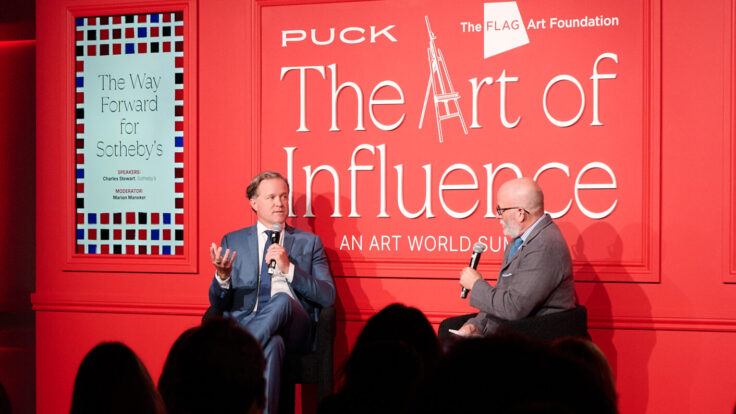
Welcome back to Wall Power. I’m Marion Maneker.
It has turned
into a busy weekend. The 59th Carnegie International opened in Pittsburgh yesterday, and I spoke to Carnegie Museum of Art director Eric Crosby to understand the strategy behind this event, which is directly inspired by the Venice Biennale. Up top, there’s lots of auction news. Sotheby’s announced the $200 million Joe Lewis collection for London in June, and Lévy Gorvy Dayan is getting into the bespoke auction game. I also stopped by White Cube
for the exceptional David Hammons and Jannis Kounellis show, which is a must-see for anyone who wants to understand postwar art. Finally, Georg Baselitz died on Thursday at 88.
Also mentioned in this newsletter: Oliver Barker, Sally Ganz, Victor Ganz, David Hockney, David Geffen, Leonard Lauder,
Sukanya Rajaratnam, Mathieu Paris, Loïc Gouzer, Brett Gorvy, Robert Mnuchin, Ryan Inouye, Danielle A. Jackson, Liz Park, and many more…
Let’s start with the auctions… |
-
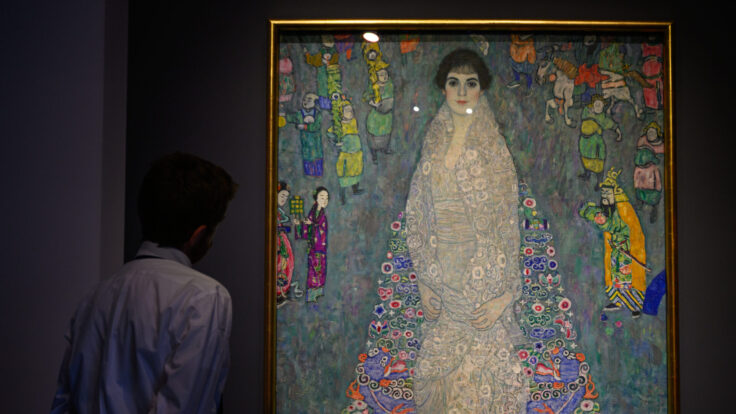
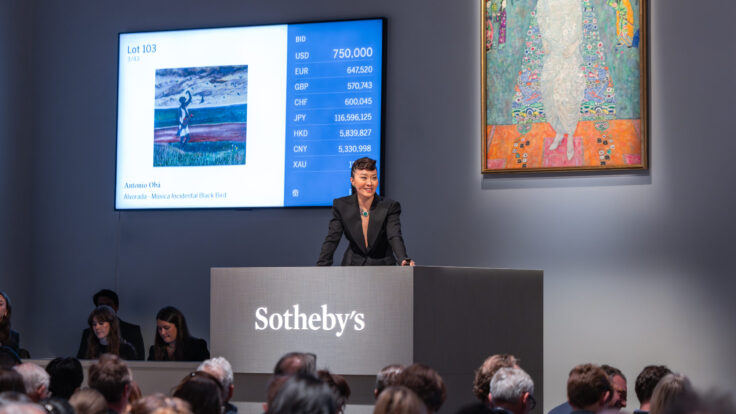
Joe Lewis sells again: British billionaire Joe Lewis is selling another $200 million tranche of his very substantial art collection, following the highly successful $48 million sale of works by Francis Bacon, Lucian Freud, and Leon Kossoff through Sotheby’s in March. The new sale will take place in London in June and feature 50 works split between day and evening sales, including pieces by Gustav Klimt,
Egon Schiele, Amedeo Modigliani, and Gustave Caillebotte.
This will be the biggest single-owner collection offered in London, which has mostly been left out of the great generational wealth transfer in which large art collections assembled over many decades are being liquidated. Sotheby’s success with the Pauline Karpidas collection last year points to
the potential for London to regain some of its mojo through these headline sales by noted living collectors.
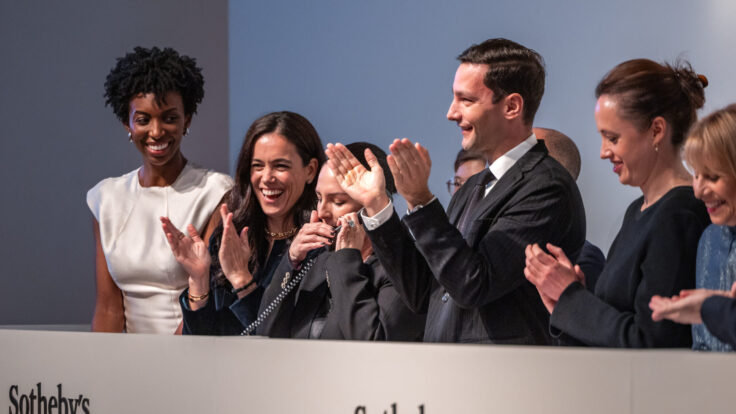
The sale “validates the platform in London and the timing in June,” Sotheby’s Oliver Barker told me on Thursday. Barker believes the quality of the works will attract an international audience, especially with major American collectors traveling to Venice and Basel that same month. Sotheby’s also made the case to Lewis that having top billing in London is better
than competing in a crowded season for name collections in New York. Though Lewis has lived for decades in the Bahamas as a tax exile, his name still resonates in London, where he made his first fortune as a publican and caterer and where his family owns the Tottenham Hotspur football club.
Lewis, who also owned a 30 percent stake in Christie’s in the 1990s, was one of the first art collectors to guarantee a single-owner collection when he backstopped the seminal Sally
and Victor Ganz sale in 1997. He is an aggressive trader who is not afraid to take risks—for example, he built a large stake in Bear Stearns during the run-up to the 2008 financial crisis, which ended with a billion-dollar loss for Lewis after the government forced a sale at cents on the dollar. That said, Lewis has been more right than wrong in his trading, especially in art. He fearlessly offered David Hockney’s Portrait of an Artist
(Pool with Two Figures) with no reserve in 2018, netting $90 million. (The painting had the double provenance of Lewis and its previous owner, David Geffen.)
In this new sale, Lewis is offering a narrow Klimt portrait that he bought a decade ago for $39 million. The work comes to market with an appealing $27 million estimate. (Leonard Lauder’s own Klimt portrait recently sold for a record-setting $236 million, but Sotheby’s is keeping
estimates remarkably low to entice bidders.) An early Schiele painting will be offered at $16 million, as will a striking Modigliani portrait. The sleeper of the sale may be Caillebotte’s full-length portrait of Paul Hugot, estimated at a mere $5 million, that starred in the recent show of the artist’s paintings of men that toured Paris, Chicago, and Los Angeles. - Hammer time: On Saturday, Lévy Gorvy Dayan announced it
will be launching a “bespoke auction platform,” dubbed LGD Hammer, a live sale where the gallery expects most bidders to participate by phone. On May 16, the gallery will christen the new platform by offering Willem de Kooning’s 1984 painting Milkmaid, once held by SFMoMA, with an estimate of $10 million.
LGD Hammer takes its cues from the success of Loïc Gouzer’s Fair Warning and private auctions that have taken place at Christie’s. In an
ARTnews article posted Saturday morning, Brett Gorvy said the move was a reaction to slowing private sales at the gallery and the need to provoke buyers into action.
Milkmaid will be competing with other late-career de Kooning works at Christie’s, such as Untitled XVI,
estimated at $6 million, and Untitled I, estimated at $9 million. At Sotheby’s, there is the late, noted de Kooning collector Robert Mnuchin’s XLII,
estimated at $9 million; not to mention another consignor’s more significant 1975 work, Untitled III, estimated at $25 million.
|
-
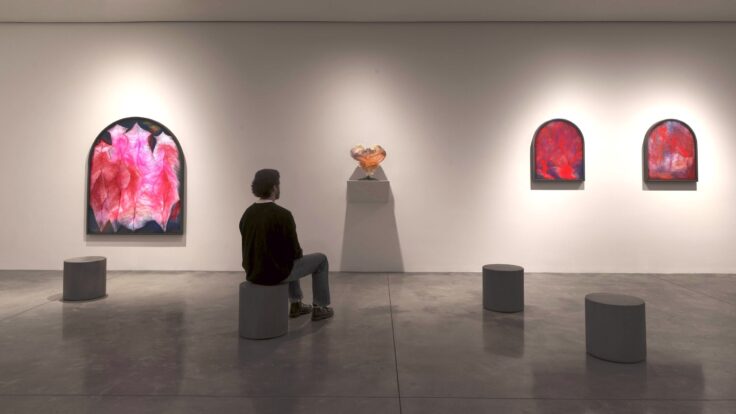
Duchamp’s heirs: New York may be overflowing with works by Marcel Duchamp right now, but at White Cube you can see a rare mini-retrospective of two artists deeply devoted to Duchamp’s example yet rarely understood as his successors. David Hammons and Jannis Kounellis were friends who met in Rome, where they had a brief joint show in 1993. Expanding on that show, gallerists Sukanya Rajaratnam and
Mathieu Paris have gathered significant works by both artists and arranged them in dialogue at White Cube’s Madison Avenue gallery. Both artists are somewhat elusive because their work actively defied convention and repetition, combining Arte Povera’s use of simple found materials with Duchamp’s destabilizing wit. You can see this in Kounellis’s early works on paper recontextualizing language, his jute bags filled with coal, and his later iron-based takes on abstraction. From
Hammons, we see an array of body print works, rare rock heads, one of the few Thunderbird liquor bottle works, and two of his great tarp paintings. What Martin Herbert writes in an essay about the artists can easily be applied to the show itself: It “sing[s] in a minor key while feeling extremely major.”
- Georg Baselitz dies at 88: Late on Thursday, Thaddaeus Ropac and White Cube galleries shared that Georg
Baselitz, the German neo-expressionist painter who first emerged in the 1960s, had died. There’s a good obituary in The New York Times for anyone who needs a refresher on his career and significance.
|
Now, let’s get to the other major international art event opening right now… |
|
|
|
A conversation with Eric Crosby, the director of Pittsburgh’s Carnegie Museum of
Art, about the Carnegie International, meeting the political moment, and freeing artists from the financial pressure to produce. |
|
|
|
The first Carnegie International was presented in 1896, directly inspired by the Venice
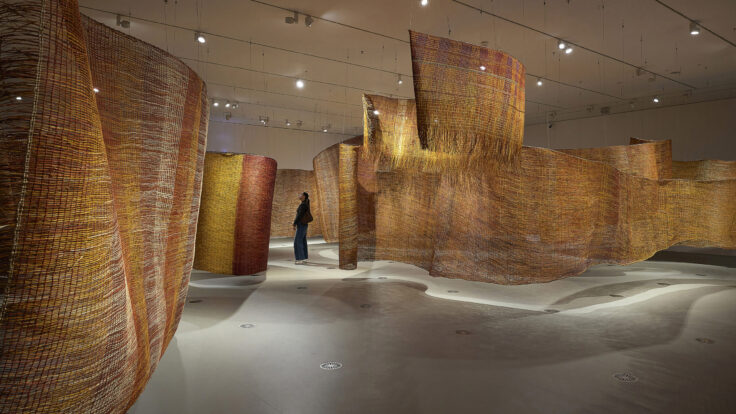
Biennale, and now takes place every four years. The 59th edition, which opened in Pittsburgh yesterday, features the work of 61 artists and collectives, including 36 works commissioned for the event. These commissions, in fact, are one of this year’s distinguishing features, according to Eric Crosby, the Henry J. Heinz II director of the Carnegie Museum of Art, who told me the aim was to offer artists “the time and space to create work that is site-specific, unique to the
moment, and unique to the conditions of display here in Pittsburgh.”
The four-year planning cycle for these events also means that, in Crosby’s words, “every Carnegie International opens on to a changed world.” He couldn’t be more right about that, given the political culture of the United States in 2026. I spoke to Crosby recently about serving the politically broad audience of Western Pennsylvania, creating an exhibition that reaches out of its museum into the surrounding community, and
why commissioning art is “not just writing a check.” As always, the conversation has been lightly edited for length and clarity. |
Marion Maneker: It’s been four years since the last of these
Carnegie Internationals, and this is the 59th in its 130-year history. What makes this one distinctive?
Eric Crosby: With this one in particular, I think what we find is an exhibition that’s more collaborative than past exhibitions. It’s guided by three curators—Ryan Inouye, Danielle A. Jackson, and Liz Park—all of whom are working both together and independently: contributing to shared
projects but also pursuing their own individual interests, research, and artist projects. Compared to past iterations of the Carnegie International, this is the one with the broadest network of collaborative relationships.
Another thing that distinguishes it is the significance of its investment in commissioning. The Carnegie International is always presenting new work, but not necessarily always presenting commissions, per se. This time, we engaged more artists in commission
relationships, creating time and space for them to create work that is site-specific, unique to the moment, and unique to the conditions of display here in Pittsburgh. About two-thirds of the artists in the exhibition have been commissioned specifically for this occasion.
The third thing I would point to is the way the exhibition reaches out from the museum itself. The Carnegie International is long known as an exhibition that transforms the museum and often looks inward. This time
around, we’ve decided to partner with four additional anchors within the arts and cultural landscape of Pittsburgh: the Children’s Museum of Pittsburgh, the Kamin Science Center, the Mattress Factory, and the Thelma Lovette YMCA. Each of these four organizations has embarked with us on a process of co-presenting key artworks by artists in the exhibition, so visitors are invited to experience the city more broadly through the lens of those partners.
You mention that commissioning
and collaboration are the key features of this. What’s that in reaction to?
The desire for a more collaborative International. These are structural concerns that also revolve around the role of the museum, and how we envision the role of the museum within our community. This isn’t to say that an individual couldn’t curate a Carnegie International. It was more a consideration of posing this question: Is one curatorial perspective appropriate for
an exhibition of this kind, at this moment? And the answer among those of us who run the museum was no.
Carnegie Museum of Art is a major commissioner of contemporary art. And a commission relationship is a specific one that’s about resource sharing, and it’s also about an institution doing what it can do to give artists what they need to produce the very best work that the moment calls for. It’s not just about writing a check. The decision to commission more came from a desire to afford
artists more time, space, resources, and consideration than other parts of the world were offering them. Artists are often in this position where they feel like they have to overproduce in order to get by, and I don’t want this museum to perpetuate that transactional way of thinking. So that was an early value established for this Carnegie International. |
The
Politics of a Swing State Museum
|
In the past four years, there’s been a sea of change at least in the political culture, if
not in the overall culture. What’s your sense of how the public interacts with events like this?
In Western Pennsylvania, we serve a very politically broad audience. About 400,000 individuals come to our museum in any given year. We like to think about the museum serving as, first and foremost, a resource. We are a resource for art, for learning, for well-being, and for social connection. These are things that I would argue transcend some of
these ideological categories. When you come to an exhibition as expansive as the Carnegie International, my hope is that there’s something for everybody to identify with. Each visitor to the museum brings their own investments, interests, research, politics, and feelings to the encounter with any artwork that’s presented.
It sounds like you’re maybe more interested in the local experience of the event than you are in making some grand statement in the global art
world.
Yeah. Every experience of the International is a localized one. It’s a museum that’s been shaped by 130 years of exhibition-making within this framework—and it hasn’t been a fixed, static framework. It’s changed over time; the International has gone through many different chapters.
Is the Carnegie International about a survey of art today—or a survey of the world through
art?
I often say that every Carnegie International opens on to a changed world, in the sense that the museum undertakes a research initiative and curatorial initiative for four years of planning—and a bunch of stuff happens in the course of those four years that impacts the process of making an exhibition. The way in which curators and artists can travel across borders, for instance, is fundamental. That automatically begins to shape what is or
isn’t possible for an exhibition. So I believe each exhibition is more than a reflection of its moment; it’s probably more appropriate to say it’s an expression of its moment.
That’s where the curatorial perspective of this one comes in very specifically. Ryan, Danielle, and Liz, very early on, took it upon themselves to meet with artists and consider practices in which artists are, in one way or another, uplifting the creativity of others around them—that they’re not
working in isolation, but rather within communities in which artistic and creative conversations are already well underway. The idea is acknowledging that the contemporary isn’t something the museum goes out and discovers—it’s living alongside those who are already making it.
Art is a condition of being. It’s a way to be in the world in relation to each other. And that’s not art speak. That is as direct as we can possibly be about what art is, and can do, in our lives. |
This interview was edited by Curtis Rowser. I’ll be back on Tuesday with more from
the art world as we gather momentum toward what’s looking to be a very big season. You’ll want to be tuned in closely these next few weeks.
Until then,
M |
|
|
|
Puck founding partner Matt Belloni takes you inside the business of Hollywood, using exclusive reporting and insight
to explain the backstories on everything from Marvel movies to the streaming wars. |
|
|
|
Unique and privileged insight into the private conversations taking place inside boardrooms and corner offices up and
down Wall Street, relayed by best-selling author, journalist, and former M&A senior banker William D. Cohan. |
|
|
|
Need help? Review our FAQ page or contact us for assistance. For brand partnerships, email ads@puck.news. You received this email because you
signed up to receive emails from Puck, or as part of your Puck account associated with {{customer.email}}. To stop receiving this newsletter and/or manage all your email preferences, click here. |
Puck is published by Heat Media LLC. 107 Greenwich St., New York, NY 10006 |
|
|
|
|