Hi, and welcome to Line Sheet. I’m back with a very fun issue examining The Row’s post-$1.1 billion valuation prospects, additional intel about the situation at WME’s Art + Commerce, and news about a TV show set at Barneys New York and created by the Gossip Girl people. Also, Sarah Shapiro has the scoop on the new C.E.O. of Away, the luggage company that overtook premium economy class.
🚨 Programming note: Tomorrow on Fashion People, Sarah joins me to discuss much of the above, as well as the rise of Donni—the scarf-charm brand turned trendy fashion line, founded by Alyssa Wasko when she was a visual merchandiser at Chanel. Listen here and here.
Also: Will you be in Los Angeles on May 20? Do you want to watch me interview Parker Posey about her caftaned turn on the latest season of The White Lotus? Or do you want to see Matt Belloni chat with John Mulaney, the funniest and best-dressed man on Netflix? If so, please join us for Puck’s latest iteration of Stories of the Season, an event focused on this year’s Emmy hopefuls. Members of the Television Academy, any industry labor guild, or another awards body will be prioritized, but just email Fritz@puck.news for an invite and I’ll endeavor to make it happen for you.
Mentioned in this issue: The Row, Ashley and Mary-Kate Olsen, Anish Melwani, Loro Piana, the Wertheimer family, Marc Metrick, Saks Global, Away, Jen Rubio, Jessica Schinazi, Barneys, Susan Plagemann, Art + Commerce, and many more…
|
|
|
|
A MESSAGE FROM OUR SPONSOR
|
The refined BMW 7 Series is all luxury. With the ability to define your design, the ultimate glamour is yet to be. Learn more at
BMWUSA.com.
|
|
|
Three Things You Should Know…
|
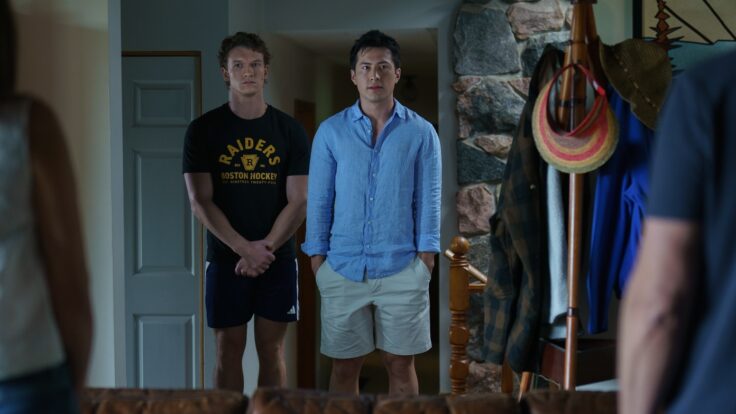
- Does anyone really want a Barneys New York TV show?: On Thursday afternoon, a curious announcement surfaced on Deadline, one of the many Penske-owned Hollywood trades: There’s going to be a television show about Barneys, created by Fake Empire’s Josh Schwartz and Stephanie Savage, the team behind the original Gossip Girl. According to Deadline, “the untitled series is set when Barneys reopens its doors in Manhattan, and the fashion elite and behind-the-scenes staff collide in a whirlwind of ambition, secrets, and style.”After reading the item about 47 times (it felt like it was written by a bot), I messaged a couple of people in Hollywood to get a better sense of what exactly it meant. They agreed that the concept sounded a little nutty. I’d be interested in a TV show about a department store with a soapy, Scruples-style plotline, but a show set in the present about a reopened Barneys, in a world where there is no Barneys and little hope of a reopening, is all very weird.Fake Empire is working with Authentic Studios, the full-service studio of Authentic Brands Group, on the project. (One of Authentic Studios’ sub-brands is David Beckham’s Studio 99, which produced the awesome Beckham documentary on Netflix.) If the Barneys show does move forward, there will likely be some sort of offline component. But I can’t imagine how difficult it would be to get this right, even for the writer-producers who artfully parodied Upper East Side private school culture, which has become sort of post-parody, anyway. (Fashion is notoriously difficult to nail onscreen, and this may prove even more challenging if you have to populate the set with racks upon racks of cool-looking, modern clothes.) On the bright side, Schwartz and Savage have a track record of actually getting things made: The OC, Chuck, The Carrie Diaries. So if you want to be a consulting producer, tell your agent to track them down.
- A WME Fashion don’t: Last week, after I published that little ditty on WME Fashion head Susan Plagemann’s dismissal of two longtime employees, I noted that her fellow former Vogue-ite Sally Singer was doing fine at Art + Commerce, the WME-owned agency dedicated to photographers and creative directors. A number of you took issue with this description, positing that Singer had failed to staff up in Paris and London, the two European cities where the company has offices, after the two former bosses exited. (Becky Poostchi, an agent based in London, now manages a lot of the talent once looked after by former co-head Philippe Brutus.) Of course, a lot of the biggest commercial jobs are with European conglomerate brands, so it’s important to have strong representation in those markets. Also: The two A+C executives that Singer effectively replaced, Nadine Javier Shah and Brutus, have started their own agency, New Art Corps, and are poaching A+C clients, including the photographer Walter Pfeiffer. (According to a source close to WME Fashion, the complaints are unfounded: A+C recently added a new agent in Paris, and there is more A+C staff than ever in Europe. As for Pfeiffer, he left when Brutus exited two years ago, so perhaps there isn’t the exodus some are perceiving.)Regardless of Singer’s management, there’s a question of whether Art + Commerce should be a part of the WME universe. The pitch has always been that the combination of parentco Endeavor’s various agencies—entertainment (WME), modeling (IMG), styling (The Wall Group), and photographers and creative directors (Art + Commerce)—was additive for clients and created more business opportunities within the group. The Wall Group has delivered on that promise; its hair stylists, makeup artists, nail technicians, and fashion stylists are often paired up with entertainment clients. Art + Commerce, which came over to WME in the 2013 IMG deal, always seemed tacked on—and, frankly, a relic of a fading world.
Anyway, the lack of additive synergies within WME Fashion is yet another reason why I doubt Plagemann’s contract will be renewed when it expires in August. WME will need to find someone to manage these businesses, and ably report to Christian Muirhead and Richard Weitz. And it’s obviously not going to be Sally. The company had no comment on that front, but my guess is that nothing has been decided. (Disclosure: WME
represents Puck.)
- Sarah on Away’s C.E.O. shuffle: Away co-founder Jen Rubio is stepping down as C.E.O. of the luggage maker, which she helped launch back in 2015, to become executive chairwoman, focusing on brand vision and strategy at the board level. She’ll be replaced by Jessica Schinazi, who joined as president in late 2024 after a stint as president of Dyson Americas, following stops at LVMH, Richemont, and Amazon.Schinazi will bring wholesale expertise at a pivotal moment. Away is launching partnerships with Amazon and Nordstrom—the latter of which puts Away products in 60 physical stores, dramatically expanding the company’s footprint beyond limited locations and removing a significant barrier for customers who need to see a physical product before buying. After years of trying to own the consumer journey end-to-end, Away finally recognized that they were losing customers who searched “Away” on Amazon and ended up buying products from their imitators.For a company that raised $186 million and achieved unicorn status with a $1.4 billion valuation in 2019, this wholesale expansion represents a slight adjustment to the flight plan. While Away remains the most recognizable D.T.C. luggage brand at airports, wholesale is the only way it’s going to become as ubiquitous as predecessors like Samsonite or Tumi. —Sarah Shapiro
|
|
|
|
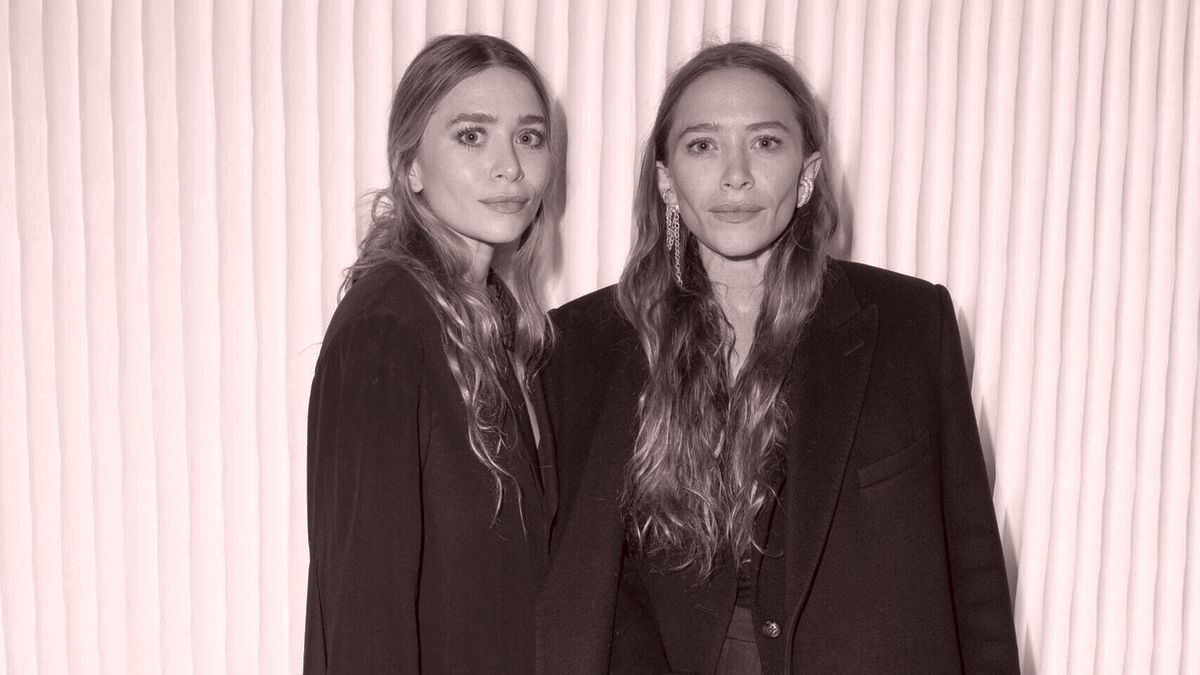
The Row defined the pandemic-adjacent era of TikTok- and Succession-fueled “quiet luxury.” Now, with the trend moving on and a wholesale strategy that’s reliant on beleaguered department stores, the Olsens are facing their next challenge.
|
|
|
|
Last week, LVMH North America C.E.O. Anish Melwani made an off-hand comment at Milken, the very private equity-friendly conference in Los Angeles, about his distaste for the term “quiet luxury”—a phrase that I find deeply unsophisticated and a little pathetic. The descriptor was “pretty annoying,” Melwani confessed, before expressing hope that the moment, instigated by TikTok and Succession, had passed through the culture.
Melwani, of course, was talking his own book. Even if LVMH-owned cashmere mill Loro Piana benefited handsomely from its if-you-know-you-know placements in Succession, Melwani needs to sell more bags with logos and Murakami cherry blossoms—designs that are antithetical to the notion of so-called quiet luxury. But nevertheless, I’d venture to guess that Ashley and Mary-Kate Olsen, the founders of The Row, feel similarly, although I hope they haven’t spent too much time thinking about it. If they did, they might find that they are, in many ways, ground zero for the idea.
|
|
|
|
A MESSAGE FROM OUR SPONSOR
|
The refined BMW 7 Series is all luxury. With the ability to define your design, the ultimate glamour is yet to be. Learn more at
BMWUSA.com.
|
|
|
As the pandemic set in, The Row seemed particularly exposed. The company had just lost millions of dollars via the liquidation of Barneys New York, and likely millions more when the Neiman Marcus Group, which also owned Bergdorf Goodman, filed for Chapter 11 bankruptcy protection in May 2020. Unlike most of their competitors in Europe, The Row was uniquely reliant on the U.S. market, and U.S. department stores in particular. There were layoffs, and discussions about closing down certain parts of the operation. (I heard about various scenarios that included shutting the just-launched men’s business or paring back to be accessories-only.)
In the end, the Olsens stayed the course, and were rewarded handsomely. While the pandemic wore on, as unspent cash accumulated and many people were tethered to a remote and domestic existence, sales of certain apparel skyrocketed. Fashion brands with soft-clothes programs disproportionately benefited from the boost. And while The Row was selling sweatpants that passed the four-figure mark (the cashmere-cotton blend version currently retails for $1,950), the company saw a bump—a big one.
A confluence of factors transformed The Row into the hottest fashion brand of the pandemic. The Olsens’ obsession with refining and modernizing simple concepts—the Teva sandal, the banana-shaped bag, mid-rise jeans—offered consumers a reason to spend at a time when there wasn’t competition. Sure, the prices were the sort that you’d hide from your mother (no matter how many boards she served on), but the cost-per-wear of those back-seam sweaters helped justify the purchase.
Meanwhile, the Olsens developed new categories and expanded distribution. The Row’s handbag business also grew as Big Luxury’s designs were growing stale. Brands like The Row and (LVMH-owned) Loewe, which turned out unique designs, became favorites for customers who wanted to signal that they were more sophisticated than the average luxury customer. And then the Margeaux—one of the market’s many riffs on the Hermès Bolide—started selling out. Last fall, by the time that The Row raised capital from Mousse Partners (the Wertheimer family office), Téthys (the Bettencourt-Meyers family office), Imaginary Ventures ( Natalie Massenet and Nick Brown’s venture shop), and Saint Dominique Capital ( Lauren Santo Domingo’s fund) at a $1 billion valuation, the company was on an unprecedented growth trajectory, fueled by handbag sales but also demand in Asia. Overall annual sales were still under $500 million, probably significantly less, but The Row had become a go-to for a certain consumer.
The Row’s growth story, in some ways, was more of a fashion accident—a brand that fought hard not to be the trend, and then became the trend, anyway. And now that trend has passed, as Melwani acknowledged at Milken, and the aesthetic that The Row articulated is on the way out. How will the Olsens, with their unicorn valuation, navigate the change?
|
|
Like many fashion executives, the Olsens are once again facing the realities of the changing market: tariffs and customer fears, yes, but especially department store challenges. The Row, after all, is likely one of the most exposed luxury brands within the Saks Global network. I’m told the team has met directly with Saks C.E.O. Marc Metrick about the matter and negotiated favorable terms, but they do not operate on a consignment model, which means there’s a risk of losing millions if Saks Global were to default. And it’s not just Saks Global: Other retailers, like Montreal-based Ssense, are facing challenges right now because of tariffs.
|
|
|
However, these are all things that will pass, and The Row has dozens of growth levers to pull. There’s the opportunity in Asia and retail expansion, even though the brand is so particular about real estate. (Why there isn’t a location in lower Manhattan, for instance, beats me.) But let’s just assume that severely limiting retail is a good long-term choice, one that’s A-OK with The Row’s investors—family offices and a uniquely positioned venture capital firm, all of which appear focused on the long-term potential.
Every brand that benefited from the pandemic-fueled minimalist movement will need to course correct… at least a little. (For a searing evisceration of the look, I encourage you to watch the “Forever 31” Saturday Night Live skit.) But there is a subset of consumers who will always seek simplicity, even if the definition of “simple” is changing. Right now, nobody wants to wear a sack dress. Perhaps the Olsens’ relocation of much of their process to Paris—the center of the fashion world—will help them adjust while still playing in tune with the culture.
But they do need to change. On a recent trip to Paris, I stopped by the newly refreshed Galeries Lafayette on Boulevard Haussmann to see the just-opened Phoebe Philo shop-in-shop, where I bought a suit. Philo, her generation’s most influential designer—and the real reason everyone owns an oatmeal-colored sweater—is developing a new form of minimalism. (Far more experimental, with a much harder edge.) The same week P.P.’s blood-red-carpeted store opened, The Row’s gentler, blonde-wood shop-in-shop turned on the lights just across the aisle. I walked by, admiring a red-and-navy checked shirt, but didn’t even stop to touch it.
|
Gro Curtis launched the American edition of Icon magazine last week. The covers are all fab. Also, the staff is super interesting: the rock journalist Lizzy Goodman signed on as deputy editor, and they hired Substacker (and thought-haver) Emily Wilson to cover food. Gro is going to join me on Fashion People soon to talk about it. [ Instagram]
In other new-media news, Edward Enninful announced the launch of 72 Magazine, part of his new, broader venture, EE72. Former British Vogue deputy Sarah Harris is editorial director, Suburbia’s Lee Swillingham and Stuart Spalding are creative directors, and Simone Oliver—whom many of us know from her NYT Style, BET, and Refinery29 days—is heading up content for EE72. [ The Hollywood Reporter]
Emilia’s interview with Brock Colyar about their recent New York mag cover story on the West Village girls is behind-the-scenes-y in the best way—I especially loved the intel about Leap, the company that’s playing an outsize role in developing areas like the W.V. and Abbot Kinney. [ Shop Rat]
You know, the share price for LuxExperience B.V. (the funny new name for the group that now owns Mytheresa, Net-a-Porter, and Yoox) is still way down from its highs, but it’s up 70 percent this year. Meanwhile, big boss Michael Kliger announced leadership changes at Mytheresa: Simon Tweed (great name) is now the chief commercial officer, Dominik Laß is leading growth, (the lovely) Tiffany Tsu is now chief buying officer (and will look after emerging brands across the group), and, for now, Kliger will continue running Mytheresa on top of managing the group overall. [Inbox]
Loved Jalil’s interview with Monica L. Miller, the co-curator of Superfine: Tailoring Black Style. [ Consider Yourself Cultured]
|
And finally… Happy 30th birthday, Bicester Village!
Until tomorrow,
Lauren
P.S.: We are using affiliate links because we are a business. We may make a couple bucks off them.
|
|
|
Need help? Review our FAQ page or contact us for assistance. For brand partnerships, email ads@puck.news.
You received this email because you signed up to receive emails from Puck, or as part of your Puck account associated with . To stop receiving this newsletter and/or manage all your email preferences, click here.
|
|
Puck is published by Heat Media LLC. 107 Greenwich St, New York, NY 10006
|
|
|
|