{{ 'now' | timezone: 'America/New_York' | date: '%b %d, %Y' }} |
|
|
|
Hi, and welcome back to Line Sheet. To quote the great Kyle Chayka, “Parties are so important right now.” As is Chanel. (Getting reports of people buying shoes in “bulk” because they can’t choose one style. Keep sending me these incremental updates, please.)
In today’s issue, I’ve got news of changes at Versace, a note on the potential end of quarterly reporting requirements in the U.S. (I love quarterly reports), and the real reasons John
Galliano is partnering with Zara, besides a desire to keep putting beautiful things into the world.
For the main event, Malique “Malique@puck.news” Morris takes a look at Lululemon founder Chip Wilson’s turn as an activist investor. I once almost did a consulting project with Chip, right around the time of Lululemon’s 2013
see-through-leggings scandal, when he said some bodies “just don’t actually work” in the stretchy pants. Turns out, I am not the consultant type, but, honestly, he was very nice.
Also mentioned in this issue: Lily Allen, Chip Wilson, Georgina Scholtens-Day, Simeon Siegel, Eric Hirshberg, Jonathan Cheung, Lorenzo Bertelli,
Lynette Nylander, Laura Gentile, John F. Kennedy Jr., Meghan Frank, Stefano Cantino, Mel Ottenberg, Dario Vitale, Dries Van Noten, Calvin McDonald, Chantal Fernandez, Emmanuel Gintzburger, André Maestrini, Yohji Yamamoto, Jane Nielsen, Jacob
Gallagher, Marc Maurer, and more… |
Three Things You Should Know…
|
- Initiate
Versace turnover: Last week, Versace C.M.O. Georgina Scholtens-Day exited the business, along with a few other C-suite executives. Her departure is anything but surprising: Versace executive chairman Lorenzo Bertelli is a marketing person, and likely wants to bring in his own team to restructure that part of the organization as the brand becomes Prada Group-ified. No word if Scholtens-Day has another job lined up, but she leaves knowing that the
marketing for the Dario Vitale launch was incredibly successful—quite the bullet for her résumé. Will there be more change? Surely. But as I wrote a couple weeks back, the Prada Group has been pretty insistent that C.E.O. Emmanuel Gintzburger is sticking around. Speculation that former Gucci C.E.O. Stefano Cantino could be joining seems to be misguided. (Although I heard that Cantino does indeed have a new job, and I will try to find out for you
what exactly he is doing!)
- No quarter-ly?!: The S.E.C. is considering a proposal to drop the requirement for quarterly reports, permitting public companies to report twice a year instead, a move President Trump has been pushing for since his first term. Yes, the paperwork, time, and money it takes to file quarterly is a hassle, and it’s arguably causing fewer companies to go public. In Europe, quarterly reports
have not been required since 2013, although most public companies still publish them. But as someone who has been reporting on quarterly earnings for 20 years—I even carry a tote bag that says I ♥️ Quarterly Reports—I have mixed feelings.
On the one hand, the current requirements allow analysts and investors to understand, incrementally, how a company is performing. More information is
better for everyone—even if “everyone” increasingly means not just the qualified business press but also the armchair TikTok analysts. On the other hand, that cadence can incentivize a company to make decisions with a short-term view. Of course, the whole reason companies go public anyway is to raise capital to expand, and vesting periods force executives to take the long view. In all likelihood, many of these companies would continue to report quarterly. But the idea they might not have to is
still a big deal.
|
|
|
|
A MESSAGE FROM OUR SPONSOR |
For over 90 years, we have defined Italian elegance. As a family-owned brand across three generations, we celebrate
heritage, craftsmanship, and timeless style. Made in Italy is more than a label— it’s our promise of quality, responsibility, and enduring design. Blending tradition with modern sensibility, we shape men’s style worldwide with understated luxury that transcends trends, generations, and borders. Discover our collection at Canali.com |
|
|
|
- I
Told Ya: Galliano Returns edition: Just yesterday, I mentioned the proliferation of John Galliano–designed dresses on the red carpet and the secondhand market, and asked whether the designer’s next comeback might be underway. Now, Zara has announced a two-year collaboration with Galliano, for which he’ll design seasonal
collections (see, e.g.: J.W. Anderson x Uniqlo), reworking pieces from the Spanish group’s archives.
Two dynamics are at play here. One is that Zara has been working diligently for several years to move upmarket—less in terms of price than on quality and value—in an effort to distance itself from the Sheins of the world. Partnerships with a true fashion auteur support that messaging. The other is that the space for designers not already linked to a megabrand
continues to shrink; people are either shopping at Chanel or Zara, and there is very little room for the in-between.
All that was on my mind last week, during a short trip to Berlin, when I visited Andreas Murkudis, the influential store that sells Dries Van Noten, Barena, Hodokova, Yohji Yamamoto, and others. There simply aren’t a lot of brands at present that possess the quality and vision to be stocked in a store like that. And there aren’t that many stores like Murkudis to stock the
ones that do exist. Not saying this is either good or bad; it’s just the way things are now. The people on the internet who are upset about Galliano’s partnership with Zara need to relax. Hopefully his designs will influence a new generation’s fashion sense.
|
|
|
|
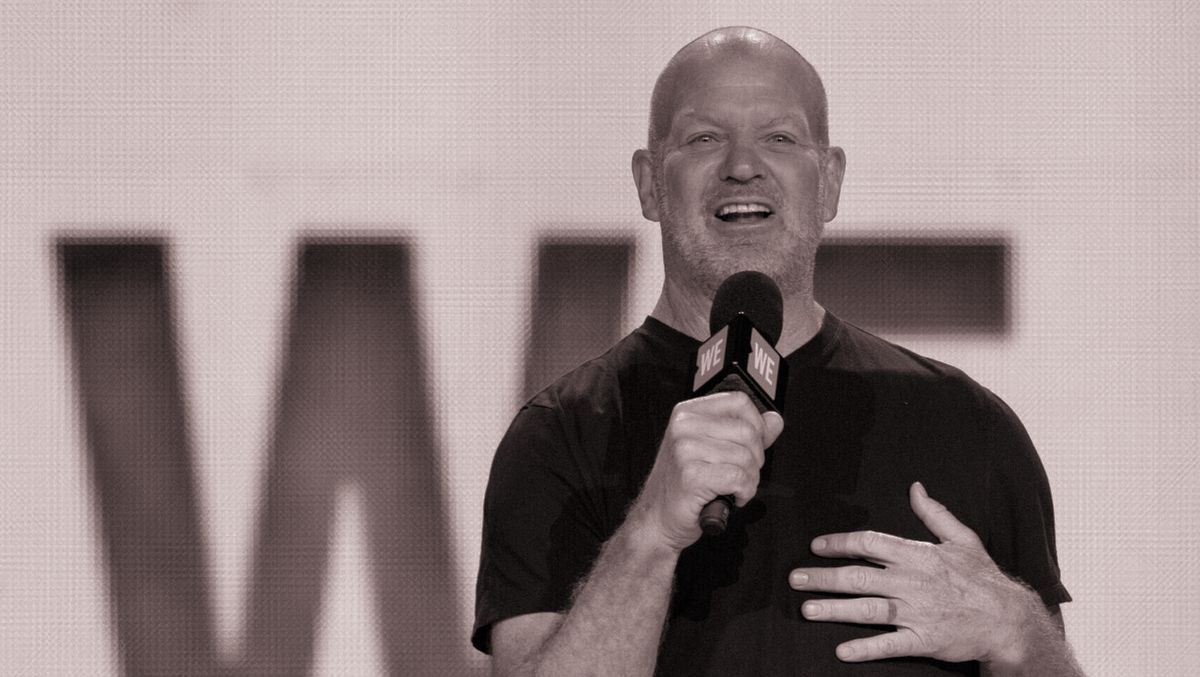
Chip Wilson has become Lululemon’s chief gadfly as the company faces rising competition and
waning influence. His criticisms are on the mark, but is the inflammatory founder helping or hurting the athleisure empire he founded? |
|
|
|
Over the past several months, Chip Wilson, the founder and former C.E.O. of Lululemon, has
transformed from a pesky shareholder to a full-throated activist investor waging war against his own athleisure empire. Wilson hasn’t been involved in the business since resigning as C.E.O. in 2013 and leaving the board in 2015, but his 8.4 percent stake makes him its largest individual shareholder. Last October, he took out an ad in The Wall Street Journal titled “Lululemon: In a Nosedive,” in which he accused the company of becoming a “lumbering corporate dinosaur” that had
“lost its soul.” (For the record: Wilson has historically bristled at being labeled an “activist investor,” but if the four-way stretch fabric fits…)
What was needed, Wilson wrote, was leadership that was less finance-focused and more driven by that ever-elusive quality: “creativity.” Then, in late December, he launched a proxy fight, nominating three new directors in a bid to shake up the board and influence its composition. Earlier this month, he created a website naming his
candidates—Marc Maurer, the former co-C.E.O. of On Running; Laura Gentile, a former marketing chief at ESPN; and Eric Hirshberg, who previously led video game maker Activision. Lululemon’s annual shareholder meeting will likely take place in late spring or early summer. |
|
|
|
A MESSAGE FROM OUR SPONSOR |
For over 90 years, we have defined Italian elegance. As a family-owned brand across three generations, we celebrate
heritage, craftsmanship, and timeless style. Made in Italy is more than a label— it’s our promise of quality, responsibility, and enduring design. Blending tradition with modern sensibility, we shape men’s style worldwide with understated luxury that transcends trends, generations, and borders. Discover our collection at Canali.com |
|
|
|
While some have dismissed Wilson as suffering from a bout of founder’s syndrome, his argument at least
addresses the vulnerable state of Lululemon. The stock has dropped 50 percent in the last 12 months, as the company continues to cede market share to an avalanche of competitors including Alo Yoga, Vuori, Set Active, and now NikeSkims. (Wilson’s stake, of course, has also declined in value, from a high of around $3 billion.) Last June, Lululemon laid off around 150 employees, one of at least three rounds of corporate layoffs in the last year, according to a source.
The company has also
recently suffered more minor, if more public slings. In January, Lululemon temporarily paused online sales of its $108 Get Low tights following a mountain of customer complaints about the leggings’ tendency to appear see-through when worn. (Not a great quality in a legging!) Yes, it was a funny headline about one SKU in a vast catalogue, but incidents like that cost money to fix and hurt consumer trust. It was also, somewhat remarkably, not
the first such controversy for the company.
Lululemon’s recent dismal stock performance contributed to the departure of C.E.O. Calvin McDonald in January, despite the brand tripling sales, to over $10.5 billion, since his arrival in 2018. Lululemon’s finance chief, Meghan Frank, and André
Maestrini, its president and commercial chief, have stepped in as interim co-C.E.O.s. Last week, Wilson redoubled his proxy battle by publishing an open letter noting that “any leader considering the C.E.O. position should be laser-focused on the Company’s Board.”
Wilson
isn’t alone. In December, the notorious activist investment firm Elliott Investment Management disclosed a $1 billion stake to strengthen its proposal for Jane Nielsen, a former finance chief at Ralph Lauren and Coach, to step in as chief executive. But Wilson is definitely the loudest messenger, if also a flawed one. He stepped down as chairman in 2014 after making controversial statements about the body types Lululemon serves, before leaving the board altogether the
following year. Even a decade on, Wilson himself is probably too inflammatory to rejoin the company, despite being its most outspoken and clear-eyed shareholder. So instead, he’s duking it out in public to get his preferred proxies on the board, who would presumably elect a C.E.O. that’s more to his liking. |
Lululemon’s biggest problem, beyond all the new competition, has been its own brand position. Getting to $10
billion in sales required the company to become everything to everyone—from tweens to middle-aged moms. And somewhere along the road to megabrand status, it lost what made it special, Guggenheim Securities’ Simeon Siegel told me. A few weeks ago, my colleague Sarah Shapiro reported that Lululemon’s “brand saturation” has even bled into the secondhand market, where its Depop listings are up 97 percent year over year—and not because vintage leggings are the latest
microtrend.
This has been one of Wilson’s central arguments. In a 2024 Forbes interview, he criticized Lululemon for “trying to become like the Gap,” before adding, “You’ve got to be clear that you don’t want certain customers coming in.” He also grumbled that the models chosen for its ad campaigns looked “sickly” and “not inspirational.” |
|
|
|
Putting the impolitic language aside, it’s inarguable that Lululemon needs to narrow its audience. Coach and
Abercrombie have bolstered impressive turnarounds by targeting Gen Z. Coach has perennial hits like the Tabby and Brooklyn bags that don’t cost more than $805. And even though its growth slowed in 2025, Abercrombie is still a young adult’s trusted source for good jeans and quality basics.
Lululemon’s executives have acknowledged some of the issues Wilson has lamented publicly. “Over the last couple years, we’ve let our product life cycles run too long,” Frank, the finance chief, recently
told The New York Times. “We’ve become a little stale and predictable.” A few weeks earlier, Jonathan Cheung, the brand’s global creative director,
told The Cut’s Chantal Fernandez that new product lines (including lightweight tennis skirts, running shorts, and tailored jackets) are designed for a customer who’s a “mindful athlete” between the ages of 28 and 32. The brand also appears to be taking Wilson’s lack of innovation accusations seriously. On March 3, it launched a
“sweat-concealing” technical fabric that promises higher “breathability” and a "lightweight feel.” We’ll see if it resonates.
In its quarterly call on Tuesday, after the market closed, the company did announce a new board member, though not one of Wilson’s chosen slate: former Levi Strauss C.E.O. Chip Bergh. The company’s quarterly revenue grew a modest 1 percent—but a closer look showed a double-digit gain abroad making up for a 4 percent fall in the U.S., its
largest market. The good news: Unlike Coach and Abercrombie before their respective rebounds, Lululemon’s sales aren’t in a total free fall. It’s projecting revenue growth of 2 to 4 percent in the current fiscal year. As Siegel told me, chasing coolness in a saturated market means narrowing one’s appeal and, after nearly a decade of explosive growth, having to shrink a bit. If that’s where the company is headed, then Wilson is right. And Lululemon needs to figure out how to sell that story.
|
Jose Manuel Albesa was named C.E.O. of Puig, replacing family member Marc
Puig, who has been doing the job since 2014. Rachel Strugatz will share context tomorrow. [Inbox]
Jacob Gallagher confirms that John F. Kennedy Jr. was not normal-hot, he was special-hot, and pretty much everyone trying to copy his style is gonna look bad. (Also, read to the bottom for the incredible correction.) [N.Y. Times]
Wow, this is the best Valentino-show-in-Rome coverage a girl could ask for: Mel Ottenberg, afterparty performer Lily Allen (who he’s been styling for her West End Girl tour), and Lynette Nylander discussing the definition of “slag,” a word I haven’t heard in 20 years. [Interview]
HSBC says luxury stocks will rebound in 2026. [WWD] |
Until tomorrow,
Lauren
P.S.: We use affiliate links because we are a business. We may make
a couple bucks off them. |
|
|
|
Need help? Review our
FAQ page or contact us for assistance. For brand partnerships, email ads@puck.news.
You received this email because you signed up to receive emails from Puck, or as part of your Puck account associated with {{customer.email}}. To stop receiving this newsletter and/or manage all your email preferences, click here. |
Puck is published by Heat Media LLC. 107 Greenwich St., New York, NY 10006 |
|
|
|
|