Hi, and welcome to Line Sheet. Today, we’ve got an overflowing issue: You’ll find details
you can’t get anywhere else on LVMH’s potential sale of Marc Jacobs; an important Versace development; and a new-old name in the Vogue mix. Let’s get into it all…
Programming note: On Tuesday, my guest on Fashion People is Amy Odell, author of Gwyneth: The Biography. We’re gonna talk about the book (conversation is more Goop, less Ben
Affleck, sorry), but also the Anna Wintour succession, since Amy also wrote a book about the most important fashion editor in the history of the world. Listen here and
here.
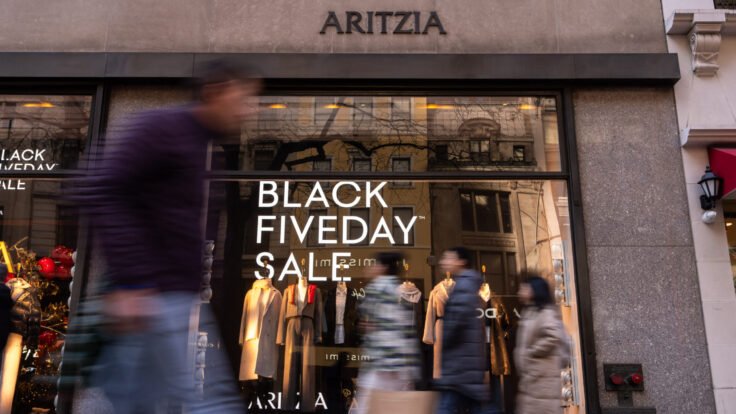
For those of you with the Shoppies: It’s the end of the road for many of the designer sales—or so they say—and I’ve noticed that there is very little current-season Alaïa discounted, at least here in the U.S. It’s sunglasses-only on Net-a-Porter,
Mytheresa, and Ssense. Even on Saks Fifth Avenue and Bergdorf Goodman, there is scant marked down.
FWRD has a bit more.
This all sends a powerful message that Alaïa’s strong sell-through rate has allowed executives to negotiate for the brand to stay full-price longer than pretty much anyone else. For those on the hunt, though, two must-buys among the discounted items are this taupe, slit-sleeve
trench (I’ve tried it on and it’s gorgeous) and a little skater dress. If you buy either, I will be jealous.
Mentioned in this issue: LVMH, Cécile Cabanis, Marc Jacobs, Bernard Arnault, Sofia Coppola, Eric Marechalle, Versace, Dario Vitale, Prada Group, Anna
Wintour, Vogue, Eva Chen, Amy Astley, Architectural Digest, the Newhouses, and many more… |
|
|
A MESSAGE FROM OUR SPONSOR |
Very few companies share what’s happening behind the scenes in wholesale. We do — because we’re curious, and
we know the industry is too. Over 100 real brands recently shared with us what’s working (and not working) right now in wholesale. Spoiler alert: it’s not more DTC or marketplace whiplash. It’s ruthless efficiency, low-risk wholesale, and smarter supply chains. Download the 2025 State of B2B report. |
|
|
Two Things You Should Know…
|
- Why
did Versace postpone Dario Vitale’s first runway show?: One of the most anticipated debuts of the fall is Dario Vitale’s first collection as creative director of Versace, a company that is currently owned by the U.S. group Capri. However, don’t expect some kind of grand gesture, even though Vitale has been preparing since March and was looking at venues. Instead, according to a Versace spokesperson, the company will host “an intimate event
honoring the past and envisioning the future.”
There’s something to be said for a new designer presenting a first collection on the down low, as Daniel Lee did at Bottega Veneta (no show, just a lookbook). Vitale is under a tremendous amount of pressure, and this could alleviate expectations. However, it’s hard to believe this wasn’t related to the Prada Group’s $1.4 billion deal to buy Versace from Capri, which is set to close in September, just days before the show was
scheduled to take place. While the decision was made on the Versace side, the Prada Group benefits from shielding Vitale until they have a final say—not only on the collection, but also the imagery, presentation, etcetera. After all, the Prada Group will presumably make big infrastructure changes at Versace—and fast. - Playing the hits at Condé Nast: The funniest thing about last week’s Eva Chen–Vogue
update, in which I mentioned that she is not-not in the running for Vogue’s U.S. content head gig, was that it triggered so many responses. And not about the fate of Vogue—or even this editor search. Instead, many people have an opinion about what Chen should do with her life, including my best friend
from college. (Another big takeaway was that reading comprehension levels are incredibly low, but that’s another story.) Anyway, as I mentioned, no decision has been made internally—people are still submitting proposals—but it would not make sense for Chen to take this job.
Meanwhile, more names popped up in the discourse. Most people are still betting on Chloe Malle (a safe choice, à la Mark Guiducci at Vanity Fair), and others
are rooting for Nicole Phelps, the director of Vogue Runway, or Carlos Nazario, style director at large at Harper’s Bazaar. Selby Drummond! Whether or not any of these people are still in the running (or ever were) is not for me to say.
Another Wintour loyalist whose name has emerged multiple times is Amy Astley, the editor-in-chief of Architectural Digest. Astley, a former beauty editor and
long-long-longtime Wintour deputy, was the original editor-in-chief of Teen Vogue. She’s a very good editor, has taste, is generally beloved by her staff, and was long thought to be The One, especially in the late 2000s when Teen Vogue was a big hit, because we all loved seeing rich-girl real estate. (Back in those days, as you’ll recall, Astley’s partner on the
publishing side was Gina Sanders, who happened to be married to Steve Newhouse.)
After Lehman, the financial crisis, and the first death blow to the magazine industry, it was clear that Astley had outstayed her welcome at Teen Vogue, which seemed increasingly out of touch with youth culture, and more like a product that Condé publishers were spoon-feeding to marketers. I’ve heard plenty of stories over the years about how Wintour—who doesn’t
really fire people, but also espouses a postwar British realpolitik—suggested to Astley that she needed to evolve her career. At that point, it seemed likely that Teen Vogue would go the way of Gourmet, and Astley might be another Ruth Reichl.
Instead, Astley just sort of hung out until the Architectural Digest solution presented itself to Wintour. It ended up being Wintour’s best H.R. move to date: At first, diehards criticized Astley
for making AD too fashion-y, cheesy, and celebrity-focused, with echoes of when Wintour edited House & Garden for a year and people nicknamed it House & Garment and Vanity Chair. But Wintour’s House & Garden was simply ahead of its time. Astley likewise transformed Architectural Digest into classifieds for the rich and famous: If you want to sell your very fancy house, you do a spread in AD. She also had great success with those
house-tour videos—Dakota Johnson and Sienna Miller are both must-watch—and even launched a professional tier, something no other Condé Nast title has managed.
There’s an undeniable logic in Wintour bequeathing the Vogue dowry to Astley: In many ways, she’s earned it. She’s practical, a capable manager, even-keeled, extremely experienced, and familiar with the upper rungs of Condé Nast and Advance management. She won’t require a royal
tour—even if, at 58, she represents a generation that is cycling out of the business. In fact, that may be the point. Despite the horrors and protests of the creative class, the Newhouses have been managing the company’s decline for more than a decade, all while allocating their capital to high-growth opportunities, like Reddit. Chen isn’t the only candidate under 50 who won’t find this opportunity appealing, despite sentimental attachments.
|
And now, on to the main event… |
|
|
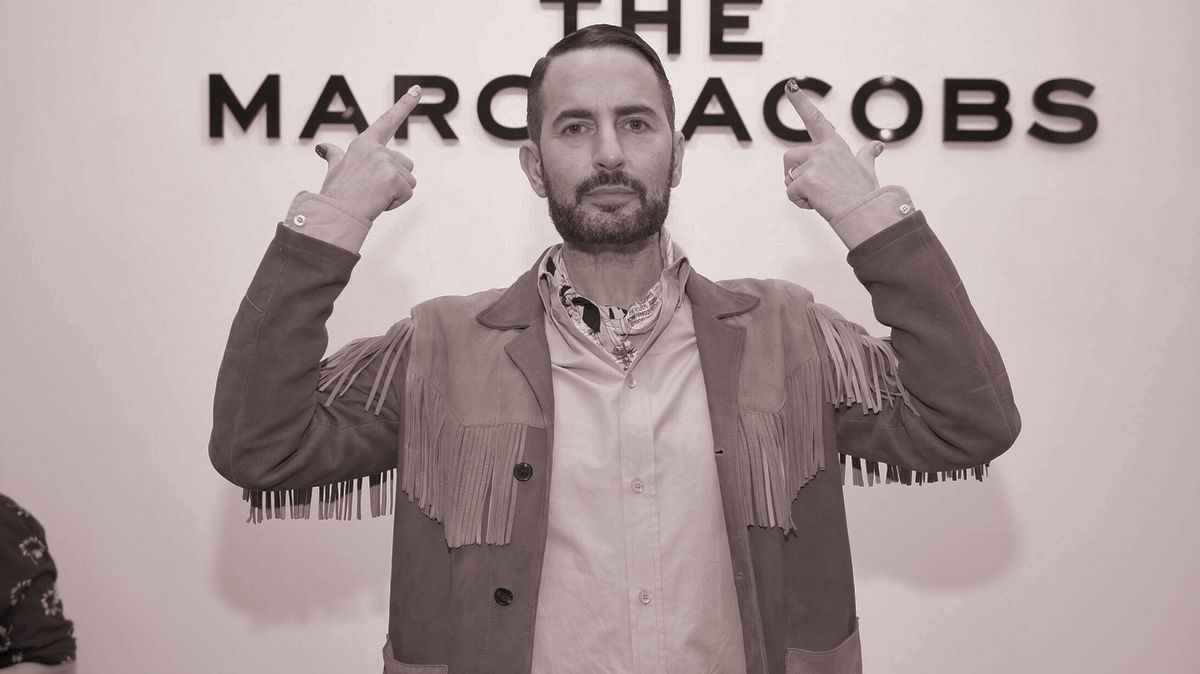
After months of blustery denial, a strategic leak suggests that LVMH is indeed looking to
off-load Marc Jacobs—a generationally iconic brand with a still-active founder that no longer fits the paradigm of modern superscale luxury. The only surprise is the price. |
|
|
During LVMH’s quarterly earnings call on Thursday, group C.F.O. Cécile Cabanis answered some
difficult questions from analysts regarding the conglomerate’s unexpectedly treacherous first half. One line of inquiry focused on whether the world’s biggest luxury group would resort to discounting its products if things got worse. “We’re not Coca-Cola,” Cabanis said. “We refuse to do that with cheap bags.”
Her response was defiant, and surprisingly testy. Public company executives rarely put down other multinationals in their presentations. Not only do they appreciate the
challenges of business cycles, but the I.R. people have usually beaten the defensiveness out of them by the time they join the call. Also, for what it’s worth, many of LVMH’s brands are developing Coca-Cola-like ubiquity, and while star brands including Louis Vuitton and Dior may continue to resist discounting, many LVMH-produced and distributed goods do end up on the sale rack. |
|
|
A MESSAGE FROM OUR SPONSOR |
There’s a reason the industry doesn’t publish wholesale reports often: it’s nuanced, behind the scenes, and
not particularly sexy. But we do it anyway because we care about how brands actually thrive. Our latest B2B report contains data we gathered from 100+ real brands. From choosing retail partners to ditching digital tools they barely use, brands are being ruthless about wholesale efficiency and control. Get your free copy. |
|
|
However, Cabanis expressed a newfound openness in other areas of business. While LVMH has historically
resisted selling off its portfolio pieces, it is open to off-loading brands “if we believe they are not a good add-on, or we are not the right operator to operate them,” as Cabanis put it. Then on Friday, like clockwork, news leaked via the deal team at The Wall Street Journal that LVMH was in talks to sell Marc Jacobs, a year after the company flat out denied a similar Bloomberg report.
There was never a moment, between then and now, when I thought LVMH wasn’t considering parting ways with Marc Jacobs. The company employs a giant M&A team and is constantly evaluating the current portfolio. But unlike Stella McCartney (a briefly held minority investment that didn’t benefit LVMH) or
Off-White (which only made sense to own when the late Virgil Abloh was working for Louis Vuitton), the Marc Jacobs situation is unusually sensitive. Jacobs, after all, is an active and well-regarded designer, and his collections are still revered by the fashion industry. More importantly, he has added tremendous value to the group via his
contributions as the longtime creative director of Louis Vuitton. His Murakami collaboration has generated millions for the group, and its relaunch helped buoy the struggling fashion and leather goods division earlier this year. I’ve often wondered whether LVMH chairman and C.E.O. Bernard Arnault would do anything to keep Jacobs in the group for these very reasons.
Also, the business of Marc Jacobs has improved immensely since Eric Marechalle was
installed to turn things around, in 2017, after years of turmoil—bad C.E.O.s, bad strategic decisions, etcetera. He moved the New York–based operation away from ready-to-wear and further into aspirational luxury: mid-priced bags that competed against other American brands like Kate Spade New York, Tory Burch, Coach, and Michael Kors, rather than Jacobs’s European designer peers. “The Tote Bag,” a meta take on the throwaway bag shape, became a huge hit, and Heaven, a reimagined diffusion line,
was a runaway success with Gen Z. Jacobs’s runway shows started to pop once again, even though the distribution of the clothes themselves was limited. In 2022, Marechalle and Sidney Toledano, who’d been running the LVMH Fashion Group, were convinced that Marc Jacobs could easily hit $1 billion in annual sales. They had, finally,
figured out how to run an American fashion business.
Arnault’s ambitions for Marc Jacobs had been to take the Michael Kors route: Acquire the company, fix it while scaling, and potentially spin it out of LVMH in a public float. But market conditions are quite different now. And while Marechalle may have done a formidable job restructuring the business to reflect the realities of operating a mid-market fashion company in the U.S., there is likely a limit to what LVMH can
accomplish in such a promotional environment driven by the power of off-price channels. That’s why I’m not surprised about these discussions—and my prediction is that, yes, they will sell it. |
What’s more surprising is that the potential acquirers mentioned in the Journal piece were
all brand management firms—Authentic Brands Group, Bluestar Alliance, and WHP Global—and that the reported valuation was in the vicinity of $1 billion. That’s very low for this business, which generates somewhere around $800 million a year in sales and throws off an operating profit of about $150 million, according to people familiar with the figures. (A rep for LVMH did not respond to a request for comment.) In normal circumstances, a company like this would sell for around
12.5 times its operating profit, so the valuation would be closer to $2 billion. ($1.875 billion, to be exact.) Also, remember that Marc Jacobs’s fragrance line is about a $250 million business for LVMH’s licensing partner, Coty, which adds additional value. (Daisy was once a top-five fragrance in the U.S., and still hits the top 30 in most months, according to sales data I viewed.)
There’s no doubt that, like pretty much everyone else, Marc Jacobs has been challenged over the past year
or so. Its competitors are far more promotional, and it hasn’t had a follow-up hit to The Tote Bag. And there are recent rumors that Coty may sell or spin off its luxury division, where Marc Jacobs fragrances sit. But the depressed valuation, which may be an intentionally plotted siren call intended to stoke interest, is likely also a reflection of another reality: There aren’t a lot of other buyers in this space. |
|
|
A private equity firm wouldn’t go for Marc Jacobs, given that the internal team is so linked to LVMH, and
wouldn’t have operators lined up to replace them. My hope was that Tapestry, after it wiggled out of the Capri merger, would consider Marc Jacobs instead; they’ve proven to be solid operators, and would be able to manage and expand the business. But that ship has sailed: Tapestry will likely reduce back down to Coach after selling Stuart Weitzman, and will likely sell Kate Spade New York, which it failed to scale, within the next couple of years.
The other preferred buyer would be PVH,
which has generally done a good job with Tommy Hilfiger, in particular, despite some setbacks. And then there’s the pie-in-the-sky idea of Ralph Lauren, which has been expertly managed in the past decade and would likely be the most responsible steward of a brand like Marc Jacobs, which means so much to a certain generation of Americans who revered his Gen X taste and sensibility. (I count falling in love with Marc Jacobs’s designs in the mid-’90s as the number one reason I wanted to be a
fashion journalist.) The market will determine this outcome, but those brand management firms reportedly in talks to acquire the business do not pay market rate.
A24’s new Marc Jacobs documentary, directed by his close friend Sofia Coppola and set to premiere this summer at the Venice Film Festival, will be an illustration of devout admiration for the brand. But LVMH has a fiduciary duty to make unsentimental business decisions. A decade ago, those decisions
could be delayed. These days, though, the LVMH executive team must show analysts that they understand the urgency—and perhaps that’s why Cabanis was so testy on the call. She knows this better than anyone else.
If I had to place a bet, it would be on Bluestar Alliance, the current owner of Off-White, to acquire Marc Jacobs. The transaction with Bluestar was clean and quiet, which LVMH likes. Bluestar has also continued to run Off-White as is, at least from the outside, retaining creative
director Ib Kamara and empowering him to stage ambitious fashion shows. Jacobs, whose contract with LVMH is rumored to be up in 2026, will receive an earn-out, and I wouldn’t be surprised if he took this moment to reinvent himself once again. |
What I’m Reading… and
Listening to…
|
As reported last week, Tyler Haney is officially back at
Outdoor Voices, now owned by Consortium Brand Partners. The early pictures of the product are very Gen Z: lime green, rhinestones, and banker shirts layered over fitness gear. This morning, I spoke to Ty, who was working from a conference room in the Twitter offices in Austin, about what to expect: She referenced post-leggings-era leggings in a material
called “bubble wrap,” skorts, dresses, cotton-cashmere cardigans, and more. There will also be the requisite shoe collaborations and “activity drops” focused on some surprising sports. “I can only speak for myself, but the lane that still feels so ownable is recreation,” she said. [Vogue Business,
Gift Guide, and How Long Gone]
More costumes from The Devil Wears Prada 2 have been revealed… and these are better. I like the use of Phoebe Philo, Nili Lotan, and Jacquemus. One
interesting note is that a lot of this stuff (the Gabriela Hearst dress in the window of her shop at the Carlyle, the white Prada heels) is available to purchase now. Will it all look dated a year and a half from now, when this movie is released? I have to tell you, Clueless looked really dated—and at times, silly—by the time it came out. (I was wearing plaid kilts and knee-high stockings a good year and a half before I heard the name Cher Horowitz.) In the long run, it won’t
feel dated. It’ll feel nostalgic at worst, iconic at best. [Marie Claire, Vogue]
An ode to Giorgio Armani.
[The Daily Mail] |
And finally… I’ll dig into the Kering numbers tomorrow!
Until
tomorrow,
Lauren
P.S.: We use affiliate links because we are a business. We may make a couple bucks off them. |
|
|
The industry’s go-to source for unflinching reporting on the trillion-dollar business of artificial intelligence - perhaps the
single most important technology of our time. Ian Krietzberg, the powerhouse journalist behind The Deep View, delivers twice-weekly insights into the latest dealmaking and breakthroughs in A.I., and how the intersecting worlds of finance, entertainment, media, and politics are being transformed in its wake. |
|
|
Puck founding partner Matt Belloni takes you inside the business of Hollywood, using exclusive reporting and insight to explain
the backstories on everything from Marvel movies to the streaming wars. |
|
|
Need help? Review our FAQ page or contact us for assistance. For brand partnerships, email ads@puck.news. You received this email because you signed up to receive emails from Puck, or as part of your Puck account associated with {{customer.email}}. To stop receiving this newsletter and/or manage all your email preferences, click here. |
Puck is published by Heat Media LLC. 107 Greenwich St, New York, NY 10006 |
|
|
|