|
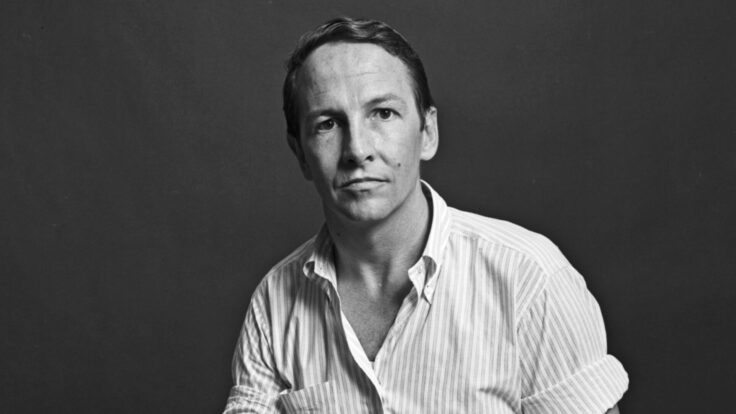
Welcome back to Wall Power, where the auction lot announcements are bearing down on us like a freight train. I’m Marion Maneker.
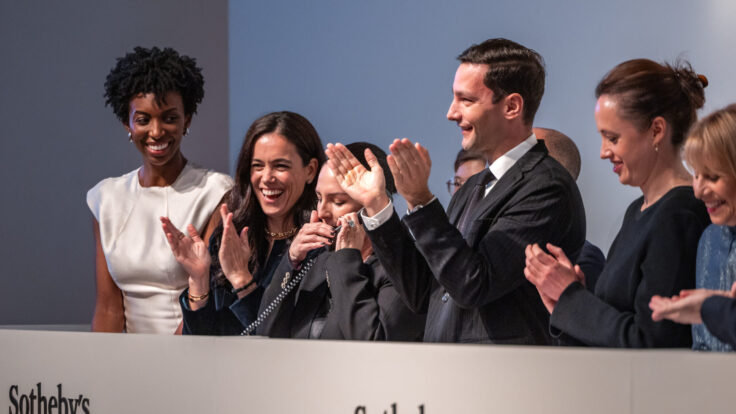
We learned about a few more consignments this week—including 40 Roy Lichtenstein works from the artist’s estate at Sotheby’s and a Jean-Michel Basquiat at Christie’s. I’ll have more details on that below. I’ve also been told of at least one other big consignment that we’ll hear about next week. And I’m learning that more consignors have taken the plunge in the last few weeks. The season is shaping up to potentially be bigger than we might have thought even a few weeks ago.
If the auction grind isn’t your thing, Julie made use of her time in Scottsdale to check in on the Western art market. She also tells some of the backstory around Ruth Asawa’s market now that the artist is getting her long-awaited retrospective at San Francisco MoMA.
|
|
|
|
A MESSAGE FROM OUR SPONSOR
|
The first steps towards a masterpiece starts with a dream. The all-electric BMW i7 – the evolution of brilliance. Learn more at
BMWUSA.com
|
|
|
- Carlos Basualdo does Dallas: The Nasher Sculpture Center announced today that Carlos Basualdo, the chief curator at the Philadelphia Museum of Art, would become the new director, with Jeremy Strick retiring after 15 years in the role. “I never thought of myself as a museum director,” Basualdo told me from a Philly commuter train last night. “But if I did, it would be a museum like the Nasher.”The Renzo Piano–designed museum in the center of Dallas has gardens that often inspire people to describe it as an oasis. Basualdo, who presented Bruce Nauman: Topological Gardens at the 2009 Venice Biennale and won the Golden Lion, is an internationalist at heart—he was born in Argentina and has worked in Italy and Brazil—and he hopes to expand the Nasher’s international reach and reputation. He starts May 12.
|
|
Now here’s Julie with a special report from Scottsdale…
|
|
|
 |
Julie Brener Davich |
|
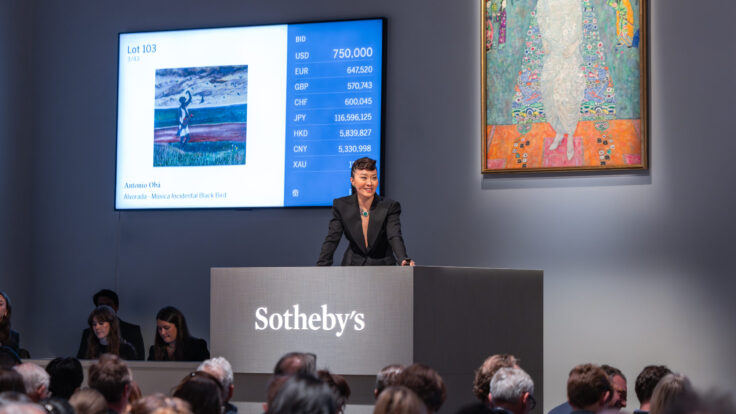
- Boot scoot biddin’: “We havin’ fun?” celebrity auctioneer Jason Brooks called out from the rostrum. The day-drinking crowd hooted and hollered back at the star of Discovery Channel’s Auction Kings. The Scottsdale Art Auction’s annual mid-April sale of Western art was in full swing. Over the course of two rousing, refreshingly informal days, the auction house offered more than 450 lots, ranging in estimates from $1,000 to $1 million. The speed and depth of bidding (there were more than 20 bids on some lots) and the loose auction-block banter (“You winkin’ at me?” asked a female bid spotter) suggested that, yes, the locals were having fun.The auction house, which also owns the Legacy Gallery in Scottsdale and Santa Fe, sold about $15 million worth of art—97 percent of lots found buyers and 72 percent met or exceeded estimates, with a skinny 17 percent buyer’s premium tacked on. It wasn’t all fun and games, though. The top lot, Henry Farny’s 1902 painting, Nomads, estimated at $800,000, did not sell. The next top lot, a Thomas Moran Grand Canyon scene, estimated at $750,000, sold for just $725,400. An Eanger Irving Couse depiction of a Native American, estimated at $400,000, squeaked over at $409,500.
The hot topic in the room (and at the bar) was the exploding market for works by Ed Mell, a local painter who died last year at age 81. The auction house offered seven works by the artist, achieving a record price of $122,850 for a painting of a cowboy on a bucking bronco that was estimated at just $28,000. His previous record was $108,000, set at Altermann Galleries in 2018. Mell paints traditional Western scenes like cacti and mountainscapes, but in a futurist style that would go well in a second home in Aspen or Jackson Hole.
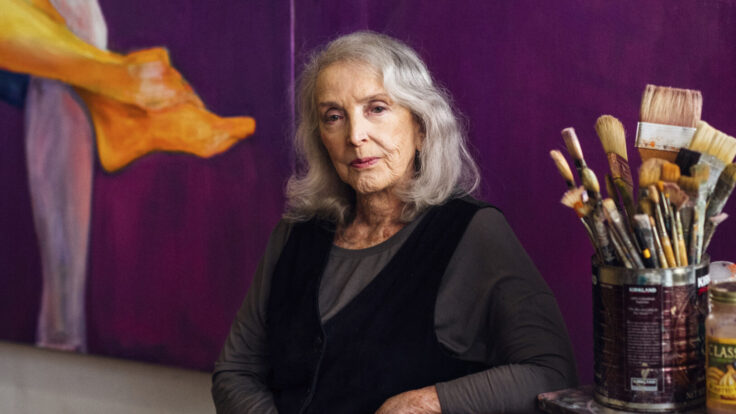
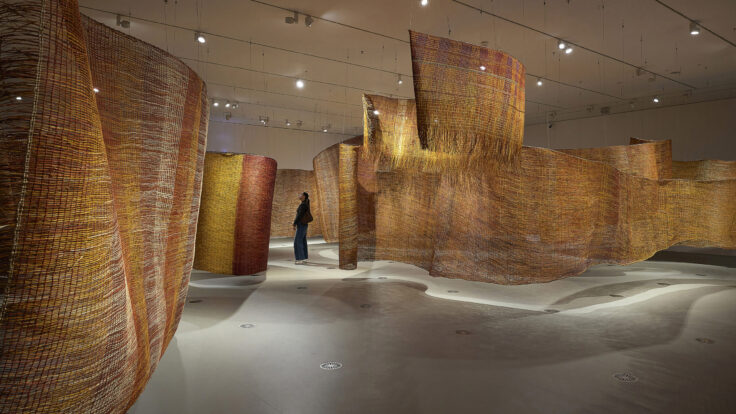
- Authenticating Asawas: In March of last year, Wright auction house in Chicago offered one of Ruth Asawa’s tied-wire sculptures at an estimate of $80,000. Asawa started making this style of sculpture—inspired by desert plants—in the 1960s, though she is more closely associated with the loop-wire sculptures she’d begun making in the previous decade. The consignor was unable to get the 1970s work, which had undergone
restoration, authenticated by Asawa’s estate, despite clear authorship and unbroken provenance dating back to the artist herself. “The criteria for authentication of her works, especially regarding condition, is not transparent,” founder Richard Wright remarked to me. (Henry Weverka, Asawa’s grandson who oversees her estate, pushed back on that notion. “We register and maintain a catalog of Ruth Asawa’s work,” he told me. “We have a registration application that clearly states the criteria for inclusion in our catalog.”)In any case, the sculpture—marketed by Wright as stuck in the “gray area” between authorship and authentication—ended up selling for $144,900. The auction record for one of Asawa’s tied-wire sculptures, circa 1960, is nearly $1 million.
A couple weeks ago, SFMoMA opened a much-anticipated, 300-work retrospective of Asawa’s career. (It travels to MoMA in the fall.) It’s remarkable recognition for the Bay Area artist, who mainly produced work that remained in her home or was sold to family and friends. She briefly showed at Peridot Gallery in New York in the 1950s, but otherwise showed with West Coast galleries, including San Francisco’s Rena Bransten Gallery when she was in her 80s. Her work appeared in national museum shows in the 1950s, but the momentum of her career slowed, and she increasingly made art for herself. The minimal amount of market activity during her lifetime has meant a scarcity of receipts and other transaction records that would allow for independent authentication.
After Asawa died, in 2013, Christie’s specialist Jonathan Laib, who had sold one of her sculptures for a then-record price of $578,500 in 2010, began representing the Asawa estate. In 2017, Laib moved to David Zwirner gallery, where the sculptor’s market rose under his close direction. By 2020, her work had reached a record price at auction of $5.4 million, or nine times the price Laib had set a decade earlier.
With such upward pressure on prices for authenticated Asawas, an odd but legal market in Asawa knock-offs emerged. An artist named D’lisa Creager had learned Asawa’s signature wire looping technique from her daughter Aiko Cuneo in 2007 at a museum workshop. She soon had a solid business with a mix-and-match menu of commissions—different heights, materials, number of orbs, etcetera. Asawa’s children were reportedly told they didn’t have any legal recourse against the knock-offs, one of which recently sold at a LAMA auction last month for $9,525. Creager is not without her fans, however: When Gywneth Paltrow’s Montecito home was featured in Architectural Digest a few years ago, the photos included a Creager.
|
|
|
|
A MESSAGE FROM OUR SPONSOR
|
The first steps towards a masterpiece starts with a dream. The all-electric BMW i7 – the evolution of brilliance. Learn more at
BMWUSA.com
|
|
|
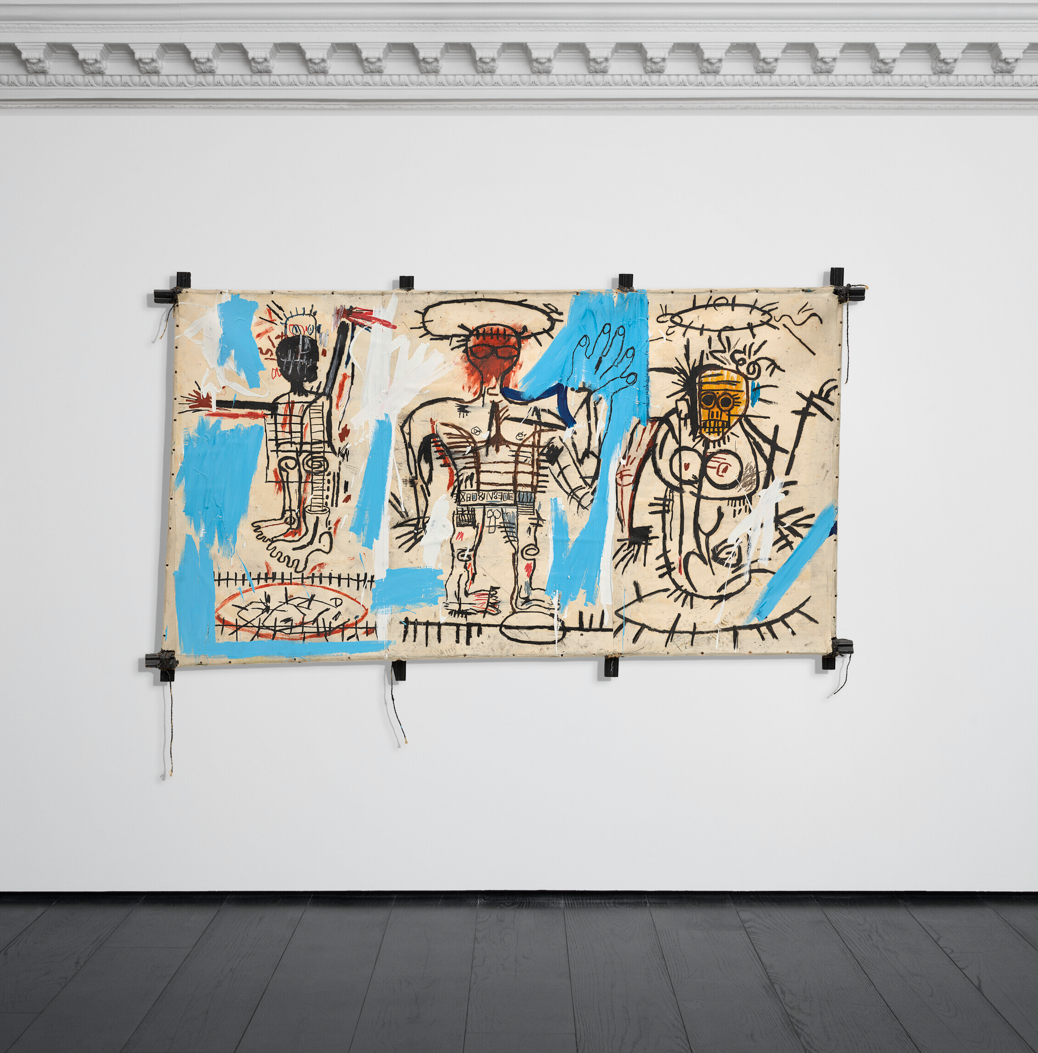
Jean-Michel Basquiat, Baby Boom (1982), Estimated at $20M at Christie’s in May
|
|
Jean-Michel Basquiat, Baby Boom (1982). Photo: Courtesy of Christie's
|
|
Jean-Michel Basquiat’s early stretcher bar work depicting his mother and father, Matilda and Gerard, alongside himself, will be offered at Christie’s with a $20 million estimate. The painting, which is structured like a three-panelled altar piece, has been shown at numerous important Basquiat exhibitions, beginning with the famous Fun Gallery exhibition in November 1982. After Basquiat’s death, the work became a favorite in shows at the Brooklyn Museum (2005), Fondation Beyeler (2010), and Fondation Louis Vuitton (2019). Given all of this, you would not be out of line doing a double take at the estimate. The highest price for a stretcher painting, El Gran Espectaculo (The Nile), from 1983, was $67 million. That auction was two years ago, though for a much larger artwork. Last year, The Italian Version of Popeye Has No Pork in his Diet, a single-panel stretcher painting from 1982, sold for $32 million with fees. This painting would appear to be priced off that sale, with an additional incentive for bidders to take a second look in these more volatile times.
Now, the main event…
|
|
|
|
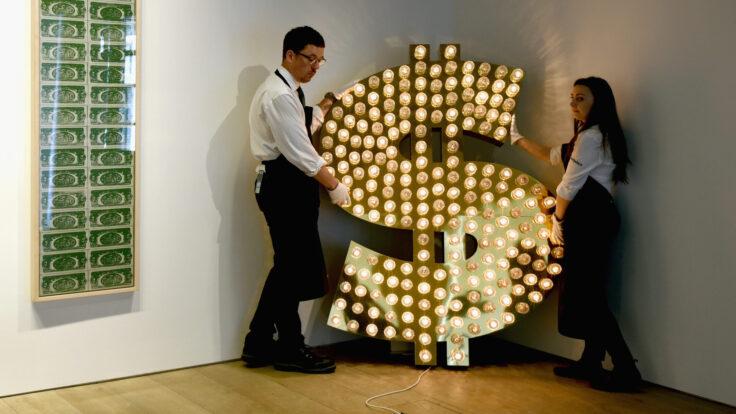
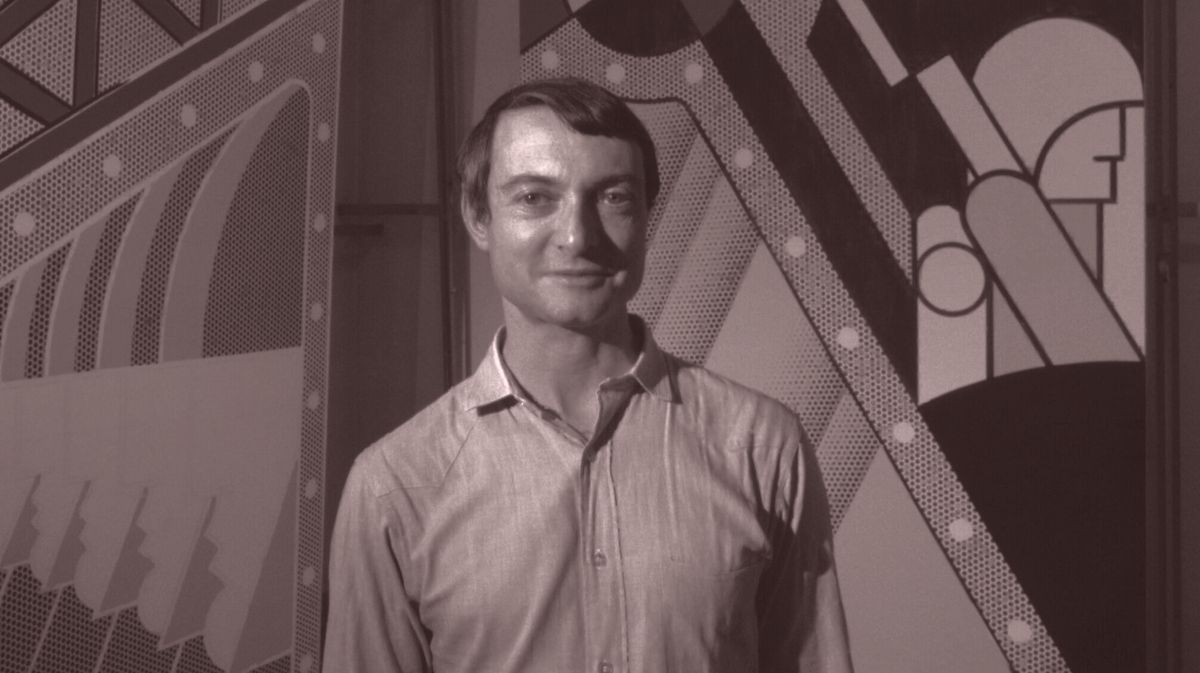
Roy Lichtenstein, who died in 1997, is going to have a banner couple of years, with a Sotheby’s auction in May, a Whitney retrospective next year, and tailwinds from an art market that tends to retreat to known quantities and beloved artists when surrounded by uncertainty everywhere else.
|
|
|
|
One of the more counterintuitive aspects of the art market is that it doesn’t always behave in sync with financial markets. I don’t need to tell you that this month has been filled with economic dread. Contrary to what you might think, times of financial crisis—and let’s be clear, we’re not anywhere near a financial crisis yet—can actually be good for the art market. Weeks before stocks bottomed out during the 2008 global financial crisis, the Yves Saint Laurent and Pierre Bergé sale set a new record for a single-owner sale. The lesson is that when financial markets seem risky—and both the equity and bond markets have been signaling a lot of risk lately—rich people who still generate excess cash have a tendency to spend money on high-quality work from proven artists.
We may be getting a preview of that flight to safety now. Catalogs for the May sales have just closed—or they are about to close—which means consignors have been deciding whether to sell art this season just as the markets have swooned. Anecdotally, I’m hearing that the specialists have been able to match buyers with sellers to encourage more consignments than they might have thought possible in March. One of the unexpected bright spots of last November’s auction season was the strong sales that Sotheby’s achieved when five lots by Roy Lichtenstein, made available by the artist’s estate, sold for nearly $14 million. The combined estimates for these works on paper had been less than half that number.
|
|
|
|
We’re likely to see much more work by Lichtenstein this season as the already heavily traded pop artist enters the glide path toward his Whitney retrospective, scheduled for some time next year. And that’s in addition to the 40 pieces from Lichtenstein’s own collection that are estimated to sell for $35 million or more at Sotheby’s next month. “These 40 works show the variety and depth of his work over four decades,” Sotheby’s vice chairman David Galperin told me yesterday.
Not all artists receive a bump in sales—either volume or price—before a major museum retrospective, Galperin cautioned. In fact, he pointed out, the phenomenon tends to show up in the markets of younger and lesser-known artists. But “Lichtenstein,” Galperin said, “was one of the greatest figures of the 20th century—no hyperbole.”
|
|
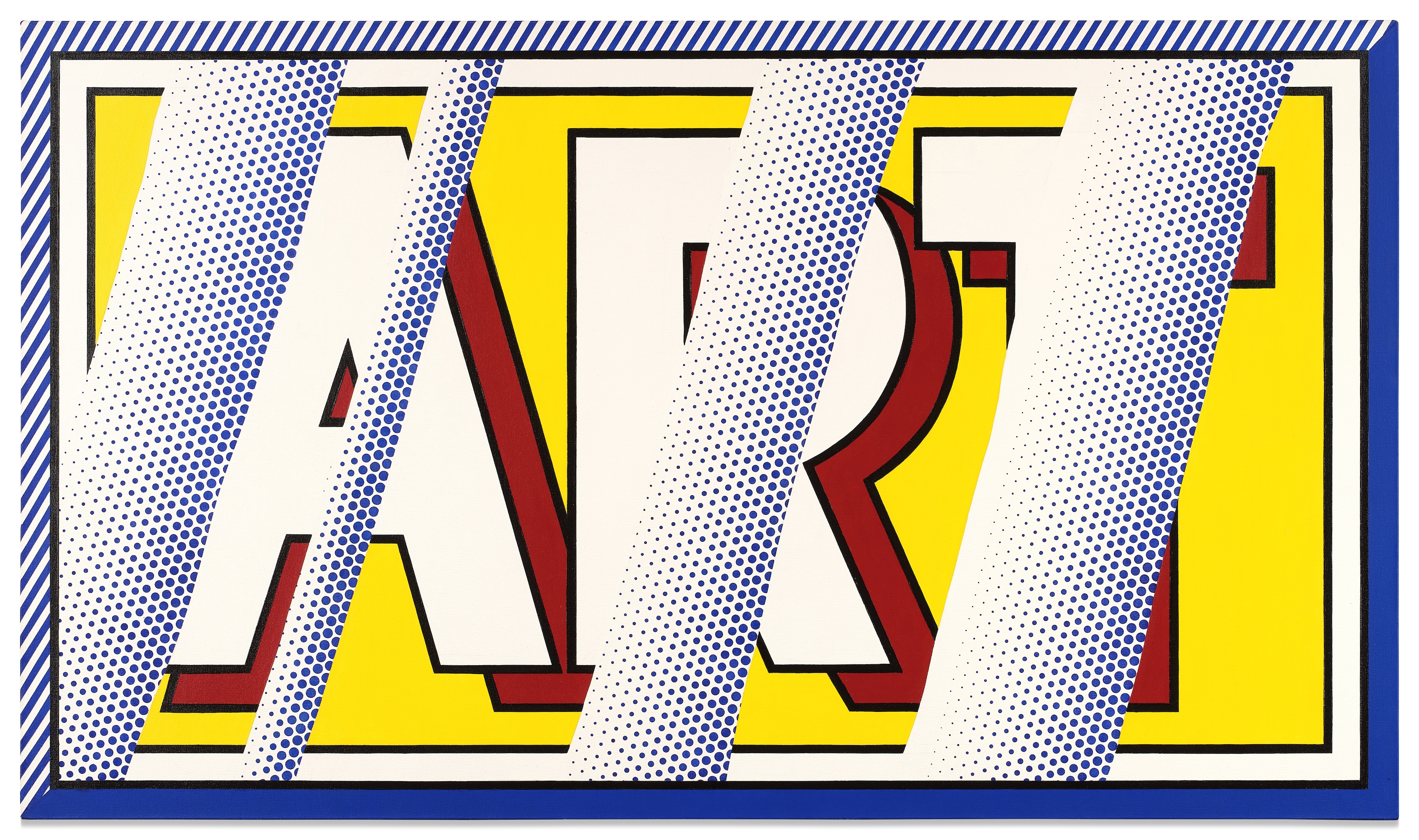
Roy Lichtenstein, Reflections: Art (1988). Photo: Courtesy of Sotheby's/Estate of Roy Lichtenstein
|
|
And he’s right. Lichtenstein’s work is immediately recognizable to the art obsessed and civilians, alike. The lots on offer include a 1988 work, Reflections: Art, that is estimated at $4 million. The painting combines a remake of a 1962 comic book work of Lichtenstein’s with his later fixation on mirrors and mirror effects. A double-sided sculpture from 1996, Woman: Sunlight, Moonlight (estimated at $4 million), also plays with the effects of light, as does Mirror I, a painted bronze from 1976, which is estimated at $1 million.
|
|
Roy Lichtenstein, Interior With African Mask (Study) (1990). Photo: Courtesy of Sotheby's/Estate of Roy Lichtenstein
|
|
Other works on offer include the 1968 painting Stretcher Frame With Cross Bars III, estimated at $2.5 million; a 1975 painting from his Entablature series that is estimated at $500,000; and a Ben Day remake of Monet’s Haystacks, from 1968, that is estimated at $400,000. There are also some truly significant works on paper, including Interior With African Mask (Study), from 1990, estimated at $800,000.
By now, you may be tired of hearing me say it, but in uncertain times, collectors retreat to known commodities. They want to believe there are constants in the world, and historically proven artists appeal to those sensibilities—especially artists who evoke a period that is perhaps now remembered with more optimism and hope than it might have possessed at the time. “It’s exactly what the market wants right now,” Galperin concluded. “These are beloved works.”
|
Rachel Corbett has a good recap in Vulture of the whole situation with the Museum of Modern Art’s selection of Christophe Cherix as Glenn Lowry’s successor. I’m sorry I didn’t get to it sooner, though I’m not sure I entirely agree with the conclusion that MoMA’s conservative board really doesn’t want change. Yes, MoMA allowed Lowry to pick his own successor to continue his—and of course, the trustees’—approach to the museum. But the critics who equate change with having a director of a certain sex or background don’t seem to recognize how much they’ve already won. It doesn’t seem that any of the other candidates for the job had a substantially different vision for the future of the museum. Or if they did, no one close to the decision has had a reason to leak that.
Or maybe I should say that I don’t think that choosing Cherix as a director without the potential to have a decades-long tenure is a bad thing for MoMA, or for all the people agitating for change. That’s especially true if the predictions in the story, and previously made by Lowry—that museums will be the next targets of the populist culture wars—come true. (By the way, if Trump prevails in his showdown with the rule of law, and moves from tormenting universities to bullying museums, it doesn’t really matter who is the director of MoMA.)
With that cheery thought, I’ll remind you to have a good weekend. Savor the moments while you can.
M
|
|
|
|
The ultimate fashion industry bible, offering incisive reportage on all aspects of the business and its biggest players. Anchored by preeminent fashion journalist Lauren Sherman, Line Sheet also features veteran reporter Rachel Strugatz, who delivers unparalleled intel on what’s happening in the beauty industry, and Sarah Shapiro, a longtime retail strategist who writes about e-commerce, brick-and-mortar, D.T.C., and more.
|
|
|
Need help? Review our FAQ page or contact us for assistance. For brand partnerships, email ads@puck.news.
You received this email because you signed up to receive emails from Puck, or as part of your Puck account associated with . To stop receiving this newsletter and/or manage all your email preferences, click here.
|
|
Puck is published by Heat Media LLC. 107 Greenwich St, New York, NY 10006
|
|
|
|





.%20Art%20%C2%A9%20Estate%20of%20Roy%20Lichtenstein_01JS55QYHMHTHA0FNXAP037KZB.jpg "Roy Lichtenstein, Interior With African Mask (Study) (1990). Photo:
Courtesy of Sotheby's/Estate of Roy Lichtenstein")