Hi, and welcome back to Line Sheet. We did it! With 2025 behind us, the real fun begins. (And… a
new war?) Anyway, as many of you know, I’m not a New Year’s resolution person. If I want to do something, I just do it. I highly recommend this way of living.
After a luxurious break filled with book-reading, movie-watching, and puzzle-finishing, we are back and busy. In today’s issue, you’ll find a look at the year ahead, pegged to the latest Saks Global news and the arrival of Jonathan Anderson’s Dior in stores. Up top, six quick predictions for 2026, plus some thoughts
on Dario Vitale’s next move, notes on the arrival of Rama Duwaji onto the fashion scene, and Phoebe Philo’s P&L. (The 2025 revenue projections are tracking as I had predicted, although you might be surprised by the size of the business.)
Tomorrow on Fashion People, my guest is Vanity Fair senior staff writer Marisa Meltzer, who is also the author of
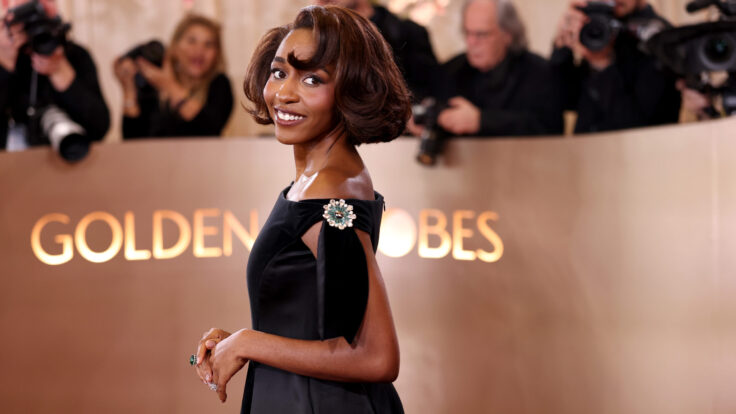
Soft Power on Substack and the fall bestseller It Girl: The Life and Legacy of Jane Birkin. She also recently wrote this op-ed for The New York Times about the plastic surgery pushback. Along with a 2026 preview, we discuss aging, Rama, Saks, the past weekend’s red carpet, the return of fur, fashion at the movies, in-store Dior, and plenty more. Listen here and here.
Mentioned in this issue: Saks Global, Richard Baker, Marc Metrick, Neiman Marcus, Bergdorf Goodman, Amazon, Authentic Brands Group, Jonathan Anderson, Dior, Phoebe Philo, Max Wigram, Delphine Arnault, LVMH, Dario Vitale, Kenzo, Nigo, Gabriella Karefa-Johnson, Demna, Gucci, Heron
Preston, and many more… |
Three Things You
Should Know…
|
-
The shape of Phoebe: On December 30, Phoebe Philo released information about its 2024 fiscal year, including a detailed strategic plan and projections for 2025. (A quick reminder that all companies in the U.K. must disclose financial information, but the numbers aren’t usually released until a full year after the period closes because they wait until the very last minute.) Some quick stats: The company generated £11.2 million in revenue in 2024, up from £5.7 million in 2023, and was
projected to make £32 million in 2025. We won’t know whether they hit that number for another year, but I suspect they came close. My own projection in November of last year was that Phoebe Philo was doing between £20 million and £30 million. According to the company’s directors—Phoebe Philo, her husband Max Wigram, and Delphine Arnault—“the business is advancing precisely as planned.”
Unsurprisingly, the
company was not profitable, losing £24.4 million in 2024 and £21.8 million in 2023. Most of those expenditures were related to operations (they spent £29.2 million on admin), but there was also a big investment (£3.8 million) in R&D. Another fun fact: 28 percent of customers shopped more than once in the first 18 months of launch.
It’s interesting to compare Philo with Stella McCartney, whose own recently released financial statement showed a company in serious trouble. Yes, P.P. has a
lot of debt, but it’s growing, and it also has planned for the losses. If P.P. continues to expand at a fast clip, it will be the first example of LVMH developing a successful brand from scratch, and a big win for Delphine Arnault, despite the fact that they own only a quarter of the business. (It seems that Wigram and Philo took the approach of playing nice with LVMH while still doing exactly what they wanted—and it’s working.) Remember, this is still a tiny, tiny, tiny
business for LVMH, but I could see P.P. reaching £100 million quickly as its retail stores begin to proliferate. Anyway, nice to hear a 2025 success story. - Dario dreams: I had a lot of conversations over the break about Dario Vitale—not about where the ousted Versace designer is necessarily going to land, but where he should end up. The obvious choice is Alaïa, since Pieter Mulier is (almost
definitely) headed to Versace. But another insider made a fabulous suggestion for Pietro Beccari and the powers that be at the LVMH Fashion Group: What about Kenzo? Current artistic director Nigo is beloved, but it’s obviously not working, and I’ve wondered for years whether LVMH would try to offload the business. Vitale’s
aesthetic preferences—color, youth—are matchmade for Kenzo, which was repositioned as a contemporary brand when Carol Lim and Humberto Leon were designing it. If this happens, I will not request a success fee!
|
|
|
A MESSAGE FROM OUR SPONSOR |
|
|
-
Enter Rama Duwaji: Indie fashion is all over the new First Lady of New York City, who is now being styled by Gabriella Karefa-Johnson. (Bailey Moon, who worked with Duwaji and Mayor Zohran Mamdani right after the election, is no longer involved.) Karefa-Johnson makes sense strategically; she’s politically active, and her own beliefs align with the couple’s brand. I expect that we’ll continue to see
Duwaji in indie labels designed by people who are unafraid of being connected to Mamdani, like Renaissance Renaissance, designed by Palestinian-Lebanese designer Cynthia Merhej. Of course, it would be imprudent for Duwaji to wear pricey designer labels, and I don’t think it’s a good idea for the brands, either.
|
- More designers will buy their brands back from their owners. You may have missed that Heron Preston bought his name back from the New Guards Group. I suspect we’ll see more of this, given market conditions and the deterioration and desperation of many of the companies that own said brands. Perhaps an Opening Ceremony revival? My dream is to witness the return of Band of Outsiders.
- Companies will get
their Italian manufacturing in order. All the so-called scandals in 2025 were not worth the money saved by turning a blind eye to the questionable operations of third-party manufacturers. While Western consumers didn’t care, many in Asia did, and now the brands have to clean it all up.
- Demna’s Gucci will be a hit. Many of the veteran designer debuts have been a little too rigid in their vision. However, if Demna’s Pre-Fall collection were any indication, he can get out of his own way while still maintaining his identity. That said, a Gucci revival is not going to be a magic bullet for Kering—and Luca de Meo still has a ton of work to do to modernize the business, which will need
to go far beyond motivational holiday-season videos to revive the stock price.
- At least one more of the “debut” designers will get fired. The Vitale situation was unique, but I don’t think companies are going to take a wait-and-see approach regarding most of these appointments. Market conditions aside, executives know pretty quickly whether or not the product is good. If it’s not working in the first two seasons, and there’s no hope of it
working, they will make a change.
- The relationship between fashion and celebrity will only intensify. I know it feels like we’ve reached the peak of celebrity-led campaigns and red carpets, but we haven’t. The big change this year will be on the brand side, where the smart companies will invest more in their V.I.P. ateliers and campaign strategies. These things work only if they are executed well.
- New,
better stores will begin to open. We all love to shop in stores—and we all know that, fundamentally, multibrand retail is a precarious, nonsensical business at scale. But one-off stores, run by people with means, are manageable for decades under the right circumstances—i.e., operations run and controlled by a proprietor or family rather than an entity with meaningful outside capital and debt, or what investors derisively call lifestyle businesses. Hopefully we get more
Hirshleifers and A’maree’s in the new year, places where the owners know how good they have it, as do the clients.
|
|
|
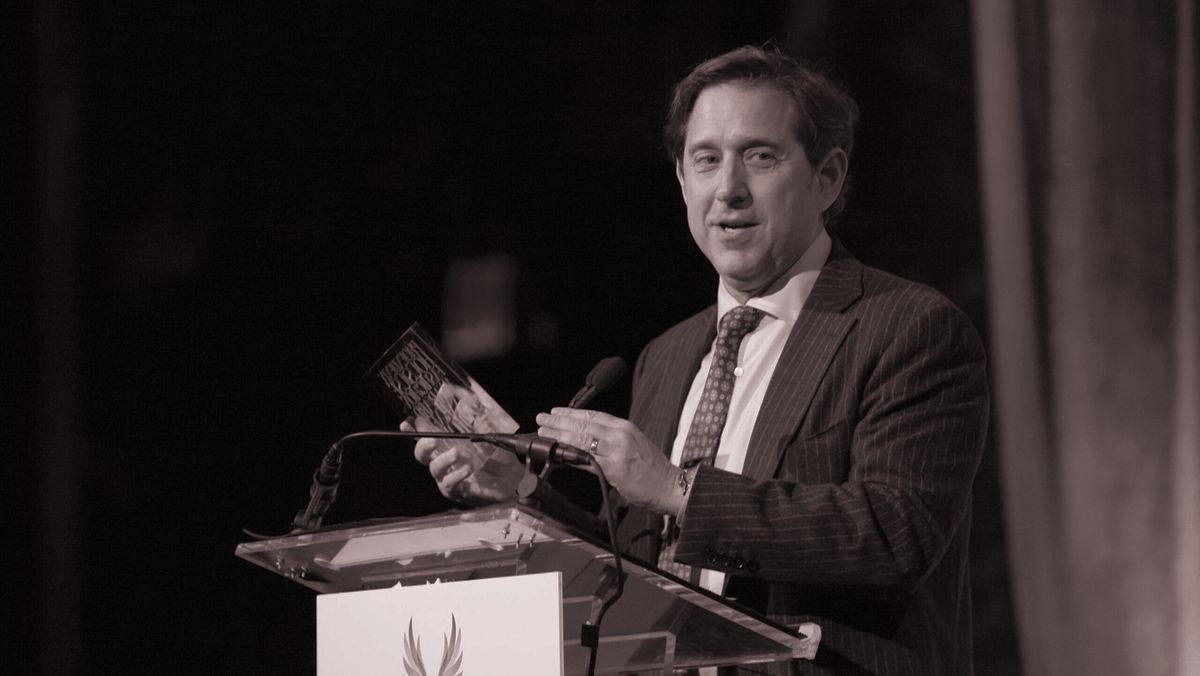
A timely report on the Saks Global saga following former C.E.O. Marc Metrick’s departure,
chairman Richard Baker’s assumption of the role, and the $100 million-plus interest payment debacle. Plus: Is Dior resetting its prices? |
|
|
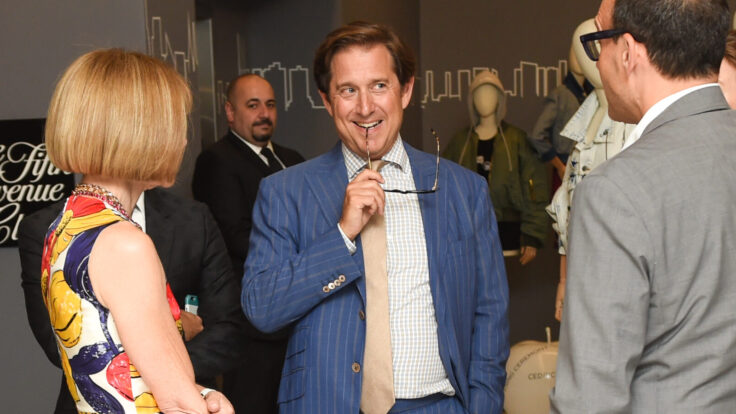
On Friday, Saks Global chairman Richard Baker finally became the C.E.O. of
the conglomerate that he willed into existence a year ago after he spun off Hudson’s Bay Company and acquired Neiman Marcus Group with a $2.2 billion junk bond. Marc Metrick, his decades-long deputy, left the role after a decidedly unmagical year defined by floundering relations with brands over an elongated payment schedule, a summertime restructuring, and incessant chatter about the servicing of the company’s debt. Last week, I first
reported that Metrick was a goner around the same time that Saks declined to make a $100 million-plus payment on said debt. |
|
|
A MESSAGE FROM OUR SPONSOR |
|
|
In many ways, it’s only natural that Baker would take over his creation, despite having little on-the-ground
experience. Consolidation, itself, is an ongoing and necessary evil in the department store space—there are too many physical locations, which are too big, and the logistics of the surprise-and-delight business are an endless nuisance, especially as shopping behavior irreversibly changes. And Baker, a retail real estate scion who unsuccessfully tried to own and operate both Lord & Taylor and the now-liquidated Hudson’s Bay Company, created an onerous debt structure that made a Chapter 11
bankruptcy protection filing a distinct possibility.
It appears the company will file sooner rather than later. My partner Bill Cohan, who presciently reported on the precarious nature of the Saks bonds and the logic of the deal, has noted that Saks Global has a 30-day grace period on its $100 million-plus interest payment.
But the company also needs cash for all kinds of other business necessities. In particular, Saks Global urgently needs spring product to fill Saks Fifth Avenue, Neiman Marcus, and Bergdorf Goodman. This weekend, Bloomberg reported that the company is negotiating a $1 billion loan to continue operating during Chapter 11
proceedings. Bondholders have also discussed a debtor-in-possession loan structure combining “at least $750 million in new money and a roll-up of existing debt.” A rep for Saks Global had no comment.
Baker is telling vendors that he has a plan, but the validity of any strategy depends on who takes
control of the business after a potential filing. There’s been a lot of speculation that Amazon, which has already sunk $500 million into the project, might step up. Today, WWD reported whispers about some sort of deal with Authentic Brands Group, another partner, which I’d been hearing about for weeks. Given the complex structure of the business and the range of ownership stakes, I expect that Saks’ ownership structure could look pretty complicated on the other side of
this.
This matters, of course, because Saks Global is effectively a systemically important institution in this industry. Brands are relying on the company to recoup millions in payments for their product. Will they ever see that cash—and when? During a Chapter 11 filing, vendors typically form a committee to lobby for payment, and those with the greatest leverage come out on top. A lot of small brands might not be repaid, though, and I suspect some that relied on Saks Global to float
their business will shut down. This will be painful, but not catastrophic—and, perhaps, a reminder that a lot of these small brands were started by people blessed by generational wealth, and premised on a false model. Perhaps the new leadership of Saks Global, or whatever it becomes, might view this crisis as an opportunity to finally rethink how this whole industry works. |
One trickle-down effect could be a reset on pricing. No, I don’t think that $1,300 shoes are going to
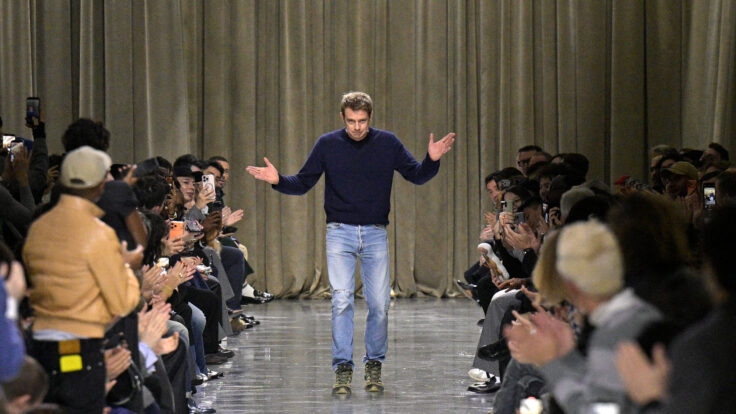
suddenly cost $900, as many of us believe they should. But the retail pricing of Jonathan Anderson’s Dior, which just hit stores, indicates that the big groups are starting to realize that even the least price-sensitive consumers don’t want to feel like they’ve been taken for a ride. Many of the items in Anderson’s first men’s collection, for instance, have been reduced significantly from the preorder prices. One denim jacket is now €3,000, down from €3,800 on the preorder line
sheet. A Dior-branded knit cape is €6,500, down from €12,000 in pre-order. (I reached out to a Dior rep and a rep for LVMH to ask about the changes. They did not respond.)
Of course, discrepancies in initial preorder prices and final retail prices aren’t totally abnormal. In many cases, during the months in between the runway debut and the sales floor debut, a brand will change the materials or the manufacturer. But we also know that prices of most luxury goods are not typically related
to the actual costs of raw materials. Anyway, this was intentional, and indicates that Dior is testing the market. Meanwhile, Anderson rolled out a new campaign by David Sims, and I was struck by how pretty everything looks on Dior.com. (As I’ve mentioned, Dior is a pretty brand, and Anderson needs to lean into that on the women’s front.)
I’m not a psychic, but when it comes to what I
think will actually sell in large volumes? The strength is once again in the shoes (many of which are around $1,000), bags (the $4,300 bow clutch), and costume jewelry (especially the daisy chain pieces, many of which are around $500). We’ll have to watch this spring to see if fashion insiders buy into the more directional pieces, and if clients are charmed by $1,700 book-cover sweaters. |
|
|
But even if the new Dior is wildly successful, the lesson may be that these brands do have a size cap. At the
beginning of this journey, Anderson’s mandate was to get Dior to €14 billion in annual sales. That will happen naturally along the way, but there’s no point—at least at this point—in rushing it. And that should be the mantra for the entire fashion industry in 2026, as these debut collections hit stores. I know that everyone is desperate for some good news right about now, but over-accelerating is what started this trouble in the first place. |
What I’m Reading… and
Looking At…
|
After all that, Horses has closed! Sounds like they might get a new investor? It’s too bad, there really
aren’t a lot of places to eat at the bar in Los Angeles. [The Angel]
I loved Marty Supreme, but I also agree with Joyce Carol Oates’s review! [X]
I honestly
had never heard of Mirror Palais before I read this article. [N.Y. Times]
Aurora James wrote about why the conversation around whether fur is okay needs to be more nuanced. [Curious]
Remember the
editor Luke Crisell, who was famously hired by Hearst to create that doomed Snapchat “brand”? He now exclusively posts pools. [Instagram]
Super fun story with stylist and Prada obsessive Nicoletta Santoro.
[Shop Rat]
A great 2000 interview with Jacqueline de Ribes. [The Style Files] |
Until tomorrow,
Lauren
P.S.: We use affiliate links because we are a business. We may make
a couple bucks off them. |
|
|
Puck founding partner Matt Belloni takes you inside the business of Hollywood, using exclusive reporting and insight to explain
the backstories on everything from Marvel movies to the streaming wars. |
|
|
A professional-grade rundown on the business of sports from John Ourand, the industry’s preeminent journalist, covering the
leagues, players, agencies, media deals, and the egos fueling it all. |
|
|
Need help? Review our
FAQ page or contact us for assistance. For brand partnerships, email ads@puck.news.
You received this email because you signed up to receive emails from Puck, or as part of your Puck account associated with {{customer.email}}. To stop receiving this newsletter and/or manage all your email preferences, click here. |
Puck is published by Heat Media LLC. 107 Greenwich St., New York, NY 10006 |
|
|
|