 |
|
Welcome back to Wall Power. I’m Marion Maneker.
Somehow, it feels like there is simultaneously so much and so little happening in the market right now. Of course, most of the art world is still recovering from Basel and the fair, or transiting through before the looming summer holidays. But in many ways, the biggest news in recent days was the departure of Gagosian C.O.O. Andrew Fabricant, after a six-year stint in which he was brought in to introduce some corporate discipline to a company where one man, Larry Gagosian, still reigns supreme. (Andrew’s wife, Laura Paulson, who opened an advisory services division within Gagosian, is also departing.)
Meanwhile, Basel itself is generating fewer headlines. One very astute collector told me Basel was “not a jaw-dropping fair—as opposed to what it usually is.” That observation may point to something quite profound about Art Basel, in particular, and the art market, writ large: We’re in the midst of what may be more than just a cyclical phase; there’s a generational transition taking place. Sometimes these moments of change happen too slowly to perceive. At other times, like now, everything seems to happen all at once.
More on all that, below. But first…
|
|
|
- Chardin’s $28.7 million sliced melon: It was estimated at an absurdly low €8 million even though another still life of fruit, a basket of strawberries by Jean Siméon Chardin, had sold two years ago for $26 million to the Kimbell Museum (only to have the Louvre pre-empt the picture). This time, a European collector bought the still life for $28.7 million.
|
|
A MESSAGE FROM OUR SPONSOR
|
 |
|
|
|
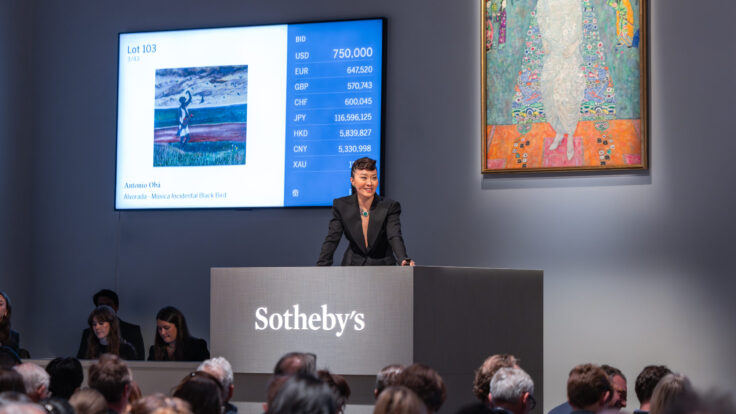
- Sotheby’s bond downgrade: S&P downgraded Sotheby’s debt to B-, according to The Wall Street Journal, citing a 22 percent drop in revenue, concerns about the auction house’s new fee structure, and the $90 million in dividends that Patrick Drahi is still disbursing. “Prices of the company’s bonds due in 2027 dropped under 87 cents on the dollar in recent days, down from around 93 in mid-May, according to MarketAxess,” the Journal reports. “S&P kept a negative outlook on its rating and could lower it again without a meaningful performance improvement, the ratings firm said.”
|
| Now, for the main event… |
 |
| Basel’s New Money & A Gagosian Ouster |
| Behind the usual scrum of buyers and sellers, a pair of dueling narratives vie to define Basel and the broader market. Also: inside the executive shake-up at the world’s most enigmatic gallery. |
|
|
|
| When the gallery emails started to come out fast and furious on Tuesday afternoon, all in an attempt by the biggest players to define both Art Basel and the broader market, the tone that emerged was both feisty and defensive. Iwan Wirth railed against “doom porn” and “gossip networks,” while praising “a more humane pace.” David Zwirner tried to counter “a narrative out there that the art market is weak” by claiming instead that it was “certainly performing well” at the Messeplatz.
As an example, Zwirner pointed to his top sale of the week, Joan Mitchell’s Sunflowers from 1990-91, which he said sold on the first day of the fair with an asking price of $20 million. In fact, Zwirner was so emphatic about the timing of the sale that he told ARTnews’s Devorah Lauter that the Mitchell sale “really happened today.” And yet at least one collector insisted that the sale was made a month ago. This person was alluding to the fact that other Mitchells were on offer during the May sales, and it seemed inconceivable that Zwirner would refrain from shopping his best work from an artist while the types of collectors who can afford a $20 million painting were considering her work.
No matter when the sale was consummated, Zwirner’s positioning captures the subtle panic baked into the market right now—one that was evident in the sales at Basel, too. The old generation of big spenders for important historical art is cycling down because of age and price, and the way the historical art market works, it may take more than a couple of years for demand to pick up. The art market is like a python. In 2020 and 2021, it swallowed a lot of works whole that are going to take a while to get digested by the system. “Art prices,” as one advisor told me, “have just gotten unsustainably (and often ridiculously) high.” |
|
A MESSAGE FROM OUR SPONSOR
|
|
|
|
|
| It will take even longer if younger collectors have decidedly different tastes. I’ve suggested that the next phase of the art market might be defined by big collectors hunting for large trophies, but what if younger Boomers and Gen X collectors just aren’t interested in digging deep into their pockets for historical works? The art market follows the broader culture. We have a pronounced lack of interest in history currently, and the great forgetting may not reverse itself. That may be one reason few Picassos were on the stands.
That said, there were plenty of sales of historical works at Basel. The Vedovi brothers, dealers from Brussels, sold René Magritte’s La Chambre d’écoute for an eight-figure price close to the Mitchell. (A pen-and-ink version of the same image went for nearly $1 million two years ago during the sale of Rosalind and Melvin Jacobs’s collection of Surrealist works.) Arshile Gorky is hardly a household name, but Hauser says they sold a drawing of his from 1946-47 for $16 million—for a work on paper, no less! (Though no one at the fair seems to have laid eyes on it.) They also sold a Georgia O’Keeffe painting, Sky With Moon, from 1966, for $13.5 million.
Pace Gallery sold their Agnes Martin for $14 million, pretty much in line with what buyers have paid for similar works at auction. Back at Zwirner, there was a Gerhard Richter, an artist that Zwirner represents now, that sold for $6 million, a recently made Yayoi Kusama for $5 million, and a couple of Josef Albers studies for prices below $2 million. (These are all asking prices, so do your own math.)
At White Cube, the early Julie Mehretu they brought to the fair sold for $6.75 million, which is a good price for that era of her work. Hauser sold a Blinky Palermo for $4 million; two Vilhelm Hammershois for more than $5 million each; and two Georges Vantongerloo paintings for $2.8 and $1.5 million. (Vantonger-who? You’ve got to know your art history for that one.) Hauser also sold a small Eva Hesse for $3 million. Christophe Van de Weghe sold a late Lichtenstein, too.
One other thing seems to have gotten under Hauser’s skin—and you can’t really blame them. ARTnet wrote a story declaring Nicolas Party “a flash in the pan” simply because some of his works were withdrawn or bought in at auction. Hauser’s revenge, it seemed, was to announce a $525,000 sale for a new Party work on the second day of Basel.
Primary market sales were tougher in Basel. Its claim to fame is secondary market and the sales of historical works. Still, the primary folks were there looking to make enough sales to cover their costs and make some contacts in the process. Several did; others did not. David Kordansky told one advisor that he sold most everything but he wasn’t able to persuade some buyers looking to get a Hilary Pecis to support the gallery’s program, which means buying the work of another artist in the hope of moving up the queue for Pecis. “Those days are over,” the advisor said, “at least for the time being.”
One of the big issues with this generational shift in the market is that younger collectors have little patience for the art market’s hazing techniques. Another dealer told me he took a few serious money guys in their 40s through Basel last year because they wanted to start collecting. After getting the ritualistic gallery tickle and slap, they walked off. It’s a problem. Art galleries are desperate for new buyers, but they think that allowing anyone to easily buy something devalues the art works. It’s a serious bind with very real consequences. And it’s another reason the art market finds itself jammed up right now in a period of real prosperity in the United States. |
| The Man Who Wouldn’t Be King |
|
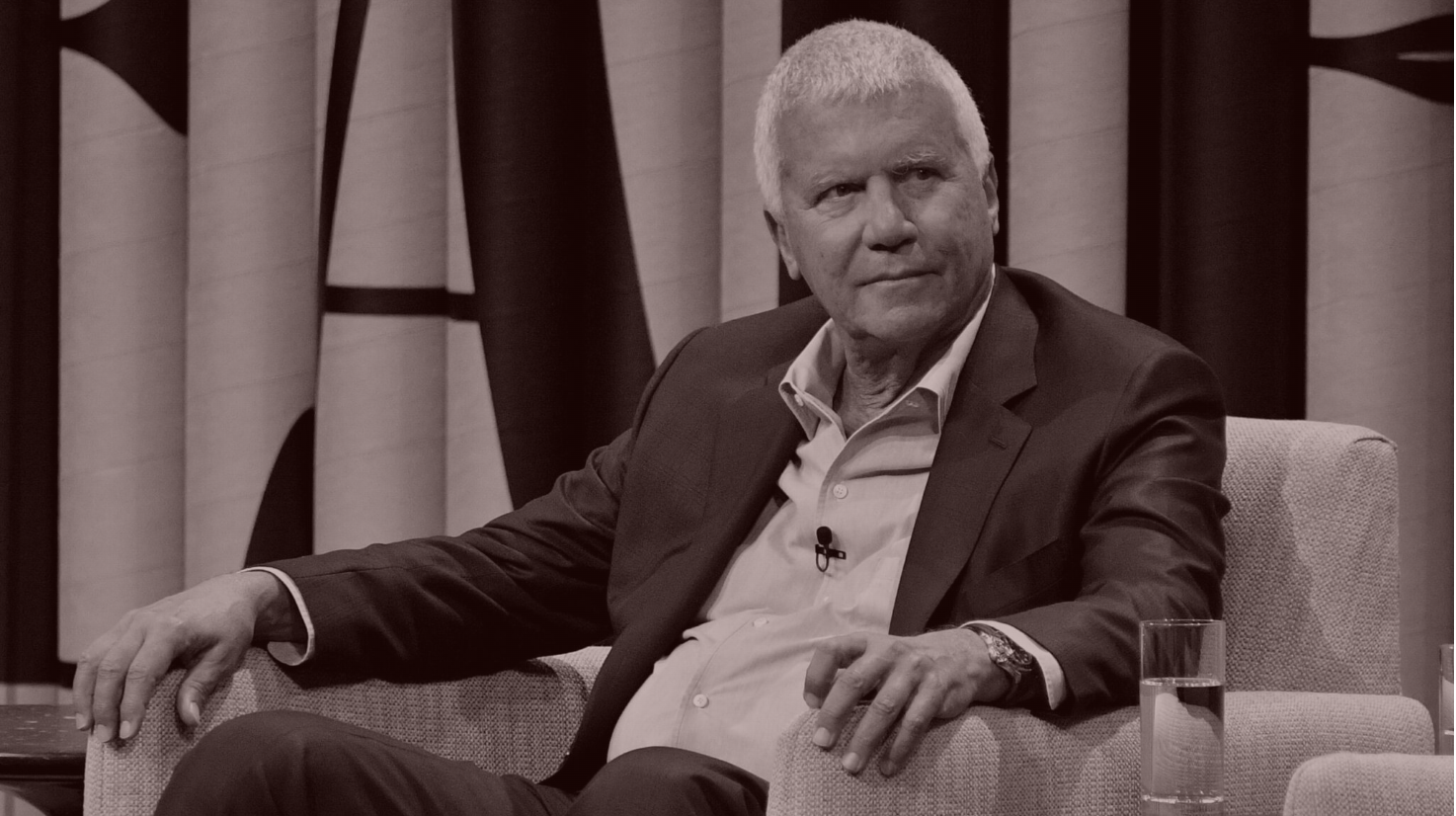
| Five-plus years ago, Gagosian gallery was a bit of a mess. Its owner, and top revenue generator, managed the gallery like a lead sled dog, always out in front, pulling hard and forcing his team to keep up. The pace and pressure was relentless. The gallery was also a sprawling organization filled with ambitious, independent directors, led by a single person who made all of the decisions.
At the time that Andrew Fabricant was brought into the company as C.O.O., the future of the gallery seemed to lie with a group of young-ish senior directors who needed mentorship from an experienced art dealer and a buffer from their hard-charging boss. In theory, Larry Gagosian trusted Fabricant enough to do what would be necessary to create a path for that generation to eventually have a shot at taking over. No one expects Larry Gagosian to stop dealing art—or be in charge of his gallery—until he is no longer physically capable. |
|
|
| Fabricant had a surprisingly long list of things that needed to be managed at the gallery. To the outside world, Gagosian was a fearsome selling machine with more gallery space than any competitor. Inside, it was still very much one man’s business. If the group of senior directors, who make a lot of money for Gagosian, were going to have a future at the gallery, it needed a formal and visible infrastructure. Gagosian built an H.R. function. (Shortly after Fabricant arrived, one of his senior directors was accused of sexual misconduct.) He had to sort out an in-house legal team that could rationalize business affairs across multiple jurisdictions on three continents. He put a C.F.O. in place to manage the gallery’s complex finances. He even had to create an I.T. department.
An internal board of directors had been formed but it was unwieldy. Working with what was already there, Fabricant finessed everyone’s needs into a broader board that could make a variety of constituents happy. The core of the Gagosian board was Fabricant, five senior directors, and the gallery’s chief creative officer. External members of the board were drawn from other interested parties with their formidable networks and experience. Those directors include Snap’s Evan Spiegel; former Blackstone heavyweight Tom Hill, who is also a major collector and runs his own art foundation in Chelsea; Glenn Fuhrman, who got rich managing Michael Dell’s money for 20 years; and Delphine Arnault, the eldest of the LVMH heirs, whose father was rumored to have expressed interest in buying Gagosian.
Prominent collectors like Bill Bell, Dasha Zhukova Niarchos, and Laurent Asscher sit on the board alongside director Sofia Coppola, artist Jenny Saville, curator Francesco Bonami, and Valentino Carlotti, a former Goldman Sachs partner who did a stint at Sotheby’s. Board heavies aside, the day-to-day running of Gagosian was still Larry’s purview. But its main job, it seems, was to ensure succession (whenever that happens) without an immediate power struggle. And Andrew Fabricant deserves credit for putting structure around it.
Ideally Fabricant, who is nearing 70, would have been able to evolve into the role of senior statesman. When I asked people close to this world why he abruptly departed, they suggested that Fabricant lost support on all sides. He couldn’t hold together the backing of the mercurial Gagosian, the restless and obstinate directors, and the directors. As anyone who has worked in a company knows, process produces friction. In the end, it appears that everyone got a bit fed up with each other. That left Fabricant in an awkward position.
On top of that friction, there seems to be something else going on. Larry Gagosian doesn’t see himself as an octogenarian. One of the secrets of the gallery has always been to keep in touch with the people who have money and want to buy art, figure out what lifestyle they want to participate in, and make the gallery an embodiment of that scene. The social milieu of the art market has changed. It’s not clear that Fabricant and his wife, Gagosian executive Laura Paulson, fit into the gallery’s vision of that market anymore. Andrew is definitely old-school. He dresses like a banker from the 1980s and can behave like a status-conscious member of the tight-knit club of the old art world.
This spring at Gagosian is beginning to feel like the climactic scene of The Godfather when Michael Corleone “settles all family business” before leaving for Nevada. Meanwhile, Gagosian might sense weakness among the other three families, so to speak, in the art world. Hauser has gone legit with the hospitality business; some behind-the-scenes dealmakers saw the Zwirner 30th anniversary show in Los Angeles and wondered if they had misjudged the gallery’s strength (though that opinion seems to have turned quickly after seeing the Zwirner booth at Basel); and people keep asking questions about Pace.
Is this a revival of animal spirits in Gagosian and at the gallery? Does Larry see his chance to reassert his gallery’s position at the top of the art market? He seems to be working fast on several fronts all at once to answer that question. |
|
|
|
| FOUR STORIES WE’RE TALKING ABOUT |
 |
|
 |
|
 |
| The Doug Bug |
| A close look at Mar-a-Lago’s veepstakes calculation. |
| TARA PALMERI |
|
 |
|
|
|
|
|
 |
|
|
|
Need help? Review our FAQs
page or contact
us for assistance. For brand partnerships, email ads@puck.news.
|
|
You received this email because you signed up to receive emails from Puck, or as part of your Puck account associated with . To stop receiving this newsletter and/or manage all your email preferences, click here.
|
|
Puck is published by Heat Media LLC. 227 W 17th St New York, NY 10011.
|
|
|
|