Welcome back to Wall Power. I’m Marion
Maneker.
I’m in Washington, D.C., tonight, getting ready to celebrate Mrs. Wallpower’s father, former ambassador Robert T. Grey Jr., who turns 90 next week. Amb. Grey spent his entire professional career in the foreign service across a wide range of postings, from Ouagadougou in Burkina Faso and Canberra in Australia to NATO in Belgium and the United Nations in New York, advising ambassadors Thomas Pickering and
Madeleine Albright. An expert on strategic arms control, he was a protégé of Eugene Rostow and an advisor to Senator Alan Cranston, and served as the U.S. ambassador to the Conference on Disarmament in Geneva, Switzerland. We live in a better world for the work he did his entire career. I wish more of us recognized the value of what we inherited from him and his peers. Thank you for your service, Bob.
Tonight, a look at the Financial
Times’s recent, dubious story about the art-backed lending business. That $30 billion–$40 billion market deserves a little more attention than the cherry-picking work done by the FT. So I spent some time asking the players in the market what’s really going on.
Also mentioned in this issue: David Nahmad, Amedeo Modigliani, Oscar Stettiner, James Palmer, Robert Mnuchin,
Mitchell Rales, Steven Cohen, Barbara Guggenheim, Abigail Asher, Angela Westwater, Gian Enzo Sperone, Inigo Philbrick, Ding Yixiao, Jan Prasens, Adam Chinn, Rebecca Fine, and many more…
But first…
|
-
David Nahmad speaks: I got a call from representatives of David Nahmad, the billionaire art dealer who plays a central role in the art market from his perch in Monaco, after I ran that brief item on the long-running restitution case regarding Amedeo Modigliani’s Seated Man with a Cane, from
1918. Le Monde had reported that the case was set for trial this spring, with the potential for summary judgment next month. Nahmad felt the Le Monde story misrepresented key aspects of the case, which will seek to determine whether the painting rightfully
belongs to the heirs of Oscar Stettiner, who claim it was stolen from the Parisian art dealer by Nazis during the Second World War.Here is the full statement that his representatives sent me: “David Nahmad believes fervently in the legal system and looks forward to having a court determine the rightful ownership of this painting. He bought the painting at a public auction at Christie’s in 1996. It was openly loaned to three separate public exhibitions
including two world-renowned museums, and subsequently offered for sale at a public auction at Sotheby’s in 2008. He has never hid the painting from potential claimants. The current lawsuit is funded and pursued by parties with no connection to the heirs of Oscar Stettiner.”
The statement continued: “To note, Mondex has lost a case with the same plaintiff, the Stettiner heirs, before the Dutch Restitution committee. James Palmer, the man behind Mondex representing this
matter, denies any ownership in Mondex, the company he founded. The painting seized from Stettiner was a Modigliani self-portrait, not Seated Man with a Cane. David Nahmad looks forward to a court and jury, not the press coverage, resolving this matter once and for all.”
- Rest in peace, Robert Mnuchin: The memorial service for former Goldman Sachs partner, hotelier, and art dealer Robert Mnuchin was held
Wednesday night at Park Avenue Synagogue. “It was packed,” one attendee told me. “Everyone you could imagine—a real who’s who.” Mnuchin’s children and grandchildren spoke. So did Mitchell Rales, the industrialist and private museum owner, and Steven Cohen, the hedge fund manager. Both men, who shared Mnuchin’s deep interests in art and finance, spoke of their close personal bond with him.Cohen told the crowd he spoke to Mnuchin every Sunday for an hour,
and Rales called him his part-time psychiatrist. “If he cared about you,” one person who was close to Mnuchin told me, “he got very personally involved in your life.” A flinty personality with a reputation for being guided by his own compass, Mnuchin was, in the words of someone who had done deals with him for 15 years, “loved and feared in equal measure.”
- Sperone v. Westwater: As a generation of art dealers and other professionals reach their ninth
decade, we are seeing the difficulties many of them are having winding up their affairs in an orderly way. Last year, Barbara Guggenheim and Abigail Asher’s 30-year business partnership dissolved into dueling vituperative lawsuits. This week, papers were filed in the dispute between Angela Westwater and Gian Enzo Sperone, whose business partnership in Sperone Westwater, a gallery housed in a Norman
Foster–designed building on the Bowery, has not been going very well for the last several years. Documents in the case show that the company has been run at a loss for five of the last seven years. Worse, the two principals don’t seem to have spoken directly for several years, though they did seem to work out a
plan for winding down the gallery. But now, that has become the point of contention. It’s another mess that lawyers will have to sort out.
|
Now, let’s talk about art loans…
|
|
|
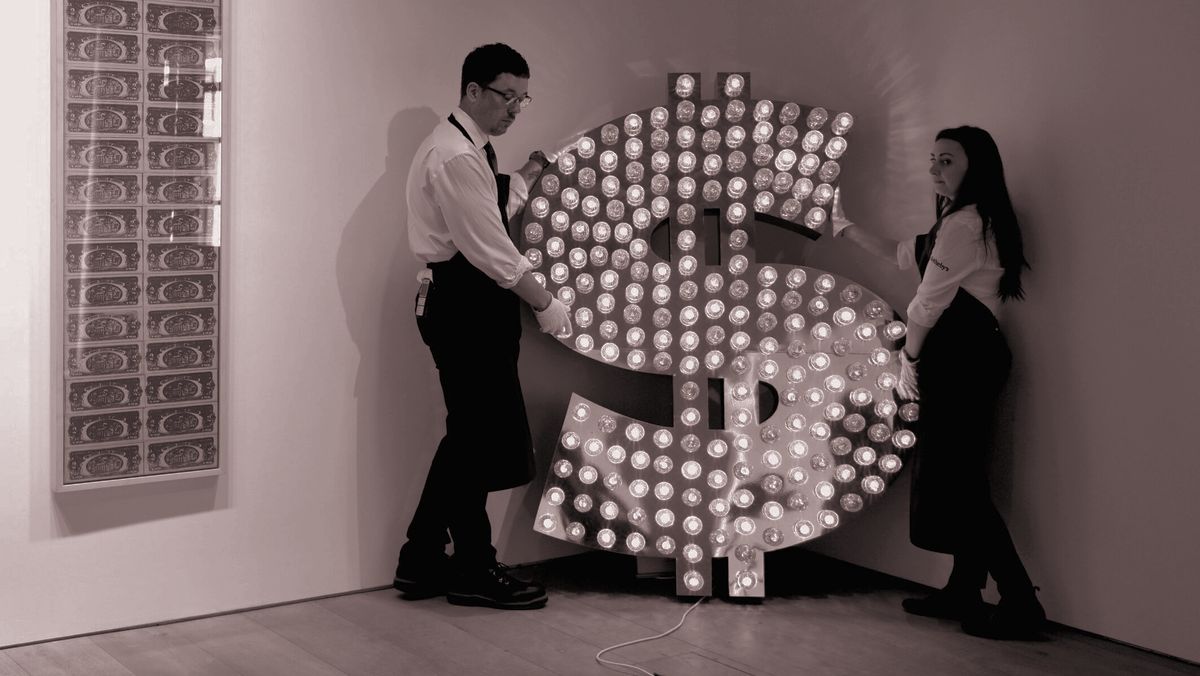
A recent column in the Financial Times tried to sound the alarm about an
apparent crisis in the art loan business. But a close inspection of the data behind the story—and a survey of art loan business insiders—reveals a much more nuanced picture.
|
|
|
Earlier this week, the Financial Times released its art market
column by a guest contributor. The story, citing a report from the accounting firm Deloitte, opened with the shocking claim that “half of the nonbank businesses lending money against artworks experienced defaults on their loans in 2024, up from just 17 percent two years earlier, according to new research.” If you were not reading carefully, you might have easily
concluded that half of art loans were in default. But a close examination reveals that the FT was making some very questionable assertions, based on comments from a few marginal players. To make matters worse, ARTnews rewrote the story uncritically.
To be sure, the art loan industry is an interesting place. On one end, where the bulk of the dollars lie, it’s a very staid business that has become fully integrated into corporate finance. On the other end, it can be the
rough-and-tumble kind of place where figures like Inigo Philbrick reside. (In fact, the only real problem in the art loan industry recently has been the losses incurred from Philbrick’s fraud.) But in the article, the FT was trying to raise a new point: that the gap between credit-worthy borrowers and back-alley deals was widening because of the art market’s 2024 contraction. “The value of artworks pledged against loans,” the FT wrote, “has also thus been
dragged down, prompting art lenders to issue margin calls or, increasingly, put the loans into default.”
I’m not sure “margin calls” means what the FT thinks it means here. These are loans and defined contracts, not margin accounts. That said, art loans are done on short duration, so the collateral can be marked to market, which means the yearly revisions of the loan could trigger what might effectively feel like a margin call to the borrower. Just ask Ding
Yixiao, a Chinese collector who bought a lot of “wet paint” art during the pandemic boom, then borrowed against it in 2022. A few years later, his lender wanted to sell some of the works to reduce their exposure. A flurry of court papers followed as the value of the collateral continued to sink.
Anyway, if we were
entering a new era of loan carnage, that seemed like a big deal—and I wondered why I had not heard of it. So I called a bunch of people I know in the art loan business, and asked whether what they were experiencing on the ground bore any resemblance to what was being described in the article. Then, I read the Deloitte Art and Finance report carefully.
|
One of my first calls was to Jan Prasens, a specialist advisor on art financing,
who was the managing director of Sotheby’s Financial Services for more than a decade. “While it’s true that there were quite a few ‘technical’ defaults resulting from annual revaluations of collateral that lead to restructurings or refinancings, I haven’t seen any meaningful uptick in true defaults in the asset-backed space last year,” he told me. “At least not within the clientele I deal with.” Prasens added that the restructurings were a “natural occurrence” of the 2023-24 down cycle, and that
“sophisticated lenders” stay “ahead of the curve when it comes to repricing.” As a result, these lenders work with their clients because the “cost of replacement is high in what is a very competitive market.” In other words, they hold on to their geese, even if the golden eggs get a little smaller in a down market.
In its report, Deloitte estimated that the market for art loans was anywhere from $34 billion to $40 billion in 2025, and will possibly reach $50 billion by 2027. The bulk of
that lending comes from private banks, which provide credit to their customers and use their art as additional assurance. Typically, private banks view art as a signal of creditworthiness. After all, if you own $100 million in art, you probably have other assets that are even more valuable.
And if you’re a client of a leading private bank, like Bank of America—their loan book was believed to be around $10 billion before rising 20 percent over the past three years, including a 12 percent rise in
the first half of 2025, the most recent audited period—there are other options. These institutions have ways to make sure you can, and will, repay their loan long before having to sell your art out from under you. In banking parlance, the lender has recourse to all of your assets to satisfy the loan. Because of that, a default never really happens.
Of course, the FT wasn’t talking about banks. They claimed that half of nonbanks making loans against art had seen clients default. But what does that really mean?
In their report, Deloitte said that their researchers contacted 21 art-secured lenders. So when the FT noted that half of the nonbank lenders saw defaults in 2024, they were talking about 10 or 11 art-secured lenders. That’s up from three or so the year before—and, yes, that’s triple the number of firms that have had a default. But here’s the problem: Just because a lender has a single default does not mean the art loan market is shaky or under siege, because a default is not a credit loss.
“Unless you lent to Inigo Philbrick,” International Art Finance’s Adam Chinn quipped during the art-secured lending panel at Deloitte’s conference, “there are lots of defaults in the art lending business, but there are very few credit losses.” When I spoke to Chinn this week, he added that “in the absence of fraud, credit losses are tiny.”
Remember, a default
means only that the borrower has missed enough payments to cause the lender to want to resolve the situation. Sometimes, payments are tacked on to the end of the loan with additional interest; sometimes the lender will have a buyer and sell the artwork, satisfying the loan—which, usually, results in the borrower getting a check in the end. That’s because nonbank lenders like Chinn, Sotheby’s Financial Services, and Christie’s own financing arm—the kinds of institutions the FT was
referring to—are so-called nonrecourse lenders: They only rely on the value of the collateral to repay a loan that has gone into default. They don’t have recourse to the borrower’s other assets. (Your mortgage, for example, is a nonrecourse loan. If you can’t make the payments, the bank sells your house and gives you a check for what’s left after taking their principal and interest. It’s the same with art, but art lenders tend to be more conservative, and typically lend against only about
half of the value of the work. If mortgage lenders followed the same criteria, you would need a 50 percent down payment on your home.)
Right now, Sotheby’s Financial Services has about $1.8 billion out, and likely more than $1 billion against art alone, according to knowledgeable people. (Sotheby’s lends against the whole gamut of what they sell, including jewelry and classic cars.) A big chunk of that $1.8 billion has been securitized by S.F.S. That’s their innovation in the market and,
to be honest, the advantage they have based on their size. Christie’s probably has $500 million to $600 million out in loans, but folks in the field say that, like S.F.S., a lot of that is financing to facilitate transactions for their main business. Say you have a valuable work of art that you’re going to sell in May, but you have a great investment opportunity right now. Christie’s will arrange financing to meet your needs. Chinn’s I.A.F. is the final big player in the nonrecourse loan market; their loan book is around $500 million and growing.
Once you get below that level of lending, the nonbank landscape shifts, and you’re dealing with a wide variety of firms that may or may not be dialed into the art market. They also deal with clientele whose creditworthiness may become a challenge. That’s the irony of the FT’s story quoting Rebecca Fine of Athena Art Finance and saying that her company “had not had an increase in defaults.” Athena, of course, was
the company that made a large loan to Inigo Philbrick. In 2024, a judge ruled against their claims on the painting, and that’s the biggest default anyone can remember in the nonrecourse art lending industry.
But it was so isolated that few finance types seem to have been discouraged from getting into the art lending game. “I continue to see a voracious appetite among lenders,” said Prasens, who helped a client close a nine-figure loan last year, referring to both the asset-backed
and private banking firms. “There are also several new parties seriously considering entering the market.”
|
Enjoy your weekend, everybody. I’ll be back on Sunday with a little more from D.C.
M
|
|
|
Puck founding partner Matt Belloni takes you inside the business of Hollywood, using exclusive reporting and insight
to explain the backstories on everything from Marvel movies to the streaming wars.
|
|
|
The ultimate fashion industry bible, offering incisive reportage on all aspects of the business and its biggest
players. Anchored by preeminent fashion journalist Lauren Sherman, Line Sheet also features veteran reporter Rachel Strugatz, who delivers unparalleled intel on what’s happening in the beauty industry, and Sarah Shapiro, a longtime retail strategist who writes about e-commerce, brick-and-mortar, D.T.C., and more.
|
|
|
Need help? Review our FAQ page or contact us for assistance. For brand partnerships, email ads@puck.news.
You received this email because you
signed up to receive emails from Puck, or as part of your Puck account associated with {{customer.email}}. To stop receiving this newsletter and/or manage all your email preferences, click here.
|
Puck is published by Heat Media LLC. 107 Greenwich St., New York, NY 10006
|
|
|
|