Hi, and welcome back to Line Sheet. If you’re like me and can only think of the
Pinault family office when you hear “Artemis II,” you’ve come to the right place.
In today’s issue, Malique “Malique@puck.news” Morris checks in on Farfetch, the luxury marketplace now owned by Coupang. It seems like a lifetime ago that there was a deal for Farfetch to acquire Yoox Net-a-Porter Group. (In truth, it was
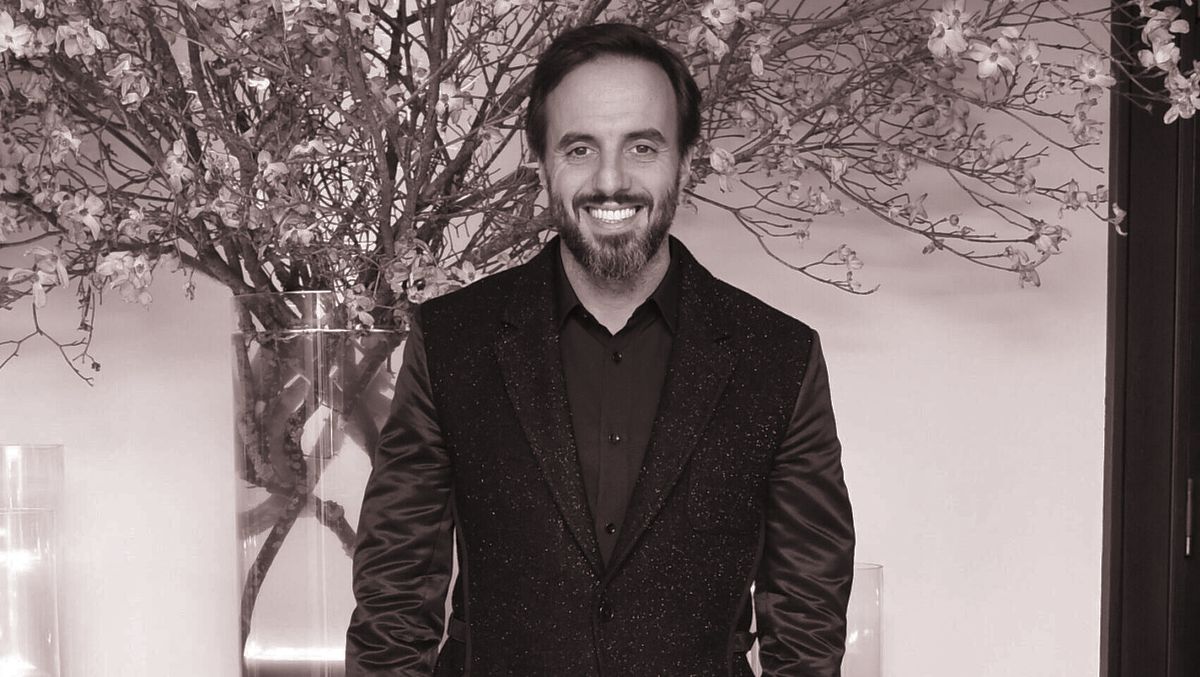
less than three years ago.) As for the whereabouts of José Neves, the Farfetch founder
who made us all believe he had the answers? José, if you’re reading, call us.
Up top, Sarah Shapiro is here with a pretty big Old Navy scoop. Plus, now that Saks Global’s path to exiting bankruptcy has been approved by a court, what happens next? Are you gonna get your money back? Are they gonna sell Bergdorf Goodman? I have some answers. Plus, remember I said
just yesterday to expect a major The Devil Wears Prada 2 push from Vogue and Anna Wintour? It began today with the cover of the May issue.
Also mentioned in this issue: Greta Gerwig, Leandra Medine Cohen, Pharrell, Grace
Coddington, Patrik Sandberg, Richard Dickson, Bom Kim, Pankaj Srivastava, Anne Hathaway, Erik Rehn, Chloe Malle, Nick Tran, Meryl Streep, Zac Posen, Liv Perez, Annie Leibovitz, Matthieu Blazy, Gaurav Anand, Geoffroy Van Raemdonck,
Stephen Eggleston, Edward Sabbagh, and more… |
Three Things You Should Know…
|
-
“Now that everything’s disintegrating”: Right on cue, Vogue’s predictable cross-promotion of The Devil Wears Prada 2 has begun with its May 2026 cover, featuring Meryl
Streep and Anna Wintour, a major inspiration for Streep’s Miranda Priestly character. They’re both wearing Prada, of course: styled by Grace Coddington, and photographed by Annie Leibovitz. Chloe Malle wrote the intro to a Q&A conducted by Greta Gerwig.
It is historic, to be sure, since it’s the first time Wintour, a celebrity in her own right, has appeared on the cover of the magazine—a slice of media real
estate she presided over from 1988 until Malle’s first cover last month (and still technically does as Malle’s boss). Wintour is, after all, the biggest driving force in positioning fashion as popular culture for the past 40 years. But while the photos are decent, the concept is pat and uninventive. This is not what Vogue should be, obviously.
That said, I enjoyed their conversation with Gerwig, and thought it was particularly comforting to hear things we already know, but need
to be reminded of, about being a working mother. The whole thing is totally inoffensive, and even feels like a warm blanket at times. It was funny that Streep mentioned that she wanted to return to this character as “everything’s disintegrating, now that these institutions are being undermined or exploded in a way that who knows what is happening in the world right now,” and that Wintour felt a need to defend herself. “I like to think we’re evolving rather than disintegrating,” she said. “We are
still here.”
Wintour also praised how the Wertheimers managed succession at Chanel, which she categorized as a “balance between tradition and an openness to change.” Too bad she didn’t take inspiration from it when creating her own “stepping aside” plan.
|
|
|
|
A MESSAGE FROM OUR SPONSOR |
|
|
|
-
Saks Global sees the light: As I mentioned yesterday, Saks Global’s initial plan to exit restructuring has been approved in a Texas court. The details are subject to change as the group negotiates terms with various stakeholders, but it’s almost assured that a group of secured lenders will own Saks Global at the end of the process. Unsecured lenders—like brands owed money—are another story. According to people at some of the top brands and sources inside Saks, many of the biggest
vendors have already received cash settlements. Many smaller brands probably won’t, but I do think that Saks Global will do everything possible to pay back as much as it can, within reason, in order to sustain relationships going forward.
Once Saks Global exits bankruptcy, expect business-as-usual under ultra-professional C.E.O. Geoffroy Van Raemdonck, who has already done a good job putting both brands and employees at ease. As one executive said to me, those still
standing at Saks Global feel “much better” about the plan under Geoffroy et al. than they did pre-Chapter 11. Brands should expect payments to run more smoothly, too.
Of course, in the next year or so, the debtors in possession will likely begin to look for a potential exit. Amazon, which owned nearly a quarter of the equity as of January, could be a buyer, as could another investment firm or even some brave billionaire. I’m still campaigning over here for LVMH to buy Bergdorf
Goodman, although it makes sense that Saks hasn’t done anything with it yet—they’ll get a better price for the whole thing down the road.
You can say what you want about the disaster that is La Samaritaine, but Bernard Arnault has owned Le Bon Marché since the early 1980s and it is still the most wonderful department store in the world. I had brunch at the Rose Bakery there on Easter Sunday, then we went grocery shopping for dinner at La Grande Épicerie, and it was
perfect. (Disclosure: Saks Global sued Puck last year over our coverage of its debt management.)
|
|
|
|

| Sarah Shapiro
|
|
- Old Navy, new
moves: Old Navy is preparing to scale its activewear business with a stand-alone Old Navy Sport store, according to a source with direct knowledge of the plans. Zac Posen is leading the push, expanding his remit as chief creative officer after building out categories like occasionwear, handbags, and the ’94 reissue. Not for nothing did C.E.O. Richard Dickson recently boast that Old Navy ranks fifth in the U.S. activewear market, and
fourth with women’s: While sister brand Athleta’s leggings run about $89, Old Navy’s are under $40, and often as low as $13.99.
In some ways, the push highlights the tensions in Gap Inc.’s portfolio. The timing aligns with On Running, Beyond Yoga, and Vuori expanding their retail footprint amid the rising popularity of pickleball, tennis, and golf—not to mention this summer’s FIFA Men’s World Cup and the 2028 Olympics. But inevitably, Old Navy’s commitment to activewear creates an
unflattering juxtaposition with its sportier sister brand, which has continued to struggle.
|
|
|
|
The onetime red-hot luxury e-comm company has spent the past few years in the wilderness
after a delisting and a bailout from Korea’s Coupang. With a drastic cost-cutting program in place and a newfound détente with its retail partners, is it finding a sustainable second life? |
|
|
|
In December 2023, José Neves told staffers that he was in it for the long haul at Farfetch,
the luxury site he founded in 2008 and took public a decade later. At the time, there was some cause for optimism. Sure, the company was in the process of being delisted from the New York Stock Exchange—a final humiliation amid a years-long collapse. But the ink was almost dry on a deal for South Korean e-commerce giant Coupang to rescue Farfetch from the brink of bankruptcy, preempting an earlier deal that would have seen the company take a near-majority stake in Yoox Net-a-Porter.
|
|
|
|
A MESSAGE FROM OUR SPONSOR |
|
|
|
Two months later, as it turned out, Coupang was running meetings and Neves was gone, along with seven other
executives. Then came the lawsuits: In a case that’s still pending, investors have accused Neves and other Farfetch executives of disguising the dismal state of the business before its fire sale. Latham & Watkins, which is representing Neves et al., has argued that Farfetch “expressly warned that it might not ‘generate sufficient cash flow from operations.’” Neves, who didn’t respond to a request for comment, is said to be lying low in his wife’s native Brazil.
Meanwhile, Coupang
has been working to sort out a global business with offices on three continents and thousands of employees—and the early months under new ownership proved tempestuous. I’m told that Coupang C.E.O. Bom Kim and C.F.O. Gaurav Anand arrived with a mandate to overhaul the business, with little patience for legacy leadership, including chief marketplace officer Edward Sabbagh and chief marketing officer Nick Tran, both of whom left in
March 2024. Instead of replacing Neves as C.E.O., Kim installed Erik Rehn, Coupang’s vice president of product management and engineering, to oversee technology and operations, alongside C.F.O. Pankaj Srivastava.
The dismissive attitude wasn’t entirely unjustified. Over time, Farfetch had evolved from a pioneering online luxury marketplace that sold goods directly from indie boutiques into a bloated enterprise that included a flailing brand incubator, New
Guards Group—which operated Palm Angels and held a license for Off-White—as well as Browns, Stadium Goods, and Farfetch Platform Solutions, its cash-burning e-commerce software arm. Across its five-year run as a public company, it never turned a profit.
Under Coupang, the mandate has been aggressive cost-cutting. The company has halved Farfetch’s headcount to about 3,000 employees; closed its offices in L.A., Hong Kong, and Moscow; and shrunk its office footprint in Tokyo and Dubai,
sometimes down to a single room. Some styling, customer service, and logistics roles have been outsourced to lower-cost regions like Egypt and Mexico. Meanwhile, Coupang has dismantled much of Farfetch’s operational sprawl. In 2024, it shut down Farfetch Platform Solutions; New Guards relinquished its Off-White license that same year, and sold Palm Angels to Bluestar Alliance in 2025. Browns, once reportedly on the auction block, has been kept on board to secure inventory from brands directly.
Stadium Goods, I’m told, is performing relatively well.
Coupang also allegedly made allowances for some unconventional revenue streams. After Kering stopped selling directly to the platform in February 2024, Farfetch introduced a program called “Sold by Farfetch” that allowed retail partners to anonymously list items, including from Kering-owned brands like Gucci and Saint Laurent, without disclosing their origin, thereby avoiding tarnishing those boutiques’ relationships with brands. In
an interview with Vogue Business last fall, chief commercial officer Stephen Eggleston, now the company’s most public-facing figure, said that multibrand retailers are “very much part of the authorized distribution network of the brands.” Farfetch, he continued, has “processes in place to ensure we know the authenticity of the
product and where it’s sourced from.” In any case, I’m told the company has tightened compliance over the past six months to meet E.U. disclosure regulations. (Farfetch didn’t respond to a request for comment.) |
It’s unclear if all of this has been enough to effect a real turnaround. On Coupang’s most recent earnings
call, Kim boasted that Q4 had been “the first quarter since our acquisition where we generated positive year-over-year revenue growth with positive overall economics,” but offered no specifics. Internally, a former executive said revenue and profit figures are kept under wraps. Public filings don’t help clarify matters, either: In 2024, Farfetch revenue fell 12 percent, to $1 billion, while operating losses narrowed 53 percent, to $369 million, according to a U.K. filing. Meanwhile, Consumer
Edge data shows U.S. debit and credit card spending on Farfetch has declined more than 10 percent year over year for three consecutive quarters. |
|
|
|
Still, despite the earlier skirmishes during the post-merger integration, some current staffers say Farfetch
is now a better, more efficient place to work—a sentiment likely aided by annual bonuses that I’ve heard can reach up to four months of salary, depending on rank. Retail partners also seem more satisfied. One told me that Farfetch has switched to a negotiable commission structure and also allows boutiques to submit their own product photos rather than shipping to Portugal. The company is also trying to enlist more brands to sell directly on the platform. An insider at a popular menswear startup
recently told me they’re considering a partnership, if only because it’s hard to prevent their retail partners from selling products on the platform.
In today’s anemic, multibrand environment, that positioning may be enough. Farfetch has effectively become a clearinghouse for discounted luxury—a place where brands and boutiques can quietly move excess inventory, and increasingly price-sensitive consumers feel comfortable hunting for deals. That’s not the company Neves set out to build,
but it’s the business he left behind. As one luxury insider put it, “It’s a platform that is operationally efficient and will remain closer to a platform like The Outnet than Mytheresa. I found the t-shirt I like in a store. If I find a more competitive price from Farfetch, why not?” |
What We’re Reading…
and Looking At…
|
Millions of art and photography books and magazines were burned in an Amsterdam warehouse
occupied by Idea Books, which distributes for many independent publishers. It’s sad. [Buy Books!]
The Alaïa denim campaign is good! [Instagram]
Brand names are in crisis!
[The Cut]
Zara hired Leandra Medine Cohen to style a new campaign. Smart. [Leandra via Feed
Me]
It’s still early on the Devil Wears Prada 2 tour, but it’s not nothing that Meryl Streep chose a Matthieu Blazy look from his first Métiers d’Art collection for the film’s Tokyo premiere. It looks a little like the book-cover look. (Anne Hathaway wore Valentino.) [Vogue]
Instagram is finally rolling out affiliate links for Reels; influencers remain skeptical. [Instagram]
Sarah chats with Liv Perez about mall brands, channel checks, the easy-pant category, and what trends actually mean. [Let’s Get
Dressed]
A South Beach hotel backed by Pharrell is facing foreclosure. [Miami Herald]
Patrik Sandberg, a smart writer on fashion, culture, Hollywood, etcetera, has launched a Substack. I swear it’s never too late. [Paraphernalia] |
Until tomorrow,
Lauren
P.S.: We use affiliate links because we are a business. We may make
a couple bucks off them. |
|
|
|
Need help? Review our
FAQ page or contact us for assistance. For brand partnerships, email ads@puck.news.
You received this email because you signed up to receive emails from Puck, or as part of your Puck account associated with {{customer.email}}. To stop receiving this newsletter and/or manage all your email preferences, click here. |
Puck is published by Heat Media LLC. 107 Greenwich St., New York, NY 10006 |
|
|
|
|