Welcome back to Wall Power. I’m Marion Maneker.
Tonight, sports fans, I
have for you some more great art-world reporting from my colleagues at Air Mail. Straight from Paris, Elaine Sciolino spent some time with Laurence des Cars, Emmanuel Macron’s pick to be the first woman to run the Louvre. Lately, the aristocratic and well-connected des Cars has been struggling to implement
an ambitious expansion project as the museum itself seems to be crumbling from deferred maintenance and neglect. And let’s not even talk about that jewel heist. All of that below the fold. (Meanwhile, you can see all of Air Mail’s offerings here.)
Mentioned in this newsletter: Phil and Martha Bachman, David SK
Lee, Auction Technology Group, FitzWalter Capital, Anna Wintour, Doechii, Victoria Beckham, David Beckham, John Galliano, Iris van Herpen, Rick Owens, Jean Paul Gaultier, Keira
Knightley, Michelle Yeoh, Kelly Rutherford, Dev Patel, Naomi Campbell, Eva Herzigová, Tyra Banks, Stephen Schwarzman, Christine Schwarzman, Leonardo, Rachida Dati,
Jean-Luc Martinez, Eugène Delacroix, William Koch, and more.
Let’s get started… |
- Mecum’s
Ferrari lovefest: There was a lot of action at Mecum Auctions’ 12-day, 4,500-classic-car sale in Kissimmee, Florida. The auction culminated this weekend with the sale of 48 Italian cars formerly owned by auto dealers Phil and Martha Bachman. A white 1962 Ferrari 250 GTO, not from the
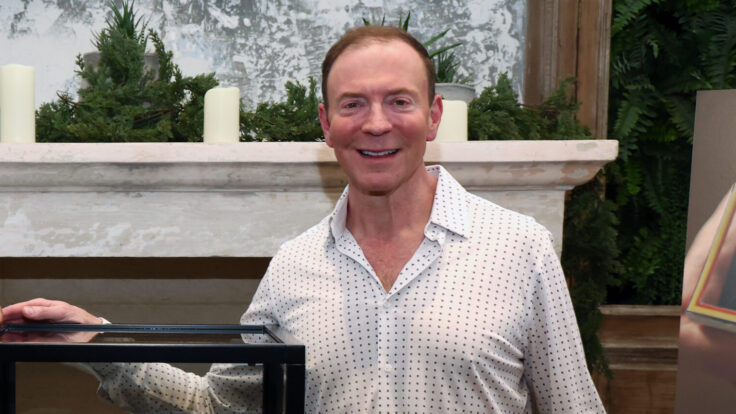
Bachmans, was the top lot of the day, selling for $38.5 million to David SK Lee, the jewelry, real estate, and classic car C.E.O. That’s the third-highest auction price for a Ferrari, not including the $70 million private sale that took place in 2018—a reminder that there’s still plenty of juice left in the classic car market.
Nowhere was
that upside more visible than in the no-reserve results for the Bachmans’ remarkably low-mileage cars, including 46 Ferraris. A reader tipped me off to the strength of the bidding on Saturday. Many of the Bachmans’ Ferraris are yellow, not red, and their distinctive specs, one-owner provenance, and low mileage (the cars were kept in an air-conditioned garage and driven only to move them around for service) made them rare. The no-reserve status also caught bidders’ attention. After all, there was
an ever-so-slight chance some of these cars could be bought on the cheap.
Even though my alert car buff clued me in to the fact that low-mileage historic cars are becoming a mini-trend, no one expected the kinds of prices that Mecum achieved. A 2003 Ferrari Enzo with 649 miles sold for nearly $18 million—roughly quadruple the previous record for the model,
according to Hagerty, the insurers who keep a price guide to classic cars. A 1995 Ferrari F50 with 252 miles sold for just over $12 million. Another 2003 Ferrari Enzo made $11 million; a 2017 Ferrari LaFerrari Aperta also sold for $11 million; and a 1985 Ferrari 288 GTO sold for $8.5 million. There were many more big-ticket sales
of Ferraris and other cars throughout the auction event. - Auction Technology Group rebuffs takeover attempts: Another reader sent me a few notes about the takeover battle brewing between hedge fund FitzWalter Capital and Auction Technology Group, which grew out of the Antiques Trade Gazette. FitzWalter, which is currently the largest shareholder of Auction Technology Group, has now made 12 takeover offers for it.
But A.T.G. and some of
its remaining shareholders say the offers have been too low. They believe FitzWalter is behaving opportunistically and pouncing on A.T.G.’s extremely low stock price. Seven months ago, after all, the stock was trading at nearly 500 pence, before falling to a low of 263 pence in late November. Since word of FitzWalter’s offers became public, however, the price has risen again, to 360 pence on Friday—still a long way from the 1,516 pence it traded at five years ago. To make matters worse, A.T.G.
has been pursuing its own acquisitions strategy—it bought furniture marketplace Chairish last year—which FitzWalter opposes. The publication of FitzWalter’s offers has now started the clock on the deal process in the U.K. The hedge
fund has only a few weeks—until early February, according to The Sunday Times.
|
Now, let’s head over to Paris … |
|
|
Laurence des Cars was Emmanuel Macron’s personal pick for the role of Louvre director. Now,
following a string of disasters—including that jewel heist—the aristocratic curator says she is fighting for her career. |
|
|
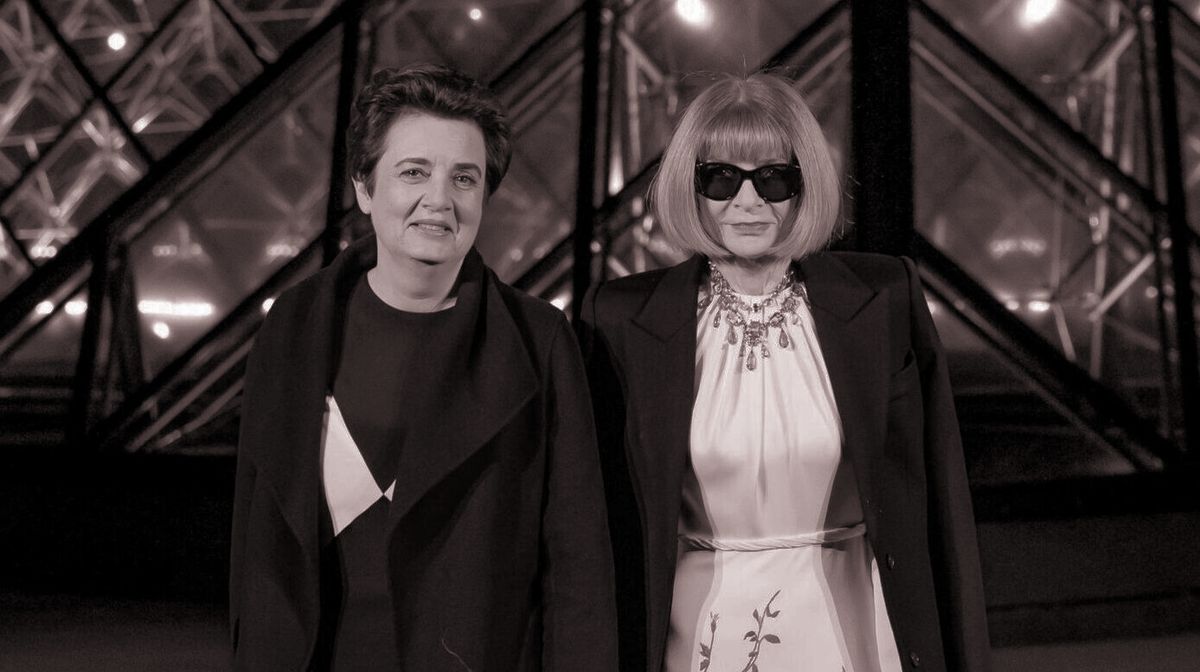
Last March, Laurence des Cars, the Louvre’s director, was at the top of her game. Dressed in
a harlequin-print gown, she played hostess to a fundraising “Grand Dîner” gala at the museum during Paris Fashion Week. Guests wandered through Louvre Couture, the first fashion exhibition in the museum’s 232-year history, before dining among the marble sculptures in the glass-ceilinged Cour Marly.
Admittedly, this was no Met Gala, with its themed costume ball and Instagrammable arrivals. But it was the world’s most renowned and popular museum, so boldface names did not shy away.
Anna Wintour arrived in Givenchy couture. Also in attendance were Grammy-winning rapper Doechii and Victoria and David Beckham; designers John Galliano, Iris van Herpen, Rick Owens, and Jean Paul Gaultier; actors Keira
Knightley, Michelle Yeoh, Kelly Rutherford, and Dev Patel; models Naomi Campbell, Eva Herzigová, and Tyra Banks; and the perennial big donors Stephen and Christine Schwarzman.
Des Cars greeted the Anglophones among them
in almost flawless American-accented English—delivered in a low, throaty purr—which she learned from her New York–born step-grandmother, Marta Labarr, a onetime minor film-and-stage actress. Some of des Cars’s American fans began to whisper that she might be tapped as director of the Metropolitan Museum itself one day. “I’m someone who is, by nature, discreet,
reserved,” she said in her office in November. “I’m not an outgoing person. I don’t spend my life in the media. I don’t spend my life at parties. I work a lot.”
Just a few weeks before the gala, at the behest of des Cars, President Emmanuel Macron had stood in front of the Mona Lisa to announce a grand makeover of the museum that would ease overcrowding and provide a new entrance and underground galleries for Leonardo da
Vinci’s masterpiece. He called it the “New Renaissance.”
This being France, criticism of the initiative—and of des Cars, whom Macron named as the museum’s first female director in 2021—was swift. She was accused of rushing an overly ambitious, costly project while the politically weak Macron was still in office. Still, the backlash was manageable.
Then disaster struck—the brazen robbery of eight pieces of the French Crown Jewels, valued at more than $100 million, in
October. The theft coincided with a damning report by the Cour des Comptes, the government’s auditing department, that stated the museum had no security master plan and advised it should funnel funds into much-needed infrastructure repairs rather than an ill-conceived building project.
More problems followed. In November, structural weaknesses in the building’s beams forced the closure of the Campana Gallery, which holds antique Greek ceramics. A water leak damaged hundreds of antique
books in the Department of Egyptian Antiquities, and workers demanding more pay, increased hiring, and better working conditions began a series of rolling strikes that shut down the museum.
Des Cars’s reputation seemed to unravel. Her boss, Minister of Culture Rachida Dati, had refused des Cars’s offer to resign on the afternoon of the burglary. But Dati is a political animal who is running for mayor of
Paris in March. Once an ally of des Cars, she now saw her as a liability.
Dati appointed Philippe Jost, the senior civil servant who oversaw the reconstruction of Notre-Dame, to work alongside des Cars to “profoundly reorganize the Louvre.” “If I had been in her position,” says a former head of a French cultural institution who has known des Cars for years, “I would
have resigned rather than accept such deep humiliation.” But when she was asked by a France Inter radio journalist in December whether she should resign to protect the institution, des Cars responded with cold anger. “Do I have to resubmit my resignation every day in the face of new crises?” she asked. |
How did des Cars fall from grace so quickly? First, she suffered the misfortune of running
an impossible institution. Unlike the Met, which was built as a museum, the Louvre started as a medieval military fortress, then became a palace for kings that was turned into a museum only after the French Revolution. Renovated and expanded more than 20 times, it has evolved into an irrational, 400-room structure that has fallen into disrepair—with rusty water pipes, leaky roofs, crumbling walls, outdated lighting, and inadequate security cameras, air-conditioning, and toilet and dining
facilities.
Then there was bad management. The Louvre is an elitist world unlike any other French cultural institution, with arcane rules and layers of bureaucracy, secrecy, and suspicion. “[It is] the cultural equivalent of North Korea,” says one senior French cultural official. Management problems had worsened under her predecessor, Jean-Luc Martinez, whose authoritarian style sidelined curators and administrators. During his tenure, a
security audit warned that the balcony used by the burglars in the October theft could be accessed by a freight elevator. But the audit was placed into the archives and never seen by des Cars when she took charge. Martinez has denied accusations of security negligence during his tenure.
Finally, des Cars’s own personal style has contributed to her problems. An expert in 19th and 20th century art, with decades of museum experience, she had come to the Louvre with impeccable credentials.
Her full surname, de Pérusse des Cars, denotes an aristocratic line that dates back hundreds of years. Indeed, her family is so embedded in French history that, during World War II, its Château de Sourches was used to hide the Louvre’s treasures, including Eugène Delacroix’s Liberty Leading the People.
In a palace like the Louvre, her noble blood both helped and hurt. She earned a reputation as someone who was so cold that she did not say
“Bonjour” to museum employees when she encountered them. When I asked her about this accusation in an interview a few weeks after the theft, she protested. “It is not true. No, no, no!” she said. She defended her management style, saying that she had held several question-and-answer sessions with hundreds of employees in the Louvre’s auditorium. “None of my predecessors did that!”
I asked des Cars whether this was the moment for her to launch an opération
séduction—a charm offensive. “I’m not into opération séduction,” she said flatly. “Laurence’s problem is that she has no friends,” says one senior museum administrator who has worked closely with her. “She doesn’t let people in.”
In one of our many conversations over the last five years, I urged des Cars to describe her ultimate goal for the Louvre. “I want it to enchant,” she said. Alas, she is not seen as an enchantress. I asked her what kind of a Louvre-goer she is when
she walks through its halls. A flâneur? A minimalist homing in on one artwork? An eternal explorer such as Henri Loyrette, a former Louvre director and her mentor, who once told me, “I have known the Louvre for 60 years, but every time I go, I discover something new.”
Des Cars confessed that she did not have the luxury of discovery. “Each visit I make in the galleries should be useful. There is generally a problem that must be solved, a decision that must be
made. How long does it take to go to this gallery? Is it tiring? Is there a toilet? Is there an elevator? If I can’t walk, or if I am with young kids, what do I do? The graphic signage is awful, so where do I go? Dealing with constraints—financial, technical, the reality of the building. There’s no school for running this. There’s no user’s manual. There’s no parachute.”
The drama continues. On January 12, the Louvre was closed once again by a staff strike. In another swipe at des Cars,
Dati sided with the strikers, calling their demands “legitimate.” But, in a win for des Cars, Jost seems to have been knocked out of the role he was given to reorganize her museum. And so, at least until Macron decides whether to renew her mandate in September 2026, des Cars struggles on. “This is perhaps the fight of my life,” she says.
|
Thank you, Elaine. And to the folks at Air Mail. On Tuesday, we’re right back at it. The $50 million sale of
William Koch’s Western art is this week, along with a lot of American art next weekend.
More on that soon,
M |
|
|
Puck founding partner Matt Belloni takes you inside the business of Hollywood, using exclusive reporting and insight to explain
the backstories on everything from Marvel movies to the streaming wars. |
|
|
The ultimate fashion industry bible, offering incisive reportage on all aspects of the business and its biggest players.
Anchored by preeminent fashion journalist Lauren Sherman, Line Sheet also features veteran reporter Rachel Strugatz, who delivers unparalleled intel on what’s happening in the beauty industry, and Sarah Shapiro, a longtime retail strategist who writes about e-commerce, brick-and-mortar, D.T.C., and more. |
|
|
Need help? Review our
FAQ page or contact us for assistance. For brand partnerships, email ads@puck.news.
You received this email because you signed up to receive emails from Puck, or as part of your Puck account associated with {{customer.email}}. To stop receiving this newsletter and/or manage all your email preferences, click here. |
Puck is published by Heat Media LLC. 107 Greenwich St., New York, NY 10006 |
|
|
|