{{ 'now' | timezone: 'America/New_York' | date: '%b %d, %Y' }} |
|
|
|
Hi, and welcome to Line Sheet. How wild was my
Everlane scoop yesterday?
For those who abstained from social media—we didn’t send out a special newsletter—the San Francisco–based, L Catterton–backed, social responsibility–evangelizing basics label was sold for $100 million to… Shein. Yes, the irony of this transaction has not been lost on any of us, and I have more details today. Up top, I’ve got some feedback on Gucci’s
Times Square takeover, details on the Marc Jacobs deal, and a bit of clarity on Sam Hine’s new job at New York.
Today on Fashion People, my guest is Line Sheet correspondent Malique Morris. We’re talking Gucci and Dior, the Everlane fire sale, more on Sam’s New York move, Victoria’s Secret’s latest issues, and plenty more. There’s a lot to discuss! Listen
here and here.
Oh, and by the way: Next Monday is a holiday in the U.S., France, and England, so I’ll be publishing a special mailbag issue. Send me your pressing questions about fashion, beauty, the future of shopping, and my skincare
routine (just kidding) by hitting reply to this email.
Also mentioned in this issue: Demna, Tom Brady, Michael Preysman, David Haskell, Morris Goldfarb, Tish Weinstock, Alfred Chang, The Onion, Sabine Getty, Dua Lipa, Lindsay Peoples, normcore, Adèle Exarchopoulos, Famesick,
Cindy Crawford, Nicole Kidman, Woody Harrelson, and more… |
Three Things You Should
Know…
|
-
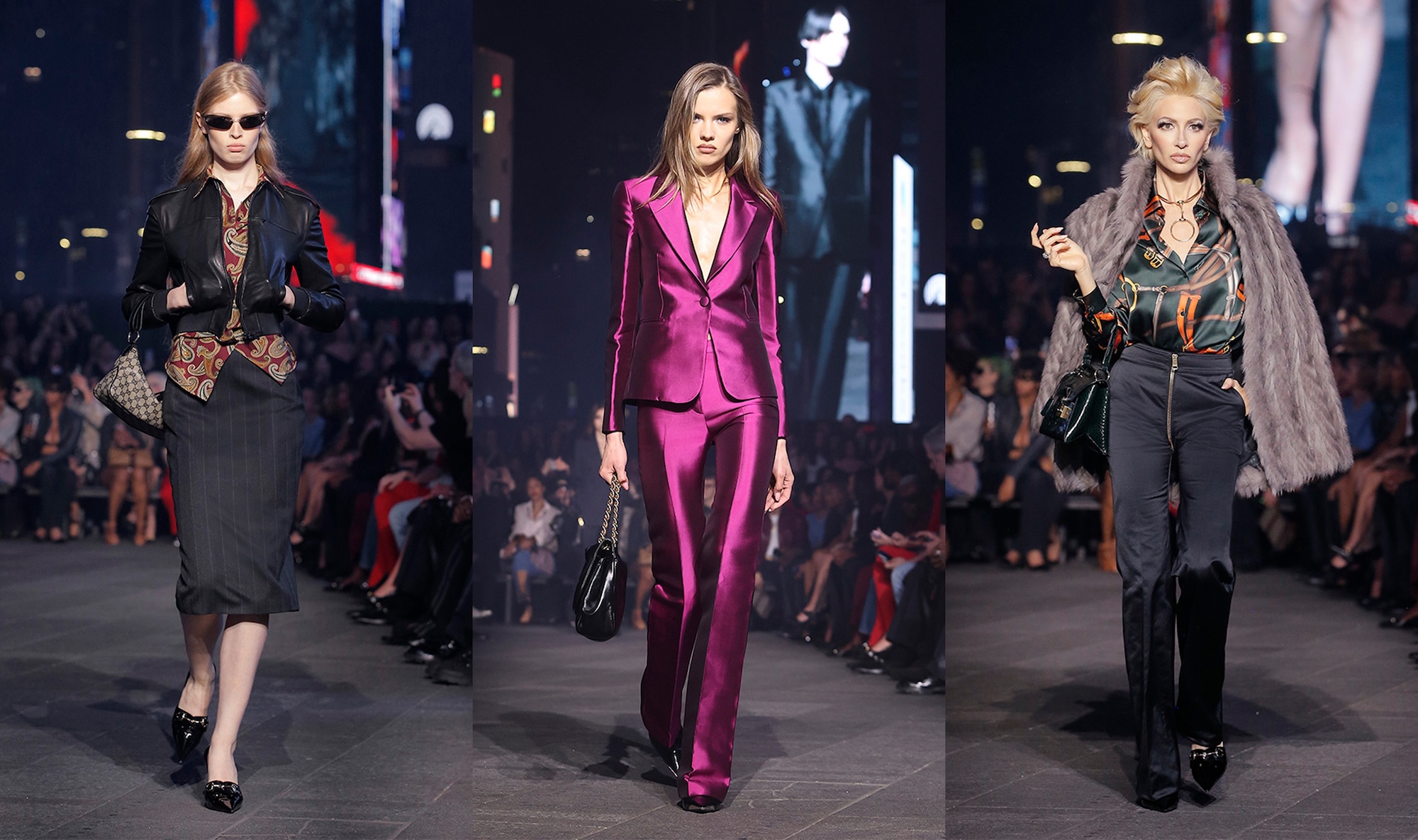
How good does GucciCore really need to be?: In America, Gucci is an adjective, and Kering needs it to be synonymous with big-time sales again. That’s partly why Demna, Gucci’s no-longer-quite-new designer, decided to call his first Cruise show for the brand GucciCore and stage it in Times Square—the country’s most unvarnished representation of consumer culture. In the show notes, Demna’s Gucci is described as “pragmatic”—not a very Gucci sentiment, but
an honest one. His self-stated mission is to give the brand meaning beyond its history of individual creative directors: We think of Gucci in terms of eras—the Tom Ford period, the Frida Giannini age, the Alessandro Michele years—and yet Demna seems to want his era to be more about Gucci itself, even if all his design signatures are redolent in the looks.
|
-
Is that possible? I received far less on-the-ground feedback about this show than Dior, but what I heard was positive: great energy on the floor, sharp clothes, a clear idea of what Gucci represents in the current market—the requisite tackiness, but all with integrity. I liked the exposed zipper satin trousers and scarf blouse worn by Sabine Getty, and the shiny pink suit. The knee-high boot is really good, and will sell. And the casting—Tish
Weinstock, Cindy Crawford, a peptide-pumped Tom Brady—was just right for the moment.
The only legitimate criticism I heard post-show was that, for a designer who has made a career of defying expectations, there was nothing surprising on display in Times Square. Demna is being contrarian, but in the ways we expect him to be. I’m not sure if our expectations are just too high at this point, if fashion is
over, or if it’s a little bit of both. After all, this is a Cruise show. No one is even supposed to be looking at it, or dissecting it, or thinking about it for more than a few moments.
|
|
|
|
A MESSAGE FROM OUR SPONSOR |
Agentic commerce isn’t a future concept. It’s already reshaping how people shop. Static storefronts are giving way to
guided, conversational experiences that don’t just surface products. They drive decisions and conversion in real time. Swap’s Agentic Commerce 101 breaks down what’s real and what it means for brands right now. Inside:
|
• What agentic commerce is and why most AI tools don’t qualify • Why AI discovery platforms aren’t built to convert for your brand • Why owning your AI experience and your data is becoming non-negotiable |
|
|
|
-
The Marc Jacobs payout: So what did licensing firm WHP Global pay for Marc Jacobs after all that? There was a lot of talk about the $1 billion valuation attached to ABG’s ill-fated deal to buy the brand from
LVMH, and skepticism that the luxury conglomerate might fetch another suitor anywhere near that number. Sure, net revenue, including licensing royalties, reached around $600 million in 2025. But that figure was down from a recent peak of $690 million in 2023. Given the nature of the business, it was only likely to decline further. According to people familiar with the finances, sales are set to continue to decline in 2026. (Reps for WHP and Marc Jacobs did not respond to a request for
comment.)
It’s hardly a shock that the business has declined while one sale fell through and the transaction window was extended. But the truth is that the revenue may not be as critical as meets the eye: WHP is about to change the whole business model, and they’ve enlisted master scaler Morris Goldfarb and G-III as the operating partner. In the end, I’m told the deal was in the vicinity of $800 million. Not bad, especially for Jacobs
himself, who owned 20 percent of the business.
Not only will Jacobs make money, but I also suspect that he may extract pleasure out of creating a bunch of silly licensed products. Without getting too far ahead of ourselves, I even wonder if this deal could be game-changing in the licensing world. If WHP utilizes Jacobs as much as the company claims to want—from runway shows to beach towels—this collaboration could serve as a blueprint for how these firms work with creative talent going
forward. - Sam Hine’s destiny: New York magazine leadership has been making it very clear to advertisers that Sam Hine, the former GQ fashion writer who said goodbye last week amid layoffs and other defections at the Condé Nast publication, is not working for The Cut and, ergo, editor-in-chief
Lindsay Peoples. This morning, Vox Media, which owns New York, officially announced that Hine is joining the magazine as senior men’s style editor to help launch a stand-alone men’s fashion issue. What it will be called is to be determined.
Hine will also start writing a newsletter, as he did at GQ. I’m sure it will not pander too much; Sam did a good job at GQ of writing stuff in his newsletter that felt relatively
honest under the circumstances. I don’t blame Hine’s Shelter Island neighbor, New York editor-in-chief David Haskell, for delineating between this product and The Cut. A new book means a whole new set of advertisers, and hopefully not too many added costs. Congrats to Sam, it should be fun for all of us.
|
Now, more on the Everlane-Shein sitch… |
|
|
|
The irony of a self-styled “clean” fashion company selling to the apex fast fashion
juggernaut has not escaped anyone. At the same time, there was probably no other alternative. |
|
|
|
Yesterday, I broke the surprising news that Everlane is being sold for $100 million to Shein. Of course, the irony wasn’t lost on anyone that a basics purveyor founded on the altruistic notion of radical transparency was being ingested by perhaps the most notorious name in Chinese ultra-fast fashion. The deal might as well have been workshopped by brain-sick headline writers at The Onion. Shortly after I posted the piece, the comments about the absolute farce of it all started
flooding social media. |
|
|
|
A MESSAGE FROM OUR SPONSOR |
Agentic commerce isn’t a future concept. It’s already reshaping how people shop. Static storefronts are giving way to
guided, conversational experiences that don’t just surface products. They drive decisions and conversion in real time. Swap’s Agentic Commerce 101 breaks down what’s real and what it means for brands right now. Inside:
|
• What agentic commerce is and why most AI tools don’t qualify • Why AI discovery platforms aren’t built to convert for your brand • Why owning your AI experience and your data is becoming non-negotiable |
|
|
|
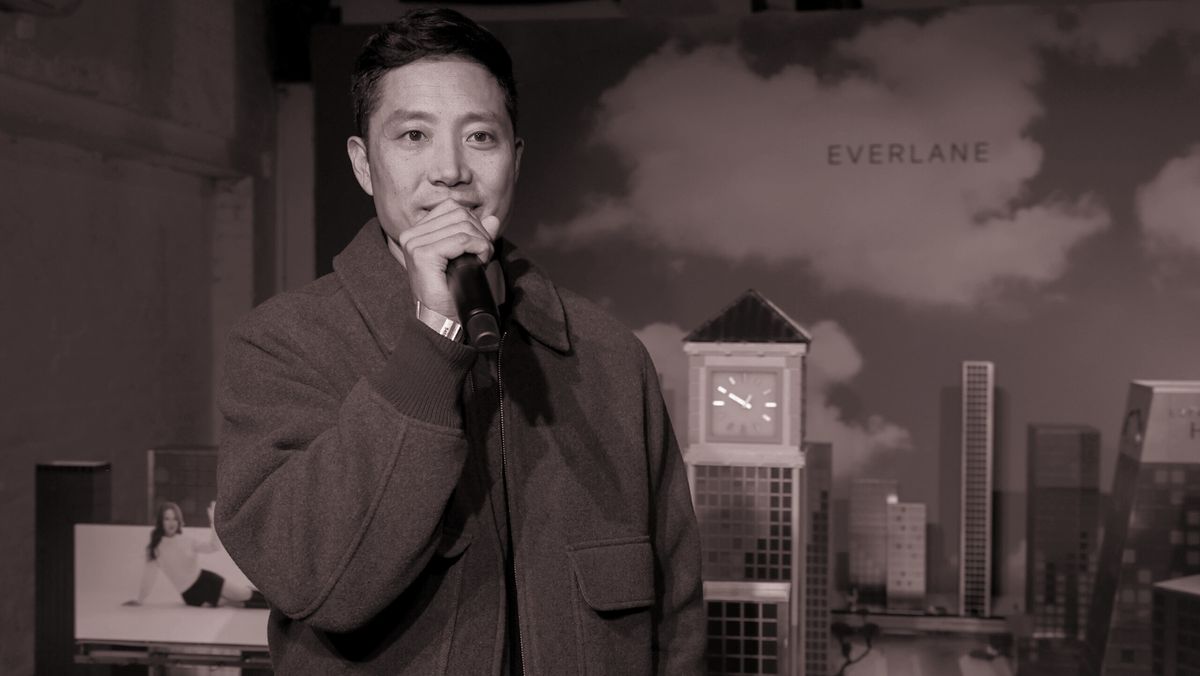
Michael Preysman founded Everlane in 2011 with a unique value proposition:
He wanted to create a brand that communicated honestly with consumers about how their clothes were made and how much it cost to make them—all while leaning into a distinctly Millennial, post-American Apparel gestalt that aligned with white leather sneakers and West Elm midcentury grey couches. Everlane filmed documentaries inside its factories, shared sourcing information on its website, and ushered in an era of venture-backed consumer brands that leaned heavily on descriptors like “clean” and
“sustainable.”
Alas, capitalism and the realities of the global fashion business got in the way. Preysman left Everlane years ago after selling a majority stake to L Catterton, the private equity firm. Even though he had stayed relatively involved in the early days of the acquisition, he has moved on fully in recent years, starting a new company that sells magnesium-electrolyte drinks. The
bigger issue was that L Catterton needed to offload Everlane, which generates around $160 million in sales and loses money, and there really weren’t any takers. I’m told Shein was interested in Everlane’s supply chain, which is pretty impressive.
After I reported in March that C.E.O. Alfred Chang was looking for a buyer (or at
least someone to service the debt), the company got into hot water over its office lease in San Francisco, where the landlord claimed it owed more than $94,000. Many employees were laid off. In the end, there was no one willing to pay enough besides Shein, which I’m told is on a mission to acquire brands with decent intellectual property. They have money, and want to foster deeper ties with Western consumers. I would expect more acquisitions in the coming months. |
Perhaps the hand-wringing is unavoidable, but L Catterton wasn’t under any obligation to honor the original
altruistic intentions of Everlane’s founders. The company had a fiduciary responsibility to secure the best exit possible for their limited partners. It’s unlikely that any of Everlane’s original investors were paid out in the new deal—common stockholders (i.e., the employees) were obviously wiped—but some benefitted when L Catterton took the majority stake for $85 million in 2020.
For what it’s worth, I also don’t blame Preysman for how things turned out. I believe the
original ethos was genuine. When the brand launched, I was part of the target demographic, and enjoyed its modular approach to merchandising—pieces were dropped daily rather than whole collections at once—as well as its normcore finishes. But it’s naive to believe that Everlane was started for any reason other than to make money. And this sort of high-minded strategy made a lot of sense in the Obama era, but it seems like a relic in a MAGA age at war with D.E.I. and so-called
wokeness.
Back then, I occasionally expressed my concern that compassionate rhetoric was a dangerous marketing tool, and could result in public backlash. My specific fear was that one of Everlane’s factories, which they were so proud to film, would be exposed as a fraud down the road. That never happened, but this deal has fulfilled that anxiety, even if consumers don’t know much about Shein’s manufacturing conditions or really anything about their process. It may sound cynical, but this
whole thing is a reminder that even the most high-minded people don’t actually vote with their dollars. |
|
|
|
What I’m Reading… and Listening To…
|
The best of the Cannes red carpet so far: Chloé Zhao in
Schiaparelli, Léa Seydoux in Louis Vuitton (here and
here), Adèle Exarchopoulos in Saint Laurent, Dua Lipa in
Jacquemus, Demi Moore in Jacquemus, Cate Blanchett in
Louis Vuitton, Odessa A’zion in Dior, and Woody
Harrelson in Celine.
Matt Belloni and Peter Hamby discuss the Cannes red carpet dress code. [Puck’s The Powers That Be]
I received many notes regarding
Taylor Swift’s white peplum shirt by Stella McCartney, nicely belted and paired with tasteful trousers and sandals by The Row and a chic little Fendi bag. “Is this the best she’s ever looked?” many asked. I honestly prefer the ribbed Retrofête dress (very figure
skater) and Dior bucket bag—feels more her. Anyway, she looks fine. The bangs are insane. [Marie Claire]
Yes, Nicole Kidman is a client of CAA, which is owned by Artémis, the family office of the Pinault family. They also own Christie’s. Does this explain why Kidman was cast in this
Christie’s commercial promoting the sale of 16 of the most-prized works owned by Si Newhouse, the late owner of Condé Nast? Maybe, maybe not, but just laying out the facts. [ARTnews]
People are mad that Derek Blasberg, Sarah Jessica
Parker, and Andy Cohen attended the opening of Primark in New York City. Primark is a truly skanky fast fashion retailer founded in Ireland where I used to buy $1 pairs of socks when I was poor and living in London right after college. [Back Row]
I felt, uh, triggered
reading Famesick and had to stop. Then I started to feel like I was missing out on something important, so I went the audio route. Hearing Lena Dunham read it grew my empathy for her. She is a gifted writer. As one silly but incisive person on Instagram put it, it’s “Just Kids for the girls who once owned an American
Apparel tennis skirt and had a Milk Bar birthday cake.” [Audible]
Demna’s former assistant and her wife have created a bedding line that is very pretty and elegant. Peter
Copping gave a quote! [N.Y. Times]
A simple and entertaining explanation of why the Audemars Piguet and Swatch collaboration is such a big deal. [N.Y. Times]
Here’s
a very clear-eyed assessment of the Richemont business. [BoF]
Chip Wilson appears ready to end his Lululemon proxy war after the company sent a letter to shareholders on Monday accusing him of harming the brand. “There is no reason why we cannot reach a resolution to this fight quickly,” Wilson said in a statement.
(We’ll surely have more here soon.) [Chip Wilson] |
Until tomorrow, Lauren
P.S.: We use affiliate
links because we are a business. We may make a couple bucks off them. |
|
|
|
Need help? Review our
FAQ page or contact us for assistance. For brand partnerships, email ads@puck.news.
You received this email because you signed up to receive emails from Puck, or as part of your Puck account associated with {{customer.email}}. To stop receiving this newsletter and/or manage all your email preferences, click here. |
Puck is published by Heat Media LLC. 107 Greenwich St., New York, NY 10006 |
|
|
|
|