Hello, and welcome back to Wall Power. I’m Marion Maneker, writing to
you from Minneapolis, which is packed with visitors for back-to-back, completely unrelated concerts from Lady Gaga at Grand Casino Arena and Morgan Wallen at U.S. Bank Stadium. I’m not here for either, but roundly entertained by those who are—and wondering whether anyone could be attending both.
While I ponder that, I’m going to share another piece from our partners at Air Mail—this one on Austrian artist Maria Lassnig, who currently has three shows in various cities in the United States and Germany. Up top, Christie’s just announced a consignment from Marilyn Arison, who was the widow of Carnival Cruise Lines founder Ted as well as the grandmother of the current president of MoMA’s board of trustees, Sarah. And Phillips has bumped up the break
points on its buyer’s premium. So much for the art advisor complaints about rising B.P.s.
Also mentioned in this issue: Édouard Manet, Henri Matisse, Pierre Bonnard, Pablo Picasso, Louise Bourgeois, Arnulf Rainer, Willem de Kooning, Jackson Pollock, Robert Storr, Edvard Munch, and
more…
Let’s get started… |
-
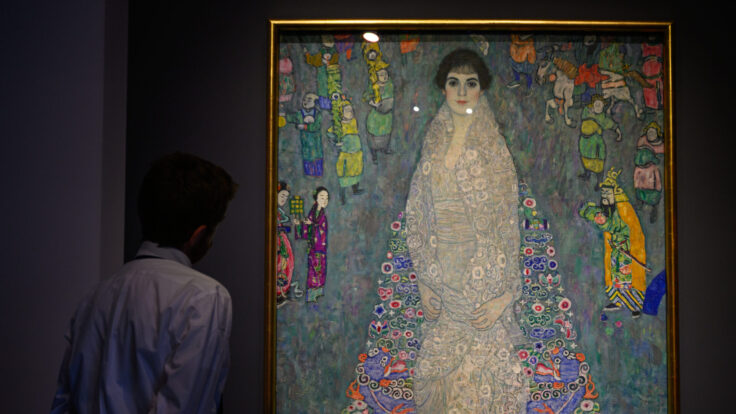
One of Manet’s peonies heads to Christie’s: In the 1860s, Édouard Manet painted six known works featuring peonies, five of which are now split between the Musée d’Orsay in Paris and the Met in New York. The sixth was owned by Lin Arison—widow of Carnival Cruise Lines founder Ted Arison—who died late last year. Painted in 1864, the work will be for sale this May at Christie’s with an estimate of $7 million. Works by Henri Matisse, Pierre
Bonnard, and Pablo Picasso will also be included in the sales.
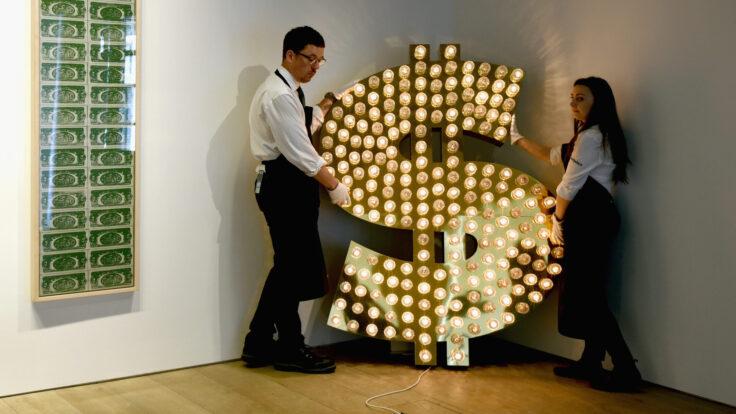
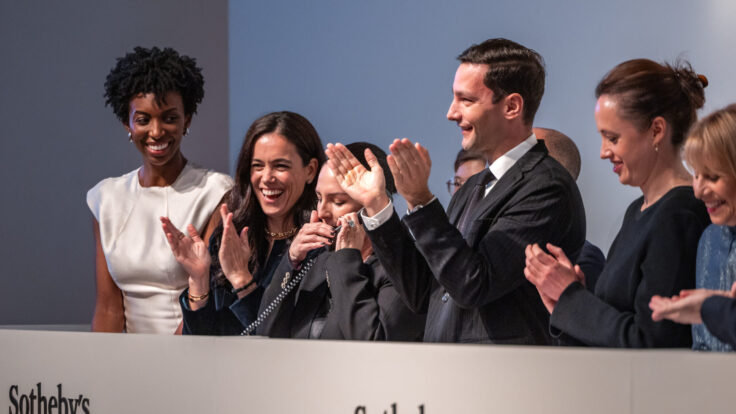
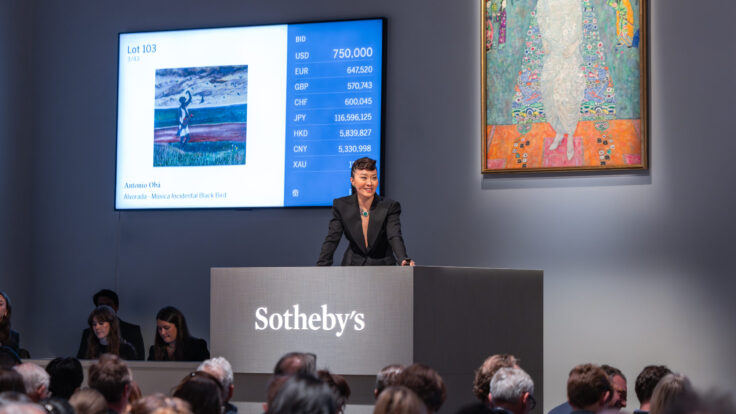
- Phillips juices the buyer’s premium: Phillips announced on Friday that they’re increasing the break points on the buyer’s premium. Winning bidders will now pay 29 percent on the first $2 million, 22 percent up to $8 million, and 15 percent on the remainder above. (The previous break points were $1 million and $6 million.) Technically, the buyer’s premium has not
increased, but the higher rate will apply to more of the company’s sales of fine art. In London, the break points will be at £1.5 million and £6 million.
|
|
|
|
Three concurrent exhibitions pay tribute to the Austrian artist whose radical
explorations of self defied the strictures of the male-dominated 20th century art world. |
|
|
|
You might have found her standing or sitting or even stretched out on a canvas on the
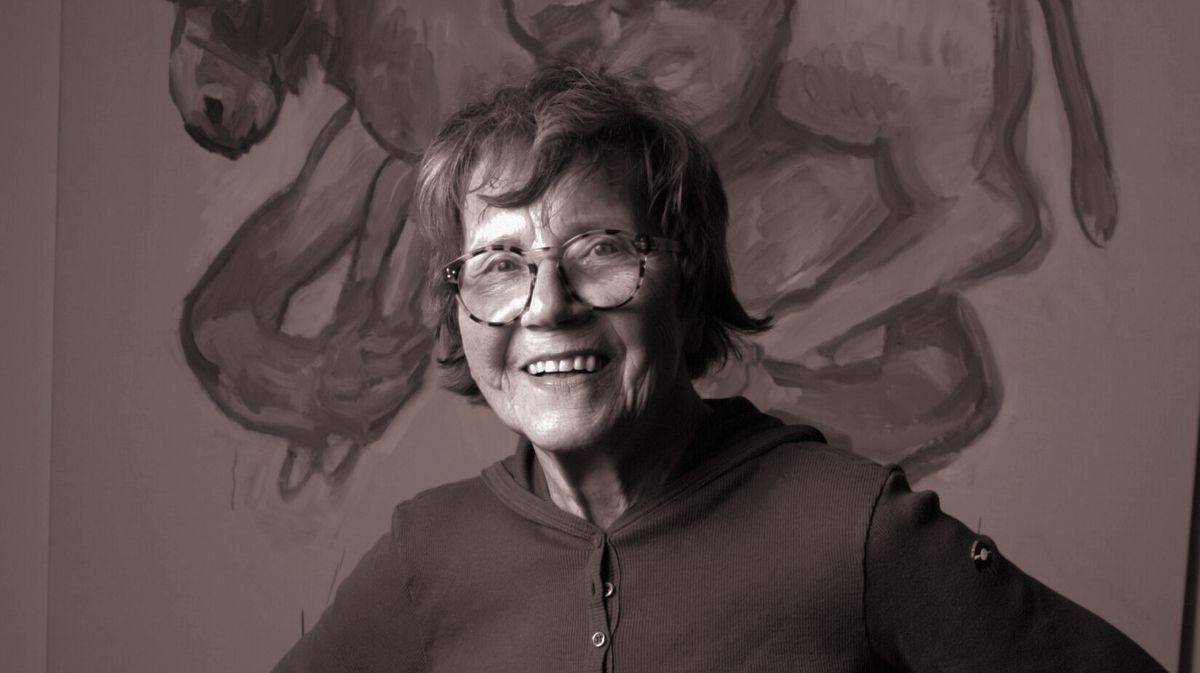
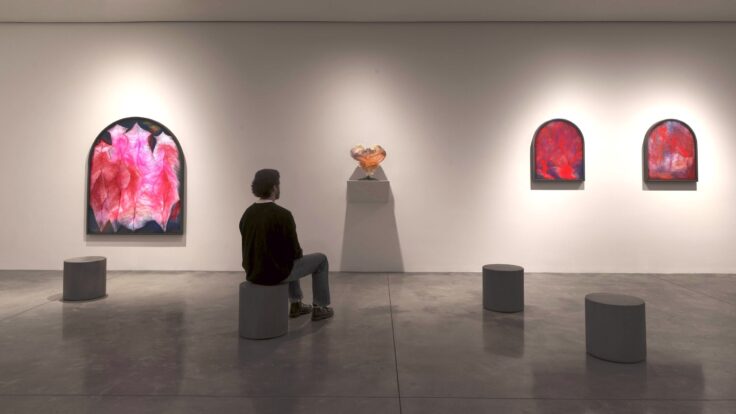
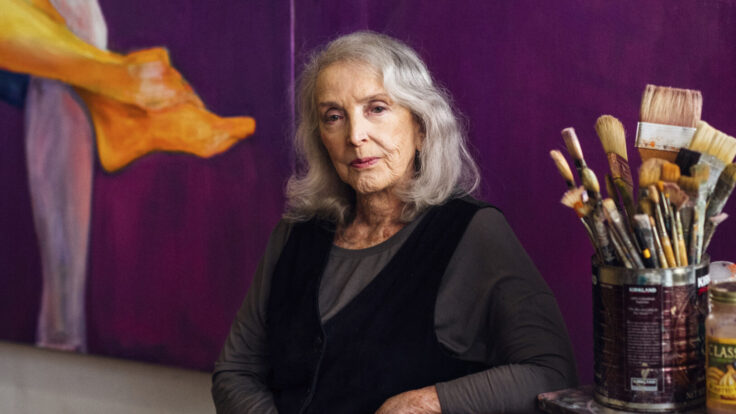
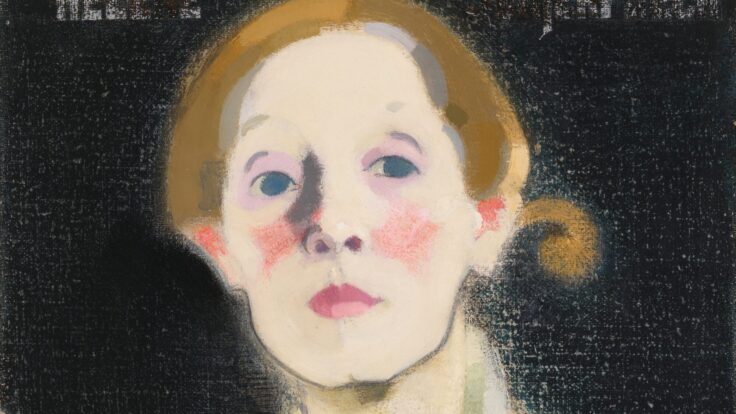
floor, downloading every bodily sensation, eyes wide shut to capture the evanescent colors inside her eyelids before she began to paint. Through these and other radical methodologies, the Austrian artist Maria Lassnig (1919–2014) channeled her perception of a moment and made the invisible visible. Just now, her art is the subject of three concurrent exhibitions: Flow of Paint = Flow of Life, at the Hamburger Kunsthalle; Honey, You’re a Wonderful Model, at the
Des Moines Art Center; and Maria Lassnig, at Petzel, in Manhattan.
“I will not be put into one box,” said Lassnig. Like Louise Bourgeois, she did not allow a male-dominated art world to muddy her highly diverse practice, which depended on a deep exploration of self. To this day, her work resists categorization.
Born illegitimate, Lassnig grew up in rural southern Austria. Early neglect and domestic volatility brewed extreme sensitivities. She found refuge
in drawing, and on the advice of a fortune teller, her mother enrolled her in the Academy of Fine Arts Vienna. Though she excelled, she chafed under the Nazi-inflected curriculum. No more “brown sauce,” she later declared. It was glimpses of so-called degenerate art, labeled and banned by
the Nazis, that captivated her.
Back home after the war, she found a new studio, which became a magnet for artists and writers. At once coquette and vixen, Lassnig was notorious for her wicked wit and tempestuous affairs with younger men, which often ended in disaster. Art was always her first love. Even when she caused a scandal in 1949 by painting an erotic male nude, she
still managed to get a solo gallery show that same year. |
The
Birth of the She-Wolf
|
In 1951, Lassnig traveled to
Paris with the artist Arnulf Rainer and, despite their draconian poverty, was soon immersed in the city’s rich artistic milieu. After leaving surrealism and cubism behind, and inspired by seeing de Koonings and Pollocks, she became entranced with the gestural freedom of abstraction. Returning to Vienna, Lassnig brought a new minimalism to
her “body sensations.” She bitterly resented the lopsided attention given to Rainer and the other male artists whose innovations were no more original than her own.
Wresting herself from the exigencies of gender and heart, Lassnig moved to Paris in 1961. Her studio permitted the creation of larger works that seesawed between abstraction and realism. Thick lines of acid green, reds, and yellows mapped a new kind of body awareness. In 1964, the death of her mother—her fiercest ally—plunged
her into depression. She began painting monsters and severed body parts. The critic Robert Storr would write, “One can’t really imagine waking up in bed with one of her double-jointed contraptions.”
In 1968, Lassnig decamped to New York, relieved to encounter a flourishing women’s movement. After a short course in animation, she
began work with bare-bones equipment on a series of 10 hand-drawn films based on body awareness. On view at the Des Moines Art Center, these films are lively, ironic, and, like her paintings, keenly autobiographical.
In turn, Lassnig’s paintings became animated by technology and mutations. A face sprouted a camera or a muzzle, or fell into fragments on a table. A body multiplied or was pierced. Few understood what she was after, and the disaffection of press and friends unmoored her.
Hence, in 1980, Lassnig accepted the first female professorship offered by the University of Applied Arts Vienna. Students clamored to get into her classes but nevertheless feared the “she-wolf.”
Lassnig finally had money and job security, and was receiving numerous awards and solo exhibitions. But she never overcame her discomfort and mistrust. “I have no skin,” she said. “All my nerves are exposed.” Paintings of cellophane-wrapped bodies were testament to feelings of isolation and
vulnerability. Lending her paintings for exhibitions struck terror: They were the children, the husband, she didn’t have. This later work is in the show at Petzel.
The exhibition at the Hamburger Kunsthalle pairs Lassnig with Edvard Munch, one of her heroes. Their affinities are plain. Both used painting as a form of self-examination: Color, brushwork, and composition all served to relay physical phenomena. Munch was more emotional; Lassnig more analytical. Yet they both
relied on images of nature, the bond with animals, and, notably, a scream, as mediums for pain and transformation. And, like Munch, Lassnig often felt misunderstood.
Her last film, Kantate (1992), is a witty, sung autobiography—and it’s available on YouTube. Why not let Maria explain herself to you? |
It’s a short one tonight since I’m traveling. But I’ve got a lot more coming up this
week.
More soon,
M |
|
|
|
Puck founding partner Matt Belloni takes you inside the business of Hollywood, using exclusive reporting and insight
to explain the backstories on everything from Marvel movies to the streaming wars. |
|
|
|
Ace media reporter Dylan Byers brings readers into the C-suite as he chronicles the biggest stories in the industry:
the future of cable news in the streaming era, the transformation of legacy publishers, the tech giants remaking the market, and all the egos involved. |
|
|
|
Need help? Review our FAQ page or contact us for assistance. For brand partnerships, email ads@puck.news. You received this email because you
signed up to receive emails from Puck, or as part of your Puck account associated with {{customer.email}}. To stop receiving this newsletter and/or manage all your email preferences, click here. |
Puck is published by Heat Media LLC. 107 Greenwich St., New York, NY 10006 |
|
|
|
|