 |
|
Hi hi, and welcome back to Line Sheet, you lucky people!
I have some news for you that I know I won’t regret. Starting this week, I’m going to be coming at you every Monday and Thursday—I’m having too much fun and there’s too much for me to cover in one ’sletter. If you’re already sick of forwarding this private email to friends and enemies (i.e., your coworkers), please reach out to Fritz@puck.news to talk about a corporate subscription.
Today, I’m diving deep into the world of the one-and-only Chanel. Plus, I’ve got the latest on what the heck is happening at everyone’s favorite luxury supplement, WSJ., (just kidding, they’re all sensational) and doing my best to explain the Rhuigi Villaseñor-Bally split.
Mentioned in this issue: WSJ.’s post-Kristina O’Neill contenders Sarah Ball, Elisa Lipsky-Karasz, Dale Hrabi and Rory Satran; Bally, the Reinman family, Jab Holdings, Schiaparelli, Krispy Kreme, Ludovic de Saint Sernin, Einstein’s Bagels, Chanel, Nicolas Ghesquière, Louis Vuitton, the Weirthheimer Family, Amanda Mull, Timothée Chalamet, Chanel, Virginie Viard, Leena Nair, Pietro Beccari, and many more.
But first, an update on the latest fashion media gossip…
|
|
|
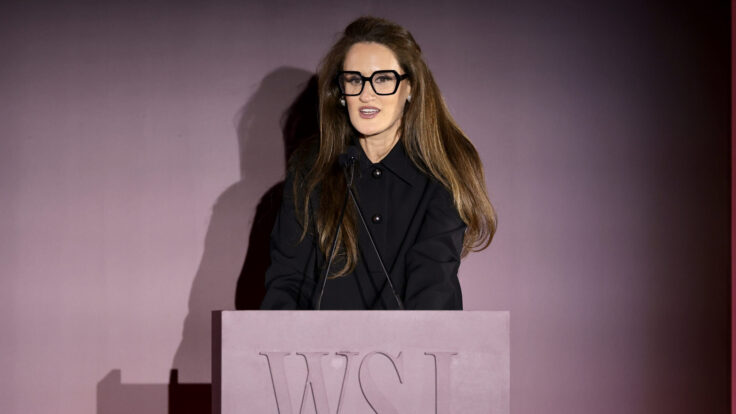
| I’m hearing from a bunch of different camps that the WSJ. editor job will likely be an internal promotion—sorry to everyone who applied after I posted that job listing. But maybe there’s still hope? As of early last week, Emma Tucker, the Journal’s newish, very Murdochian editor-in-chief, had yet to make a decision on who that person would be. I’m told that Tucker, who arrived from London in February, has made similar types of cuts across the paper, with a goal of streamlining costs, but also sharpening the focus of the overall enterprise. The two names that keep popping up are Sarah Ball, who runs the digital-focused Style News Desk and reported into on-her-way-out editor-in-chief Kristina O’Neill, and Elisa Lipsky-Karasz, O’Neill’s longtime deputy. (Even before WSJ., Elisa worked with Kristina at Bazaar.) Less likely but still possible: Rory Satran, the paper’s official fashion director, whose knack for writing viral stories about viral trends (coastal grandma, etc.) is unmatched—but, of course, these jobs are much more about favor-trading with Paris and Milan and proffering some anachronistic incandescence of cool or luxury.
However, my wild card pick is Dale Hrabi, editor of the successful weekend section Off Duty. Hrabi’s sensibility is less quiet luxury, more let’s-act-like-our-readers-aren’t-the-richest-in-the-world, but he’s a masterful editor with an ability to spin plain-jane story ideas into something worthwhile. (Again, just to be transparent, I used to write a lot for Hrabi’s section but have only met him once when he sort-of interviewed me for a job that I didn’t want.)
Many of you asked whether WSJ. creative director Magnus Berger, who is also O’Neill’s outside-of-work partner, is staying put. Look, it’s hard to fathom a situation where he’d stick around. But as far as I know, no other changes have been made on the masthead… yet.
Am I missing someone obvious? Hit reply!
Again, before we get to the Chanel of it all, a little designer musical chairs intrigue… |
| Notes on the Rhuigi Exit from Bally |
|
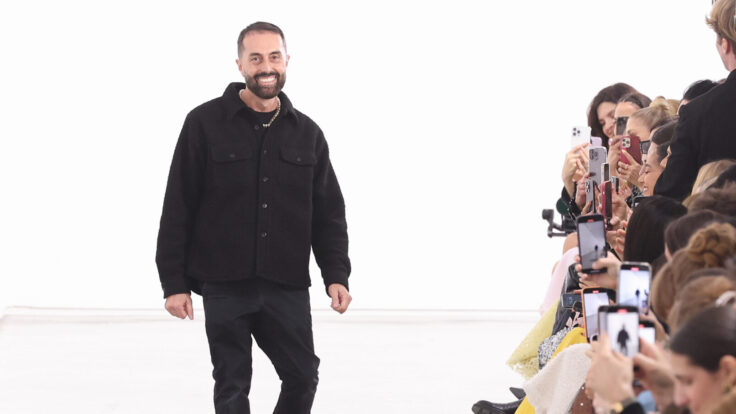
| So, what really happened with Rhude designer Rhuigi Villaseñor’s lightning-fast departure from Swiss leather goods house Bally, where he was creative director for less than a year? Especially given that sales at the company are up 20 percent in 2023 from a year earlier—not a bad showing.
I messaged Villaseñor last week via Instagram to see if he wanted to talk about it, and he responded in a very L.A. way—“Would love!”—while noting that it was he who decided to resign and not extend the contract. (I followed up to schedule a time to speak, but haven’t heard back just yet. Hopefully soon!)
Anyway, there’s been a lot of chatter in some corners of the Internet about what actually went down: Did all the traveling back and forth from Switzerland get the best of him? (Burnout is real.) Did Villaseñor fail to lift sales as much as Bally expected? Was Villaseñor “always on vacation,” as several commenters noted, and there was simply no way of moving forward with the partnership?
Villaseñor is certainly a polarizing character. His own line, Rhude, is very successful—generating more than $30 million a year in sales and plenty of investor interest. I first noticed the proliferation of Rhude at Nobu Malibu, where guys were mixing it with Louis Vuitton, Dior, and Fendi. (It was my anniversary and we ate at the bar.) One secret to Villaseñor’s fast rise was that he had the guts to charge $500 for logo-ed basketball shorts and $795 for printed camp shirts, convincing a bunch of influential celebrities (Jay Z, Ben Simmons, Michael B. Jordan) that the clothes were worthy of their cost.
Not everyone agrees. We need a new term to refer to the hypebeast community (I find the “streetwear” label racist or at least classist, and “urban” needs to be exiled from the industry lexicon). But whatever you want to call it, many influencers within this realm seem to resent Villaseñor’s approach.
That ability to sell, however, was the reason Bally hired him: He has a good sense of what people want to buy and how much they will pay for it. (For instance, he was very early to this Formula 1 thing that’s happening in American culture, and makes a bunch of racing-adjacent products now.) Out of the several debut collections at Milan Fashion Week in September 2022, I rated Bally between okay (Maximilian Davis at Salvatore Ferragamo) and a travesty (Filippo Grazioli at Missoni). Villaseñor’s take was very “Y2K Tom Ford”—correct timing, but the bags and shoes in particular were too stiffly designed to actually work commercially.
I did, however, assume that he’d get a boatload of celebrity placements (paid, unpaid, who knows?), and I was right about that. In recent history, Bally has been popular with two main groups of people: guys who wear suits, and guys from the early 1980s who were into hip-hop and wore Bally sneakers—the first luxury trainer of its kind, they say—and he was clearly attempting to target both, along with women.
Runway shows and celebrity placements are just marketing, though. It’s not only about the person with first-billing in these situations. It’s about the people working around them, the access to great factories, great real estate. However it ended with Bally and Villaseñor, it was almost guaranteed not to work out. Bally is owned by Germany’s Reinmans family, the billionaires behind Jab Holdings, best known for their controlling stakes in bagels, coffee and donuts, from Einsteins and Peet’s to Krispy Kreme. The Reinmans abandoned luxury in 2014 with the dissolution of Labelux, a group that also included Jimmy Choo and Belstaff, which were sold off to others. For one reason or another, they kept Bally, but it’s not a category of expertise. Even with all the financing in the world, which Bally certainly does not have, it would be next-to-impossible to successfully reinvigorate a brand like this without near-perfect execution. (Which means its prospects are limited, if not entirely diminished.)
My expectation is that we’re only going to see more quick changes—Ludovic de Saint Sernin’s even more abrupt exit from Ann Demeulemeester happened just a few days after this—and fewer examples of investors letting a designer cook (Daniel Roseberry at De Valle-owned Schiaparelli is an exception). Meanwhile, I’ll let you know if Villaseñor gets back to me with anything to the contrary, but I’m sure he knows all this better than anyone. |
 |
| The Chanel Spell |
| Gossip abounds and rumors swirl: Is Nicolas Ghesquière headed for Chanel? What are the Wertheimers really thinking? But the real story is a lot more complicated, if decidedly less sexy. |
|
|
|
| On my first day at Puck, a juicy tip landed in my inbox from a longtime fashion executive whom I’ve known for more than a decade. “But what about all the talk or is it confirmed, of Jonathan Anderson going to Louis Vuitton to replace Nicolas [Ghesquière] who goes to Chanel… to take over from Virginie [Viard]…?” I responded with news of what I had heard in Paris just a few weeks earlier: Still-new Louis Vuitton C.E.O. Pietro Beccari was happy for now to continue working with Ghesquière, who has been leading women’s at the LVMH-owned fashion house for nearly a decade, despite persistent rumors that the designer is on his way out. Beccari has plenty to manage with the arrival of Pharrell and the launch of his first men’s collection this June, and Ghesquière signed a contract not too long ago. So… just rumors.
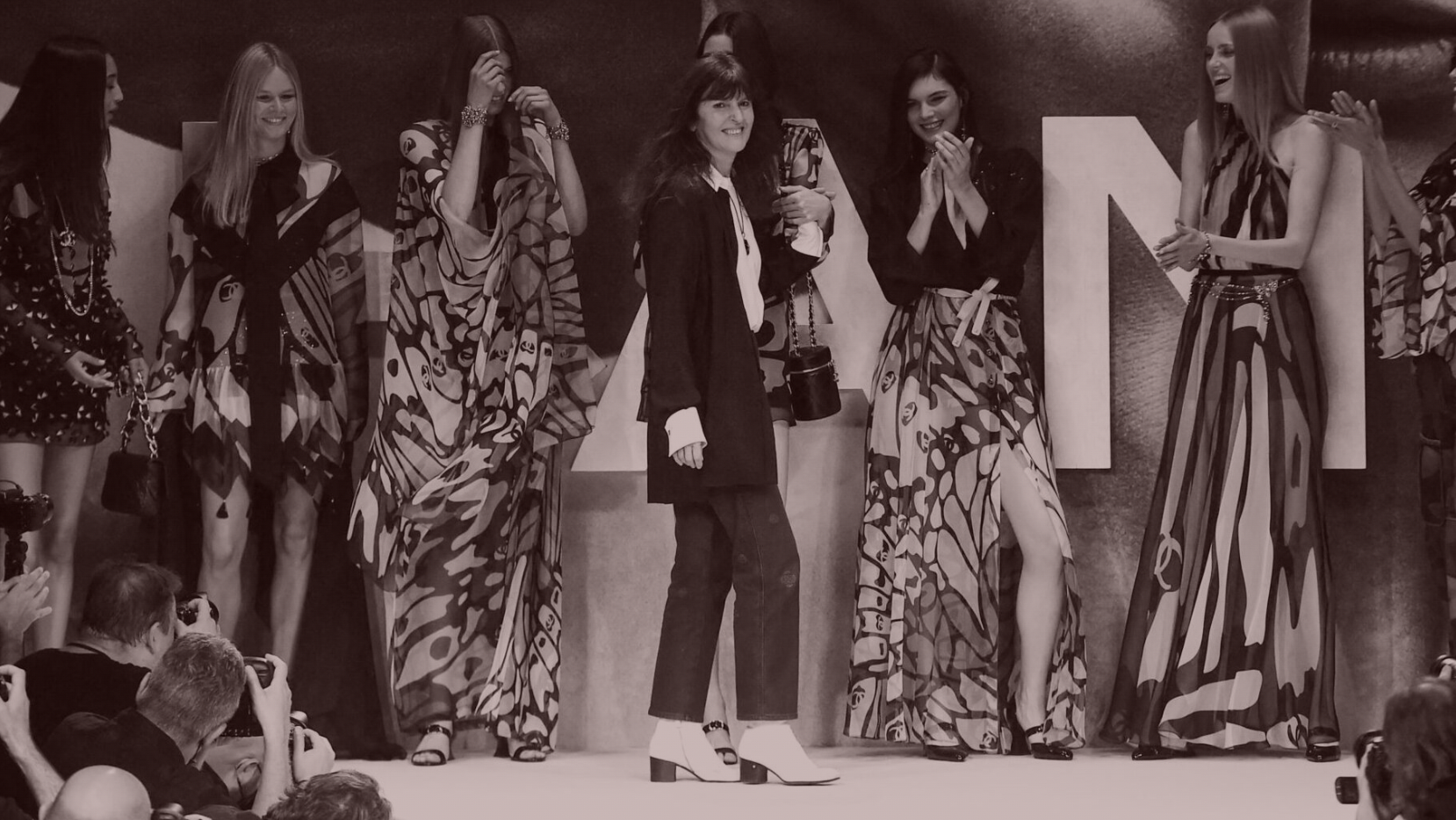
But the rumors kept persisting, and by the time Chanel staged a 900-or-so-guest runway show at the Paramount Studios here in Los Angeles on May 9, it was all everyone was gossiping about at fashion parties and dinners around town. The talking point was that Viard’s tenure was always meant to be temporary, and that Ghesquière’s particular talents (his interest in texture and layering, his obsession with shape and structure), made him an ideal successor at Chanel, which has access to an incredible range of fabric mills and specialist manufactures, like the feather and flower house Lemarié, which the company owns. Ghesquière, like many designers, has also apparently dreamed of the Chanel job for decades—all the way back to his years at Kering-owned Balenciaga.
I still think, despite the logic, the odds are not in favor of it being true. At this point, Chanel doesn’t really need a superstar designer. It has the strongest brand DNA of any fashion house, and those codes are more powerful than any one person’s touch. (As for whomever is designing red carpet… that person needs to answer to God about Marion Cotillard’s jorts at Cannes.) Representatives for Chanel and Louis Vuitton declined to comment.
Plus, the reality is that shaking up the whole ready-to-wear business in such an extreme way feels out of character for the Wertheimers, who have owned Chanel for nearly 100 years, and run it as if they plan to own it forever. The Wertheimer family are sort of the antithesis of the Arnaults: they have been called “secretive” in the past, including by me, although perhaps it’s more accurate to say that they are simply private. They don’t court the media for coverage about themselves, the businesses they own, or their investments unless absolutely necessary. They also have other, way more important things going on. |
|
|
| Think about the last month alone. There was the Chanel-sponsored Met Gala and Costume Institute exhibition, which is essentially a months-long, dynamic advertisement for the house. (Every person who visits the Met will think of Chanel at least once.) Then came a much-ballyhooed reopening of the Rodeo Drive store—a shrine to V.I.C.s (very important customers)—followed by the Cruise show at Paramount. Just a week later, Timothée Chalamet was announced as the new face of the fragrance Bleu de Chanel, an important celebrity partnership, especially in light of the brand losing longtime ambassador Pharrell to Louis Vuitton. (A Line Sheet fan asked if Chalamet’s deal was anywhere close to Johnny Depp’s reported $20 million arrangement. My educated guess would be no. Most of these agreements are $3 million to $5 million over a three year period.)
Meanwhile, global C.E.O. Leena Nair, who joined in January 2022, seems to be focused not on marketing or design, but the customer experience. She spent three decades prior moving up the ranks of Unilever, the consumer packaged goods conglomerate, and her expertise is in human resources, a unique trajectory for someone in her position. Maureen Chiquet, her longtime predecessor, left the business after disagreeing with the Wertheimers on the creative direction—she wanted to replace Karl Lagerfeld, they wanted to let him work until he died, which they did—but Nair is obsessing instead over the way in which Chanel sells, not simply what it is selling. And this dynamic, both what she is interested in and what she won’t touch, is probably one main reason why the family decided upon her appointment. After spending time in Los Angeles with entertainment industry executives, she headed up to the Bay Area, I’m told, to meet with companies like Google.
Makes sense to me, because Chanel really needs to figure out what it’s going to do about selling online. At the moment, its own e-commerce channel is extremely limited, with handbags, shoes and clothing accessible only in stores or via one-on-one messaging with retail associates. (This is a sneaky way of selling online without it feeling so pedestrian.)
Would straight-up e-commerce generate more sales? Sure. But the great thing about being a private company is that you can be as greedy as you want to be. After all, Chanel is one of the biggest luxury brands in the world without traditional e-commerce. In 2021, sales were $15.6 billion, up 23 percent from pre-pandemic. Maybe the Wertheimers don’t see a problem worth fixing.
The company only started releasing financial figures annually five years ago—mostly as a branding device to show what a strong position it is in. Unlike most of its competitors, Chanel has no shares floating on the public market. (Nair recently told Lauren Indvik at the Financial Times that there are zero plans for an I.P.O.) It’s a controlled investment, like a sports team or Condé Nast, subject to the whims of a phenomenally wealthy family who can evolve it at their pace.
To a point, at least. Chanel posted an operating profit of $5.5 billion in 2021, and employed close to 29,000 people that year. We’ll see how the business fared in 2022 in the coming weeks, when those numbers are released. But in order to be able to continue that trajectory, it will need to maintain a certain level of ubiquity beyond fragrance and beauty sales. Luxury, in concept, used to be about exclusivity: now it’s about perceived exclusivity. |
|
|
| As it becomes increasingly normal to spend thousands of dollars on luxury goods, brands like Chanel are going to have to figure out how to stay top-of-mind. On Friday, I had a coffee with a designer who you’ve probably never heard of: He works with fewer than 40 private clients, and has no interest in press, just wants to make interesting things for people who are interested in interesting things. He charges the same as Chanel for his clothes (say, five figures for a jacket), but doesn’t need to augment the work in any way because it’s so intimate.
I see high-end fashion moving in two directions: either toward this guy, who does ultra-specific, niche work; and then toward Chanel, which needs to maintain the patina of uniqueness while satisfying a global audience, whose tastes and consumer preferences are shape-shifting before our very eyes. In the near term, companies like Chanel—and Hermès, and LVMH and Kering—are untouchable and will continue to sell to the wealthy masses no matter whether the debt ceiling is breached or anything else terrible happens. But over the long-term, consumers are going to demand more mass-market luxury. That’s why dorky concepts like leapfrogging e-commerce are important to get right. So while the fashion crowd cares about whether Ghesquière has landed the job, the real drama is taking place at another altitude, over his head. |
|
|
| “The C-Word Is Everywhere Right Now—And Not in a Bad Way.” OK, but fashion people defanged this word years ago. [Rolling Stone]
Amanda Mull wrote about Stealth Wealth, but she really wrote about how TikTok ruins everything pure and good. [The Atlantic]
There are no new ideas in fashion—even if we seek them desperately. This collection of stories explores why our culture is obsessed with the concept of originality, even if it’s a total fallacy. [Vox]
The reason The Row worked is not because the Olsens are famous, it’s because they are good designers. The reason Jessica Simpson worked is because she knew she wasn’t a designer, and focused on merchandising, marketing and great distribution. Every celeb brand in between needs to not exist. [BoF]
Notes on the athleisurefication of the runway, which I have to say, I don’t mind. [Vogue Runway]
Thanks to Who What Wear Chief Content Officer and recommendations queen Hillary Kerr for including Line Sheet and Puck in her weekly newsletter this week. Hillary does not suffer fools, so I’m doubly flattered. [Hi Everyone]
Also mentioned in Hi Everyone: longtime fashion writer and denim expert Jane Herman launched a newsletter. She is really good. Sign up. [Jane on Jeans]
Every time I’m supposed to go to Flamingo Estate for an event, something bad happens. (And I live five minutes away. It’s really sad.) I’m relieved Marisa Meltzer stopped by, though, because you gotta get a load of this place, which I truly believe could make Richard Christiansen extremely rich if he lets it. [NY Times]
How companies sell you on the idea of community. Especially of interest if you are one of those companies! [Vox]
Armani’s announcement about staging couture at the Venice Film Festival hit different from the typical destination runway show press release. [WWD]
I found this article infuriating on a lot of levels—Can you really call those lace-ups sneakers? Are the shoes the worst part of these outfits? Can we actually have a discussion about these suits?—but probably worth reading anyway because we should be talking about the poor fashion choices of male politicians with more frequency. [NY Times]
A comprehensive overview of this year’s Cannes red carpet. [Go Fug Yourself] |
|
|
| On the Nadaam drama: “Rumor has it a consortium of Naadam suppliers flew from China to New York to demand back payment.” –A fashion C.E.O. (More on this soon!)
“Just got the really promotional part of the Acquired LVMH pod ep. ‘Seems like kids each genuinely earned their roles at the companies’ my eyes are rolling out of my skull.” –A tech startup C.E.O.
“I work in advertising strategy, and when Tiffany launched the ‘Not Your Mother’s Tiffany’ campaign around the same time as the Knowles-Carter campaign, we called it ‘working on two competing briefs.’ The current partnerships don’t clearly express Tiffany’s modern P.O.V. That’s why the Nike collab was so disappointing. I didn’t like ‘Not Your Mother’s Tiffany’ (you never want to win new customers by isolating your current ones), but at least it was saying something. I hope they can move past this phase and focus on crystalizing their own P.O.V.” –An agency executive |
|
|
Until Thursday,
Lauren |
|
|
|
| FOUR STORIES WE’RE TALKING ABOUT |
 |
|
 |
| Lazard Succesion |
| Notes on a major Wall Street succession, SVB lessons, and ESPN calculations. |
| WILLIAM D. COHAN |
|
 |
| ESPN’s Future |
| What will the next generation of sports fandom look like? |
| DYLAN BYERS |
|
 |
| One Shaheen Moment |
| Unpacking the upper chamber’s secret foreign policy scandal. |
| JULIA IOFFE |
|
|
|
|
|
 |
|
|
|
Need help? Review our FAQs
page or contact
us for assistance. For brand partnerships, email ads@puck.news.
|
|
|
|
Puck is published by Heat Media LLC. 227 W 17th St New York, NY 10011.
|
|
|
|