Hi, and welcome back to Line Sheet. By the time you read this, I’ll be this close to landing in Los Angeles, where I plan to stay put for the summer (do not tempt me). If you’re at the Bezos- Sánchez wedding right now, text me. Also, I hope you enjoy tomorrow’s pajama party.
I had an exceptionally good time in Paris: Thanks for all the coffees, conversation, and information. If I can make one recommendation, run to the Wolfgang Tillmans show at the Pompidou. It’s dynamite. I have a friend who is flying to Paris—in August, of all months—just to see it. I support this decision.
Speaking of dynamite, let’s hear it for Jonathan Anderson at Dior. It would have gotten raves no matter what, but these accolades are more than well deserved. (I want to write in all caps but I’m practicing restraint.) I’ll be back on Monday with more realness on Dior, Condé Nast, and news of a fashion brand on the block. Today, Sarah Shapiro is here with a smart take on the post-privatization state of the Nordstrom Anniversary Sale, and a look at the Bally effect that I spied at the men’s shows. For the grand finale, Sarah also heads to the east side of Los Angeles, where she gets inside the mind of Clare Vivier, who shares her views on thoughtful expansion.
Programming note: I made a brief appearance on How Long Gone this morning to discuss American Vogue succession with Chris Black and Jason Stewart. It’s funny, listen ( here or here)!
Mentioned in this issue: Clare Vivier, Clare V., Fossil, Tom Kartsotis, Steven Alan, Jamie Haller, Maya Brenner, Nordstrom, Bally, The Row, Prada, Ashley Harris, Celine, Kate Spade, and many more…
|
|
|
|
A MESSAGE FROM OUR SPONSOR
|
Now Viewing: FRAME Sotheby’s. A limited-edition collection from the California fashion house and the world’s leading name in art and design. Explore now at FRAME.
|
|
|
Three Things You Should Know…
|
|
|
 |
Sarah Shapiro |
|
- Nordstrom’s summer cleaning: Nordstrom’s annual anniversary sale used to be road-trip-worthy for exclusive, one-time-only merchandise and on-trend brands. The company just went private earlier this year, so it would’ve been a nice moment to secure some new, strategic vendor partnerships and really make the event an event. Alas, anyone hoping for a return to form at this year’s sale, which starts July 12, might be disappointed. Influencers will still feel obligated to go because of affiliate commission, I’m told, but all the social chatter suggests their followers are frustrated by the boring inventory. At least the iconic yellow bags remain.This might just be a blip. Recent channel checks reveal that Nordstrom has been taking more aggressive markdowns on aging, slow-moving inventory—a sign that they’re clearing deadweight, and taking advantage of not having to publicly disclose their margin and EBITDA to do some spring cleaning. Without quarterly earnings pressure, Nordstrom can eventually rebuild this off-price event properly, rather than spill out the factory-outlet-style derivatives you can also get at Nordstrom Rack.
- The Bally effect: This summer, off-duty but still here-for-it footwear—mainly boat shoes, moccasins, and loafers—are being put through the bauble machine by brands like Bally, The Row, and Prada. The result is a somewhat kitschy twist on the prep classic. It’s fun to imagine how an older generation would have interpreted the trend: Paris Review founder George Plimpton, who liked a boat shoe; John Updike, a fan of mocassins; and Audrey Hepburn, who often slipped into loafers, would surely have been scandalized.Nevertheless, plenty of brands are getting in on the trend. Other examples come from Wales Bonner, Isabel Marant, and Freda Salvador’s upcoming collaboration with Ashley Harris—the 2025 CFDA/Vogue Fashion Fund finalist and the designer behind Don’t Let Disco. I’m crossing my fingers that Minnetonkas make a comeback.
- The summer of Suzie: I’ve heard from several multibrand boutiques that Suzie Kondi’s terry sets—a quasi-reinvention of the Juicy Couture tracksuit—have been selling out. It’s a great moment for Suzie, who has been working her tail off. “We’ve reordered them throughout the season,” Betsy Goldin of Litchfield County’s Pinnacle told me. Kondi’s recent success has largely come from the sale of sets rather than individual pieces. They’ve made up no less than 80 percent of her sales, and, over the past 18 months, have helped her brand grow 50 percent year-over-year. The sets offer the comfort of athleisure, but with a more elevated, less Lycra feel, and are often summery: See her ba&sh collab and Hampton Jitney partnership. Kondi has also opened showrooms in Antwerp and Paris. For brands, matching sets are a win-win: They increase purchase order size, and buying matching materials in bulk improves margins.
|
|
|
|
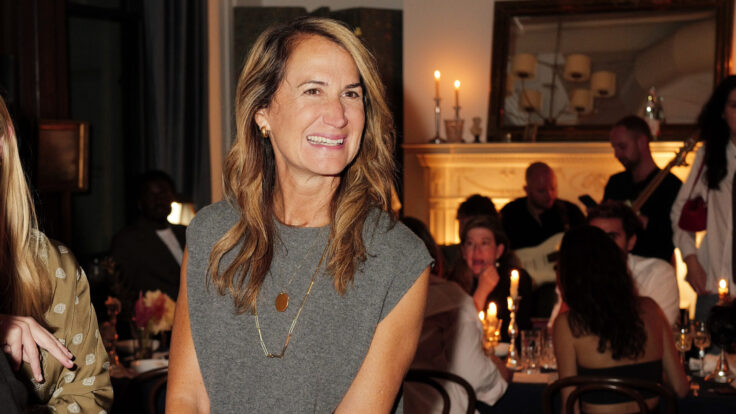
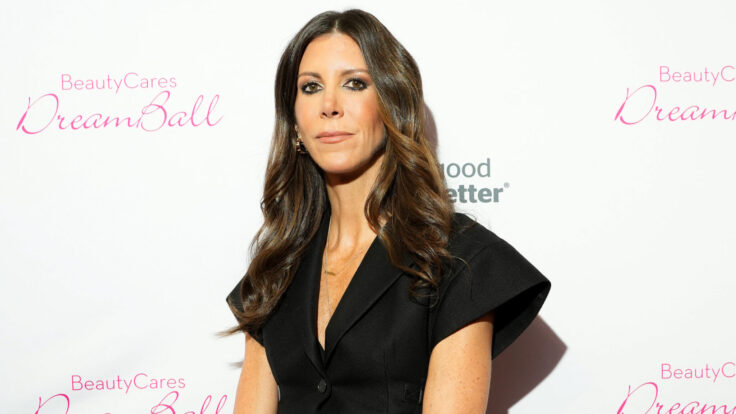
Clare Vivier, the founder of Clare V., explains her commitment to Silverlake before it was cool, and her thoughtful, neighborhood-centric, very personal retail expansion. The inevitable question: Can the brand scale?
|
|
|
|
When Clare Vivier opened her first Clare V. store in Silverlake, in 2012, the neighborhood east of Sunset Junction in Los Angeles was by no means a retail destination. In fact, she told me, landlords and developers tended to avoid it altogether. But things have changed over the past decade and a half: The neighborhood has become a bastion of midcentury modern mavens with record players and “rescue” purebreds—it’s basically Williamsburg West. Vivier, an American designer with French taste, is renovating the original Silverlake store, which will nearly double in size to 1,100 square feet. Clare V. has been expanding its national footprint, too.
|
|
|
|
A MESSAGE FROM OUR SPONSOR
|
Now Viewing: FRAME Sotheby’s. A limited-edition collection from the California fashion house and the world’s leading name in art and design. Explore now at FRAME.
|
|
|
|
Vivier’s approach to expansion is slightly unorthodox: Like other retailers, she uses e-commerce data to identify promising markets, but ultimately makes the decision by walking through the neighborhood. In the end, she prioritizes community over foot traffic: “Where do we feel like we want to fit in and belong?” she told me.
So far, this strategy has been worked out for her 14 U.S. locations, although she still works with retailers like Nordstrom for coverage in key mall locations, for a retail mix that’s 80 percent direct-to-consumer and 20 percent wholesale. She has two more stores scheduled to open in Texas over the next year and a half, which will be her entrée into the Lone Star State. (Of course, what works for one retailer doesn’t work for everyone—one brand recently told me that their own Silverlake location, where Vivier is growing her footprint, was its worst-performing store globally.)
But the real test of Vivier’s retail philosophy won’t be measured by geographic expansion, but whether her business model can withstand the economic pressures reshaping American manufacturing and retail. Once a poster child for American-made accessories, with all of its products manufactured domestically, the share of goods that Clare V. manufactures stateside has dipped below 50 percent at the worst possible time. “We are well positioned [to weather tariffs] given that we have a lot of production in L.A.,” she told me, “but the problem is all of the components that come from overseas.”
Even with California factories, Clare V. sources leather from Italy and hardware from Asia. Trump’s tariffs have created “a real burden on the company,” she told me, forcing scrambling across shipping, financial, and merchandising departments. Clare V. has also absorbed other pressures that specifically impact teams based in Southern California—everything from the L.A. fires in January to the recent ICE raids on factories in the area. Clare V. boasts $75 million in net annual sales projected for 2025, with no debt
and consistent profitability, but these are the kind of external events that test a brand’s operations and resilience.
|
|
|
|
So far, Vivier has managed to scale the business without much outside help. She still controls the majority of equity in the company, which she co-owns alongside Fossil founder Tom Kartsotis—whose Bedrock Manufacturing (also an investor in Shinola and Filson) holds just under 30 percent—and pioneering boutique multibrand retailer Steven Alan, who owns 7 percent. Her approach to product development is similarly personal: Rather than hiring consultants or chasing viral trends, Vivier has built new categories by testing her friends’ businesses through a “Friends of Clare V.” program, in which she invites designers like Jamie Haller and Maya Brenner to occupy shelf space—essentially turning her stores into a mini marketplace. She was among the first serious D.T.C. brands to do so.
|
Clare V. occupies an underserved niche in the mid-priced accessible luxury market—adjacent to Kate Spade, perhaps, but more design-forward. The handbags are mostly under $400, while still appealing to a customer who might buy Celine or Goyard but is looking to trade down, or searching for an everyday, more “casual” alternative to those bags. I can’t go a weekend without seeing a dozen women wearing either the Grande Fanny (I swear it sounds better if you say it with a French accent) or the brand’s distinctive trucker hat emblazoned with “Le Vibe.” Clare V. is also testing new categories, like jewelry and ready-to-wear, and dropping so many handbag straps they’re on the verge of being over-assorted.
The Clare V. model may work, but it’s not easily replicable, and is still testing the bounds of its ability to scale. It’s also a company that is very much reliant on the founding vision of Vivier, herself, who made a smart early bet on Silverlake as a shopping mecca and grew the business at her own pace. While other founders have become overleveraged or overextended, and traded ownership for venture capital, Vivier’s retail expansion strategy has tried to be thoughtful about location, location, location. That’s among the never-ending tensions between personal connection and business growth—a balancing act that, sooner or later, breaks most founders. Here’s hoping Clare can pull it off.
|
|
Have a great weekend,
Lauren
P.S.: We are using affiliate links because we are a business. We may make a couple bucks off them.
|
|
|
|
Puck fashion correspondent Lauren Sherman and a rotating cast of industry insiders take you deep behind the scenes of this multitrillion-dollar biz, from creative director switcheroos to M&A drama, D.T.C. downfalls, and magazine mishaps. Fashion People is an extension of Line Sheet, Lauren’s private email for Puck, where she tracks what’s happening beyond the press releases in fashion, beauty, and media. New episodes publish every Tuesday and Friday.
|
|
|
|
An essential, insider-friendly Hollywood tip sheet from Matthew Belloni, who spent 14 years in the trenches at The Hollywood Reporter and five before that practicing entertainment law. What I’m Hearing also features veteran Hollywood journalist Kim Masters, as well as a special companion email from Eriq Gardner, focused on entertainment law, and weekly box office analysis from Scott Mendelson.
|
|
|
Need help? Review our FAQ page or contact us for assistance. For brand partnerships, email ads@puck.news.
You received this email because you signed up to receive emails from Puck, or as part of your Puck account associated with . To stop receiving this newsletter and/or manage all your email preferences, click here.
|
|
Puck is published by Heat Media LLC. 107 Greenwich St, New York, NY 10006
|
|
|
|