|
Welcome back to the Wall Power Inner Circle. I’m Marion Maneker.
Art finance may seem like a niche subject, but it speaks to a key issue for the growth of the art business. Put simply, a great deal of capital has been searching for a way into the art world, but there are surprisingly few points of entry. Adam Chinn thinks he’s found one. It relies on a paradox: Art’s value is a direct reflection of the availability of capital, and yet the market makers are starved for capital. Tonight, I’ll explain Chinn’s solution.
|
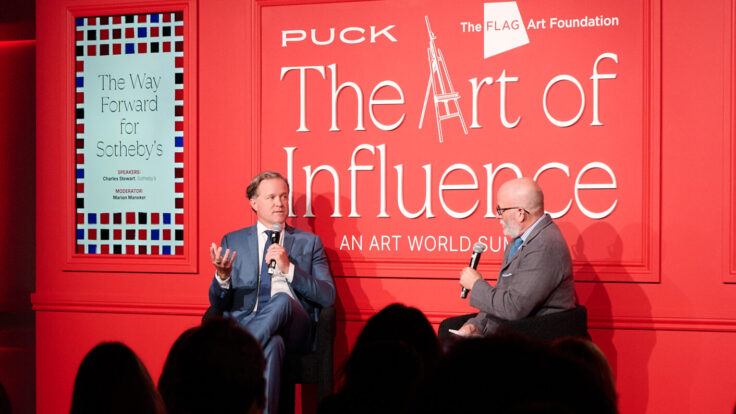
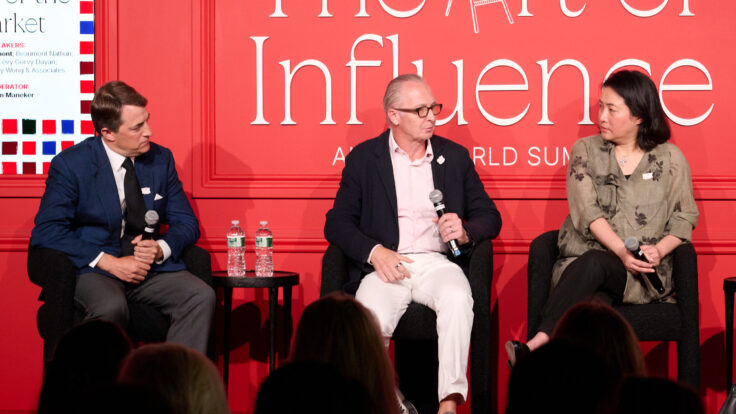
I hope you’ve heard the news that Puck and the FLAG Art Foundation have announced our first summit, The Art of Influence, taking place on September 15 in New York at SECOND, an event space in Midtown. We’re planning a day of frank conversation among the people who set the art world’s agenda, and you’ll have unparalleled access to them— Larry Gagosian will be our first featured guest, along with noted collector Glenn Fuhrman, in conversation with artist Nicolas Party. Dasha Zhukova, the founder of Ray, has agreed to join us, too, with more names to be unveiled this summer.
Since the venue is intimate and exclusive, tickets are limited, with a discount for Inner Circle members (upgrade your subscription here and then get your tickets here). The event will take place from 10 a.m. to 4 p.m., leaving you plenty of time to get work done. Our goal is to focus on museums, auction houses, galleries, advisors, and the most pressing issues and opportunities in the global art world. Come join me and Glenn.
Let’s get started…
|
- Reimagining the art fair: The Independent art fair has announced dates for next spring (May 14-17) and a new location on the Lower East Side, at the 70,000-square-foot Pier 36—three times the size of its former home at Spring Studios. The space offers Independent an opportunity to reimagine the art fair experience once again.Founders Elizabeth Dee and Matthew Higgs aren’t planning to expand the number of galleries at the fair; the biggest problem they see with art fairs is that they’re overwhelming and overstimulating. So the two are going to work with their architecture and design teams to create something that Higgs describes as “focused and familiar, organic and intuitive.” Overall, the nut they’re trying to crack—and which they have consistently chipped away at with each iteration of their fairs—is how to avoid presenting art in a trade-show atmosphere.
|
|
|
|
A MESSAGE FROM OUR SPONSOR
|
The first steps towards a masterpiece starts with a dream. The all-electric BMW i7 – the evolution of
brilliance. Learn more at
BMWUSA.com
|
|
|
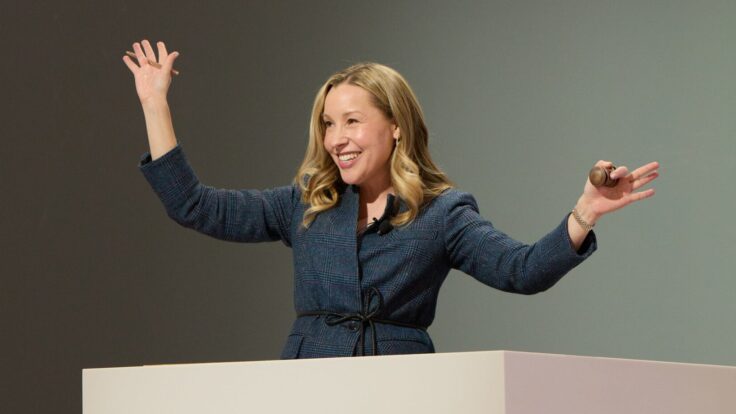
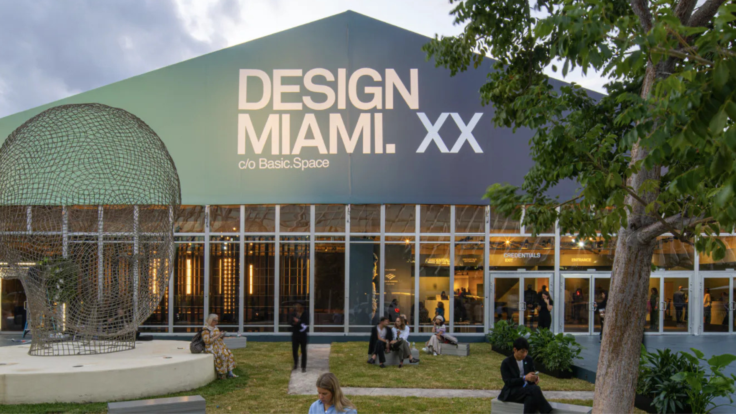
- Design Miami on the move: I caught up with Design Miami C.E.O. Jen Roberts yesterday to hear about her plans for the fall. Design Miami will have localized programming, aimed at community development, in Aspen in late July, and in Seoul over the first two weeks of September, in collaboration with the Seoul Design Foundation. Then, in October, Design Miami returns to Paris, and the Hôtel de Maisons, with its expansive gardens, for a fair that’s become a highlight of the Paris art week. In December, Design Miami returns home to Florida for its 21st fair curated by Glenn Adamson.
- MoMA announces Marcel Duchamp retrospective for April 2026: This morning, the Museum of Modern Art announced that it will open the first retrospective of Marcel Duchamp’s work in the United States in 52 years, at the Steven and Alexandra Cohen Center for Special Exhibitions. The exhibition brings together 300 works by one of the most influential 20th century figures, whose art raised and addressed the question: “Why is this art?”
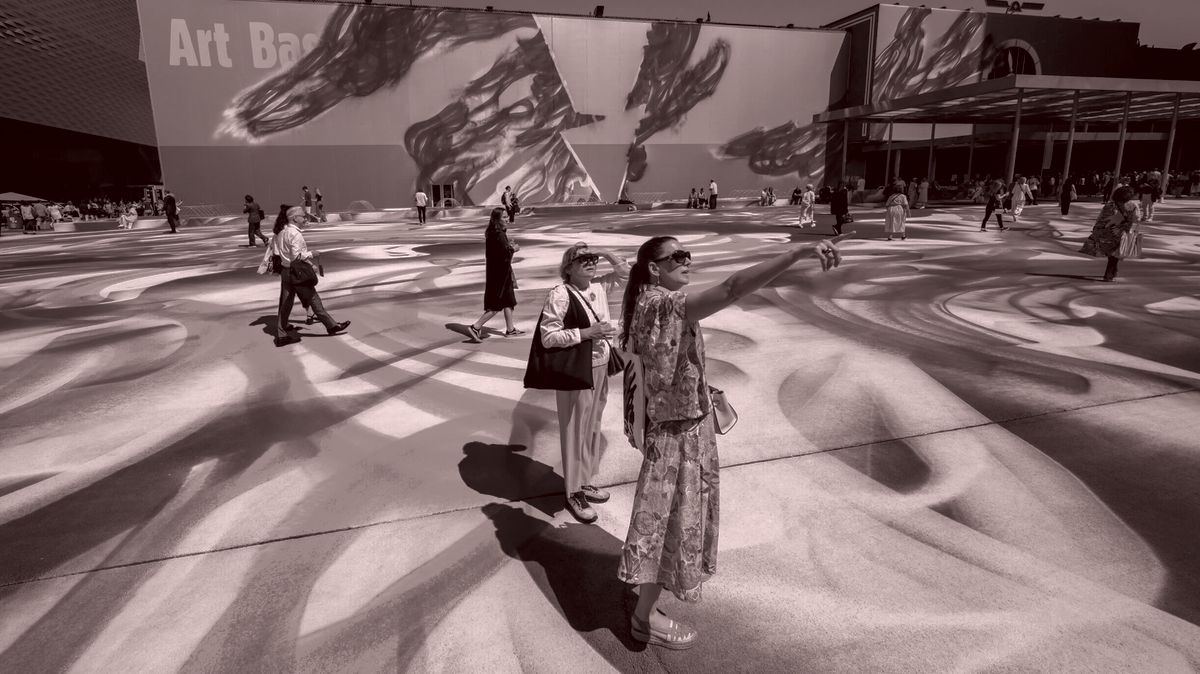
- More Basel deals: James Cohan sold a work by Jesse Mockrin for $125,000, and an Eamon Ore-Giron for $115,000. Crèvcoeur sold a Yu Nishimura for €115,000 ($132,000). Chantal Crousel sold a Gabriel Orozco for $190,000. Massimo De Carlo sold Jennifer Guidi’s Whispers of Life Beneath the Snow, from 2024-25, for $400,000. Stephen Friedman sold Jaune Quick-to-See Smith’s I See Red: Indian Heart, from 1993, to a U.S. collection for $750,000. Gladstone sold works by Keith Haring for $3.5 million; Alex Katz’s Lilies 11, from 2025, for $1.2 million; Robert Rauschenberg’s Signs, from 1969, for $1.2 million; and Amy Sillman’s Structure with black & yellow for $575,000. Hauser & Wirth sold Frank Bowling’s Iceni, from 1975, for $1.85 million; Zeng Fanzhi’s Water IX, from 2019-23, for $1.6 million; Louise Bourgeois’ Couple, from 2002, for $1 million; and Rashid Johnson’s Quiet Painting “Spectrum”, from 2025, for $1 million.Xavier Hufkens sold Tracey Emin’s Hunter, from 2025, for $1 million, and Alice Neel’s Pink Table, from 1956, for $1 million. Annely Juda Fine Art says it sold David Hockney’s Mid November Tunnel, from 2006, for $13 million. Karma Gallery sold Matthew Wong’s The Smoke, from 2017, for $1.2 million. Tina Kim Gallery sold paintings by Ha Chong-Hyun for $550,000 and Kim Tschang-Yeul for $300,000.
David Kordansky sold Jonas Wood’s Akio Takamori Shelf, from 2025, for $975,000, and Shio Shelf, from the same year, for $900,000; Rashid Johnson’s Broken Soul “Flight Risk”, from 2025, for $750,000; and Shara Hughes’s Protection Reflection, from 2024, for $450,000. Lisson Gallery sold Lee Ufan’s Response, from 2025, for $850,000 and Anish Kapoor’s Oriental Blue to Clear, from 2024, for $700,000. Mennour sold an untitled Joan Mitchell for €950,000, and Lee Ufan’s Response, from 2025, for $900,000. Pace Gallery sold a Louise Nevelson, Night Image 1, from 1964, for $850,000, and Loie Hollowell’s Pressure in blue-purple, from 2025, for $275,000.
Perrotin sold an untitled Takashi Murakami work for $550,000, and Hernan Bas’s The Overachiever #2, from 2025, for $400,000. Pippy Houldsworth sold two works by Judith Godwin for $195,000 and $150,000. Almine Rech sold paintings by Ewa Juszkiewicz for $500,000, Javier Calleja for €350,000 ($401,000), and Kim Tschang-Yeul for €250,000. Thaddaeus Ropac sold James Rosenquist’s Playmate, from 1966, for $1.8 million, and Robert Rauschenberg’s Lipstick (Spread), from 1981, for $1.5 million. Sikkema Malloy Jenkins sold Sheila Hicks’s Indigo Itinerant, from 2025, for $850,000. Sprüth Magers sold Rosemarie Trockel‘s Golden Brown, from 2005, for €850,000, and Barbara Kruger’s Untitled (WAR TIME, WAR CRIME), from 2025, for $650,000. White Cube sold Michael Armitage’s In the garden, from 2015, for $3.25 million; Tracey Emin’s We do not Sleep, from 2024, for $900,000; and Lynne Drexler’s Hovering Sentinals, from 1963, for $975,000.
|
|
|
|
With $1 trillion of art in private hands, and only 5 percent of it leveraged, the art market is nowhere near as liquid as other asset classes. A new art-secured lender, backed by the Nahmads and selling discretion, aims to change that.
|
|
|
|
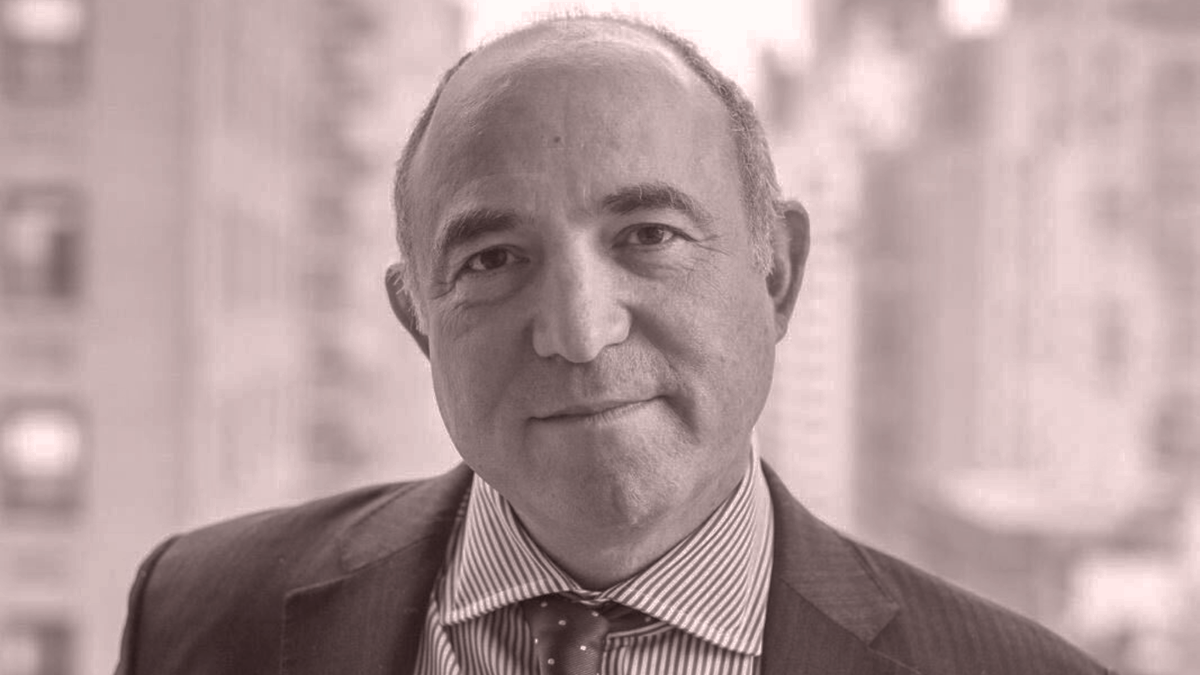
Last summer, the big news in the world of art finance was that wealthy art buyers were tapping into their collections to invest in the then-roaring equity markets. This summer, it’s the emergence of a major new art-secured lender that has just come out of stealth mode: International Art Finance, a Nahmad family project managed by Adam Chinn, a former partner at Wachtell Lipton, co-founder of boutique investment bank Centerview Partners, and the former chief operating officer of Sotheby’s.
Despite starting up less than two years ago, IAF has made more than $400 million in loans, with the goal of reaching $500 million by the end of this year. It has also partnered with a “major auction house” and received $125 million in additional funding from a “leading European bank.” Longer term, Chinn told me, he sees a much larger potential market for nonrecourse art lending. (He had no comment on the identity of the “major auction house” to whom IAF is providing “lending solutions,” but it’s probably Phillips, where the Nahmads have done significant financing deals with auction collections.)
|
|
|
|
A MESSAGE FROM OUR SPONSOR
|
The first steps towards a masterpiece starts with a dream. The all-electric BMW i7 – the evolution of brilliance. Learn more at
BMWUSA.com
|
|
|
|
The loan market has some significant players already—Bank of America is the category leader, with a loan book that, as of last year, was reportedly worth north of $10 billion and has, as I understand it, kept growing. But BofA’s loans are tied to the borrower’s net worth; they’re really lending against the clients’ entire portfolio, with the art as a sweetener. True art-backed lending leaves the underwriter no recourse beyond selling the art to satisfy the loan. Last year, Sotheby’s Financial Services syndicated some $700 million of the $1.6 billion it has lent against art, and Christie’s is
quietly loaning $600 million to its clients with art and jewelry as collateral, according to the Financial Times.
But not everyone wants to go to an auction house for a loan. Many collectors jealously guard their holdings from the auction houses, and dealers have even less reason to reveal their inventory to a potential future counterparty. In an industry that is less capitalized than most realize, there is apparently opportunity for IAF.
|
|
Auction houses have a natural advantage when it comes to making art-backed loans. They make money on the lending, but they also make money from the transaction fees if a borrower defaults. In general, though, auction house lending has moved away from structuring loans in the hope that it will get the property to sell. (If you want to make money off the lending, you will attract more customers by looking less eager to sell their art out from under them.)
Their other advantage lies in having access to the three key ingredients of art lending: 1) a cheap source of capital, 2) an ability to “underwrite the asset,” and 3) a network to generate deal flow. It’s worth going through each of these briefly, so you can see how the business works. Let’s start with cheap capital. Christie’s has access to the Pinault family’s enormous personal balance sheet—however they fund their $600 million loan book, it is backstopped by the Pinaults’ creditworthiness. Sotheby’s, the first movers in this market, used to have the advantage of being a public company with a strong credit rating, which allowed the firm to supply its financial services arm with affordable capital. Now, though, Alexander Klabin has unlocked the ability to syndicate loans, which has allowed S.F.S. to scale beyond its previous limits.
As for “underwriting the asset,” that’s just fancy finance talk for being able to come up with a relatively accurate valuation for a work to be used as collateral. Auction houses are filled with specialists whose primary job responsibility is knowing—or finding out—what people are willing to pay for a work of art, since that, and nothing else, is what determines its value. Finally, there are the network effects. With their global wingspans and teams of business-getters, auction houses are well positioned to sniff out potential borrowers. That usually means nothing more than telling a client that there are financing options available, and making a referral.
|
|
|
|
All of this is fairly straightforward—so much so, it makes you wonder why art finance has taken so long to develop. Or, as Chinn put it to me: “The art market has been powerful in its resistance to economic forces that have blown through every other market.” After all, Chinn said, lending (or leverage, as finance people like to call it) has been essential to the smooth functioning of every other market. And that’s essentially the huge opportunity he sees, with something like $1 trillion of art in private hands and only 5 percent of it leveraged.
|
|
The auction houses aren’t the only ones with an edge in art lending. Because of their extensive art holdings and private dealing, the Nahmad family can price the works of many top artists as well as, or better than, an auction house. Chinn believes his team can value a work within 10 percent of its eventual selling price. Basquiat works on paper, for instance, are hot right now; the Nahmads have sold a lot of them, and Joe Nahmad, who is taking the lead for the family on the lending business, knows the prices and potential buyers better than almost anyone else.
Because of that pricing advantage, International Art Finance is willing to tolerate more exposure than the traditional players. Whereas underwriters at an auction house can lend at a loan-to-value ratio of only 50 percent, Chinn and the Nahmads can use their superior market intelligence, higher risk tolerance, and greater ability to sell the asset (if absolutely necessary) to lend more against it. Further, because fewer decision-makers are involved, and because they’re all principals, not employees, they can be more agile and act faster. Chinn says they did one deal, from initial query to wiring the money, in about 10 days. In this sense, they’re behaving like a merchant bank.
The Nahmad family clearly has enough money to fund the $350 million currently on IAF’s loan book. And the European bank that kicked in $125 million is surely providing cheap capital because their risk is so low. That solves the cheap capital problem, at least for now. The Nahmads’ final, and possibly most important, edge is that they know so many people in the industry. Famous for having a free port full of classic art, the Nahmads not only sell art through their own businesses, but they also often consign their works to other dealers. I know one collector whose favorite pastime at Art Basel in Basel is to walk through booths of various secondary dealers, and try to identify which works are consigned from the Nahmads’ holdings.
Here’s where Chinn sees a place to open a space for leverage. It’s no secret that the market has been tough for the past two and a half years. That means there are dealers who are sitting on art, but haven’t made sales, and they’re going to need to tap into those works to get by. No dealer really wants to go to an auction house for a loan, since that would mean revealing their inventory. But there hasn’t been another reasonable source of capital until now.
One of the great mysteries of the art market has always been how dealers, large and small, finance their businesses. There are any number of interesting and secret deals going on. And though the art market thrives on excess liquidity sloshing around, the dealers who make the market are, according to Chinn, “starved for capital.”
I asked Chinn whether he’s worried that an eventual upturn in the market might threaten the future of his business—offering dealers more liquidity, and therefore less need for his loans. He was sanguine, and pointed me back to his earlier observation that financial leverage is essential to the smooth functioning of every other industry. Let’s hope we get a chance to find out if he’s right.
|
|
Okay. That’s it for today. See you back here on Friday.
M
|
|
|
|
The ultimate fashion industry bible, offering incisive reportage on all aspects of the business and its biggest players. Anchored by preeminent fashion journalist Lauren Sherman, Line Sheet also features veteran reporter Rachel Strugatz, who delivers unparalleled intel on what’s happening in the beauty industry, and Sarah Shapiro, a longtime retail strategist who writes about e-commerce, brick-and-mortar, D.T.C., and more.
|
|
|
|
Finally, a media podcast about what’s actually happening in the media—not the oversanitized, legal-and-standards-approved version you read online. Join Dylan Byers, Puck’s veteran media reporter, as he sits down with TV personalities, moguls, pundits, and industry executives for raw, honest, sometimes salacious conversations about the business of media and its biggest egos. New episodes publish every Tuesday and Friday.
|
|
|
Need help? Review our FAQ page or contact us for assistance. For brand partnerships, email ads@puck.news.
You received this email because you signed up to receive emails from Puck, or as part of your Puck account associated with . To stop receiving this newsletter and/or manage all your email preferences, click here.
|
|
Puck is published by Heat Media LLC. 107 Greenwich St, New York, NY 10006
|
|
|
|