 |
| Welcome back to Line Sheet as I head back to New York this week, in part to moderate a panel at the French American Chamber of Commerce’s annual luxury fashion summit on Thursday. The focus of my talk is how technology plays a role in physical retail and beyond, with executives from Chanel and McKinsey weighing in. If you’re interested in attending, you can apply here. I promise there will be no mention of magic mirrors!
And for you lucky Inner Circle members: I’m also joining Puck’s executive editor Ben Landy on Thursday at 1 p.m. PT, 4 p.m. ET (10 p.m. CET!) for an off-the-record call where we’ll cover the latest designer rumors and discuss the potential future maneuvers of LVMH and Kering, among other topics. (If you haven’t yet upgraded to the Inner Circle, our most exclusive membership tier, do it now!)
Mentioned in this email: Anna Wintour, Edward Enninful, Sarah Harris, Gabriela Hearst, Chloé, Clare Waight Keller, Stella McCartney, Phoebe Philo, Vogue, Riccardo Bellini, Roger Lynch, Richemont, New Guards Group, Farfetch, Carolina Herrera, Davide De Giglio, Andrea Grilli, and so many more.
But first… |
| Hearst’s Au Revoir to Chloé |
|
| I heard late last week that Gabriela Hearst was on her way out at Chloé, the Richemont-backed Parisian fashion house, where she showed her first collection in March 2021. I reached out to Hearst and a Chloé rep on Monday morning for comment but didn’t hear back; a couple of hours later, WWD leaked the news. Funny how the world works.
The timing is intriguing—and not because, just this morning, Hearst announced that Chloé would be the first brand to “collaborate” with Angelina Jolie on her new, confusing fashion venture, Atelier Jolie. This past February, Hearst and C.E.O. Riccardo Bellini were written up in WWD touting their success, with sales up 60 percent over two years. The big commercial hit, I know from buyers, is the knitted “Nama” sneaker; the WWD article noted that the “Woody,” a structured canvas shopping tote with straps made of grosgrain ticker tape, is also performing well.
I wouldn’t be surprised if that was true, given the success of a similar style from Marc Jacobs. But it was also true that Hearst’s runway collections failed to inspire industry insiders—they were often too similar to what she was producing for her own brand. That lack of heat certainly affects consumer perception. Of course, things can be very different behind the scenes, and Hearst has her own fledgling brand to look after, which received a small investment from LVMH Ventures in 2019.
There are three scenarios to contemplate. One: perhaps Hearst realized she needs to focus on building her own business, and that swinging two full time jobs, with one of them based on another continent, made that difficult. Two: perhaps she got another job. (Although that seems unlikely, even if everyone was saying over the winter holidays that she was interviewing at Chanel. Who hasn’t been the subject of a Chanel rumor this year?) Three: perhaps Chloé, which has had six creative directors since 2000 (including Stella McCartney, Phoebe Philo and Clare Waight Keller), is looking to shake things up yet again—growth doesn’t always equate to bigger profits.
Chloé’s greatest challenge is structural—nothing one creative person could solve. During Waight Keller’s reign, handbag and shoe sales were kicking, thanks to padlock purses and scallop-edged ballet flats. The consolidation of the market, however, has been tough for Richemont’s fashion brands. LVMH, and to a lesser extent, Kering, dominate retail real estate—and more importantly for a wholesale-dependent brand like Chloé, the real estate on the department store sales floor. They have the biggest brands and the most brands, so they get priority when it comes to floor space and can also negotiate better terms when it comes to discounting. When Barneys liquidated, the only brands not on sale were those owned by LVMH.
Chloé is moving further into direct retail—it opened 15 new stores in recent years, which is a lot and helps explain such a big increase in sales. But it’s still tiny compared to most of its rivals. (Analysts estimate its sales are around the $1 billion mark at this point, maybe a little more or less. Gucci, for comparison, generated more than $10 billion in 2022.) For years, people (meaning: investors) have wished and hoped that Richemont would sell off what’s left of its fashion properties to another group, given its expertise in hard luxury (meaning: fine jewelry and watches). Richemont has mostly dispelled those rumors and its recent success with Alaïa, which is evolving positively under Pieter Mulier, suggests there’s a way to manage these brands without pumping them into mass-market oblivion like the big dogs do. It’s not easy, though. |
 |
| The End of the Edwardian Age |
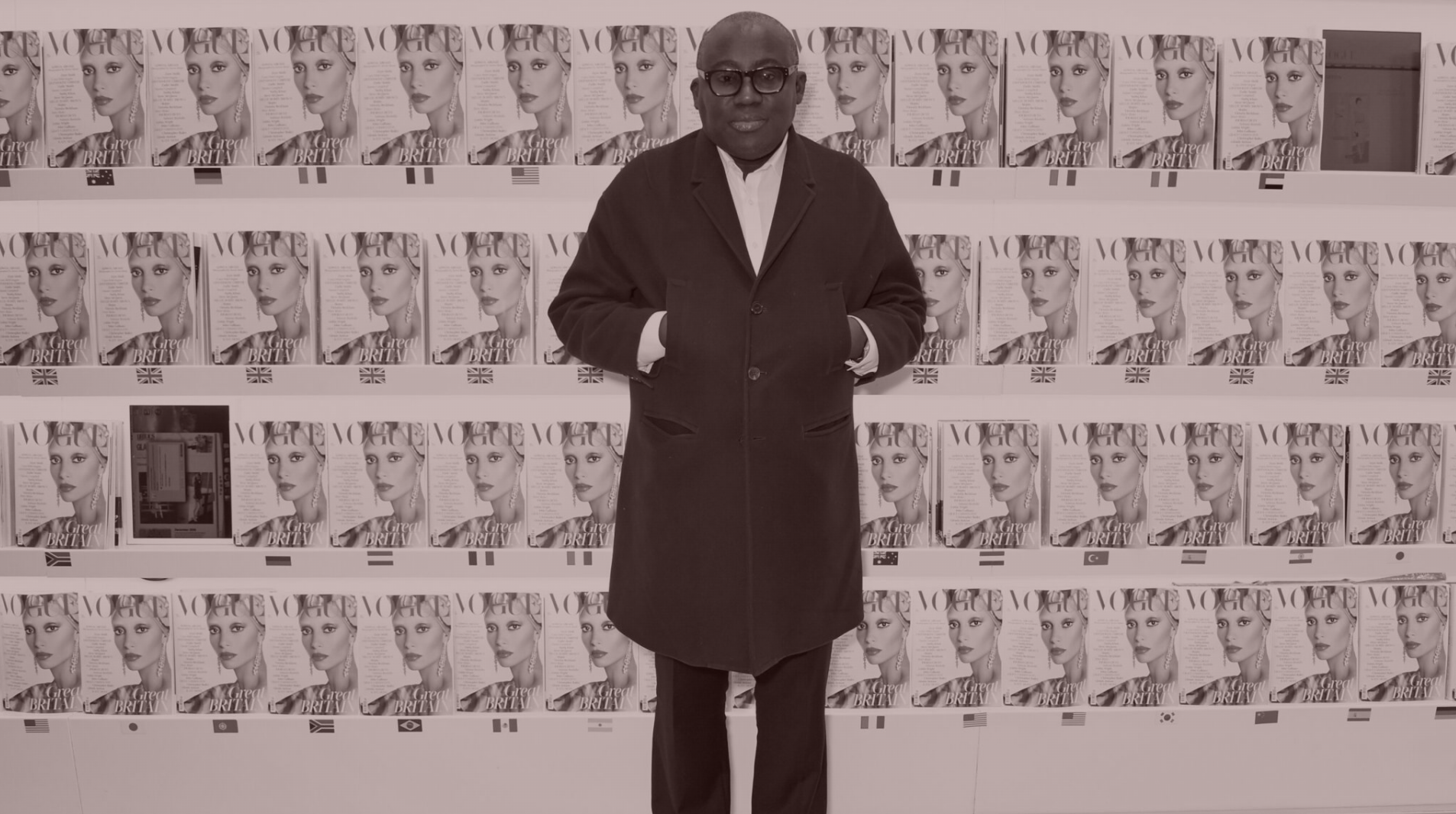
| Edward Enninful’s “promotion” to an advisorship at British Vogue completes Condé Nast’s long-labored aim of global consolidation. It also ends an era and ensures that Anna Wintour will be the universe’s last real glossy editor-in-chief. |
|
|
|
| The fashion media in-crowd’s use of the word “promotion” to describe Edward Enninful’s impending exit as editor in chief of British Vogue, announced last week, seemed odd to me, and obviously a bit contrived. It was clear that Enninful was not being promoted, but instead going freelance in 2024. The move itself manifested a few unspoken realities of how fashion works these days.
First, being a glossy E.I.C., once a fantasy job, now no longer competes with the commercial opportunities afforded to styling ad campaigns and consulting brands. And second, it is now more abundantly clear than ever that Anna Wintour isn’t going anywhere any time soon. After all, the only thing that could have presumably kept Enninful warm in his seat was the promise of one day succeeding her at Vogue, the American masterbrand. And it either wasn’t happening, or not on his timeline.
You can’t blame him for turning the page. Prior to taking over British Vogue in 2017, Enninful was a contract person, meaning that he could style high-paying advertising campaigns and pursue other cash-rich projects with ease. You can’t do that when you’re working for a publisher, which makes money from these brands. (Fashion ethics are permeable, but this is a hard and fast rule—for E.I.C. at least.) More than that, companies like Condé Nast want to own their top talent’s time, even if they no longer pay as handsomely for it.
I won’t get into a full history of Condé Nast, but for years the company was split between the U.S. mothership, overseen with the eagle eye of Si Newhouse (and eventually Steven Newhouse) and the international entity, helmed by Jonathan Newhouse. Enninful was a Jonathan person. And when the Newhouses tasked C.E.O. Roger Lynch with merging the two companies (a long overdue task), Enninful lost a powerful ally. Lynch, of course, was a professional manager and seemed to have attended whatever class in business school teaches executives to keep their top creative people happy. Many of Lynch’s external statements contain tributes to Wintour.
Surely, Condé Nast also placated Enninful, funding his lifestyle and expanding his platform. He is far more famous than he was when he took over six years ago—he wrote a memoir, appeared on Fresh Air, is friends with Oprah—and likely has Hollywood ambitions as so many fashion people do. I heard a few months ago that he was planning a move back to America, and now that makes more sense. When people began talking about a rift between Wintour and Eninful, as my Puck partner Dylan Byers reported last fall, the company did what it does best: it tucked in everyone. But that was always going to be a short term solution, it seemed, as it appeared that Wintour wasn’t going anywhere. |
|
|
| For 20 years, people have speculated that Anna Wintour was on her way out, with a different cadre of potential replacement candidates surfacing with every new micro-generation. (Rising stylist Gabriella Karefa Johnson is a recent name.) But the truth is that Wintour is not going to leave until she wants to. American Vogue itself is a well-oiled machine led by veteran staff (Virginia Smith is celebrating 21 years on the masthead) and Wintour has done a respectable job of transforming it into a multimedia brand that continues to mean something in popular culture: Met Gala, Vogue World, etcetera. After all, Vogue itself is rarely criticized. Critiques of Wintour focus on mistakes she has made overseeing the full brand collection in her other organizational role as the company’s artistic director.
Wintour could theoretically relinquish the E.I.C. title and continue on as “worldwide chief content officer and global editorial director of Vogue,” but like, why? Sure, the work of managing the revolving door of editors across titles—most recently Dawn Davis at Bon Appetit and Gideon Lichfield at Wired—can’t be easy. However, global C.E.O. Lynch doesn’t butt in when it comes to editorial, and Wintour has the freedom to make the decisions she wants to make.
Most importantly, though, Wintour is Condé Nast’s most marketable asset, and both sides remain fiercely loyal to one another. People forget that Steve Newhouse’s wife, Gina Sanders, was the founding publisher of Teen Vogue (an extraordinary hit back in the day) and was the C.E.O. of Fairchild Fashion Group a decade ago when it was under Newhouse rule.
In some ways, Enninful has proven himself a worthy successor to Wintour: British Vogue itself is far more visually compelling than its American counterpart, with collectible covers and editorials that harken back to the golden age of magazines. The problem is that magazines are not the future of Condé Nast. Perhaps that sentiment is nowhere clearer than in the way the company is structuring the business these days. The next head of British Vogue will probably not have the title editor in chief, but instead something like “head of editorial content,” as the still-new overseers in France and Italy are called. You could call it semantics, sure, but “editor in chief” is still a very powerful idea, one that I believe advertisers—like say, Celine, which is hot and cold on Condé—care about. Editor in chief connotes experience and, really, worthiness. (Any job title with the word “content” is going to get a rebrand in the next couple of years, I guarantee it.) It’s worth noting that Margaret Zhang is the editor in chief of Vogue China—whether or not she was given that title or she negotiated it, I have no idea, but it positions her better in the market.
As for who will replace Enninful? This is everlasting Wintour’s chance to install one of her own. (The people who were in the mix with Enninful after Alexandra Shulman’s departure, in 2017, like Penny Martin and Jo Ellison, carry too much gravitas now.) An outside idea: Mark Guiducci, American Vogue’s very ambitious “editorial creative director,” is spending time in London these next few months to prep for the second installment of Vogue World. Of course, many folks in London are assuming it’s current deputy Sarah Harris’s job if she wants it. Whatever happens, the whole ordeal makes one thing certain: Anna Wintour is still in charge. |
|
|
| Davide De Giglio and Andrea Grilli, co-founders of the “brand accelerator” New Guards Group, which made its name producing Off-White by Virgil Abloh, are out. Parent company Farfetch acquired the business in 2019 for $675 million, but has yet to replicate the success of Off-White with another brand. An interesting time to watch the tangled web that is Farfetch, which will own about half of Net-a-Porter by the end of the year if regulators okay the deal with Richemont. [BoF]
Meet the Breitbart of women’s magazines. Backed by Peter Thiel! Sorry to my college friend named Evie. [Medium and Rolling Stone via After School]
A fun history of Gorpcore, although let’s just go back to calling them camping clothes or outdoor gear or whatever. [Bloomberg]
What did Puig-owned brand Carolina Herrera get out of staging its first destination runway show? The short answer: the brand’s fragrances and lower-priced line are huge in South America, and meeting the customer where they live (in this case, Brazil) isn’t a terrible idea now and again. [Vogue Business]
My feeling has always been that the only way to fix the proliferation of cheap, damaging-to-the-world clothes is government regulation. I’m skeptical we’ll ever get there, for myriad reasons, but policies in Europe are changing. [BoF]
Lululemon is killing it, both in the U.S. and abroad. This is what I was talking about when I said last week that activewear is not a winner-takes-all category. [Reuters]
A story from 1988 about the rise of Delia’s, the iconic teen apparel catalog. [Chief Marketer]
Licensing firm Authentic Brands Group can’t stop, won’t stop. It already owns the I.P. of Barneys New York, Reebok, Brooks Brothers, Hickey Freeman, Ted Baker, Vince… and now, Hunter, the Wellington boots company. When we look back on this era of fashion, ABG mastermind Jamie Salter is going to be at the center of it. [WWD]
Vanessa Friedman on the Balenciaga comeback. [NY Times]
Apparently “shoppers will buy anything—except the real thing,” according to Sangeeta Singh-Kurtz. The young woman sitting next to me at Sqirl the other day must be an exception: she laughed when I asked her if her teeny Chanel bag was real. (Her response was “yes, it’s real,” but what she really meant was, “yes, it’s real, you idiot.”) [The Cut]
An in-the-weeds look at how Adidas is managing that big, gaping hole left by Yeezy. [GQ]
Warren Buffett’s banker bestie Byron Trott just bought a big chunk of Under Armour. [WWD]
Developers and retailers are super pissed that Beverly Hills locals won’t let LVMH open a Cheval Blanc hotel on Rodeo Drive. Even Jay Luchs weighed in. [Bloomberg] |
|
|
| Until Thursday,
Lauren |
|
|
|
| FOUR STORIES WE'RE TAKLING ABOUT |
 |
| President Dimon? |
| On the inside chatter percolating around the Core Club set. |
| WILLIAM D. COHAN |
|
 |
|
 |
|
 |
| DGA’s Wet Ink |
| How will the fresh deal affect the writers’ strike? |
| JONATHAN HANDEL |
|
|
|
|
|
 |
|
|
| Need help? Review our FAQs
page or contact
us for assistance. For brand partnerships, email ads@puck.news. |
|
| Puck is published by Heat Media LLC. 227 W 17th St New York, NY 10011. |
|
|
|