{{ 'now' | timezone: 'America/New_York' | date: '%b %d, %Y' }} |
|
|
|
Hi, and welcome back to Line Sheet. I had a real Emily in Paris experience yesterday
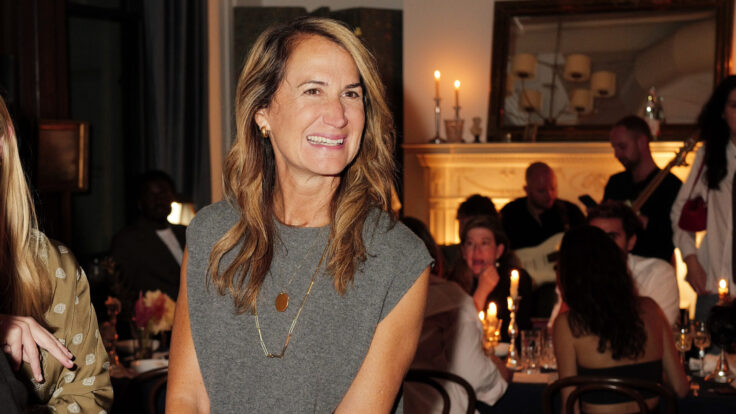
evening at Numéro founder Babeth Djian’s annual dinner to support the AEM Association, a French nonprofit that helps kids in Rwanda. Galas in France hit different. Carla Bruni, Delphine Arnault, and Jean Paul Gaultier were at the table in front of me. Every Paris-based P.R. was there, too. There was lots of smoking under the blue lights. Babeth said that she has built eight schools in Rwanda during her time working with
AEM. Thanks to the team at Balenciaga for inviting me to experience what I suspect is always an iconic (in the Gen Z sense) night.
In today’s issue, Sarah Shapiro has got a shopping report for the ages: She reveals what people are buying other than Chanel, how the high street is faring, and gives some context on the rise of the dust bag as a thing you carry outside of the house. Plus, Malique Morris returns from vacation with a deep dive on Daydream, the
A.I.-powered shopping app that’s kind of like if ChatGPT and Pinterest had a baby.
Also, I was on Marie Claire editor-in-chief Nikki Ogunnaike’s fabulous podcast, Nice Talk, this week. We chatted about the fashion month that was, and some other stuff, too. Thank you to Nikki for having me. Listen here.
Also mentioned in this
issue: Phoebe Philo, Jonathan Anderson, Pieter Mulier, Phoebe Gates, Julie Bornstein, Michael Rider, Brooke Callahan, Laurel Pantin, and more… |
|
|
|
A MESSAGE FROM OUR SPONSOR |
|
|
|

| Sarah Shapiro
|
|
Three Things You Should Know…
|
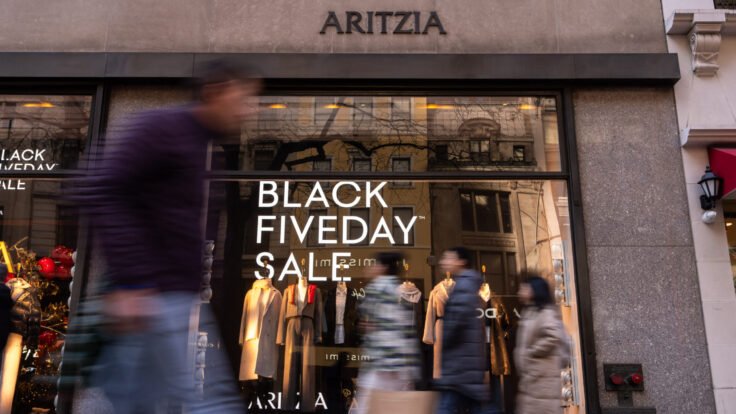
- Other than Chanel, what’s
selling?: While the luxury floors appear quiet, V.I.C.s are always spending—making calls, booking personal-shopper sessions, unwrapping in-home deliveries. According to my field research, shoppers appear to be voting with their wallets for designers who have a clearly defined point of view. Phoebe Philo has been moving at both FWRD at The Grove and Maxfield on Melrose. One associate at Maxfield said that Philo’s minimalist designs drive sales of adjacent pieces that pair well, too. The
Row’s understated simplicity remains a top seller for personal stylists and their clients.
Alaïa ready-to-wear is also performing strongly in prestigious zip codes. (I’m guessing shoppers are grabbing it now because it was among Pieter Mulier’s final collections.) At another luxury department store, a personal shopper reported strong demand for Jonathan Anderson’s Dior ready-to-wear. Michael Rider’s Celine accessories are resonating, too:
bright silk scarves, oversize logo belts, and, in particular, the perforated jazz shoe. The new bags are also popular. Hermès stood out in regard to foot traffic: Even on a Tuesday afternoon at Stanford Mall in Palo Alto, its shop floor was bustling while neighboring stores remained quiet. - More mall talk: Here’s another observation about au courant mall culture: In the old days, the high-energy shopper used to migrate from the mall floor. Now,
all the action is direct. It takes place in V.I.C. dressing rooms, on the phone with a personal shopper, or waiting on a preorder to arrive. When no one around you is buying, the impulse doesn’t travel to others.
Relatedly, in a sort of chicken-egg way, almost every women’s ready-to-wear mall store that I visited recently had the same things on display. There was a TWP-style dress shirt—button-up, easy fit, and often with rhinestone detailing. And the dresses were all Dôen-adjacent floral
bias-cut midis. Sometimes both appeared in the same store. Alas, one depressing hallmark of this moment in the cycle is that there’s no moment of discovery or point of view when the merchandise looks the same in store after store. - Who killed the big bag?: We all know giant bags are becoming less popular, but I’m not sure the proliferation of pouches is the answer. Small silk bags—Prada’s drawstring version, Celine’s petite leather styles—are showing up
everywhere, across every price point. (They look sort of like shoe bags, if that’s your thing.) The emerging trend echoes past moments: Prada’s ’90s nylon bags, Hervé Chapelier handheld totes of the early aughts, Kate Spade’s nylon handbags, The Row’s mini silhouettes, etcetera.
This week, at Mohawk General Store and Laurel Pantin’s Earl, I spotted Valesque, a Berlin-based brand, offering handbags under $200 for minis—dainty satin bags with spaghetti-thin leather straps.
Mohawk reported that it had quickly sold out and subsequently placed a robust order for the fall. Meanwhile, Brooke Callahan just collaborated with the London brand Hai on tiny, handheld silk dupioni bags. The formula is consistent: mini, colorful, easy, and largely logo-free.
|
|
|
|
Serial entrepreneur Julie Bornstein is betting tens of millions that A.I. shopping is the
future of e-commerce. Investors believe it could be the next big thing, but industry insiders are skeptical: Does anyone actually want a digital stylist? |
|
|
|
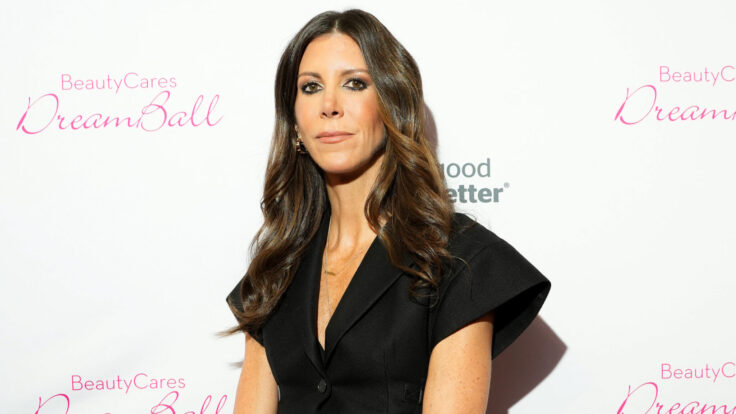
Julie Bornstein, the former fashion and beauty executive turned serial entrepreneur, has
spent years trying to build a fashion shopping search engine. In 2018, the e-commerce veteran, who previously helped scale businesses at Stitch Fix and Sephora, raised $30 million in Series A financing from NEA and others to jumpstart the personalized shopping app The Yes. (The company modestly exited in a cash-and-stock deal with Pinterest in 2022.) Two years later, she raised another $50 million from Google and V.C.s like Forerunner and Index to launch Daydream, which bills itself as
fashion’s answer to ChatGPT. Bornstein was trying to christen digital retail’s A.I. era, and at the perfect time. |
|
|
|
A MESSAGE FROM OUR SPONSOR |
|
|
|
Yes, we’re at the outset of a period that will undoubtedly bring tectonic shifts in the fashion business.
Google’s Gemini, Microsoft’s Copilot, and OpenAI’s ChatGPT have all at least teased direct-checkout services within their platforms. Salesforce estimates that A.I.-driven shopping tools accounted for $262 billion in 2025 holiday sales globally. And in many ways, Daydream was ahead of the curve. Bornstein and her team designed their app for the sort of person who needs a sundress for a sweltering garden party—or at least thinks of herself as someone who would go to a sweltering garden
party—rather than for the ChatGPT user looking for an affordable leather bag. When you ask Daydream for a revenge dress for a wedding in Paris, you’re met with a list of pretty frocks instead of a version of “I have no idea what you’re talking about” or sizzle reels from Emily in Paris.
But these are early days. OpenAI itself pulled the plug on ChatGPT’s instant checkout feature earlier this month after the company realized that people were searching but not buying,
according to a report in The Information. “We’re evolving how we approach commerce in ChatGPT to better meet merchants and users where they are,” the company said in a statement. Indeed, this micro-revelation seemed to validate all sorts of privately pondered questions about Daydream’s pitch: Do shoppers really want to incorporate A.I.? Can anyone beat
Google or Amazon, or even Pinterest, at predicting consumer behaviors? And is Daydream essentially performing R&D services for its exponentially larger competitors?
Bornstein is well aware of the skeptical industry chatter. Creating an A.I.-search-based shopping site was as hard as people made it out to be, she told me. “Trying to build a customer experience that is reliably excellent is one of the challenges of building with A.I.,” she said. Daydream, which remains in beta mode, has
attracted most of the 700,000 users who have been active since last June through word of mouth. “The beta moniker is mostly to signify to users that this is a product in evolution,” Bornstein said, noting that Daydream will add new content-discovery and personalization features before the site is marketed widely later this year. “I raised the amount of money I did to buy time,” Bornstein said. “The thing that I learned at The Yes is that everything is harder and takes longer than you
expect.”
Nevertheless, other A.I.-powered e-commerce startups have fully launched with less capital. The Clueless-inspired styling app Alta, which debuted a year ago, has raised $11 million. Phia, a price-comparison site co-founded by Phoebe Gates, raised a $35 million Series A last December, around eight months post-launch. Neither was launched by a seasoned executive and founder, of course. |
Bornstein told me that Daydream is attracting exacting fashion consumers who don’t need hand-holding—they
arrive knowing what they want, how much they’re willing to spend, and are looking for options across top retailers. The platform takes a cut of the transactions it drives for partners such as Mr Porter, Mytheresa, Revolve, Cult Gaia, and Gucci. So far, however, the sales volume it generates for these partners “is not meaningful yet relative to their businesses,” Bornstein told me. |
|
|
|
Daydream’s biggest challenge may be that, like many A.I. startups, it relies on the very tools produced by
the tech giants it aims to compete with. The company integrates its in-house coding with Google Gemini’s L.L.M.s, which are prone to lags and outages, Bornstein acknowledged. “We’re building on a system that is not yet fully mature,” she said. Beyond these technical limitations, Daydream is also leveraging tools from platforms that could easily replicate its core functions. Bornstein counters that Daydream’s fashion focus is its key differentiator. Still, as one e-commerce software veteran noted
to me recently, Daydream remains just another shopping app—one that consumers must choose from among thousands and use long enough for its A.I. to learn their preferences.
Anyway, there are already signs of consolidation in the sector. I’m told that last year Amazon approached A.I.-powered styling and product recommendation site Vêtir—which has raised $4 million to date and launched in 2024—about a potential acquisition, likely another attempt by the e-commerce behemoth to worm its way
into high fashion. (A spokesperson for Amazon said they would not comment on speculation.) The talks ultimately fell through after several months, according to a source, but the message was clear: The bigger players are circling the smaller ones.
If Daydream can’t scale on its own, it could become an attractive target for a tech giant that sees value in A.I.-driven commerce tailored to the discerning fashion girlie. In many ways, this was the fate that befell The Yes—solid, if
unspectacular, at least by the standards of venture capital. In that scenario, Bornstein’s investors could use their experience to escalate other adjacent investments in their portfolio—and, yes, everyone would make a buck or two. For most startups, after all, that is the best-case outcome. |
Until Monday,
Lauren
P.S.: We use affiliate links because we are a business. We may make a
couple bucks off them. |
|
|
|
Puck fashion correspondent Lauren Sherman and a rotating cast of industry insiders take you deep behind the scenes of this
multitrillion-dollar biz, from creative director switcheroos to M&A drama, D.T.C. downfalls, and magazine mishaps. Fashion People is an extension of Line Sheet, Lauren’s private email for Puck, where she tracks what’s happening beyond the press releases in fashion, beauty, and media. New episodes publish every Tuesday and Friday. |
|
|
|
Puck’s daily art market email, anchored by industry expert Marion Maneker, offers unparalleled access to the mega-auctions and
galleries, elite buyers and sellers, and the power players who run this opaque world. |
|
|
|
Need help? Review our
FAQ page or contact us for assistance. For brand partnerships, email ads@puck.news.
You received this email because you signed up to receive emails from Puck, or as part of your Puck account associated with {{customer.email}}. To stop receiving this newsletter and/or manage all your email preferences, click here. |
Puck is published by Heat Media LLC. 107 Greenwich St., New York, NY 10006 |
|
|
|
|