 |
 |
|
Welcome back to Wall Power. I’m Marion Maneker.
A front passed through on Sunday while I was out on the water and the air shed its moisture, leaving the light a dazzling autumn clear. Here in the northeastern United States, that’s the unmistakable signal of a new season. We send our kids back to school and head back to work, some of us reluctantly, others with great alacrity.
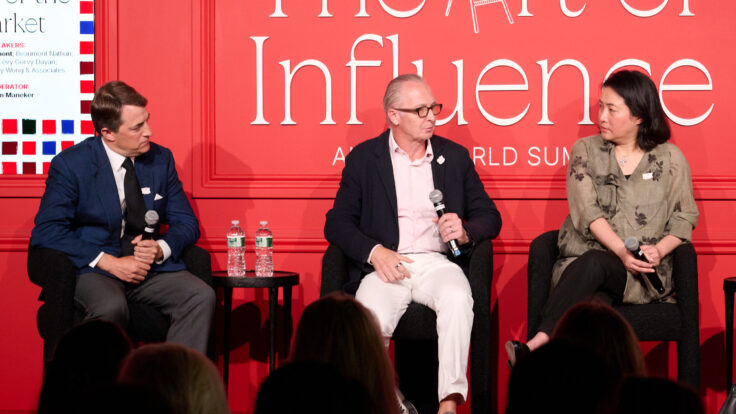
There’s a lot on my agenda tonight, including a conversation I had with Magnus Resch on our way back from New Haven on Friday night. Magnus teaches a course on entrepreneurship in the art market at the Yale School of Management. On Friday, he opened the new semester with a three-hour lecture. I showed up for the final hour to talk about some of the art market charts that ARTDAI has been fashioning for me. Magnus wanted to illustrate the idea that the art market has been in a recession. He also wanted to talk about the role of galleries in the market’s future. In fact, we did both.
After the class, which included many thoughtful questions from the mix of SoM and MFA students from the art school, I gave Magnus a ride back to New York, which gave us some time to talk about the art industry. I’ll get into that below.
But first, a little housekeeping…
- Asia Week starts September 12: A fat-finger error in a previous newsletter noted that New York’s citywide sales of Asian art at galleries and auction houses was set to begin on September 16. Alas, Asia Week begins September 12 and runs through September 20.
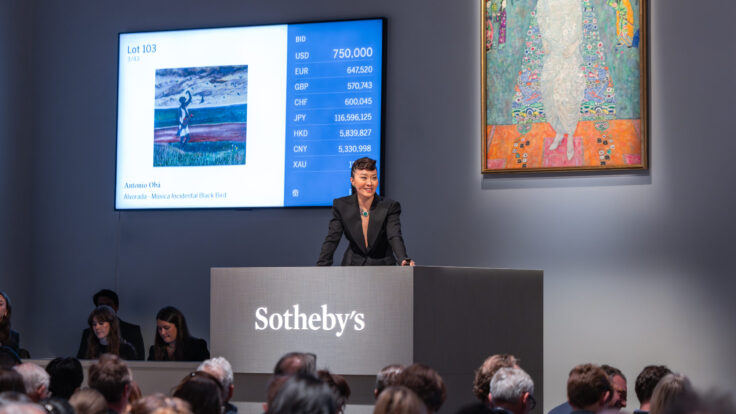
- Sotheby’s Magazine debuts its reboot today: My partner Lauren Sherman spoke to Kristina O’Neill, the editor of the newly relaunched Sotheby’s Magazine, which goes to 35,000 of the auction house, real estate, and luxury goods purveyor’s best customers. With the demise of American Express’s Departures, there’s been no recognized, controlled-circulation marketing platform for the UHNW set. Sotheby’s is hoping to fill that gap. You can read Lauren’s take on the new magazine here. Or, better yet, subscribe to Lauren’s excellent newsletter on the business of fashion, Line Sheet, so you don’t miss out in the future.
- Wall Power at the Independent 20th Century Fair: Just a reminder, the Independent 20th Century fair, down at Casa Cipriani, begins on September 5. I’ll be hosting some talks at Independent on Friday, September 6. Come by to say hello. (Wall Power subscribers can find an offer for complimentary fair access by using this link.)
|
|
|
|
|
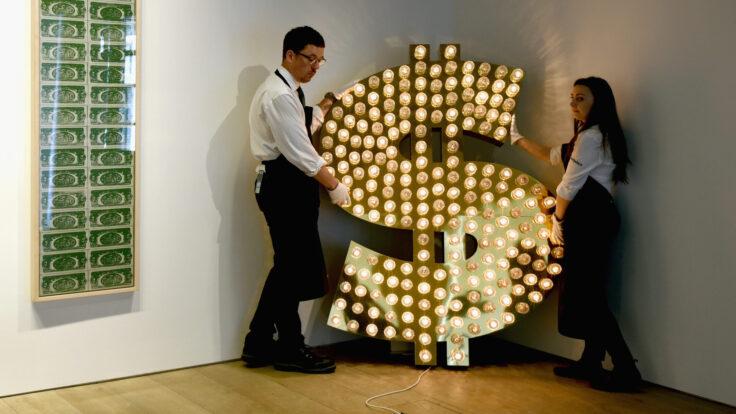
| In the 1980s, Robert Abrams and his wife, Cynthia Vance, bought 41 acres of land an hour north of Manhattan. Abrams was the son of noted collector and art book publisher Harry Abrams. Living in a house adjacent to the property, Abrams planted trees on the acreage and began to plan a guesthouse that would also be a showcase for the family collection. Eventually, the “art barn” took shape around works by Andy Warhol, Morris Louis, Larry Rivers, and others. The Abramses ultimately moved into the open and transparent barn, with its views of rolling hills dotted with trees and sculptures, and kept the neighboring house as a place for guests.
Robert died last September at the age of 80. Now, Cynthia is selling some works from the collection at Sotheby’s on September 27. The auction highlights include work by Robert Indiana, Fernando Botero, and Alex Katz. But the most interesting lots are: |
|
|
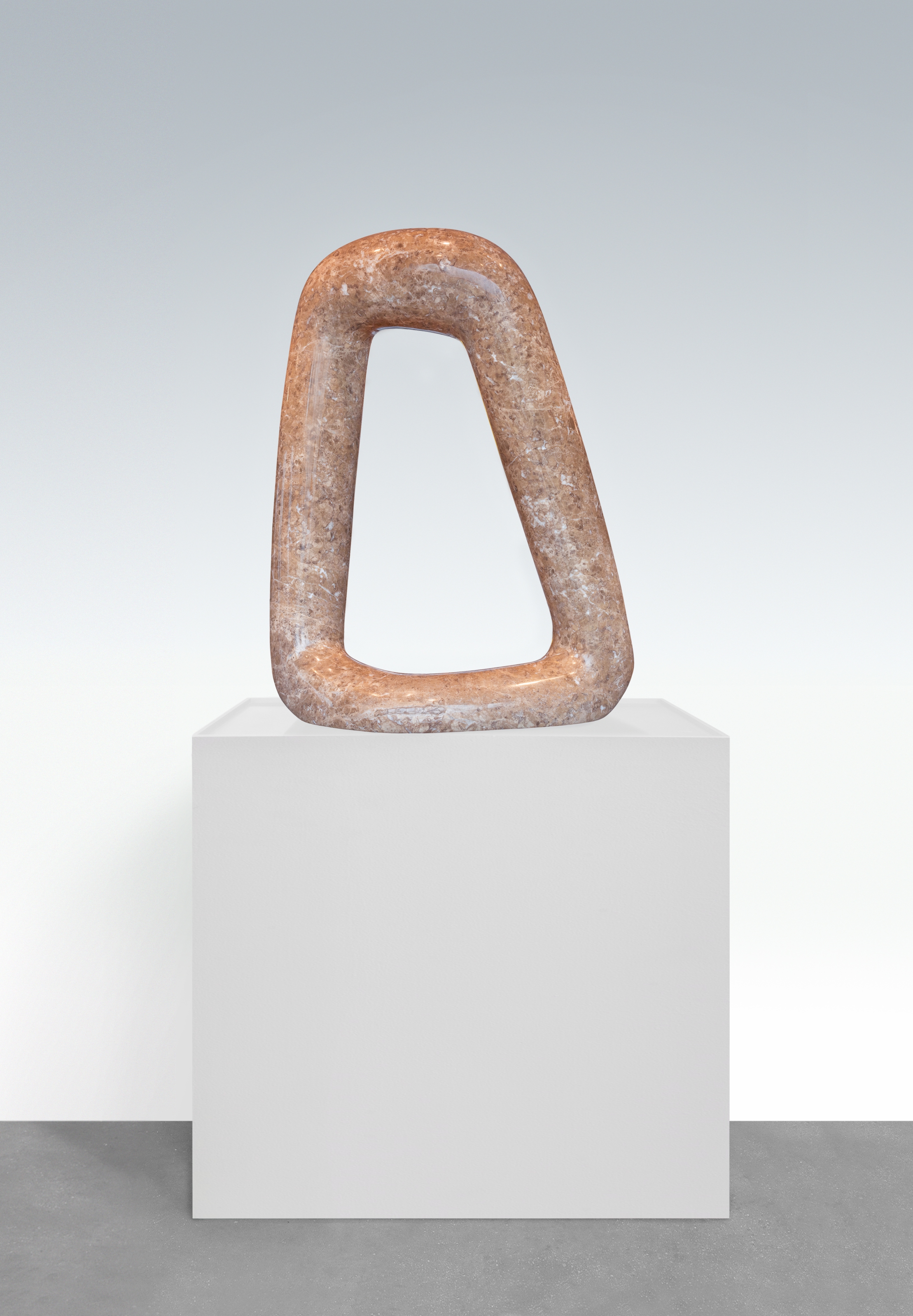
Isamu Noguchi, Study for Energy Void (1971), estimated at $3 million
|
|
|
- Isamu Noguchi’s Study for Energy Void, from 1971, estimated at $3 million, was bought by Bob Abrams directly from Noguchi’s studio in 1979. The energy void is carved from a single block of marble. Noguchi made two other energy voids, but neither is in marble. A Six-Foot Energy Void is at the Nelson-Atkins Museum in Kansas City. A related marble sculpture made with the concept of a void is at the Isamu Noguchi Foundation and Garden Museum in Long Island City. Only a dozen Noguchi works have sold for more than $3 million in the past 15 years. The recent record set for the artist—a $12 million sale at Sotheby’s in May 2023—is a good sign. But given the limited number of comparable works and their presence in museums, it will be very hard to predict a likely result.
|
|
|
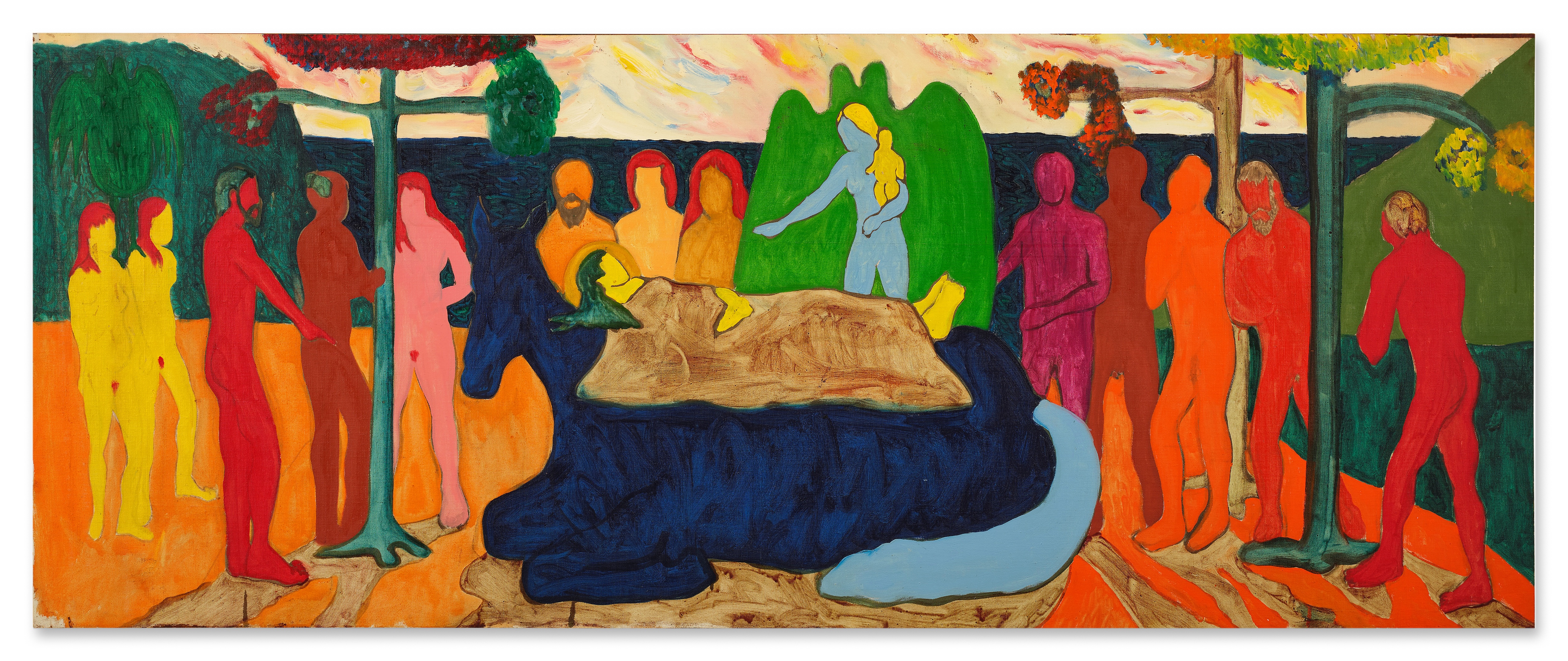
Bob Thompson, Nativity Scene (c. 1964), estimated at $500,000
|
|
|
- Bob Thompson’s Nativity Scene, from circa 1964, estimated at $500,000, was also acquired directly from the artist in the 1960s. The work captures Thompson’s distinctive interest in Old Master paintings combined with his attempts to replicate the improvisational character of Jazz in a “painterly language.”
There has been a growing visibility of Thompson’s work of late. The painter died from a heroin overdose in Rome in 1966 at the age of 29. He left 1,000 paintings and drawings, which in recent years have formed the basis of museum and gallery shows at Los Angeles’s Hammer Museum, Atlanta’s High Museum, and Colby College’s museum in Maine. There were also gallery shows at David Zwirner’s 52 Walker gallery last year. Auction volume for Thompson’s work has risen steadily over the last five years, with 2024 already nearly doubling the previous years’ dollar volume. That’s in large part due to Music Lesson, from 1962, selling for a record price of $1.2 million this May.
|
|
|
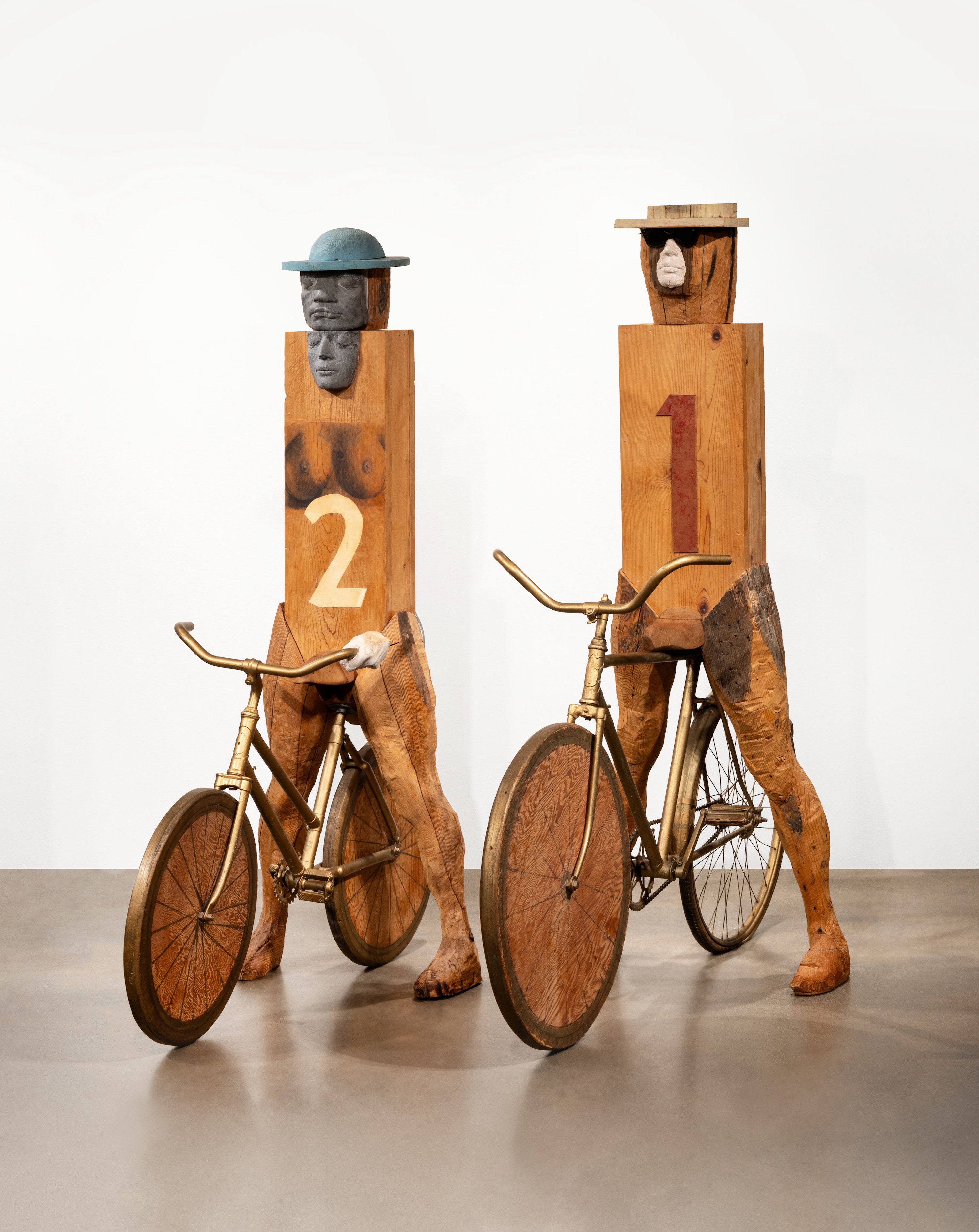
Marisol, The Bicycle Race (1962-63), estimated at $250,000
|
|
|
- Marisol’s The Bicycle Race, from 1962-63, estimated at $250,000, is featured in the artist’s retrospective currently at the Buffalo AKG. I wrote about Marisol and that exhibition here. When the show moves next to Dallas, the organizers would like The Bicycle Race to move with it—the work is that important to Marisol’s oeuvre.
The lack of visibility for Marisol’s work late in her life has somewhat limited her market. Buffalo AKG is also the repository for her estate, so few of her later works will ever come to market. Her previous record price was for a “portrait” of Andy Warhol, which made $794,500 at auction a dozen years ago. The fame of the subject, and the fact that the work was so out of range from the rest of her works sold at auction, means the estimate for The Bicycle Race must be closer to her other sales, even though they are quite out of date.
|
 |
| The Art Market’s Lo-Fi Tech Solution |
| For years, tech platforms have been pining to disrupt the art market with A.I. or blockchain or a jazzy new platform. I came up with a better solution during a chat with the Yale School of Management’s Magnus Resch. |
|
|
|
| What’s it going to take to increase the level of art sales in the market and bring in new buyers? That was the question Yale professor Magnus Resch put to me as we were driving back from New Haven to New York last Friday night. Magnus teaches a class on entrepreneurship in the art world at the Yale School of Management, and I’d just shown his students a series of charts summarizing the last 17 years of auction data. The final slide depicted the auction totals adjusted for inflation—a particularly revealing data point.
According to the numbers, the art market is way down from its peak in 2015. And yet, on some logical level, it shouldn’t be. After all, there’s been academic research showing that ultra-high-net-worth individuals are spending the same proportion of their wealth on art… and the number of UHNWIs has doubled in recent years. So, why are we not seeing these facts reflected in the auction market data? There are a number of possible explanations, but I want to focus on just one here, because it resulted from what I thought was an interesting and serendipitous conversation.
Magnus comes to the art market via a fairly unique route. After founding Springstar, an incubator that internationalized Airbnb, and Gymondo, an online fitness company which he sold, Magnus moved to Hong Kong and obtained a Ph.D. in economics with an emphasis on the art market. His thesis, Management of Art Galleries, spawned a cottage industry of books and online courses targeted at all sides of the art equation. In Hong Kong, he also met the scholar Christoph Noe, who co-founded Larry’s List with him. Eleven years ago, Magnus moved to New York, where he launched his own app, Magnus, aimed at gathering pricing information on the primary market.
During our drive, Magnus made the point that there wasn’t much going on at the intersection of art and technology. The blockchain has not produced a meaningful innovation in art. Artificial intelligence seems to be going down the same path. The flood of excitement around bringing art sales onto the internet hasn’t led to much positive disruption, either. Artsy has been the most visible of the companies involved in trying to make art buying more accessible, but there have been a number of other efforts, including those sponsored by eBay and Amazon, that haven’t worked out spectacularly. (I was recently involved in a company that was trying to create a peer-to-peer marketplace for secondary sales.)
The problem with these endeavors is that they don’t address the actual pain points in the art market. We often say that the art market is supply-dependent on the secondary market. But as I’ve written before, demand is the issue with art, and there is no preexisting demand for art work—especially by new or unknown artists. Instead, creating demand falls to art galleries—that’s their core competency, and one reason they’ve thrived in recent years, even as the industry has worried the entire business would be swallowed up by a few so-called mega-galleries with global reach and a long list of artists represented.
Galleries large and small create demand by showing the artist, attracting a crowd of the right collectors, and building an armature of critical, scholarly, or institutional support for the artist’s importance. These are the things that add value, and they don’t come cheap. There’s also the sense of scarcity. Art dealers don’t want to sell to just anyone. They want to protect the long-term viability of their artists, which means favoring some classes of collectors over others, turning down interested buyers, etcetera. It also leads to the central conundrum of the art business: Galleries are eager to find new collectors, but they usually don’t treat new buyers very well until they’ve proven themselves as collectors.
Anyway, Magnus and I agreed that one very well-known platform has worked well—one that regularly does business with most of the world’s top galleries, has trusted relationships with leading collectors and institutions, and was recently acquired by a prominent media investor, James Murdoch, who is eager to expand the brand. I’m obviously talking about Art Basel, which has one of the best reputations in the industry and a boatload of trust among institutions and collectors. It’s a great entry point for the art curious. Art, as a product, needs something like an industry council that promotes and operationalizes the idea of buying art as lifestyle choice. And, in many ways, Art Basel is the closest thing the industry has to a full-scale association that promotes the idea of buying art over promoting a specific artist. Perhaps that could be leveraged into a tech opportunity? |
|
|
|
|
| Art Basel currently builds its business around selling carpet squares in conventional halls: Its revenue comes from the space it provides to galleries of different sizes and economic viabilities. The reason Art Basel can sell booths for more than the hall costs to rent is that it has a powerful V.I.P. program of big collectors and museum boards that it can deliver to the fair. Many galleries, especially the smaller ones, are paying for access to that stream of new visitors to their booths and gallery programs.
But there’s no reason that Art Basel can’t play that same role at other times. Indeed, it would seem there is a vibrant opportunity in the art ecosystem for Art Basel to help facilitate transactions between collectors and galleries. Many galleries complain about speculators who resell work too quickly. Art Basel could vet collectors for the galleries. Many collectors want work that may not be available to them from the primary gallery, but is being held by other dealers as secondary stock. Art Basel could help match buyers with hidden inventory, increasing sales and reducing the number of works that come to auction.
What Magnus and I came up with as we made our way home wasn’t a tech solution, but rather an internal sales force working across galleries and the V.I.P. program. If Art Basel could make that work, the company would be able to use technology to optimize the process, matching sellers with all sorts of buyer profiles. The company would have the credibility to digitize the inventory and deal with permissions around client data. Companies like Artsy and Ocula are already melding their marketing platforms with live art advisors. Art Basel could easily and inexpensively build its own sales force, and likely deliver a superior product. (For Murdoch, it might make sense to eventually buy one of those platforms to expedite the build.)
Will any of this happen? I doubt it. Companies like Art Basel tend to be bogged down in the day-to-day of running a business that already coordinates a lot of bodies. And there’s nothing terribly sexy about hiring half a dozen sales people and doing the nonstop hard work of building relationships and facilitating sales. Nevertheless, as Magnus and I approached the lights of Manhattan, it seemed to us that we’d come up with a far more satisfying solution to the art market bottleneck than anything involving artificial intelligence. |
|
|
| New Haven, besides being home to Yale (and also because of it), is a great destination for anyone who loves art and architecture. The city has numerous important modern and brutalist buildings designed by architects like Marcel Breuer, Paul Rudolph, Gordon Bunshaft, Louis Kahn, Philip Johnson, Richard Foster, Kevin Roche & John Dinkeloo, and Eero Saarinen. You could spend a week visiting them all.
Many of those buildings are on the Yale campus. Some, like Louis Kahn’s Center for British Art and his extension to the Yale Art Gallery, house important art collections. That museum holds some extraordinary art works, including an early Kandinsky, several Piet Mondrians, a Jackson Pollock drip painting, and Vincent van Gogh’s The Night Cafe. So, when I go to New Haven, I try to visit some old friends. (Also, there’s that whole pizza thing.)
That’s it for today. Back at it on Sunday,
Marion |
|
|
|
| FOUR STORIES WE’RE TALKING ABOUT |
|
|
|
|
|
 |
|
|
|
Need help? Review our FAQs
page or contact
us for assistance. For brand partnerships, email ads@puck.news.
|
|
You received this email because you signed up to receive emails from Puck, or as part of your Puck account associated with . To stop receiving this newsletter and/or manage all your email preferences, click here.
|
|
Puck is published by Heat Media LLC. 227 W 17th St New York, NY 10011.
|
|
|
|