Welcome back to Wall Power. I’m Marion Maneker.
Shortly after
I returned from France last week, I got a text from a prominent art advisor questioning why there was such a chasm between her positive experience of Art Basel Paris and the coverage she’d been reading about the fair. “Maybe I am missing something,” she wrote, “but it feels as though reportage is less than exuberant.”
I’ve heard this refrain in a number of different conversations—some in the aisles of convention halls, and others over meals or drinks in the weeks I was abroad.
Tonight, I examine some of the commentary in an effort to understand the disconnect between the current mood of the art market and the journalism about it. |
|
|
A MESSAGE FROM OUR SPONSOR |
The first steps towards a masterpiece starts with a dream. The all-electric BMW i7 – the
evolution of brilliance. Learn more at BMWUSA.com |
|
|
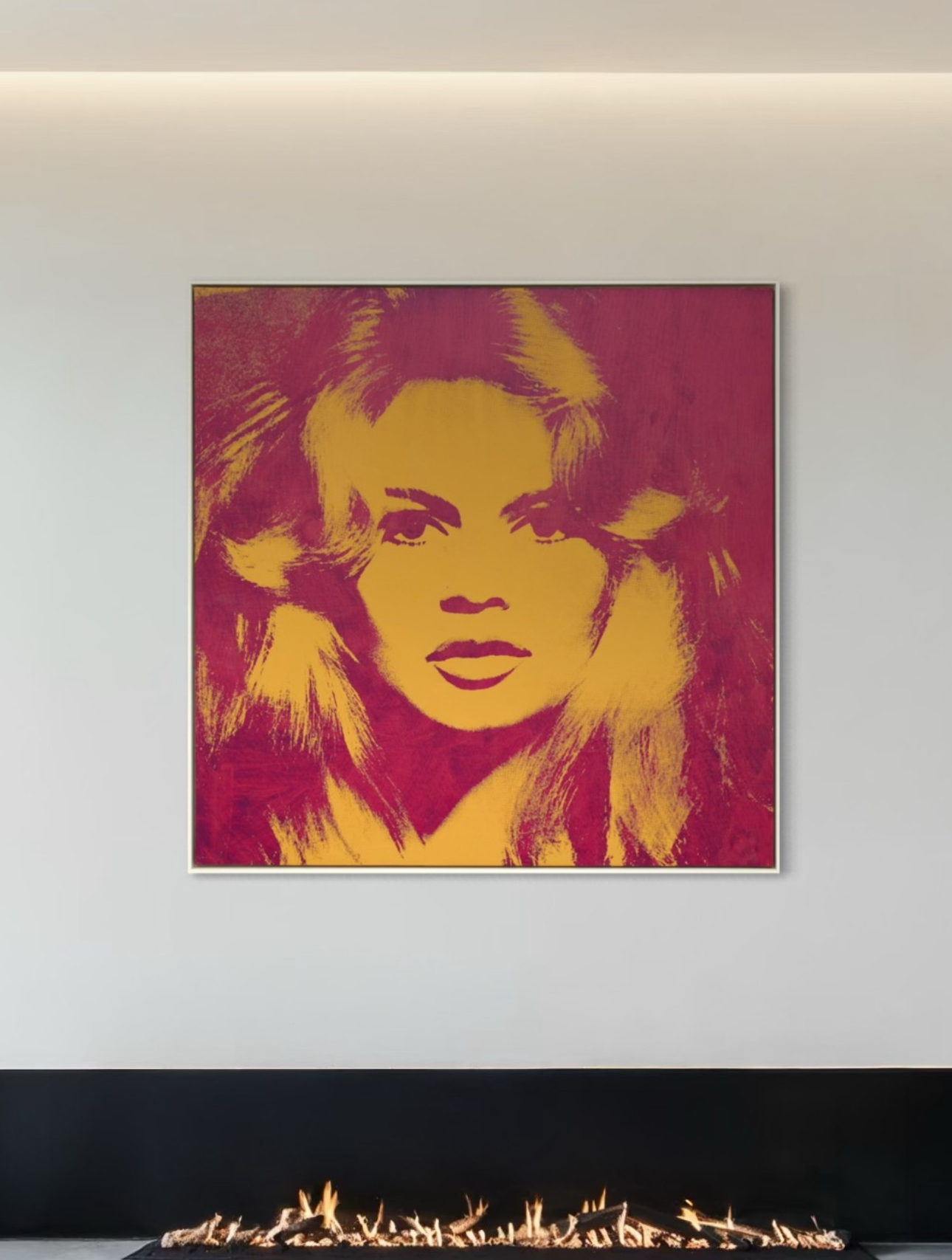
- Is Bardot still sexy to Warhol buyers?: One of this season’s last big lots to be announced comes from Fair Warning, which is holding another live auction this season with Jussi Pylkkänen wielding the gavel on November 19 at Clemente Bar, the cocktail lounge above Eleven Madison Park. The lot on offer is a 1974 Andy Warhol portrait of Brigitte Bardot with an $8 million estimate. Over the past 20 years,
examples of the 47-inch-square work have sold at auction for prices ranging from around $3 million to as high as $11 million, though that latter sale was 11 years ago. The red and yellow example that Fair Warning is offering last changed hands at Sotheby’s in 2012, when it made $4.75 million.
|
Andy Warhol, Brigitte Bardot (1974). Photo: Courtesy of Fair Warning
|
|
|

| Julie Brener Davich
|
|
- Breguet’s
anniversary auction: Breguet, which is celebrating its 250th anniversary this year, is the star of a Sotheby’s auction of 73 pocket watches, wristwatches, and clocks spanning the company’s history. The auction, which will take place on Sunday evening in Geneva, is curated by the brand’s head of patrimony,
Emmanuel Breguet, a direct descendant of founder Abraham-Louis Breguet. About one-fourth of the lots come from the family’s personal holdings; others were tracked down from private collections. (The family has not owned the watch company since the early 1900s; its current owner is the Swatch Group.)
One of the auction highlights is a gold tourbillon
pocket watch with a natural escapement, from 1809—one of only 35 tourbillons produced by the company’s founder. (Another, commissioned by King George III and completed in 1808,
sold in 2020 for £1.5 million.) It served as the inspiration for the Classique 7225, one of the novelties that Breguet is releasing this year in honor of its anniversary, with a guilloché gold
dial.
Leading Sotheby’s sale is another of the brand’s 250th anniversary releases, a Classique Souscription 2025. It retails on the Breguet website for $59,400 (if you ever clear the waitlist, of course), but the one on offer at Sotheby’s will go for considerably more—it was the first piece produced and bears the number 250, for the 250th,
making it a real collector’s item, as well as a marketing ploy. As a member of the Breguet team said to me, “They don’t make things like they used to. These are made like they used to.” - Kindred’s spirit: Taylor Swift’s engagement ring received approximately a gazillion internet impressions, vaulting its maker, Kindred Lubeck, to instant stardom. Now, Sotheby’s is trying to catch some of the moment’s reflective glow
with help from Lubeck’s gem sourcer, Anup Jogani. In this month’s sealed, online-only Gem Drop auction, running from November 10 to 13, Sotheby’s is offering three rings by the designer: the first, set with a 4.05-carat mid-1800s mine-cut diamond, is estimated at $70,000; another, featuring a 5.48-carat Ceylon sapphire, is
estimated at $80,000; and the last, showcasing an 8.66-carat cognac, or fancy brown, diamond, is estimated at $150,000. “They were cut in the same techniques and same feel as [Swift’s] stone,” said Jogani in a video for the sale. On December 9, Sotheby’s is offering two other Lubeck rings in its live High Jewelry sale: one with a 5.14-carat
internally flawless D-color diamond, estimated at $200,000, and the other featuring a 2-carat orangey-pink diamond, estimated at $150,000.
|
|
|
Now, let’s get to the main event… |
|
|
The gulf between how the art world operates and how the art press says
it operates has never been wider. While journalists cry wolf and fixate on the treatment of artworks as mere financial assets, they are likely missing the point, and the opportunity. As it turns out, it may be a great time to buy. |
|
|
The art world, like any industry, likes to complain about its own media coverage. In
recent weeks, traveling to art fairs and speaking to various market participants, I’ve been getting an earful about articles in a variety of publications. Sometimes the irked reader will forward me the piece via text or WhatsApp. Other times, they’ll pull a story up on their phone and shove it across a dimly lit table in frustration, exasperation, or even vindication.
I’m not here to condemn nor to defend the art press. But one of the unequivocal inadequacies of art world coverage is the
vast gulf between the lives of the journalists and the social and professional milieu of the collectors, dealers, and art advisors they cover. Simply put, art journalists seem to have a very hard time looking at the art market from the point of view of any of these kinds of people. Too much of art writing focuses on what happens on the surface, when the market’s real action happens beneath it, leaving the coverage grasping for often self-serving explanations. |
|
|
A MESSAGE FROM OUR SPONSOR |
The first steps towards a masterpiece starts with a dream. The all-electric BMW i7 – the
evolution of brilliance. Learn more at BMWUSA.com |
|
|
This is a shame. Few industries could benefit more from robust media
scrutiny and analysis. The art market has suffered through three years of contraction. The long-hoped-for pivot toward a new group of artists who might revive the market has taken time, leaving many frustrated and fearful. Meanwhile, the market lacks a defining narrative to coalesce around. Instead, market participants—buyers and sellers and the people who take their cues from those transactions—often feel like they are reading about a faint or distorted reality, which has led to legitimate
confusion and frustration on all sides. |
Earlier this week, while talking to an art world P.R. professional I’ve known longer
than either of us would care to admit, I learned of the unconventional broadside that Artnet editor Naomi Rea published almost a month ago, in the week leading up to Frieze. Her piece, titled “What the Art Market Gets Wrong About ‘Bad’ Press,” was an attempt to defend her publication from accusations that they take a “bad
news sells” approach to the market. She pointed to an informal survey of their market coverage that found only a quarter of their stories had a negative slant. But she also accused the galleries and auction houses of preferring “vibe management” to “transparency,” averred that “independent journalism holding it accountable to reality poses a threat,” and even suggested that frustration with her editorial judgment was an attack on journalism itself.
To be fair to Artnet, the
overall mood of the market has been negative for some time. It’s clear that 2024 was a tough year for everyone, and to the extent that there is a new mood in the market, it has only emerged in these last few weeks as some external economic and political factors have seemingly stabilized. The world is still a pretty awful place, but in recent months, it has not gotten significantly more awful.
A better example might come from one of Rea’s competitors. A week ago, an ARTnews report
declared, “Blue-Chip Galleries Drop Out of Art Basel Miami Beach with Two Months to Go.” The story cited fewer than 10 galleries that were not doing the fair, only one of which could have been legitimately described as “blue-chip,” assuming the designation refers to a gallery that consistently sells high-value art that holds its value. It’s this boy-crying-wolf aspect of the art press that I think lies at the core of the conflict.
People who have money don’t feel that their wealth is at
risk right now. This sets up the potential for something of a Goldilocks moment, as prices soften while buyers are still flush. At least, that’s the hope as the galleries launch their November shows in New York, and the auction houses hang the lots they’ve gathered and negotiate for third-party guarantees. |
Not all the negative press is landing on unsympathetic ears. Since the previous art
market peak a decade ago, buyers and sellers have been in thrall to the idea that art is a financial asset. For many of the very people who make their money buying and selling art, this notion has become an obstacle to reviving genuine, lasting interest in collecting. If you buy art to make money, you will inevitably be disappointed.
In London, I ran into an auction house chairman who wanted to discuss a long, unbylined article published on a website called
Fakewhale Log. To be honest, I was slightly taken aback—and impressed—by this person’s approval of a story chronicling the overexposure of art and the decline of the market during the past three years. “The crisis is not merely economic but semantic,” the piece argued. “When price no longer represents quality, when numbers lose their
narrative content, the market turns into a language without syntax.” In other words, when prices stop going up, too many buyers lose interest in art. Then, “the artwork returns to what it truly is, a fragile object, suspended between matter and idea, between investment and indifference.” |
|
|
I think the auction house chairman was trying to convey that folks at the center of
the market are tired. They, too, feel the exhaustion of a market without much of a narrative, and decry the mistaken idea that artworks should be primarily approached as investments rather than as cultural objects whose price might objectively fluctuate while its value remains subjective. Indeed, part of the battle taking place over the last three years has been a broad attempt to reorient newer buyers away from the notion that art can be flipped for a quick buck. Primary galleries have even
raised their prices as a check on this activity.
But contrary to the Fakewhale, I don’t see the crisis as being a semantic one, where price has lost its ability to designate quality. Price was always just a measure of demand and competition—quality, on the other hand, is subjective. Part of what really good collectors do is help define quality through their connoisseurship, not through price competition. |
The last batch of art market stories that raised eyebrows came from The
Business of Fashion. Art and fashion overlap in important ways, but the two worlds actually function very differently. (Just ask Kering and Christie’s owner François Pinault, whose company manages its art and fashion business separately.) BoF wants to call attention to their expanding coverage of the art world. But most of what I’ve read indulges in vague generalities supported by minimal evidence. Some of their takes now seem out of
date.
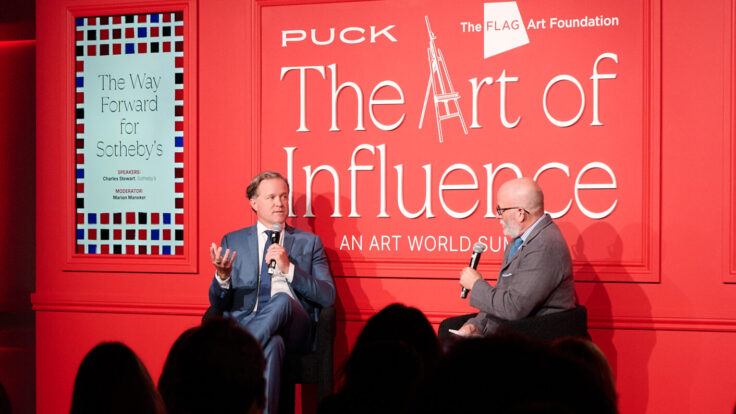
The one that highlights how auction house “strategies and marketing pitches have become ever-more distinct,” for instance, struck me not as wrong, but wrong as of about two months ago. What’s become apparent over the last few weeks is that the art market is going back to basics. That’s affecting Christie’s and Sotheby’s, alike: Christie’s managed the downturn by focusing their business and controlling costs; this summer, Sotheby’s doubled down on selling apex art, a focus
underscored by the opening of their new Breuer Building this week. For both houses, buying art—not luxury items—for the sake of owning extraordinary works is now at the center of the value proposition.
While I was in London and Paris, I felt a real sense that the market had changed. Now, with the auction catalogues out, the vast apparatus of art advisors, collectors, and dealers are combing through the day and evening sales for works they believe are must-have additions to
a collection. If you have the means, now is a good time to start buying—there’s a lot of good work available at fairs and auctions, often at reasonable prices or prices I think buyers will find quite reasonable in the years to come. There’s little competition for many things, and a new collector is likely to be rewarded over time with a good collection. Yes, some works will be pitched as bargains. But the real conversation will be about the work of art, and the real goal of buying art is to
create a good collection that gives you, the collector, the experience of spending time with it. I suspect the art press will catch up to this soon enough. |
Speaking of changing moods in the art market: Tomorrow, in the Inner Circle, I’ll look
at the data from the auctions in London and Paris (provided by our friends at ARTDAI) to determine whether the market has turned. Here’s a hint: There’s good evidence it already has, though it’s still early and uneven.
If you want to get clued in, upgrade to the Inner Circle here.
Speak to you then,
M |
|
|
The ultimate fashion industry bible, offering incisive reportage on all aspects of the business and its biggest
players. Anchored by preeminent fashion journalist Lauren Sherman, Line Sheet also features veteran reporter Rachel Strugatz, who delivers unparalleled intel on what’s happening in the beauty industry, and Sarah Shapiro, a longtime retail strategist who writes about e-commerce, brick-and-mortar, D.T.C., and more. |
|
|
Finally, a media podcast about what’s actually happening in the media—not the oversanitized,
legal-and-standards-approved version you read online. Join Dylan Byers, Puck’s veteran media reporter, and Julia Alexander, a longtime media analyst, as they sit down with TV personalities, moguls, pundits, and industry executives for raw, honest, sometimes salacious conversations about the business of media and its biggest egos. New episodes publish every Tuesday and Friday. |
|
|
Need help? Review our FAQ page or contact us for assistance. For brand partnerships, email ads@puck.news. You received this email
because you signed up to receive emails from Puck, or as part of your Puck account associated with {{customer.email}}. To stop receiving this newsletter and/or manage all your email preferences, click here. |
Puck is published by Heat Media LLC. 107 Greenwich St., New York, NY 10006 |
|
|
|