Welcome back to Wall Power. I’m Marion
Maneker.
Pauline Karpidas’s sale of the surrealist art collection from her London home could be a potential market inflection point. The sale was previously announced for September, and the catalogues are now available, bringing an early end to art advisors’ summer isolation. Before I get to that, though, I’ve got an update on Cj Hendry, who is up to her pop-up mischief again this August and September. Plus, Julie Davich takes a
look at ArtTactic’s midyear luxury report, which shows that lot volumes are up. But it’s a bit more complicated than that, and you’ll have to read on to see why.
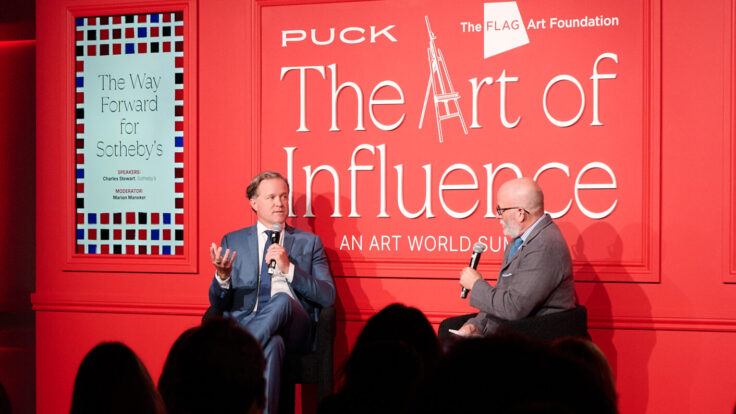
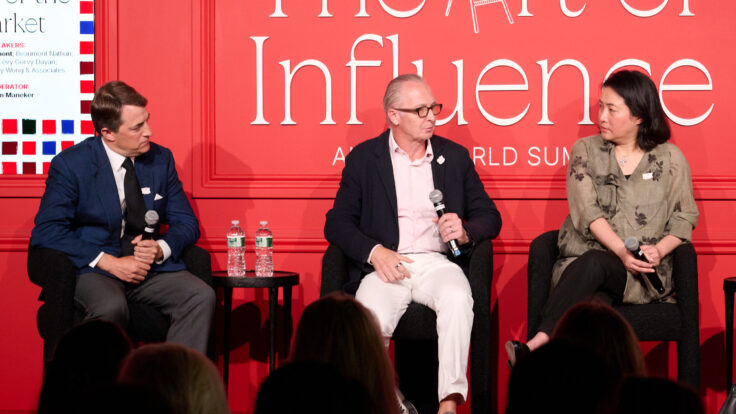
Up front, though, I wanted to announce that Scott Rothkopf, the director of the Whitney Museum of American Art, and Patti Wong, one of Asia’s leading art advisors, will be joining us for The Art of
Influence, Puck’s one-day summit about the art market in partnership with the FLAG Art Foundation at SECOND in Chelsea on September 15. Just a reminder that the lineup of speakers also includes Sotheby’s C.E.O. Charles Stewart; collectors Dasha Zhukova, Michael Ovitz, J. Tomilson Hill, and Glenn Fuhrman; the director of the Brooklyn Museum, Anne Pasternak; the mega-dealer
Larry Gagosian; and the artist Nicolas Party.
We still have one or two big names to announce next week, but I wanted to share the exciting news with you now. Meanwhile, we’re keeping the summit small so that the conversation stays intimate and forthright. Get your tickets while they are still available. I hope you’ll join us.
Mentioned in this
issue: Tobias Meyer, Oliver Barker, Alex Rotter, William Koch, Cj Hendry, Alexander Iolas, Joseph Lau, Yves Saint Laurent, Pierre Bergé, Edward James, Eileen Gray, Robert Scull, Andy Warhol, and many, many more…
Let’s get started…
|
-
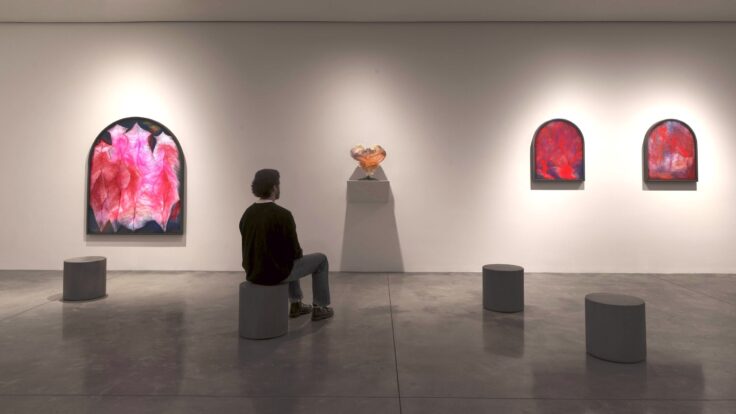
The Studio Museum in Harlem sets an opening date: The long-awaited opening of the new seven-floor, 82,000-square-foot, Adjaye Associates–designed building on 125th Street, in the center of Harlem, will officially be on November 15, when the museum will hold a Community Day celebration. As part of the opening, there will be a presentation of the work of Tom Lloyd, whose work was the subject of the Studio Museum’s inaugural exhibition in 1968. There will also be
an exhibition of works from the museum’s 9,000-object permanent collection, as well as a presentation of works on paper made by more than 100 alumni of the museum’s Artist-in-Residence program.
|
|
|
A MESSAGE FROM OUR SPONSOR
|
The first steps towards a masterpiece starts with a dream. The all-electric BMW i7 – the
evolution of brilliance. Learn more at
BMWUSA.com
|
|
|
- Cj Hendry’s opaque
model for selling art: Everybody’s always talking about new models for selling art. Cj Hendry has actually developed one, pioneering a program of pop-up events that are both performance art and a groundbreaking commercial model—from installing a perpetual indoor snowstorm in a dilapidated London church to erecting a tree of basketball hoops in Miami and holding a far-too-successful market for $5 artificial flowers on Roosevelt Island. (Eventually, the city forced her to move to
Industry City, in Sunset Park, due to the crowds. Meanwhile, the flower market will return to the much more centrally located Rockefeller Center from September 19 to 21.) More spectacle than gallery opening, these events give the artworks she sells an additional aura of originality. They’re also just catnip for Instagram.In the process, Hendry and her team have developed a proficiency at guerrilla construction that corporate underwriters have begun to notice. To wit: On August 14, Hendry
will debut a collaboration with Jeni’s Ice Creams whereby she’ll serve her own flavor, “Opaque,” in a shop that will also display her artworks. Over the course of a few days in SoHo, Jeni’s will latch on to Hendry’s Greenpoint street cred to make a New York marketing push. For their part, Hendry and her team will improve their margins by building out another brief sales venue on someone else’s dime. What does black ice cream taste like? You can find out next week.
|
|
|
 |
Julie Brener Davich |
|
- They only call it
luxury: Luxury sales have become an increasingly significant component of auction houses’ total revenue picture. ArtTactic’s report for H1 2025, which looks back at luxury sales over the past decade at Phillips, Christie’s, and Sotheby’s, adds more nuance to the story. In short, there was a huge increase in the number of lots sold in luxury categories—mostly
wine—but a stagnation in total sales. In other words, the houses are selling more items for less. (N.B.: ArtTactic included jewelry, watches, clothing and accessories, and wine and spirits in their data. They did not include cars, streetwear, sports memorabilia, pop culture, or science and technology.)In the first half of this year, the three houses sold 27,985 luxury lots—a 16 percent increase in volume over H1 2023 (24,193) and 22 percent increase from the first half of last
year (22,960). But the houses sold only about $800 million in the first half of this year and last year, compared to $1.14 billion during the same period two years ago. Average lot value in H1 2025 equaled only $28,796, down from $34,698 in 2024 and $47,276 in 2023.
The volume increase was driven entirely by wine and spirits sales. So far this year, Christie’s and Sotheby’s sold 19,039 lots in the category, making up 68 percent of total lots sold, compared to about 11,000 the
previous two years (56 and 57 percent). Christie’s H1 wine sales totaled $55 million, and included the collections of William I. Koch ($13.7 million) and Joseph Lau, Part III ($9.3 million). Sotheby’s H1 wine and spirits sales totaled $44 million.
As for geographic breakdown, London and Hong Kong are shrinking markets for luxury, while New York and “other” sites (led this year by Paris, Napa, Dubai, and Diriyah, Saudi Arabia) are growing. New York accounted for
33 percent of luxury sales in the first half of this year, the highest share in five years. (It typically ranges from 26 to 29 percent.) Hong Kong’s share was 26 percent, way down from the roughly 40 percent it garnered in H1 2021 and H1 2022. “Other” locales—meaning markets outside the traditional auction hubs of New York, Hong Kong, Geneva, and London—accounted for only 0.1 percent of sales as recently as H1 2021, but in the first half of this year accounted for roughly 7
percent of sales.
More lots sold, lower average prices, and broader geographic dispersion essentially means that the houses are working harder and spending more to make less. It’s a useful reminder that the definition of luxury is changing.
|
|
|
Now, let’s get to the main event…
|
|
|
The octogenarian collector, famous for collecting “in depth,” is
emptying out her London home and selling an estimated $80 million worth of art and design. She once helped bail out the art market after the financial crisis. Can she do it again?
|
|
|
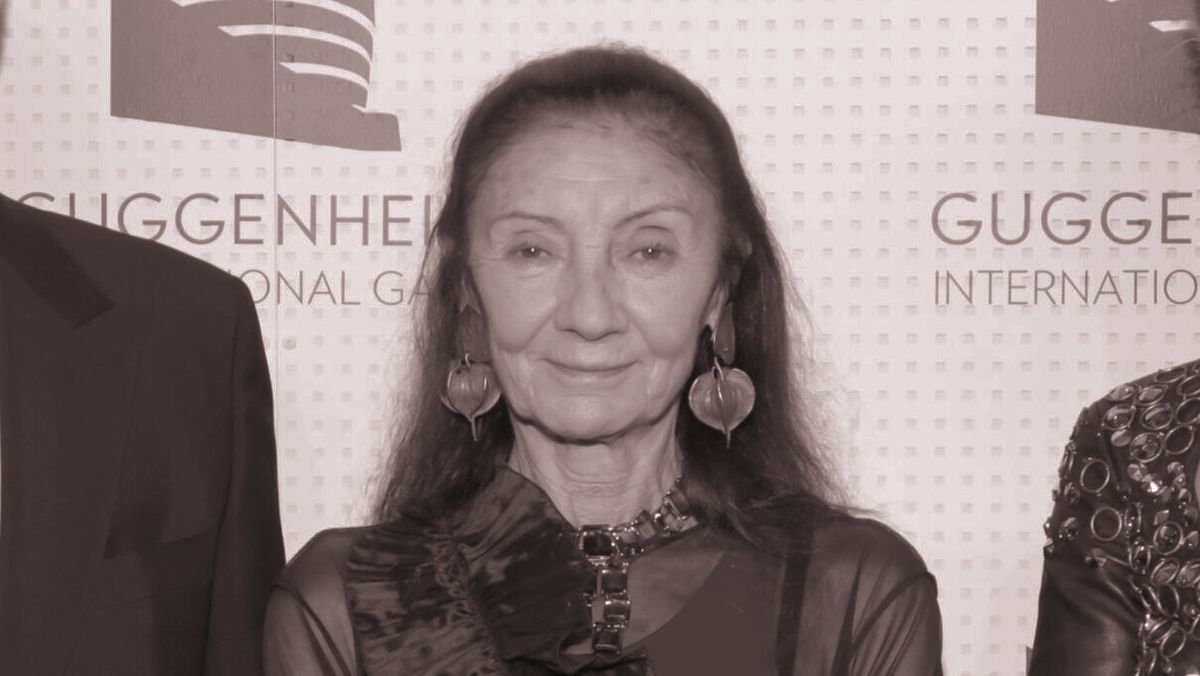
Pauline Karpidas is one of a number of important contemporary art
collectors with deep holdings of artists such as Cindy Sherman, David Salle, George Condo, and Eric Fischl. She has such an extensive collection of works by Richard Prince that, two years ago, her family’s Dallas art foundation mounted an exhibition that many described as a small retrospective of the artist’s work. It’s said she could do the same with any of the other aforementioned artists. But at 81, she’s
rapidly downsizing, which means a trove of works are coming to market.
Karpidas has already sold the contents of her home on the Greek island of Hydra, which brought in €35 million, buoyed by the large number of works by Claude and François-Xavier Lalanne—Karpidas collects in depth, after all—but also by the rapidly rising arc of demand for works by Les Lalannes. The sale also contained works by other contemporary artists like Jacqueline
Humphries, Brice Marden, Damien Hirst, Marlene Dumas, and Juan Muñoz.
|
|
|
A MESSAGE FROM OUR SPONSOR
|
The first steps towards a masterpiece starts with a dream. The all-electric BMW i7 – the
evolution of brilliance. Learn more at
BMWUSA.com
|
|
|
This week, she announced she’d largely emptied out another home, in London, to sell
most of its contents through Sotheby’s this September in the off-season. Her husband, who made his fortune in shipping, had dictated that all the family’s art should be sold through the auction house, which will hold a special-event sale and give over its premises to re-creating Pauline’s distinctive style.
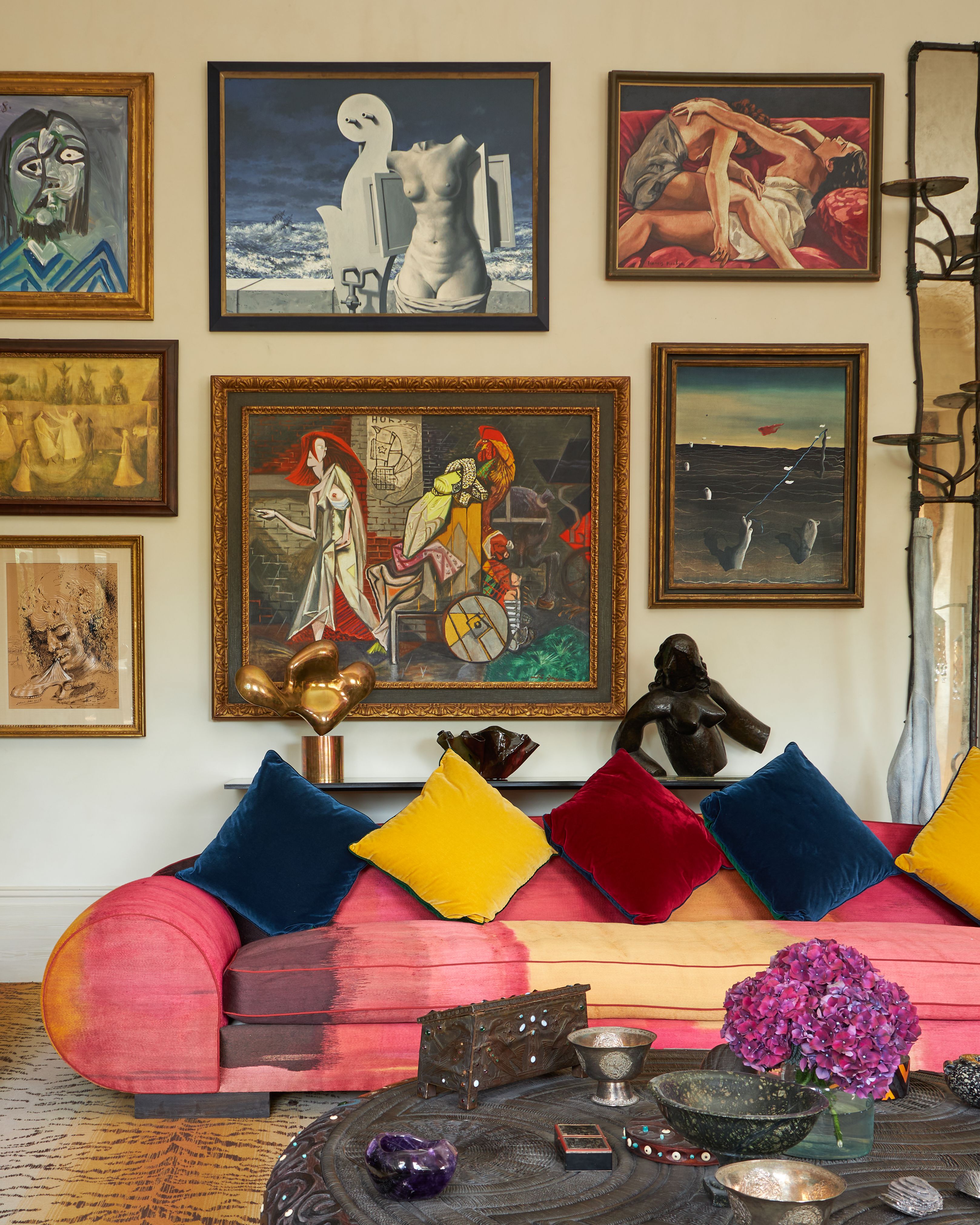
Here, we get an emphasis on surrealism and related artists— René Magritte, Leonora Carrington, Dorothea Tanning, Max
Ernst, Salvador Dalí, André Masson, and Óscar Dominguez, not to mention Francis Picabia, Giorgio de Chirico, Jeff Koons, and Andy Warhol—along with Karpidas’s eclectic or, possibly, omnivorous design taste. The entire collection of 250 works of art and design comes to market with an estimate of £60 million (about $80 million), which Sotheby’s says makes it the
highest-value “designated” collection the house has sold in Europe.
The Karpidas sale comes at a time when the art market has been struggling to return confidence and momentum behind the idea of paying a lot of money for works. So Karpidas’s taste in art and design—a sweet spot between surrealism and contemporary art—will offer an experiment. After all, her collection is being sold at a time when the results might have maximum impact on the public consciousness. Could the sale help turn
the tide of pessimism?
|
The Once and Future Market
Recalibrator?
|
This would not be the first time Karpidas has played an important role in rebuilding
confidence and interest in art. In 2009, at the nadir of the global financial crisis, the market was shocked to see the contents of Yves Saint Laurent and Pierre Bergé’s collections of art and design objects sell for a record €374 million at Christie’s. It didn’t matter so much whether buyers were paying for the objects because of their intrinsic importance or because they were owned by such a famous figure—more significant was the public spectacle of the very
rich spending their money at a moment when the international banking system seemed on the brink of collapse. If the rich were so bold as to buy an Eileen Gray “Dragons” chair for €22 million, maybe things would work out.
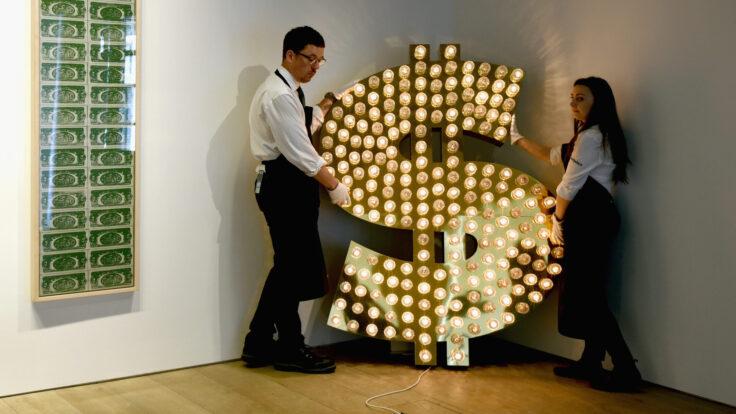
But one sale does not make a market. Not long after the YSL sale, the Karpidas family decided to unload at least one significant work from their vast holdings. Tobias Meyer, then Sotheby’s chief auctioneer, selected for sale Warhol’s rare
and important 200 One Dollar Bills, from 1962, which Karpidas had bought from Robert Scull’s estate sale in 1986—a low point in Warhol’s market.
Meyer developed a strategy to offer the work at a “can’t walk away from it” estimate ($8 million) backed up by strong bids (Meyer had a $30 million bid in
his pocket before the lot came up). He opened the bidding at $6 million; Alex Rotter, then the department head at Sotheby’s and in possession of that $30 million bid, shouted out $12 million, and the sale was off and running in million-dollar increments. The final price was $44 million with fees—a number that recalibrated the market.
|
Cool Finds for Connoisseurs
|
The top lot in the Karpidas sale is Magritte’s La Statue volante, from 1958,
estimated at £9 million, which places it above the selling price of previous Magritte nudes sold at auction. But this part of Karpidas’s collection is not where the big-money works lie. And that’s more appropriate for the market we’re in.
|
|
|
Rather, this is a collection of cool finds for connoisseurs, which makes sense given
that Karpidas was advised by Alexander Iolas, the former dancer turned art dealer and one of the first gallerists with an international footprint. Iolas had already retired by the time he met Karpidas, according to Sotheby’s Oliver Barker, and she immediately placed herself under his tutelage after visiting his home. Thereafter, given Iolas’s role in the careers of Magritte, Ernst, and Warhol, Karpidas had access to the artworks that sophisticated collectors
prize; she also frequented the sales of great surrealist collectors like Edward James and picked exceptional works. That kind of provenance should bring extra focus to the works in this sale.
|
The London Salon of Pauline Karpidas, featuring artworks by Pablo Picasso, Leonora
Carrington, René Magritte, Francis Picabia, Yves Tanguy and André Masson. Photo: Barney Hindle/Courtesy of Sotheby’s
|
Among the works on offer is Picabia’s Deux amies, from the early 1940s,
estimated at £2.2 million, which Karpidas has owned for more than 20 years. The painting of two nudes on a sofa has an irrevocable bid, which is good, because if the work sells at the estimate, it will cost as much as the highest-priced Picabia “pin-up” to sell at auction. Karpidas is also selling two Warhol
works inspired by Edvard Munch: The Scream (After Munch), from 1984, also has an irrevocable bid and a £2 million estimate, and is also already priced at the top of the range for other examples of this image sold at auction; and Madonna and Self-Portrait with
Skeleton’s Arm (After Munch), from 1984, is estimated at £1.5 million. The latter work doesn’t have a backer, but its estimate similarly lies near the top of the range for previous works.
Koons’s auction market is somnolent, but Karpidas’s example might be
the kind of thing that sparks unexpected interest: She bought the Poodle, from 1991, from Anthony d’Offay, and it’s now estimated at £1 million. Large Vase of Flowers, from the same series, sold in New York in November for $8.2 million. And I’ve been told of significant activity on the private market for classic Koons works from the ’90s, too. Finally, a large André Masson
painting that Barker singled out as a particularly strong example is on offer for £350,000. And Leonora Carrington’s The Hour of the Angelus, from 1949, should capitalize on the intense interest in her work.
Of course, the sale has many other “finds,” and there are still the 58
works, large and small, by Les Lalannes that are sure to outperform the low estimates the market seems to insist upon, even so many years into their runaway success. Although I cannot tell you that the market is holding its collective breath waiting to see how this sale performs, it could not come at a better time. Fingers crossed.
|
That should do it for today. I’ll be back tomorrow with the Inner Circle.
M
|
|
|
The ultimate fashion industry bible, offering incisive reportage on all aspects of the business and its biggest
players. Anchored by preeminent fashion journalist Lauren Sherman, Line Sheet also features veteran reporter Rachel Strugatz, who delivers unparalleled intel on what’s happening in the beauty industry, and Sarah Shapiro, a longtime retail strategist who writes about e-commerce, brick-and-mortar, D.T.C., and more.
|
|
|
Finally, a media podcast about what’s actually happening in the media—not the oversanitized,
legal-and-standards-approved version you read online. Join Dylan Byers, Puck’s veteran media reporter, as he sits down with TV personalities, moguls, pundits, and industry executives for raw, honest, sometimes salacious conversations about the business of media and its biggest egos. New episodes publish every Tuesday and Friday.
|
|
|
Need help? Review our FAQ page or contact us for assistance. For brand partnerships, email ads@puck.news.
You received this email because you signed up to receive emails from Puck, or as part of your Puck account associated with {{customer.email}}. To stop receiving this newsletter and/or manage all your email preferences, click here.
|
Puck is published by Heat Media LLC. 107 Greenwich St, New York, NY 10006
|
|
|
|