Welcome back to Wall Power on a fine autumn weekend in New York turned unexpectedly soggy. I’m
Marion Maneker.
The auction world is filled with Icarian stories of collectors who became intoxicated by the sense of grandiosity and power that comes from owning extraordinary examples of art and workmanship passed down through history. Alan Bond bought van Gogh’s Irises in 1987 for $54 million with money he didn’t have. Halsey Minor went on an American art buying spree before going bankrupt. And recently,
Ronald Perelman had to sell a lot of art to make good on other loans. Tonight, Julie Davich has the story of Kazuo Okada, known in Japan as the “Pachinko king,” whose long-running legal woes have brought to the market a collection of Asian art that Sotheby’s is calling “one of the greatest collections, if not the greatest collection of Asian art, to come to market in decades.”
But first…
|
- A vintage Patek Philippe record: After a 10-minute battle between five bidders yesterday at Phillips Geneva, in association with Bacs & Russo, a stainless-steel Patek Philippe (ref. 1518) sold for CHF 14.2 million, or $17.6 million, setting the record for a vintage wristwatch from the brand at auction. It’s believed to be one of only four stainless-steel versions of the first serially produced perpetual calendar chronograph wristwatch, more commonly made in yellow or pink gold. The price was
about 30 percent higher, in Swiss francs, than what the exact same watch made in 2016.The final price was just shy of the $17.8 million record for any vintage wristwatch, set in
2017 by Paul Newman’s Rolex Daytona (ref. 6239). Meanwhile, the highest price for a wristwatch still stands at $31.2 million, set in 2019, for a Patek Philippe Grandmaster Chime (ref. 6300A-010). In a segment on CBS Sunday Morning last weekend, Phillips auctioneer Aurel Bacs said he believes that, one day, a
watch will sell for $50 million. —Julie Brener Davich
|
|
|
A MESSAGE FROM OUR SPONSOR
|
The first steps towards a masterpiece starts with a dream. The all-electric BMW i7 – the evolution of brilliance.
Learn more at
BMWUSA.com
|
|
|
- Salon
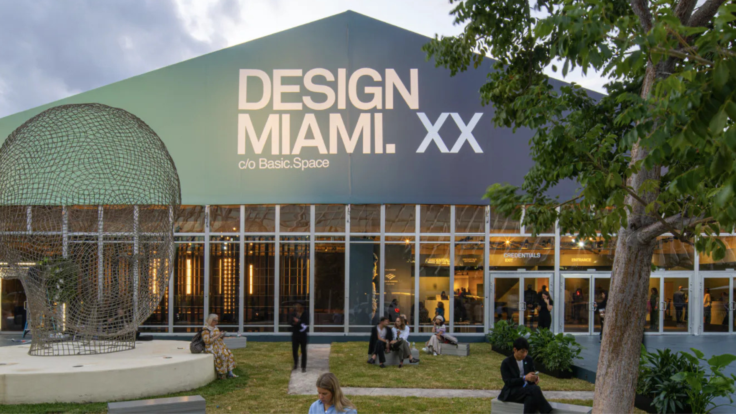
and on: The Salon Art + Design fair was founded in 2012, and this year’s edition is the second under director Nicky Dessources after its founder, Sanford L. Smith, died last year. The fair features 47 exhibitors showing an eclectic mix of objects, including furnishings, decorative objects, paintings, sculpture, and jewelry, from antiquity to present day. There are some familiar faces, including fair stalwart Bernard Goldberg, whose focus is on early 20th century European and modern—but within that category, the range could not be wider, from a Guy Pène du Bois painting of an orchestra for $125,000 to a Josef Hoffmann plant stand for $52,000, and a midcentury Swedish pine side table and two chairs for $42,000.Of course, there are a few newer entrants this year: It was Parisian gallery Sceners’ first time participating in the fair, and director Néjib Ben Ali is announcing
himself to the New York market with a mix of contemporary and historic items, ranging from a Rick Owens horn bench to a George Nakashima coffee table and a four-panel lacquer art deco screen designed by Jean Dunand and realized by his son, Bernard, who gave his father’s signature eggshells a decidedly ’80s twist. —Julie Brener Davich
- So you want to buy a Rockwell: After yearslong legal proceedings to
determine ownership of Norman Rockwell’s quadriptych So You Want to See the President!, which hung in the White House through eight presidential administrations, the work is coming up for sale on
Friday at Heritage Auctions at an estimate of $4 million. The four interrelated sketches, from 1943, depict a casting call of characters waiting on a long red couch for their turn at face time with the commander-in-chief—a beauty pageant winner, a politician, a military officer, and so on. On the far left is President Franklin Delano Roosevelt’s press secretary, Stephen T. Early, who originally commissioned the work to highlight his belief in people’s
accessibility to government.Rockwell gave the original sketches, which were published in The Saturday Evening Post, to Early, and his nephew William Nile Elam III loaned them to the White House. But in 2017, descendents from a different branch of the family saw the work in the background as President Trump was being interviewed on TV, and began inquiries as to how it got there. Years of bitter legal
disputes over ownership of the work followed between the different branches, with Elam emerging victorious. Heritage describes the drawings as a reminder of the spirit of American democracy. —Julie Brener Davich
|
Now, let’s get to the main event…
|
|
|
Japan’s so-called “Pachinko king,” staring down tens of millions of dollars in legal
obligations, is bringing one of the greatest collections of Asian art to auction.
|
|
|
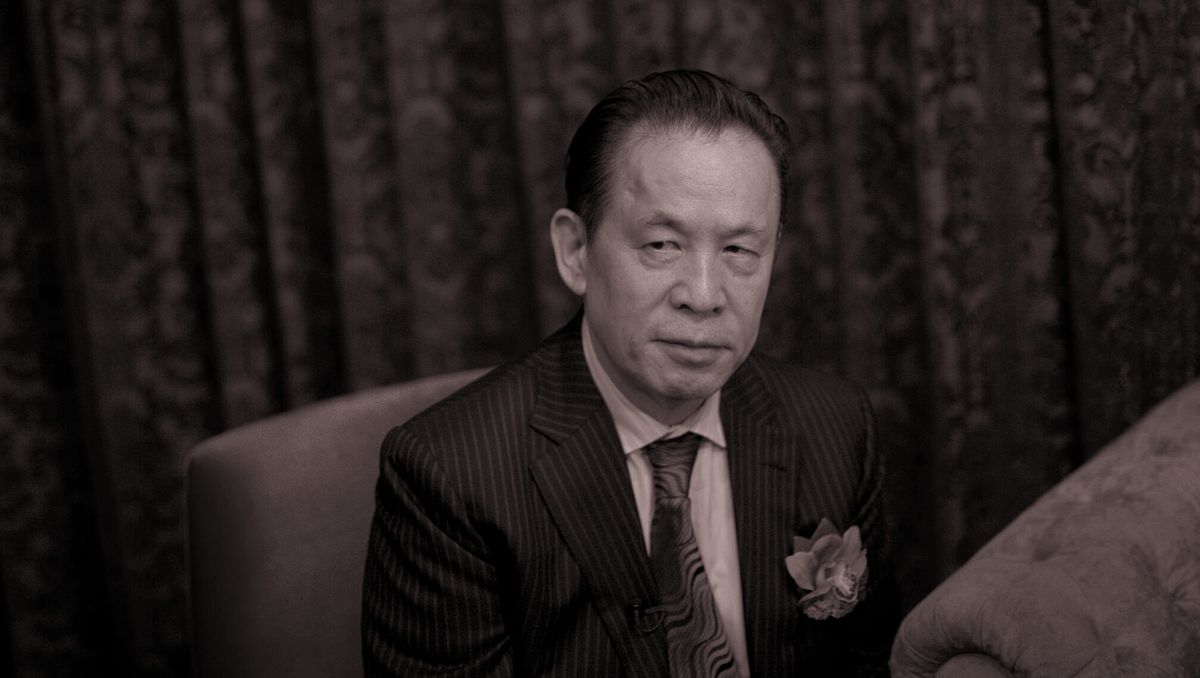
Sometimes, even the very rich are left with no other choice but to sell their art. That’s what happened to
Kazuo Okada, known in Japan as the “Pachinko king.” He built his fortune as chairman of Universal Entertainment Corporation by making and selling gambling machines. But after partnering with Steve Wynn in the early 2000s to build casino resorts, the relationship fell apart. In 2018, Wynn Resorts agreed to pay a $2.6 billion settlement to Okada’s Universal Entertainment—and lawyers for Okada, who was ousted as chairman of Universal in 2017 after being accused of
misappropriating funds, invoiced Okada $50 million for their agreed-upon contingent fee. (The fraud charges, which he denied, were later dropped.) He refused to pay. Now, following years of arbitration and appeals, the contents of Okada’s private museum are being sold to at least partly pay off that debt, which has climbed to $54.6
million.
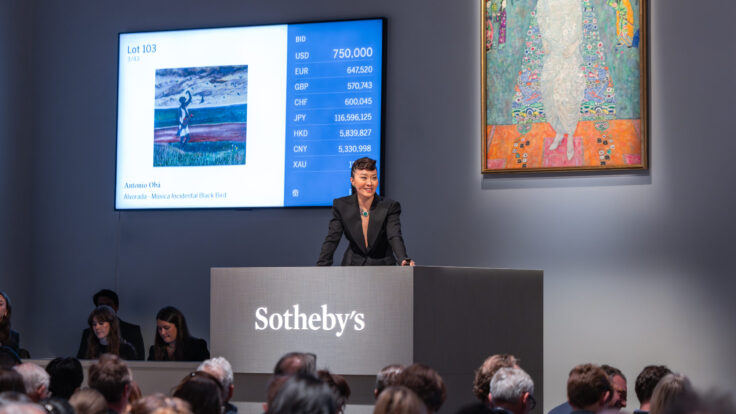
The Okada collection of Asian art, which is coming up for sale at Sotheby’s Hong Kong later this month, offers global collectors a unique opportunity to acquire treasures spanning 3,000 years of East Asian artistry. “The Okada collection is one of the greatest collections, if not the greatest
collection of Asian art, to come to market in decades,” Nicolas Chow, Sotheby’s chairman in Asia, told me. While there have been some exceptional collections of only Chinese works of art from the region, such as the most recent Hikonobu Ise collection of ceramics, Okada’s holdings
are notable for their breadth. In addition to more than 70 Chinese works of art, there are more than 50 Japanese screens, paintings, and Korean ceramics. “[It] stands apart as an extraordinary overview of Japanese painting and East Asian ceramic art, and includes many masterpieces of a quality rarely seen on the market,” said Chow.
|
|
|
A MESSAGE FROM OUR SPONSOR
|
The first steps towards a masterpiece starts with a dream. The all-electric BMW i7 – the evolution of brilliance.
Learn more at
BMWUSA.com
|
|
|
The aggregate estimate of Sotheby’s sale is a conservative HK$248 million, or $31.9 million—a possible
indication that while the quality of works is exceptional, there could be lurking provenance issues on some that the market will have to assess. (If these works underperform, perhaps an additional tranche will come to auction.)
|
The collection, which Okada built for more than three decades with the help of Tokyo’s Kochukyo Ltd., one of
Japan’s two greatest dealers, is coming up for sale at an interesting time for Asian art. The market for Chinese works of art, in particular, has cooled in recent years as domestic financial constraints and political crackdowns on flashy displays of wealth have tempered buying in both the category and the region. But the Okada opportunity exists outside of regular
market trends. Extremely rare objects that are fresh to the market can drive demand, especially if the provenance is air-tight.
But that’s where Okada’s treasures became tricky. When it came to selecting works from the museum’s vast holdings, Sotheby’s and the appraisal and advisory firm Gurr Johns, which had been appointed to manage the sale, considered both cultural patrimony and sale expectations while preserving the museum’s vision. “We focused on identifying a small selection of the
most salable pieces while ensuring the collection’s integrity and narrative remained intact,” said Gurr Johns president Charlie Horne, emphasizing that the works for sale represent only a small fraction of the museum’s total holdings. “It was always our intention to remove as little as possible while still satisfying our court-appointed role as agent for the sale.”
Many works in Japan’s museums, like Okada’s, were not bought at
international auctions; rather, they were acquired discreetly from Japanese dealers. If not for Okada’s debt obligations, these works would never have been seen at international auction—they would have stayed in his museum, or been sold privately in that domestic network. Indeed, the provenance of many works in Japanese museums “is often opaque,” dealer Lark Mason told me. “This doesn’t mean that the prior ownership is unknown—rather it means that the prior owner likely did not
want to be known.”
Okada’s large Ru guanyao bowl, from the Northern Song dynasty, provides an interesting case study. Ru ceramics, considered the greatest among the five Song kilns, are known for their crackled blue-green glazes like “first ice
forming over a still pond,” according to Sotheby’s catalogue. They are highly prized and extremely rare—fewer than 10 have come to auction since 1940, three of which are in museums. In 2018, Christie’s offered a smaller Ru tea bowl, also from a Japanese collection, with detailed 20th century provenance, at an unpublished estimate; it sold for HK$56.5 million, or $7.2 million. Okada’s bowl,
which is double the size but comes with no provenance information, carries an estimate of only HK$20 million, or $2.6 million. That doesn’t mean the market won’t respond to the work. It just means buyers will have to make their own judgments.
|
|
|
Another Chinese highlight is a 20-inch
tianqiuping from the Qianlong period, decorated in doucai and famille-rose enamels with bajixiang, or the eight Buddhist emblems. With documented provenance that includes being exhibited twice at the Osaka City Museum of Fine Arts before passing
through Kochukyo to Okada, it carries a conservative estimate of HK$30 million, or $3.9 million. The only other Qianlong tianqiuping of this size and decoration to appear at auction, at Christie’s in 2018, made HK$130.6 million, or $16.6 million, against an estimate of HK$70 million.
|
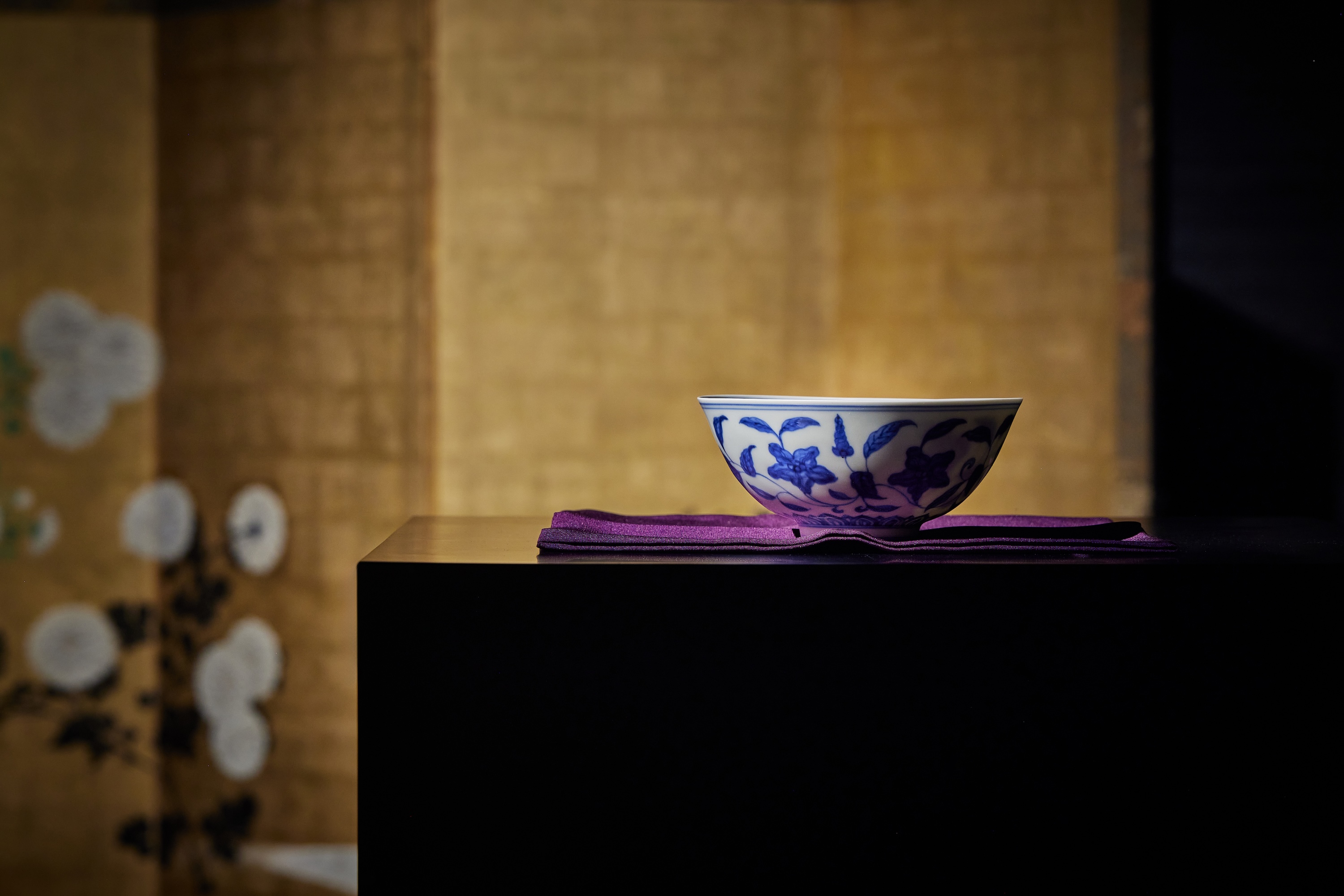
An important and exceedingly rare blue-and-white palace bowl, Masterpieces of
Asian Art from the Okada Museum of Art, estimated at HK$15 million. Photo: Courtesy of Sotheby’s
|
A rare blue-and-white palace
bowl, from the highly sought-after Chenghua period, is one of only five surviving examples of its design. Known to have passed through the collection of Osaka businessman Yamamoto Hatsujiro in the early 20th century, it is likewise conservatively
estimated at HK$15 million, or $2 million. Of the other four known examples, one is in the British Museum and another is in the Palace Museum, Taipei. Examples of a closely related design have come to auction, but not since 1999.
Japanese highlights include a pair of six-panel folding screens from the Muromachi period, or early 16th century, by Japanese painter and calligrapher Kano Motonobu, known for his synthesis of Chinese and Japanese styles. Estimated at HK$4 million, or $520,000, it last appeared at auction in 1912 at the Tokyo Art Club. A hanging
scroll from the Edo period, or early 19th century— Fukagawa in Snow, by ukiyo-e artist Kitagawa Utamaro—is considered to be one of his most important paintings, and estimated at HK$6 million, or $780,000. Among the Korean works, most notable
is a celadon-glazed kundika, or water vessel, from the Goryeo dynasty in the 13th century, estimated at HK$1.5 million, or $195,000.
Given the quality and rarity of the pieces, and the “gold seal” of having passed through Kochukyo gallery, the auction is a historic
market opportunity for collectors. Whether the buying base is there to take advantage of it remains to be seen. Either way, though, I don’t think we’ll be seeing Okada in the salesroom watching his much-loved and hard-earned treasures dispersed.
|
|
|
Thanks, Julie. I’ll be back on Tuesday with more.
Until then,
M
|
|
|
The ultimate fashion industry bible, offering incisive reportage on all aspects of the business and its biggest players.
Anchored by preeminent fashion journalist Lauren Sherman, Line Sheet also features veteran reporter Rachel Strugatz, who delivers unparalleled intel on what’s happening in the beauty industry, and Sarah Shapiro, a longtime retail strategist who writes about e-commerce, brick-and-mortar, D.T.C., and more.
|
|
|
Finally, a media podcast about what’s actually happening in the media—not the oversanitized, legal-and-standards-approved
version you read online. Join Dylan Byers, Puck’s veteran media reporter, and Julia Alexander, a longtime media analyst, as they sit down with TV personalities, moguls, pundits, and industry executives for raw, honest, sometimes salacious conversations about the business of media and its biggest egos. New episodes publish every Tuesday and Friday.
|
|
|
Need help? Review our
FAQ page or contact us for assistance. For brand partnerships, email ads@puck.news.
You received this email because you signed up to receive emails from Puck, or as part of your Puck account associated with {{customer.email}}. To stop receiving this newsletter and/or manage all your email preferences, click here.
|
Puck is published by Heat Media LLC. 107 Greenwich St., New York, NY 10006
|
|
|
|