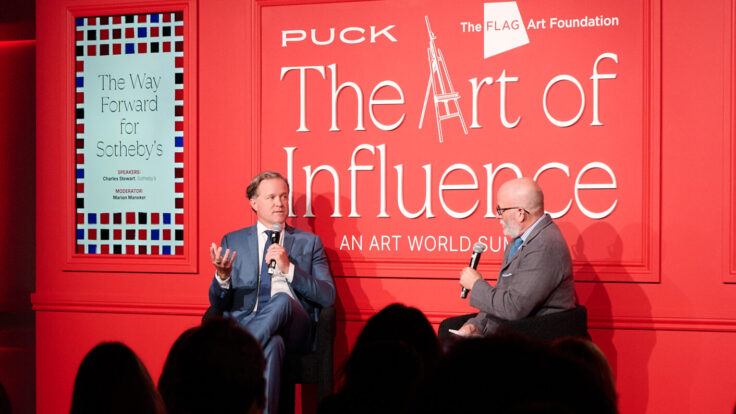
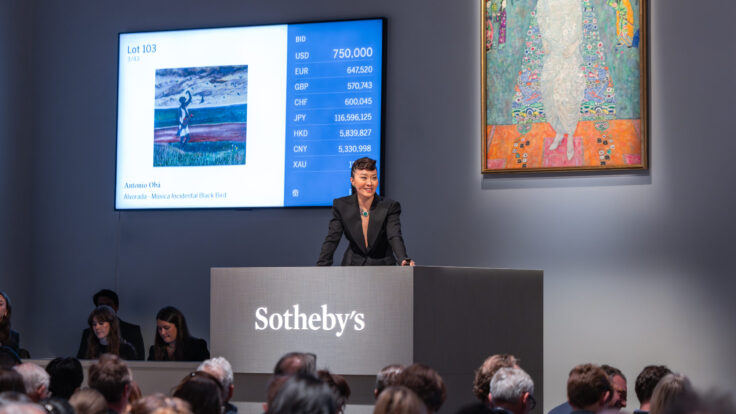
Welcome back to Wall Power. I’m Marion Maneker.
Tonight,
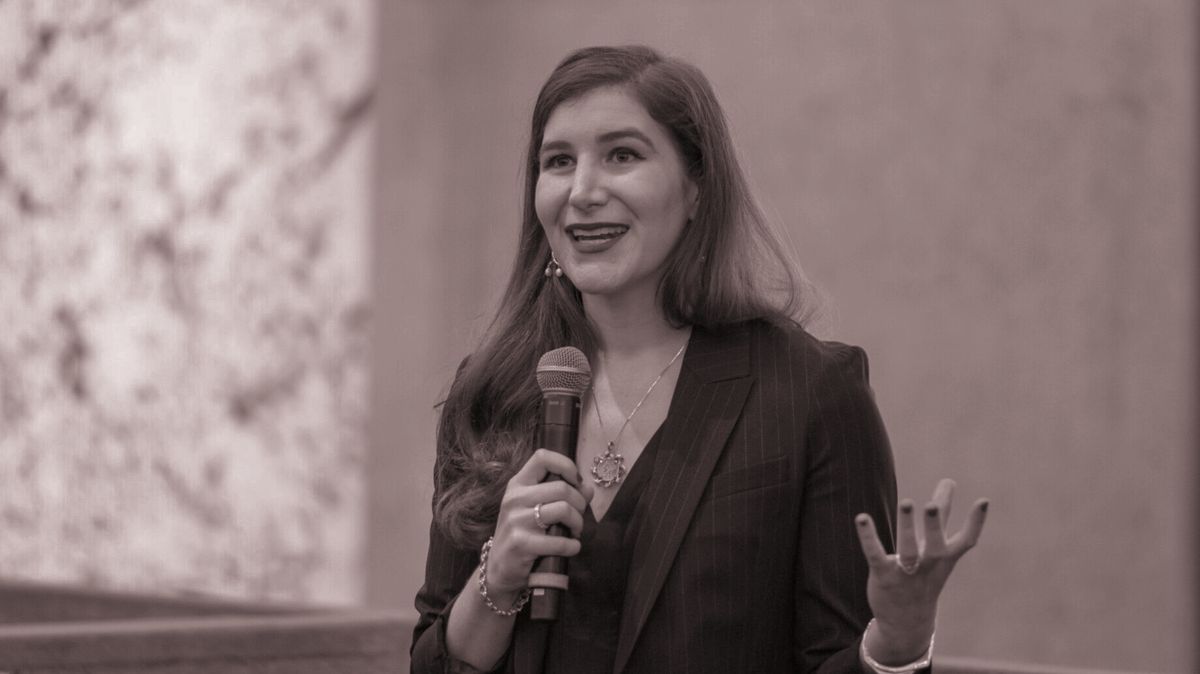
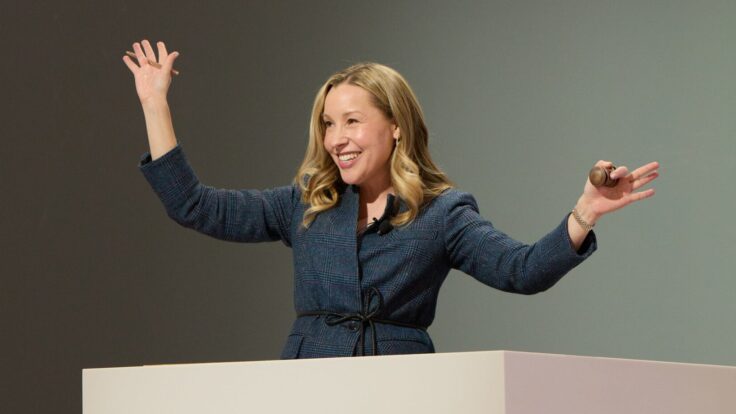
we’re headed behind the scenes at Sotheby’s as Julie Davich speaks to Madeline Lissner, the head of the house’s global fine art division. Lissner helps lead and coordinate the firm’s fine art specialists and oversees the deals that increasingly make the auction world run.
But first… |
|
|

| Julie Brener Davich
|
|
- Gallery Hopping
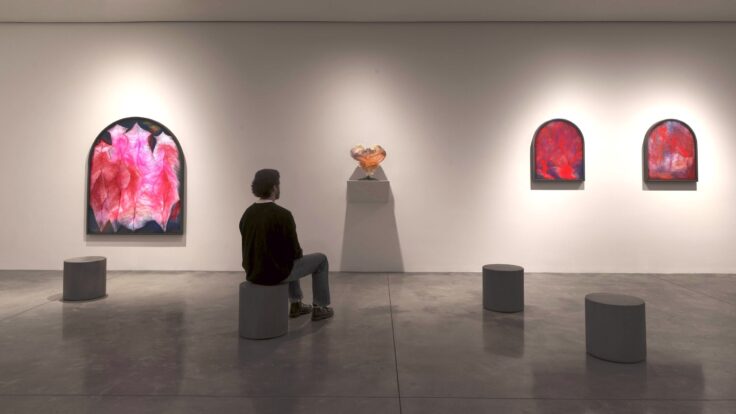
With Julie: Adam Pendleton at Friedman Benda: Artist Adam Pendleton had been toying with the idea of designing furniture for about a decade when he approached gallerist Marc Benda about finally making it happen. The result is a collection of sculptural tables in various shapes and sizes, made from stone and wood, as well as a chandelier suspended from the ceiling like a thin halo, on view at Friedman Benda, in Chelsea, through December
19.
All the pieces are circular and in his signature black, except for one end table in white onyx. Pendleton reportedly went through numerous prototypes, and his attention to detail is evident, as with the subtle lip of the end tables. The furniture is available in editions of eight, plus four artist’s proofs. (Eight means it can be considered “original art” for tax purposes in many European countries. The convention of eight plus four emerged to increase availability but maintain the
classification.)
The furniture is complemented by a series of silver glazed ceramic tiles with black celestial orbs, which Pendleton first showed in an immersive show at the Kemper Museum two years ago. Here, he has reimagined Friedman Benda’s white cube with two site-specific conceptual wall paintings—a black triangle and a white triangle—both available for purchase. (You can roll your eyes if you want to.) “You have to go back a long time to find someone who is that into geometry,”
Benda told me. “It seems simple but it’s not—it’s difficult to reduce.” - Seconds on the clock: For Sotheby’s inaugural luxury sales season at the Breuer Building, the house secured one of the most important historic watch collections ever to come to auction. The Olmsted Complications Collection, estimated to bring in more than $4 million, comprises 85 rare 19th and early 20th century timepieces by the likes of Patek Philippe, Audemars Piguet, and
Breguet. A watch market insider told me that many of them are “hugely rare—heinously so,” and will likely pique the interest of scholarly collectors and museums.
The timepieces are coming to market after decades hidden away in the collection of the late Robert M. Olmsted, an investment advisor by vocation and avid horologist by avocation. He began collecting rare and complex timepieces when he was an undergrad at Princeton in the 1960s, and, according to his obit in the
Princeton Alumni Weekly, his Monday nights were dedicated to winding all his watches. (Daylight saving time provided a special challenge.)
The collection is led by two 1920s Patek Philippe double-movement pocket watches and a paperweight clock, as well as a legendary, ultra-complicated Audemars Piguet pocket watch. Both of the Patek pocket watches were originally commissioned by industrialist John Motley Morehead III; the first is a split-seconds minute repeater,
estimated at $500,000, and the second is a remarkably thin, open-faced minute repeater with a double movement, estimated at $300,000. They are the only two known watches ever created with two movements that share one winding mechanism.
Meanwhile, the previously unknown 1927 paperweight clock, estimated at $500,000, is now one of only three known examples, with the other two being in the Patek Philippe Museum in Geneva. When Patek Philippe reissued this model this past spring, at Watches &
Wonders in Geneva, all 25 of them sold out instantly at $1.25 million apiece. The Audemars Piguet, known as the Grosse Pièce, or “Big Piece,” is the most complicated pocket watch by the maker in private hands, even including an astronomical star chart complication. It is estimated at $500,000.
|
|
|
Now, let’s get to the main event… |
|
|
Madeline Lissner, the auction house’s new head of global fine art and
major collections, opens up about the impact of the Breuer Building, managing client relationships, and the latest global market trends. |
|
|
Several weeks ago, at the opening of Sotheby’s new Madison Avenue location,
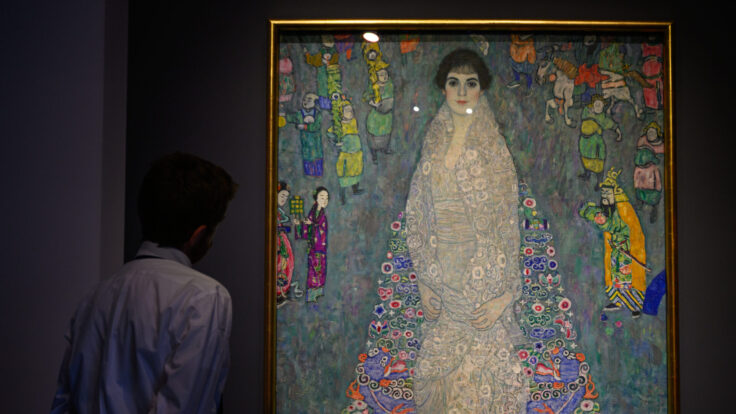
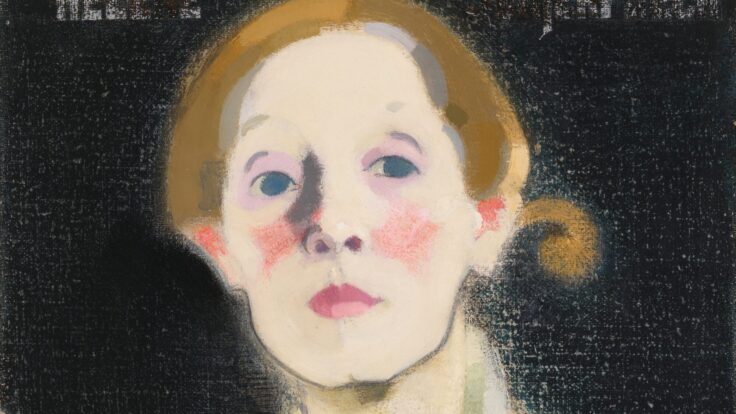
Madeline Lissner, the auction house’s new head of global fine art and major collections, spoke about the blockbuster artworks her team had secured to inaugurate the Breuer Building. In pure art market kismet, the star of the season was the collection of Leonard Lauder—the former president of the Whitney Museum, which was once housed in the Breuer. The sale included museum-quality masterpieces by the likes of van Gogh,
Matisse, Munch, and three works by Klimt, whose Portrait of Elisabeth Lederer made $236 million—a record for a modern work of art. |
|
|
A MESSAGE FROM OUR PARTNER |
|
|
In today’s highly competitive auction landscape, the long-term, high-touch
relationships that were once necessary to win collections like Lauder’s seem almost quaint. These days, after all, consignment negotiations often come down to who puts forward the more attractive deal, and sales come down to who can secure the stronger guarantees. Indeed, whereas Lissner’s predecessors, Brooke Lampley and Amy Cappellazzo, were specialists, Lissner is an M.B.A. who cut her teeth in Sotheby’s financial services division—a background that bespeaks
the complicated dealmaking that now defines the top of the market. Herewith, our conversation about the nuances of her new role, Sotheby’s real estate play, and the macro- and micro-factors laddering up to the auction house’s blockbuster $1.2 billion week. The following has been lightly edited for length and clarity. |
“Everything Was Clicking”
|
Julie Davich: Tell me about last week
and the run-up to the sales. After the artworks go on view, what happens over the following two weeks?
Madeline Lissner: This season was unique, of course, with the grand opening of the Breuer. Going into the sales, there was a level of engagement that we haven’t seen in the last several years, both in terms of excitement over the property—these were truly special collections with rare provenance—but also engagement with the space and
the exhibitions. Some clients who usually come in once or twice were coming in five or six times; just being on Madison Avenue really was a difference-maker for us.
Do you think it was those micro-factors, along with the property on offer, or other macro-factors that made a difference this season?
I think it was a mix. If you look at what happened last week, everything was clicking. We had five paintings sell above $50 million; we
had the most expensive painting ever at Sotheby’s. So you have that at the high end of the market. But then also in the mid-market, we had our largest-ever day sale. And then when you look at how we delivered for sellers, six of our nine sales were white-glove, and the others were either 85 percent or 95 percent sold through.
So I think you’re looking at a combination of confidence on the buyer side, the type of property that was coming to market, the estimating strategy, the type of
exhibition that we put on, and just the proposition and the marketing that went out to clients. In our day sales, we also had an increase of about 50 percent in new bidders. So we were really seeing this type of enthusiasm across the market.
Was that across generations and geographies?
I haven’t seen our age demographic stats, but from a geographical standpoint, about 30 percent of our bid value came from Asia, which is double what
we had last year. Within that, there were some new clients coming through from Asia. If you bring the right type of property, and high-quality property, Asia is going to respond to it, which is often the difference-maker each season.
How do you think these results are going to carry into upcoming sales?
I think the last week is going to bring a lot of confidence back into the market. I’m talking beyond auction, to the landscape of
dealers and advisors. There are key price points that everyone is going to look at. And I think that’s a bit of what has been missing. |
The two big specialist divisions at Sotheby’s are global fine art and luxury,
but a couple weeks ago, my partner Marion noted that “Sotheby’s doubled down on selling apex art, a focus underscored by the opening of their new Breuer Building this week.” What would you say to that?
The Breuer [represents] the larger real estate strategy we’ve taken on. It’s about forming connections with our clients. Last year, we opened our new Hong Kong space, which was followed in the fall by our new Paris
galleries. We opened our galleries in Zurich earlier this year, and now, of course, the grand opening of our worldwide headquarters at the Breuer.
It’s all been part of a larger strategy to be a platform for cultural exchange. It’s what’s allowing us to do things like host the Independent art fair next October, and our Icons exhibition this December, which is a non-selling exhibition featuring some of the best items across categories that we’ve sold since the last time we were on
Madison Avenue, in the ’60s.
Tell me more about the company’s real estate play.
We are investing in central locations and property that can be part of the day-to-day activity of clients, collectors, and the general public. On Madison Avenue, we had over 25,000 people come through in our exhibition period. We had lines around the block. We don’t want that to be a moment that just happens for two weeks in May and November—we want to
be able to activate our current and future clients throughout the year. So with that, we have to expand how we think about our galleries.
We also have different types of activations planned. We’ve been holding exhibitions that explore themes, most recently Eros/Thanatos in Hong Kong. In our London spaces, especially during the summer, when you are benefiting from international travel, we have been hosting different activations—Hafla, for example, with a Middle East
focus, to better activate clients during those non-selling moments. |
|
|
A MESSAGE FROM OUR PARTNER |
|
|
You bring a strong finance background to your new role. How does that set you
apart from your predecessors?
I joined Sotheby’s 10 years ago through the acquisition of Art Agency Partners, which was formed by Amy Cappellazzo, Allan Schwartzman, and Adam Chinn. I was their first external hire. At Sotheby’s, I was originally doing strategy, focusing on our guarantee book, then I led our financial services division to its highest-value portfolio balance at the
time—fortunately, our team has beaten that record multiple times since then. Then, until this past spring, I was our chief commercial officer. So I’ve been interacting with these categories and with these clients during my entire career here at Sotheby’s.
I think the advantage in my perspective is that I’ve been working on our most complicated situations, always with that client-first focus. It has allowed our specialists and our chairmen to focus on their expertise,
relationship-building, and clientele, while I’m thinking about how we bring it all together.
You mentioned that you worked on guarantees when you first started, and then, as C.C.O., you worked on deals. How have those deals evolved in the past 10 years?
When I first came in, there was a bit of a risk-off mode when it came to guarantees across the market, and that was really the start of the expansion of third-party guarantees,
[which involved] bringing that beyond a handful of certain players. Now, guarantees have opened up to the broader collecting community and have just become a part of the larger auction business.
We used to think of relationships with clients as primarily around bringing in property and selling property, but now there’s this added layer of relationships with clients, around bringing in guarantees or third-party bids. As we focus on relationships with clients, we’re thinking about that
through their whole collecting journey, and not just those selling moments. That’s one of the other changes that we made this year: We’ve brought some of our business development categories directly into [global fine art] to further strengthen those connections. A great example of that would be the Pauline Karpidas sale we just had in London. That was a relationship built over many, many years with our chairman, Oliver Barker. That brought
together a lot of the best of these G.F.A. categories.
Your position is global. What’s your take on the market in Europe, Asia, and the Middle East right now?
I’ve spent time with our clients and colleagues across London, Paris, and Hong Kong, and we’ll be in Abu Dhabi this week, which is quite a feat. Across all of our locations, there’s enthusiasm, there’s momentum. We see it in the results, whether that’s our largest-ever
designated sale in London, our highest-ever marquee sales in Paris, or our highest-ever total in a single night in New York. So there’s very good strength behind the market this fall and through the end of the year. |
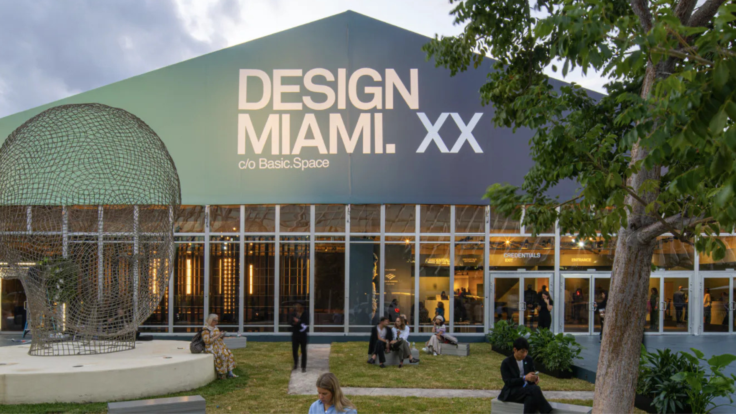
Thanks, Julie. I’ll be heading to Art Basel in Miami on Tuesday. If you see me in the
Design District or at the convention center, please say hello—or tell me what you think I got wrong.
See you there,
M |
|
|
The ultimate fashion industry bible, offering incisive reportage on all aspects of the business and its biggest
players. Anchored by preeminent fashion journalist Lauren Sherman, Line Sheet also features veteran reporter Rachel Strugatz, who delivers unparalleled intel on what’s happening in the beauty industry, and Sarah Shapiro, a longtime retail strategist who writes about e-commerce, brick-and-mortar, D.T.C., and more. |
|
|
Finally, a media podcast about what’s actually happening in the media—not the oversanitized,
legal-and-standards-approved version you read online. Join Dylan Byers, Puck’s veteran media reporter, and Julia Alexander, a longtime media analyst, as they sit down with TV personalities, moguls, pundits, and industry executives for raw, honest, sometimes salacious conversations about the business of media and its biggest egos. New episodes publish every Tuesday and Friday. |
|
|
Need help? Review our FAQ page or contact us for assistance. For brand partnerships, email ads@puck.news. You received this email
because you signed up to receive emails from Puck, or as part of your Puck account associated with {{customer.email}}. To stop receiving this newsletter and/or manage all your email preferences, click here. |
Puck is published by Heat Media LLC. 107 Greenwich St., New York, NY 10006 |
|
|
|