|
Welcome back to Wall Power. I’m Marion Maneker.
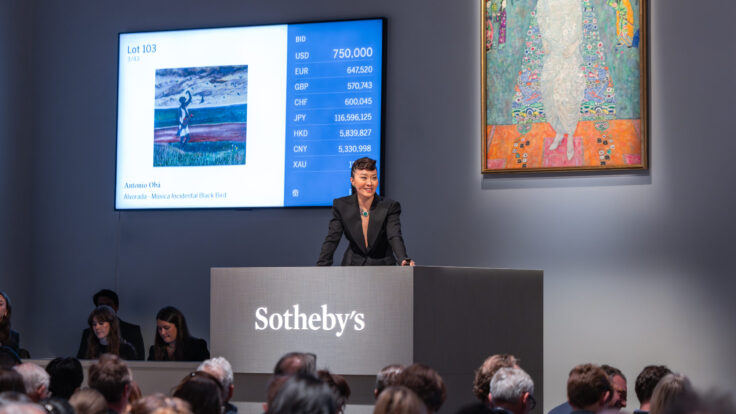
Had enough of modern and contemporary art after this past week of marquee sales? Tonight, Julie Davich explores some other categories you’ll find refreshing. She interviews Sotheby’s own master of Old Masters, George Wachter, who has spent more than 50 years at the auction house. He is set to preside over the sale of the Saunders collection, the largest Old Masters corpus ever to come to auction. Julie also pays a visit to the Torlonia collection of ancient Roman marbles in Chicago, and takes a look at some basalt benches at Friedman Benda.
|
|
|
|
A MESSAGE FROM OUR SPONSOR
|
A new campaign starring Julia Garner celebrates the House’s storied silk scarves and their enduring legacy within the House’s design codes.
DISCOVER MORE
|
|
|
 |
Julie Brener Davich |
|
A Vatican Banker’s Treasure in Chicago
|
|
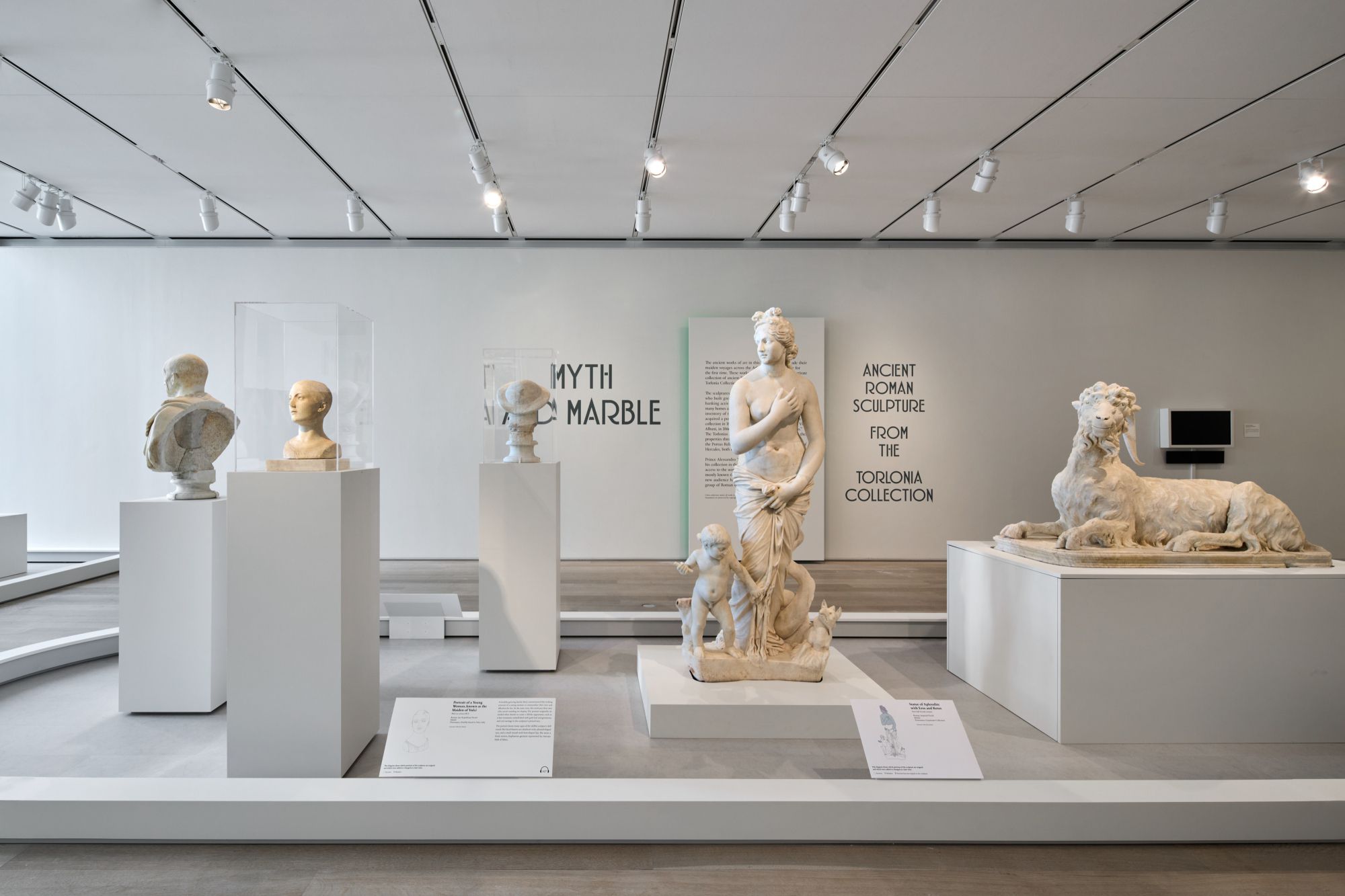
Installation view of Myth & Marble: Ancient Roman Sculpture From the Torlonia Collection, Art Institute of Chicago. Photo: Agostino Osio/Courtesy of the Torlonia Foundation
|
|
Everyone said, You have to go, so I went, and yes, the Torlonia collection of ancient Roman sculpture at the Art Institute ended up being a high point of my recent trip to Chicago. Assembled in the 19th century by Prince Giovanni Torlonia, a banker to the Vatican, and one of his sons, Prince Alessandro, the marbles went on view in 2020 in Rome for the first time in 70 years, followed by a stop at the Louvre. In a coup for Chicago, this exhibition marks the first time they’ve been seen in North America.
Spanning 10 centuries, from the early Roman Republic through the 4th century C.E., the 58 sculptures on view in Myth & Marble comprise only about 10 percent of the 622-piece Torlonia collection. Most of the sculptures were hidden away during World War II, and remained so for decades while the family’s heirs and the Italian government engaged in a struggle over selling or displaying them. Meanwhile, their inaccessibility lent the collection a legendary status.
Presumably, touring the collection helps the Torlonia Foundation raise the funds needed to restore the sculptures after their decades in storage. (Some in the field who saw the stark white marbles on view at the Art Institute complained of over-cleaning.) The tour might also be a way of promoting the collection leading up to an attempted sale, though whether the sculptures would ever be allowed to leave Italy permanently is unclear.
The Renzo Piano–designed gallery space provides a modern counterpoint for the nearly 20 imperial portrait busts, from Hadrian all the way down to Septimius Severus, which encircle a full-length statue of Augustus seated on his throne. A room devoted to death and memorial sculptures features several rare sarcophagi; one is adorned with a startling intact frieze depicting the myth of Hercules. The exhibition closes with three pairs of sculptures of the same motif, like Leda and the Swan, highlighting the sheer volume of the collection.
Each sculpture in the exhibition is accompanied by a conservation diagram that shows its restoration history, and in a way, the restorers—like Bartolomeo Cavaceppi, whose entire inventory the Torlonias bought in 1800—are among the heroes of the exhibition. In some cases, an entire sculpture is original to ancient times; in others, almost none of it is. The Statue of a Resting Goat, for instance, has a body from the 1st century and a head from the 17th century, attributed to the great Baroque sculptor Gian Lorenzo Bernini.
Sadly, the exhibition is not making its way to the coasts. After departing Chicago at the end of June, the sculptures head to Fort Worth and then to Montreal.
|
Design Hopping With Julie: NYCxDesign Week Edition
|
|
Installation view of Byung Hoon Choi: Voice of Silence, Friedman Benda, New York. Photo: Izzy Leung/Courtesy of Friedman Benda
|
|
A couple weeks ago, I stopped by the design gallery Friedman Benda, in Chelsea, to catch up with Astrid Malingreau, who was in town from Paris for TEFAF. Though I went mainly to see Malingreau, I was immediately taken by the basalt benches of Byung Hoon Choi. Malingreau led me into the gallery and invited me to sit with her on one of them. Choi, now in his 70s and based in Seoul, works in wood, clay, granite, and stone to create pieces that are at once sculptural and functional, evoking both the ancient and the modern. Resting on one was a meditative experience.
The solo show, which closes this week, is Choi’s first at Friedman Benda in almost a decade. It features the monumental basalt rocks smoothed into benches by his own hand following their natural shapes—a process that takes about nine months. These works have long been a defining part of Choi’s oeuvre and can be found at the Museum of Fine Arts, Houston, and the National Museum of Qatar. Perhaps even more striking are his newly conceived cabinet bookshelves, made from blackened ash wood that balance on and incorporate found stones. The show is titled “Voice of Silence,” an apt description of works that physically manifest the feeling of stillness—a welcome antidote to our technological fatigue.
|
|
|
|
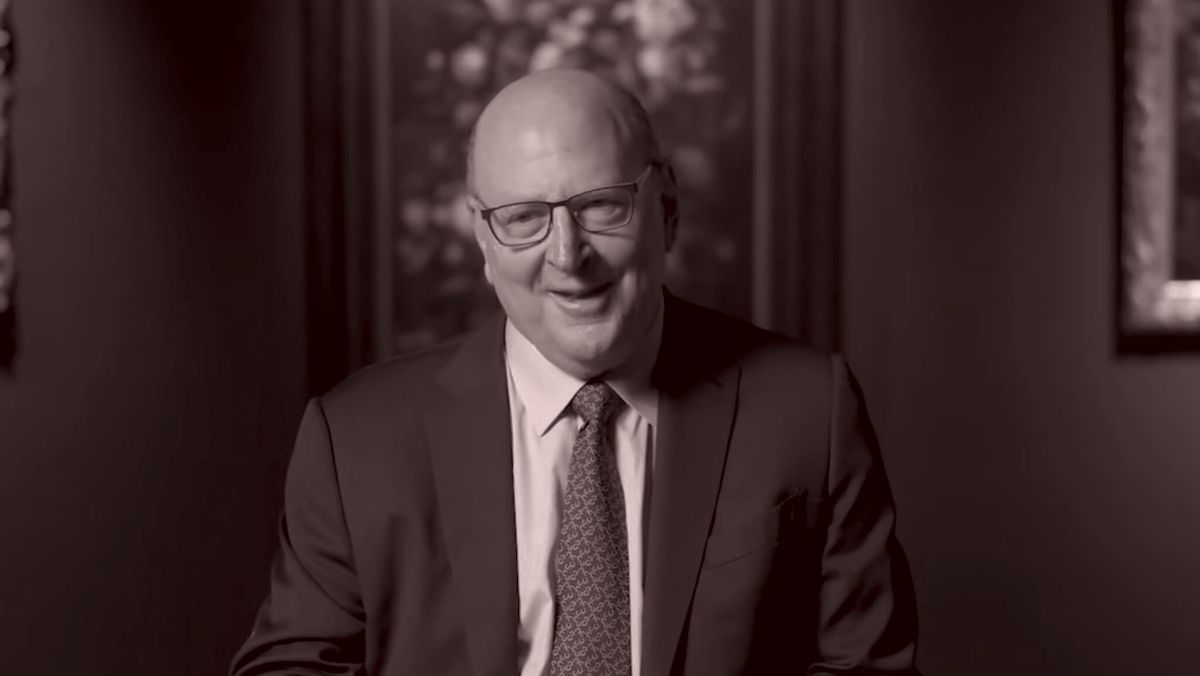
George Wachter, a Sotheby’s lifer who has long led its Old Masters department, is overseeing the category’s most valuable single-owner sale ever this week. We spoke about dirty old paintings, Victoria Beckham, and how the art market has (and hasn’t) changed during the past 50 years.
|
|
|
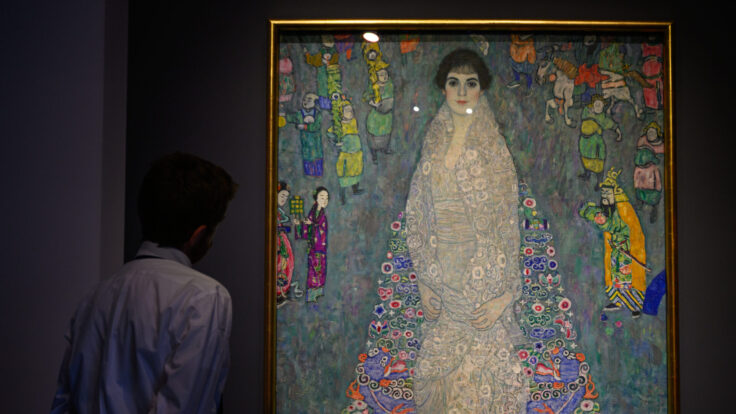
On the eve of Sotheby’s sale of the $80 million Old Master painting collection of Jordan and Thomas Saunders this week—the most valuable single-owner sale ever in the category—I spoke with George Wachter, co-chairman of Old Master paintings worldwide. He recently celebrated his 50th year at Sotheby’s, where he began as a trainee straight out of college. He first met Jordan in the late 1990s, and went on to help the Saunderses build their collection over many years, advising them on both public and private acquisitions.
In 2007, when the renovation of the couple’s Park Avenue penthouse was complete, and the collection fully installed, Jordan and Thomas hosted a dinner in Wachter’s honor at The Carlyle. Jordan wrote of Wachter in the evening’s program, “He gives you his critical and honest opinion from his expert eye. We trusted him completely.” When I asked Wachter back in February how he felt about the full-circle moment of dispersing a collection he was so instrumental in building, he told me, “If the collection is going to be sold, then I want to be the one to sell it.”
|
|
|
|
A MESSAGE FROM OUR SPONSOR
|
A new campaign starring Julia Garner celebrates the House’s storied silk scarves and their enduring legacy within the House’s design codes.
DISCOVER MORE
|
|
|
|
Earlier this month, I got lunch with Wachter at Sotheby’s to discuss the arc of his career and the evolution of the auction business—and of the Old Masters market, in particular. As always, this conversation has been edited for length and clarity.
|
|
Julie Davich: When you started in the auction business, Old Masters was king; then it was impressionist and modern art; now it’s contemporary. What are your thoughts on what’s come and gone in the business?
George Wachter: Old Masters has always had a place. There’s always been a group of collectors who buy them. When one goes off to do something else, or one fills their house, someone else comes along. I’ve seen it over and over. And we’ve been spending a lot of time trying to appeal to younger collectors. We partnered with Victoria Beckham. She posted a photo of herself in front of Old Masters paintings for her 11 million followers on Instagram. I just don’t think young people know they’re available. And frankly, many of them are so much cheaper than anything else.
Within the category, there are certain subjects that get stronger. So at one point, Venetian views were what everybody wanted; at another point, Dutch landscapes were what everybody wanted. And that comes and goes over time, and you just have to follow it, and try to respond to it. So when you see Dutch landscapes are not as successful [anymore], you try and make them a little cheaper, so they can become more successful.
Are young people getting interested in Old Masters?
Yes, so many. There are a lot of young scholars working all over the world—many in Italy, but also here in America, in museums everywhere. People like Adam Eaker, who I’m guessing was in his young 30s when he was hired as head of Dutch paintings at the Met. There are a lot of young people who are studying, and people who want to come work at Sotheby’s. Obviously, the more money you get, the easier it is to collect, so it’s more so people buying in their 40s, but we do have people, believe it or not, in their 20s and 30s.
You speak about responding to trends; is it possible for an auction house to set trends?
God knows we’ve tried over the years. We had a still-life sale, an Enlightenment sale, a Renaissance sale. So, yes, we used to try, but it’s hard to get the material you really want.
The problem with Old Masters is that 40 percent of what we see is dirty. Back in the day, if you got a painting that was dirty and needed reframing, you would still put it up for sale as it was, and the dealers would take it. The internet hurt the dealers in that respect. Now, you go online, everyone can see everything in the sale, including the one you’re interested in. We used to have a big population of dealers who bought. Now, in terms of buying at auction, private collectors and museums have really taken over.
|
|
|
|
When I started, there were next to no photographs, so in a major catalog, there were maybe color photos of three paintings, 50 percent were black and white, and the others had no photos at all. So, as a cataloger, I couldn’t say Still Life of Flowers. It had to be a Still Life of Double Ranunculus, Tulips and Iris, or whatever it was, or, you know, fish. I didn’t know anything about fish, but I would go to a guy who fished, who would tell me, That’s a perch or That’s a cod, or whatever it was, and that’s how I cataloged. Then all of a sudden we were using more and more photos, and at a certain point, everything’s in color, right? That was probably the first big change before digital that changed the auction industry in a big way. And then I realized, We need to let people know what we’re selling, so I put notes in. All these notes you see today, I kind of invented them.
|
|
Old Masters covers hundreds of years—so many countries, cultures, and languages—and you can’t be an expert on everything. How do you know when something is truly spectacular?
I know what’s good when I’m in front of it. A lot of people aren’t able to do that. I remember so clearly: I was in front of a Georges de la Tour, and everyone was hemming and hawing, and I said, Guys, this is it! And now it’s in the Louvre. I’ve always had that ability. Yes, there are people who are experts, who are knowledgeable in any given area. Obviously, I’m not studying these artists every minute. But you learn a lot as you go along. Expertise comes in a lot of different packages.
I studied art history at Brandeis, and then I went to Sotheby’s. I joined a 50-person training program run by a guy named Derek Shrub, who was really the best teacher I’ve ever had. Although I was never the most brilliant student, I was really good in that program, because what he wanted us to do was understand not so much the art-historical meaning, but what we were actually looking at: What colors are used? How thick are they? How did this artist do it, versus that artist?
You helped build the Saunders collection over many years of close friendship with them, and now they’re selling with you. Do you think auction is evolving from a relationship-based business?
Some people think it’s changing; I don’t happen to be one of them. I think every time Sotheby’s or Christie’s loses someone who has a close relationship with a collector—someone who’s nurtured someone for years—they lose something. I’m not saying we don’t have to compete to get them, but it’s that relationship that wins it. I believe that very strongly. If you have a really good relationship, and you really thought about that person, and you’re really taking care of that person—more often than not, it goes the way you think it’s going to go.
What do you collect?
With [my daughter] Jackie being in contemporary art [at Sotheby’s], I started buying contemporary art—Kusama, Fontana. I have Old Masters. I have a gold ground by Sano di Pietro that I love, a beautiful della Robia terracotta sculpture that I love. I have impressionism. I collect silver, both 18th century silver and modern silver. I go to Adrian Sassoon and I buy quite a bit, particularly [Hiroshi] Suzuki silver. I collect whatever I find that I can afford. I bought a painting when I was 24 years old, £3,000 pounds. I called my parents and said, I need help. I still have the first thing I ever bought, which was a pastel by Adolphe Albert. I keep it because my grandfather saw it before he died in ’75. I bought it in ’74.
|
|
Thanks, Julie. I’ll be back on Tuesday.
M
|
|
|
|
The ultimate fashion industry bible, offering incisive reportage on all aspects of the business and its biggest players. Anchored by preeminent fashion journalist Lauren Sherman, Line Sheet also features veteran reporter Rachel Strugatz, who delivers unparalleled intel on what’s happening in the beauty industry, and Sarah Shapiro, a longtime retail strategist who writes about e-commerce, brick-and-mortar, D.T.C., and more.
|
|
|
|
Puck founding partner Matt Belloni takes you inside the business of Hollywood, using exclusive reporting and insight to explain the backstories on everything from Marvel movies to the streaming wars.
|
|
|
Need help? Review our FAQ page or contact us for assistance. For brand partnerships, email ads@puck.news.
You received this email because you signed up to receive emails from Puck, or as part of your Puck account associated with . To stop receiving this newsletter and/or manage all your email preferences, click here.
|
|
Puck is published by Heat Media LLC. 107 Greenwich St, New York, NY 10006
|
|
|
|