Welcome back to the Wall Power Inner Circle. I’m Marion Maneker.
Just to remind you of the rules of the Inner Circle: What happens here, stays here. If you want access, upgrade here.
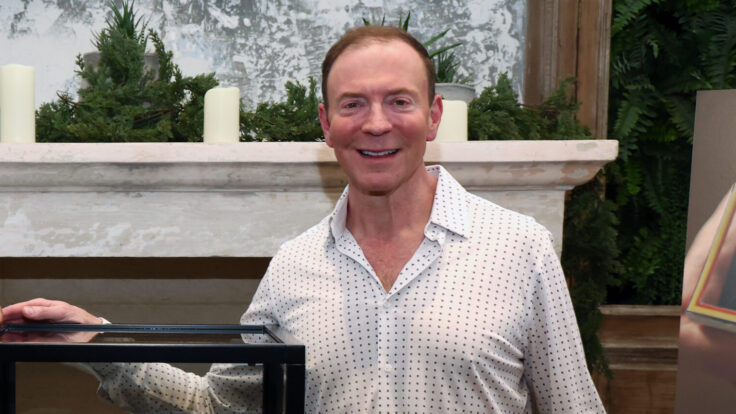
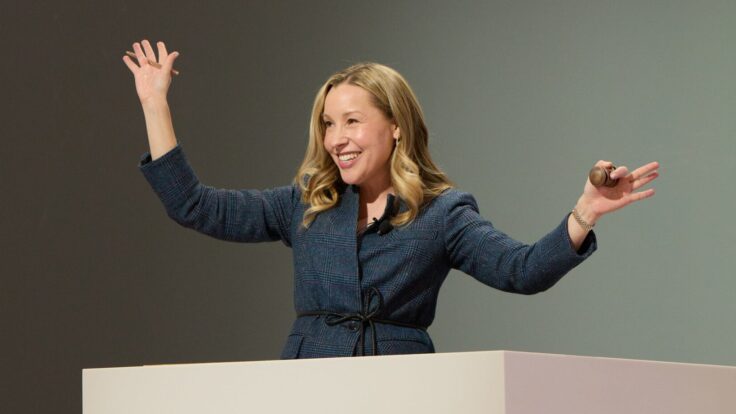
Tonight, I have a conversation with Paula Cooper Gallery partner Steve Henry and Christie’s deputy chairman Sara Friedlander about how primary galleries and auction houses actually work together behind the scenes. It’s been a shibboleth that the art market can be divided between the interests of primary galleries—which seek to guide their artists’ markets and reputations—and the demands of the auction houses, which seek to make markets. The truth is far more nuanced, and we’ll get into that in detail.
But first…
|
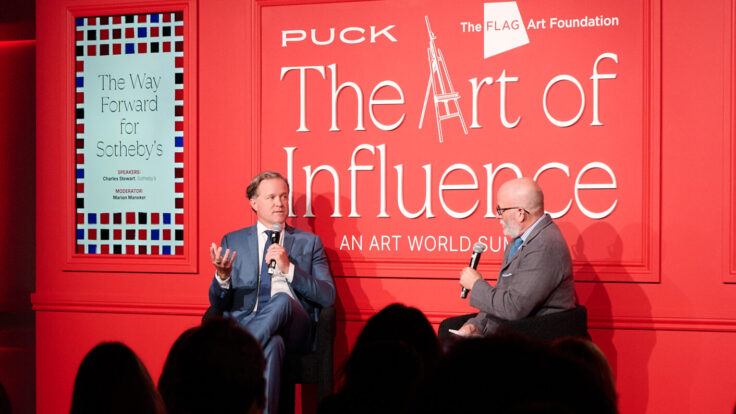
- Sotheby’s to reveal Breuer building renderings tomorrow: I went to a lunch at Casa Tua yesterday during which representatives from Sotheby’s and Herzog & de Meuron walked the press through renderings of their new headquarters, two blocks away in the former Whitney Museum space on Madison Avenue. (One of the architects had to check her hard hat with the restaurant.) The images are embargoed, but the big takeaways are: 1) Although there will be space for several dozen staff to work out of the Breuer building, they’ll most likely use it as a flexible work location; and 2) Sotheby’s will continue to maintain office space for specialist staff on York Avenue. This resolves a major issue around the move.The second major issue with the Breuer building was its lack of a proper loading dock—instead, with the main freight elevator located in the middle of the lobby, big load-ins for museum shows required opening windows onto Madison. That worked for a museum that only changed exhibitions every few months. An auction house, however, has much higher turnover. So, the new building will have a dedicated freight elevator, accessible from 75th Street, connecting to all of the floors and creating a “back of house” for staging exhibitions and sales.
The rest of the renovation adds exhibition space by converting former offices and storage, while making upgrades to bring the building up to code and modernize the infrastructure—including the lighting, which had been a problem when the building was a museum. Luckily, there is plenty of space above the coffered concrete ceilings to replace lighting tracks, wiring, and the rest.
- Sotheby’s upcoming $80 million Pauline Karpidas sale in London: In 2023, Sotheby’s sold the contents of Pauline Karpidas’s home on the Greek island of Hydra—which included a large number of works made by Claude and François-Xavier Lalanne—for nearly €36 million. The auction house will now be selling the contents of Karpidas’s London home, in a sale estimated at $80 million, including some 250 lots with works by René Magritte, Francis Picabia, Andy Warhol, Leonora Carrington, Salvador Dalí, Max Ernst, Les Lalannes, Dorothea Tanning, and more. The sale will take place on September 17 and 18 in London.
- SFMOMA names new board chair and president: Diana Nelson, the president of the San Francisco Museum of Modern Art’s board of trustees, has been moved up to chair. Alka Agrawal, a trustee for 13 years, is replacing her as president of the board, making it the first time that SFMOMA is being led by two women. Long-serving chair Robert Fisher will become chair emeritus.
|
|
|
|
A MESSAGE FROM OUR SPONSOR
|
Introducing FRAME Sotheby's—A first-of-it's-kind collaboration that brings together two cultural forces through craft, heritage, and timeless style. Discover the full collection now at FRAME.
|
|
|
- Frieze to launch Seoul flexible exhibition platform: Building on their program in London at No. 9 Cork Street—where galleries can mount exhibitions for their artists in London, and even hold a residency, without committing to maintaining space in the city—Frieze announced today they will be launching Frieze House Seoul in September to coincide with their fair in the city. Located in Yaksu-dong, the space will include “two main exhibition spaces across four floors, offering more than 210 square meters of display space. A central indoor area will provide a dedicated setting for sculpture, while the expansive garden will host special events and programming throughout the year.”
- Blum to debut Kimiyo Mishima’s estate at Basel: Japanese sculptor Kimiyo Mishima, who died last year at the age of 91, started her career training with the founders of the Gutai movement of abstract painters, but she never quite became a member.
Instead, her work migrated toward collage and sculptures, as she sought to capture the evanescence of information and everyday life. Blum has now announced global representation of the artist’s estate, beginning with Art Basel in a few weeks. Then, in September, her work will be included in Written with a Splash of Blood, the exhibition of Japanese art that Blum will mount to inaugurate its New York space. In November, Blum will put on a major survey of Mishima’s work in Los Angeles.
|
|
And now to the main event …
|
|
|
|
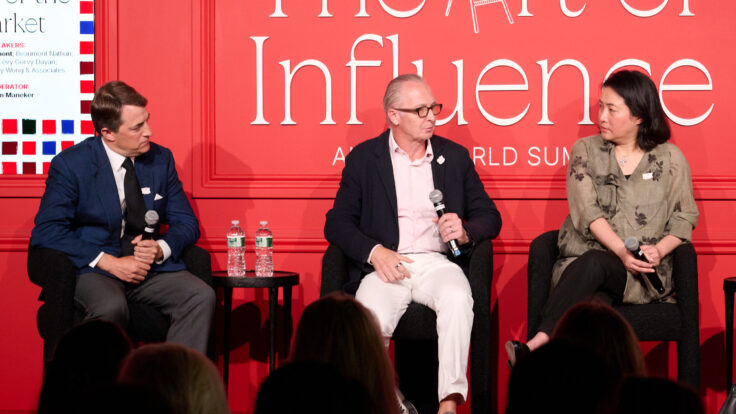
The old art-world truisms about the diverging interests of auction houses and galleries were overdue for a revamping. So I corralled Paula Cooper Gallery’s Steve Henry and Christie’s Sara Friedlander to hash things out.
|
|
|
|
It’s no secret that art galleries and auction houses often have competing priorities. A gallery’s primary role is to represent the interests of its artists, and to nurture their careers and reputations, often by guiding their sales to collectors and institutions that will serve as stewards of their legacies. Galleries also tend to price their artists’ works with a long view toward creating a sustainable and stable market. Auction houses, on the other hand, are fiduciaries for their consignors. They make markets in the work of many artists, and their primary responsibility is to maximize value for their consignors.
But while artists’ galleries and the auction houses may not always have the same immediate goals, they share a common interest in the long-term health of any artist’s market. With that in mind, I sat down with Steve Henry, a partner at Paula Cooper Gallery, well known for its fierce advocacy for its artists, and Sara Friedlander, deputy chairman at Christie’s. As always, our conversation has been lightly edited for clarity.
|
|
Marion Maneker: The public perception is that there’s friction and competing interests between galleries and auction houses. So, how do they actually work together?
Sara Friedlander: I need to start by saying that arguably the best job I ever had in the art world was working for and with Paula Cooper and Steve Henry.
At the old Christie’s auctions, nobody came except for dealers, and they just bid and bought things in the room, whether they were buying for their own inventory or supporting artists within their stable. Thanks to price transparency, that is no longer the case. You can’t buy something for $30,000 and resell it six months later in a booth at an art fair for $250,000—although many people try. That was the old-school way—auction houses were basically just inventory platforms for galleries to buy works of art.
Steve Henry: You’re absolutely right. And when I worked at Margo Leavin in the ’90s, even in those days, it was still largely dealers buying at auction. They were where your dealers would turn for inventory. And also, as Sara said, supporting artists, which is something that was kind of a standard practice in those days.
|
|
|
|
A MESSAGE FROM OUR SPONSOR
|
Introducing FRAME Sotheby's—A first-of-it's-kind collaboration that brings together two cultural forces through craft, heritage, and timeless style. Discover the full collection now at FRAME.
|
|
|
|
Dealers used to represent their clients at auction as
well.
Henry: We’ve certainly done so on occasion. There are certain dealers who, as a practice, do that—every sale, you’ll see certain dealers bidding for clients. But the role of art advisor has shifted that, too. Now, collectors have their art advisors do the previews, talk to them, vet works, and then bid and buy for them.
Friedlander: It always makes me very happy when a dealer actually bids in the room on behalf of a client—like Bob Mnuchin bidding on a Jeff Koons. They should be seen as participating within the secondary market; I think that is very important for this ecosystem. There are some great art advisors who support clients, but when it’s only art advisors bidding, it’s a little less interesting.
|
“We Can’t Afford Not to Work Together”
|
|
There’s no secondary market without a primary market. But when artists make the transition from being primary market artists to secondary ones, there are competing interests. Could you describe that?
Henry: We feel that we’re part of the same ecosystem. So cooperating with auction houses actually seems smart and strategic. When we’re approached to help with cataloging certain works, we’re always fast to respond, because we feel it’s important for that information to be available. We’ve certainly helped find and source buyers for certain artworks. We’ve supported artists at auctions. Not every gallery does, but this gallery has a history and belief in that. Some of it is buying inventory, and some of it is placing works with collectors who ask us to bid.
We do have competing interests and platforms, but the auctions have an essential role in our ecosystem. And galleries, of course, do too. I really enjoy going to auction previews. And I will recommend to people that they go, because you see things—but one of the things that’s shifted recently is that the volume of work coming through auction has disrupted the market in many ways. There are so many younger artists and works that come up for sale, and that can be quite destabilizing. We see it being a potential detriment to certain careers.
Friedlander: It’s the gallery’s job to prioritize the artist. That’s the spiritual part of why it’s so important that artists have galleries. For me, I can’t always prioritize the artist; I work with the client. And that’s the conflict: If there’s a seller and they want to sell something that I believe will do very well, and will appeal to other sellers, that’s what I care about. It’s not the artist’s market. That being said, Christie’s in particular has not leaned into the contemporary the same way some of our competitors have. And there were moments in the market where that was really successful. They were featuring very young artists, and there was a market that was really supporting that. I don’t think that’s the case anymore.
Is the answer to cooperate in finding a way to meet the seller’s expectations while still supporting the artist?
Henry: Yes. And that’s not to say there aren’t disagreements. We sometimes have disagreements with estimates. We constantly tell the auction houses to come to us when they need insight into the current market, because we know those markets. And I’m talking on either extreme—estimates we feel are not reflective of the current market, either on the high side or the low. Those are conversations we have. Sometimes they’re listened to, and other times they’re not.
Friedlander: For example, if I’m dealing with an estate, and the estimates are too low for a gallery, and it messes with their pricing, oftentimes there’s not a whole lot I can do, because somebody has a fiduciary responsibility for
things to just sell—and all I can do is work very hard to make sure there are several bidders, instead of just one.
|
What Real Collectors Care About
|
|
Are you concerned that the estimate will be lodged in people’s minds, no matter what it sells at, or just that the work will sell at a price that makes the artist’s market look weak?
Friedlander: The truth of the matter is that a lot of the time, especially with artists who are still alive, I’m not people’s first call. They call the gallery first—as in many cases they should. So oftentimes I become the person who has to solve the problem. They’ve bought this thing, and for whatever reason, they don’t, or cannot, have it anymore, and it needs to be sold. My team and I have a responsibility to solve this problem for the collector, and it doesn’t always go well.
Sometimes, things just don’t sell, and that’s a bummer for everyone. And we’re in a market right now where we cannot afford to not work together—there aren’t enough clients for us to not work together. From 2013 to 2018, everyone was doing super well, and sales were great. And that’s just not the market we’re in right now. And I think we will all serve each other better if there can be a more collaborative and cooperative approach.
|
|
|
|
The problem with the market is that people draw broad conclusions from isolated events.
Henry: Absolutely. And we have conversations with people where we’re saying that one auction result, whether good or bad, should not change a market. We’re very clear that one result is not indicative of what a market can be.
Friedlander: And on the flip side of that, just because somebody pays a certain price for something doesn’t mean it’s going to be worth that in six months. I also think not every artist’s market is successful both at auction and privately. There are some artist markets that do not have a good presence at auction. Auction is the only transparent mechanism we have for understanding what things are really trading for. It is the market in real time, as we know. But it’s only one part of the story.
Henry: And when things come up for appraisal, the appraisers have to look both at public sales and private sales. With both, you get a fuller understanding of what a market is.
There are primary galleries that are consigning secondary works to auction. I get the sense that it’s not very prevalent these days.
Friedlander: It hasn’t happened so much recently. As the primary market has risen so much, and those prices have increased, it’s been harder for there to be a secondary market to support that. And that’s all of our fault. We’re all complicit in this. As the auction market pumped up all of their prices, the galleries pumped up their prices, and now here we are.
Henry: There are certain galleries that are more careful about how they price, and we’re one of them. Paula has always believed in building a sustainable career for artists. It’s about making sure their career is supported in good times and bad. Thoughtful, smart pricing is essential to that.
Friedlander: There have been some artists in Steve’s stable who have had huge booms at auction—and even if that hasn’t continued on the secondary market, Steve is still able to place great work on primary to great collectors. The truth is that a real collector doesn’t really care all the time whether something was once worth $1 million, and then $100,000. If they see another great work by that artist, and they want it for their collection, they’re not going to be tied to the results on Artnet—and they shouldn’t be. People want to feel like they’re not overpaying for something, but if galleries are doing the correct work of building an artist’s career over time, then dips up and down in the market at auction are not career-killers.
|
Just a reminder that you should subscribe here if you’re reading a forwarded copy of this email. And, if you have something to share—a tip, complaint, idea, or observation—just reply to this email or contact me on 917.825.1391, which works on SMS, WhatsApp, and Signal. Text me; I’ll text you back.
Even if you don’t decide to be in touch, I’ll see you back here on Friday.
M
|
|
|
|
The ultimate fashion industry bible, offering incisive reportage on all aspects of the business and its biggest players. Anchored by preeminent fashion journalist Lauren Sherman, Line Sheet also features veteran reporter Rachel Strugatz, who delivers unparalleled intel on what’s happening in the beauty industry, and Sarah Shapiro, a longtime retail strategist who writes about e-commerce, brick-and-mortar, D.T.C., and more.
|
|
|
|
Finally, a media podcast about what’s actually happening in the media—not the oversanitized, legal-and-standards-approved version you read online. Join Dylan Byers, Puck’s veteran media reporter, as he sits down with TV personalities, moguls, pundits, and industry executives for raw, honest, sometimes salacious conversations about the business of media and its biggest egos. New episodes publish every Tuesday and Friday.
|
|
|
Need help? Review our FAQ page or contact us for assistance. For brand partnerships, email ads@puck.news.
You received this email because you signed up to receive emails from Puck, or as part of your Puck account associated with . To stop receiving this newsletter and/or manage all your email preferences, click here.
|
|
Puck is published by Heat Media LLC. 107 Greenwich St, New York, NY 10006
|
|
|
|




_01JXDDJ8628NPTEBVV16781GSS.jpg "Frame")





_01JXDDJ7WY0X81Z8G6ZTRJF9D7.jpg "Frame")