 |
|
Welcome back to Wall Power. I’m Marion Maneker.
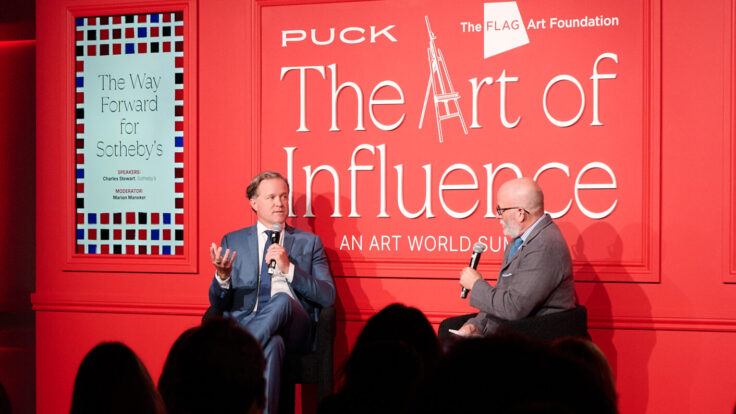
Tonight we’re going to talk about Sotheby’s significant reorganization—numerous positions are being eliminated, and a number of people from around the company, mostly in the fine art division and several sales offices, are leaving. I’ll try to explain why, and explore the case for a new, asset-light Sotheby’s that exploits the value of their brand without investing as much in human capital.
But first…
- About that Richter: On Sunday night, I wrote about a large Gerhard Richter abstract painting, 725-1, displayed in the booth of Helly Nahmad Gallery at Art Basel Miami Beach. The Nahmads were not the buyers of the painting in Hong Kong two years ago, as I reported. Instead, the work was consigned to the gallery by the purchaser. “The Nahmads would never sell a work for such little profit,” one observer texted me shortly after Wall Power went out. “They would prefer to die a painful death!”
- More Art Basel sales: A few additional sales reported by the fair were Richard Prince’s Harbor Nurse for $4.5 million at Gladstone gallery and a Carroll Dunham painting for $600,000. Garth Greenan sold four paintings by Howardena Pindell for prices ranging from $875,000 to $950,000. Kasmin Gallery sold a Mark Ryden, a favorite of Leonardo DiCaprio, for $1.5 million. Pace sold Sam Gilliam’s Whispering Wind, from 1972, for $1 million, and a 2024 Lee Ufan work for $900,000. The Vedovis sold an Ed Ruscha painting for $1 million.
|
|
|
- Independent museum acquisitions: I’m a little late to these museum acquisitions from the Independent’s fair this fall, but I nevertheless wanted to share some of the placements. Monique Meloche, in Chicago, sold work by Chase Hall to the Baltimore Museum of Art, the Rubell Museum (Miami/Washington, D.C.), the Brooklyn Museum, and the High Museum (Atlanta). Meanwhile, the Dallas Museum of Art bought a work by Jameson Green from Derek Eller, and the Whitney bought two works by Dorothy Antoinette LaSelle from Inman Gallery.
Also, the State Department’s Art in Embassies program, Mandeville Gallery at Union College, and Santa Barbara’s Museum of Art all bought works by Eamon Ore-Giron from Fleisher/Ollman; MoMA bought five works by Leopold Strobl from Ricco/Maresca; the Brooklyn Museum and the Columbus museum in Georgia both bought works by Winfred Rembert from James Barron Art; and the Parrish Museum and Centre Pompidou bought works by Peter Nadin from Off Paradise.
|
| Now, let’s get back to Sotheby’s… |
 |
| Sotheby’s Black Tuesday |
| Shortly after closing on a $1 billion financing, the 280-year-old auction house is drastically cutting back staff in offices around the world. With new real estate that emphasizes luxury retail and plans to exploit the power of its brand, what does the future look like for a leaner, meaner Sotheby’s? |
|
|
|
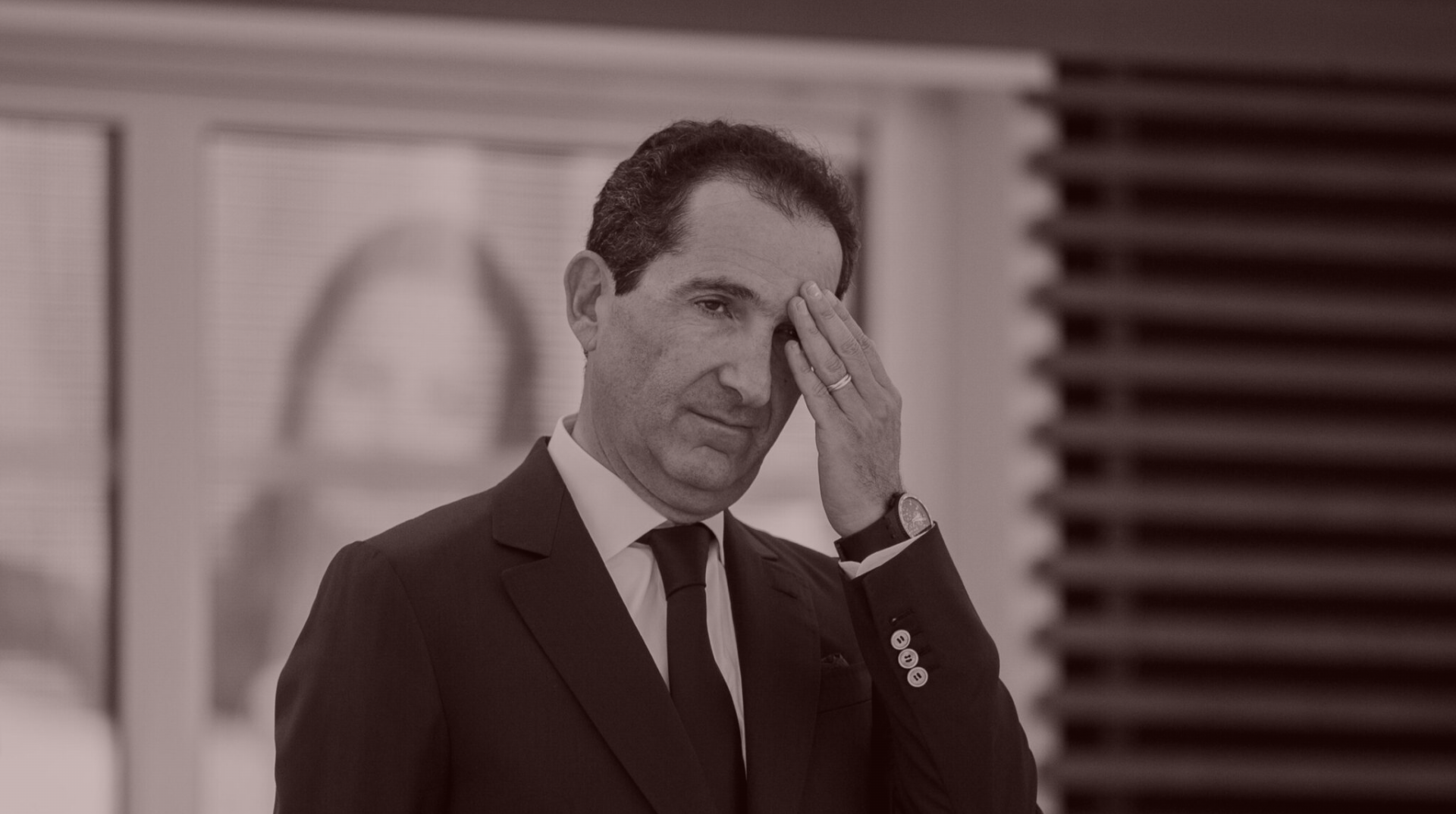
| Sotheby’s is downsizing. On Tuesday, people within the auction house began reporting that around 100 staff had been laid off in New York, with more cutbacks planned or in progress in locations across the world. Today’s layoffs were said to range from people in business development roles to senior specialists in the impressionist and modern departments. An overwhelmed H.R. department was allowing terminated employees to make their own way out of the building as concerned staffers consoled their shell-shocked, and in some cases, tearful former colleagues. “If only we owned stock in Kleenex,” one rueful observer commented.
There were cutbacks in antiquities, Americana, and Japanese art; and next year’s modern and contemporary African art sale was just mysteriously removed from the company’s website. It appears that offices around the world have had their staff reduced or will be closed outright. (Sotheby’s declined to comment on individual departures among their more than 1,800 employees; a rep noted that some of the international office closures had been long-planned.) Christie’s also reduced its staff, as often happens around this time of year, but not at the same scale.
No matter what Sotheby’s is or isn’t saying, the belt-tightening appears to be deep and wide and perhaps not coincidentally timed to the arrival of the auction house’s new minority owner: Abu Dhabi’s ADQ sovereign wealth fund, which invested nearly $1 billion in October. The layoffs may not be a direct condition of ADQ’s cash infusion, but the stipulations attached to the deal may have incentivized the restructuring—even if they also potentially threaten majority owner Patrick Drahi’s grip on the company. |
|
|
| So while much of the auction industry will be focused on the layoffs, the real question is what they indicate about Sotheby’s strategy going forward. Drahi flirted with an I.P.O. in 2022, at a valuation of $5 billion, but the rising-interest-rate environment shut that window before he could follow through. In many ways, the culling reflects a vision Drahi brought to the company when he bought it five years ago: to make Sotheby’s brand much larger than fine art.
When he took over, Drahi told a senior figure in the fine art division that he really wasn’t interested in that business. He viewed the luxury world as the company’s real potential for growth—classic car and real estate auction joint ventures, as well as handbags and jewelry, which already drive meaningful business—even if fine art still drives the lion’s share of revenue.
As I’ve mentioned before, Sotheby’s recently invested heavily in new retail locations in the centers of Hong Kong and Paris. Its relocated New York flagship is set to open next year in the Breuer building, the former home of the Whitney. The company has also relaunched its magazine in a bid to expand on the sponsorships it already generates from brands—from Samsung to Cartier—that want to be associated with its auctions and exhibitions. The immersive train station experience that was built to promote Keith Haring’s subway drawings, which ended up bringing in $9.2 million, was paid for by Samsung and featured their massive monitors showing trains pulling into the “station.” |
| A Leaner, Meaner Auction House |
|
| Sotheby’s decision to shrink the profitable company suggests the goal may be to generate more cash flow. One supporting clue lies in the documents filed with Companies House in the U.K. for Sotheby’s Holdings UK Limited, which reveal that the firm has a dual-class share structure. The preferred shares in the company pay an 11 percent dividend. If ADQ received those preferred shares for its investment, the payout would be an additional $100 million each year.
The additional dividend obviously presents a problem for Drahi, who ostensibly does not want to rely solely on the potential rise in value of his equity in the company. (Sotheby’s C.E.O. Charlie Stewart told The Wall Street Journal earlier this year that none of the previous dividends have left its network of holding companies. Others point out that Drahi focuses on tax management and nesting structures, which may explain why the ultimate holding company is located in Luxembourg.) Management does have the option to make a payment in kind if Sotheby’s lacks the cash to pay ADQ’S 11 percent dividend. That would likely require the company to give ADQ additional shares, a move that could easily tip the balance of ownership—and control—away from Drahi.
No one thinks Drahi will let go of the company easily, however. Thus, he may be buying time by cutting staff while hoping the art market rebounds. Sales in Miami and in New York last month suggest that the art market has turned a corner, or at least that it’s found the bottom, which means Sotheby’s could ride the next wave of the cycle back to the point where Drahi can sell for the $5 billion valuation he once allegedly coveted, benefitting both himself and his partner. And from what I can tell, most of this week’s layoffs are in departments that are not likely to move the needle in the next wave. |
|
|
| We’re not hearing of many departures from contemporary art, for example. And the way the auction business works, Sotheby’s thinning the ranks of specialists doesn’t necessarily put it in a less competitive position. Even after the growth of Phillips and the brightening prospects of Bonhams, the auction world remains a duopoly. On any big estate or consignment of property, sellers will always want to get a competitive bid from the other side.
As we saw with the Sydell Miller estate, the power of Sotheby’s platform can be activated by a small, well-organized team working for the consignor. This has been done before. In 2010, Phillips partnered with Philippe Ségalot to mount the $117 million Carte Blanche sale. Ségalot, a former Christie’s head of contemporary art, did most of the work—assembling the property, cultivating the bidders, and even manning the phones at the sale. For one night, he was a one-man contemporary art department… and the sale was a rousing success. With the army of former auction house specialists now freelancing as art advisors and Sotheby’s sterling name, the company could easily run these sorts of asset-light auctions in its new sale rooms at the Breuer on Madison Avenue.
A year ago, Stewart attended Gagosian gallery’s show of Picasso works, curated by writer Annie Cohen-Solal, and came away deeply impressed and excited by the prospect of mounting his own museum-quality shows. He wondered aloud to several of his staff what it would take, not seeming to understand that all his team lacked were the funds—and time—to mount such a show, let alone several of them a year. A person familiar with the planning of the Gagosian show told me that the insurance fees on the eight-figure paintings on loan were not for the weak of heart.
But with a showcase like the Breuer building, where many decades of museum shows generated lines around the block, Sotheby’s ought to have a major draw for its stable of corporate sponsors to offset the expense. In other words, there’s no obvious reason why Sotheby’s cannot thrive with a reduced focus on fine art.
At this moment, the auction houses have never had such different business strategies. The restructuring at Sotheby’s this month recognizes their diverging paths. That said, Sotheby’s new strategy will require the kind of flawless execution that proved elusive in today’s layoffs. |
|
|
| The New Yorker’s Calvin Tompkins is getting out ahead of the Rashid Johnson retrospective at the Guggenheim this April with a long profile tracing his journey from conceptual artist to market-friendly painter. Interestingly, the article seems to go out of its way to defend Johnson’s market value (“A recent decline in auction prices for some artists has not affected him”) and makes perhaps too much of his lifestyle, citing a “palatial summer house” in East Hampton, a Gramercy Park townhouse, and a “vacation place” on Minorca.
All of this is followed by stories of Johnson struggling earlier in his career, which might seem more familiar from profiles of regular-guy-makes-good business titans. Is this a preemptive move against depictions of Johnson as too successful to be authentic? The profile also tries to address the other issue: Johnson’s role as a board member at the Guggenheim prior to the decision to hold this focal point event.
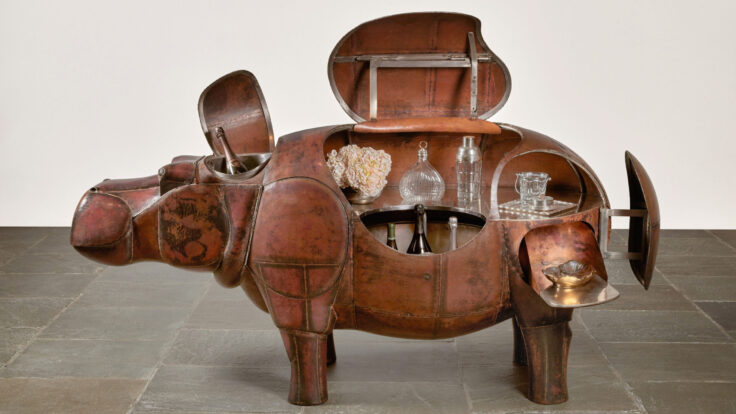
That’s it for today. The design sales are this week in New York and I’m hoping there will be some interesting results—like this Diego Giacometti console table that sold in Paris last week from the collection of Lady Harrison for $10 million—to share with you on Sunday.
Until then,
M |
|
|
|
| FOUR STORIES WE’RE TALKING ABOUT |
 |
| Mall Rats |
| A dispatch on the beguiling state of the American mall. |
| LAUREN SHERMAN |
|
 |
|
 |
|
 |
| Ro Knows |
| A conversation with Ro Khanna about how the Democratic Party lost its way. |
| PETER HAMBY |
|
|
|
|
|
 |
|
|
|
Need help? Review our FAQs
page or contact
us for assistance. For brand partnerships, email ads@puck.news.
|
|
You received this email because you signed up to receive emails from Puck, or as part of your Puck account associated with . To stop receiving this newsletter and/or manage all your email preferences, click here.
|
|
Puck is published by Heat Media LLC. 227 W 17th St New York, NY 10011.
|
|
|
|