Welcome back to Wall Power. I’m Marion Maneker, and you’re in the Inner Circle. Pull down
the cone of silence so we can get started.
I didn’t go to Basel last week. But I was reading all of the reports that you were reading, too. And some of what I was hearing about the fair—that no collectors came, or that the big money works weren’t selling—didn’t entirely make sense to me. So I called as many people as I could think of who work in the private-sales end of the business to get a better sense of what’s going on in the market. What I found out surprised me. And I will share it
with you below the fold.
But first, a brief reminder…
|
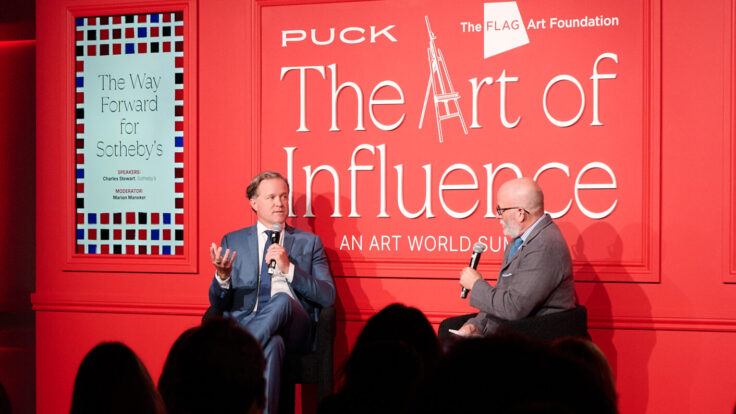
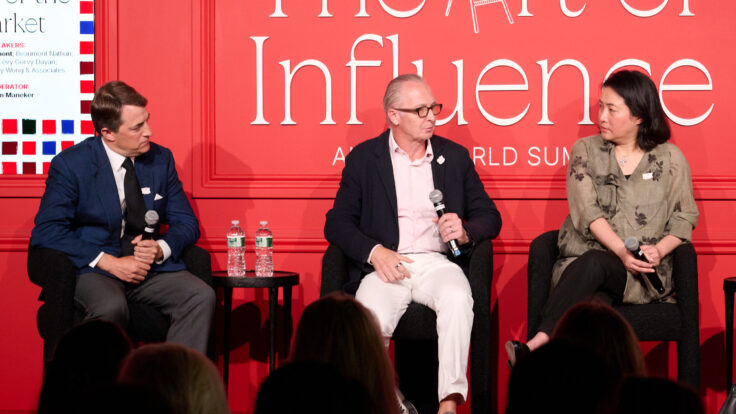
Puck and the FLAG Art Foundation have announced our art world summit, The Art of Influence, which will take
place on September 15 in New York at Second, a Midtown event space. We hope you’ll join us for a day of frank conversation and unparalleled access in an intimate setting.
The one-day event will take place from 10 a.m. to 4 p.m., leaving you plenty of time to get work done. Our goal is to focus on the most-pressing issues and opportunities in the global art world—for museums, auction houses, galleries, advisors, and more.
Our first featured guest is the one and only Larry
Gagosian. Prominent collector Glenn Fuhrman will have a conversation with artist Nicolas Party. Dasha Zhukova, the founder of Ray, will be there, too. More guests and programming will be announced in a few weeks. We’re keeping this event small and exclusive—spots won’t last, and you won’t want to miss it. Inner Circle members can purchase
their tickets at a discount.
|
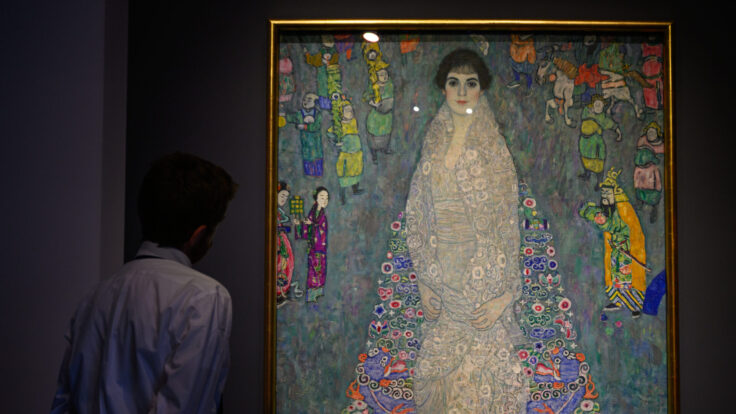
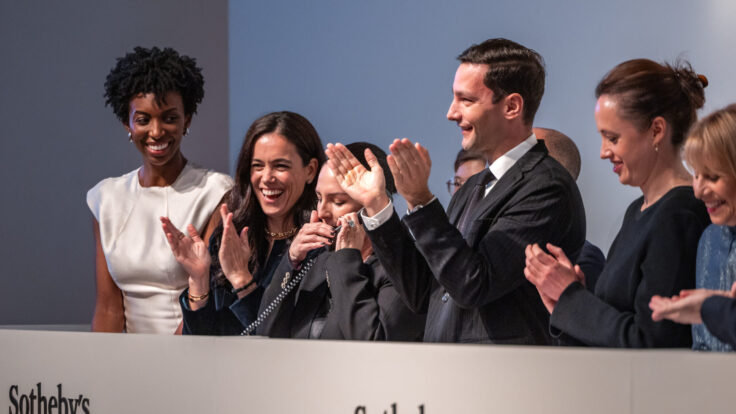
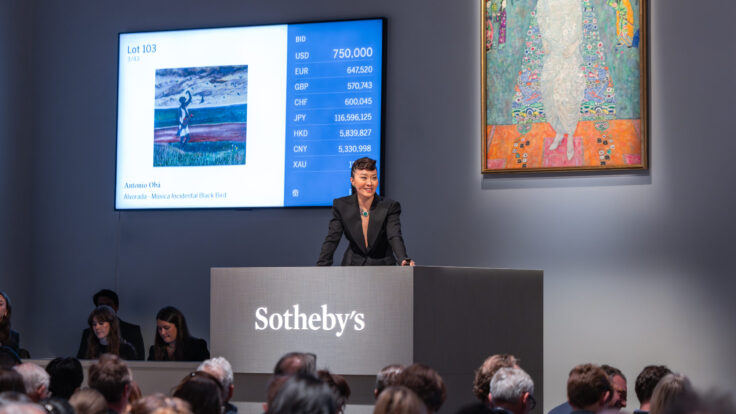
Sotheby’s Modern & Contemporary evening sale in London totaled £62.4 million, or almost $85 million—a solid
piece of commerce for what’s now a shoulder season sale. Of course, the top 10 lots accounted for about two-thirds of the sale total; eight of those were backed by irrevocable bids, in line with a trend we’ve seen at auction for some time now. Here are some of the lots that stood out:
|
Elizabeth Peyton’s Liam and Noel, from 1996, sold for nearly £2 million, or almost $2.7 million, marking one of the artist’s top-selling works at auction to date. There have been eight Peyton paintings sold at auction for more than $2 million since a 2012 image of David Bowie broke that price barrier in May 2021.
|
|
|
A MESSAGE FROM OUR SPONSOR
|
|
|
Although Jenny Saville’s Juncture, from 1994, sold for pretty much the same price it made six years ago at £5.4 million ($7.3 million), Mirror, from 2011, became the most expensive charcoal work by the artist to sell at auction: It made £2.1 million ($2.8 million).- The two Jean-Michel Basquiat works on paper performed well, with Untitled (NY CZAR), from 1988, making £740,000, or just under $1 million,
and Untitled (Indian Head) attracting sustained bidding to £6.6 million, or nearly $9 million.
- Six of the Roy Lichtenstein estate lots were in the evening sale, with Seductive Girl (Study) attracting the most-aggressive bidding—the final price was £950,000, or nearly $1.3 million. Purist Still Life with Pitcher, from 1975, was bid to £3.15 million, or nearly $4.3 million.
- Pablo
Picasso’s Nu assis dans un fauteuil, from 1964, sold for a little more than £7 million, or a little less than $10 million, a number on par with works of a similar date and size sold at auction in the past 15 years. Good works by the master are holding their own, but perhaps not keeping up with inflation.
- Tamara de Lempicka’s La Bella Rafaëla, from 1927, was able to make nearly £7.5 million, pushing the dollar price
just above the $10 million mark. This continues the upward revision of Lempicka’s prices into the eight-figure range.
- A rare print of Man Ray’s Noire et blanche from 1926 sold for £2.1 million. That’s nearly $2.9 million, which is a drop from the $4 million paid for another print two and a half years ago.
- Marlow Moss’s White, Black, Blue and Red, from 1944, sold for £600,000,
or $825,000, which is nearly twice her previous record sale at auction.
- The auction market for primary works has cooled considerably, but there were three noteworthy sales in London last night. An untitled work by Lucas Arruda sold for £250,000, or nearly $350,000—the artist’s 10th-highest auction price, which is nevertheless within the range of recent sales, and only 30 percent below his auction peak five years ago. Yu
Nishimura’s Through the Snow, from 2023, achieved the artist’s second-highest price at auction, at £290,000 ($395,000), just a few dollars short of the record set in May for a similar image. Joseph Yaeger, whose work only recently broke out on the auction market last October, achieved his third-highest price at auction last night, when Loyalty to the nightmare chosen, from 2022, sold for £100,000, or nearly $140,000.
|
|
|
The thrill is gone at what used to be one of the art market’s most storied and exclusive
gatherings, as die-hard collectors stay away, preferring to conduct business in private.
|
|
|
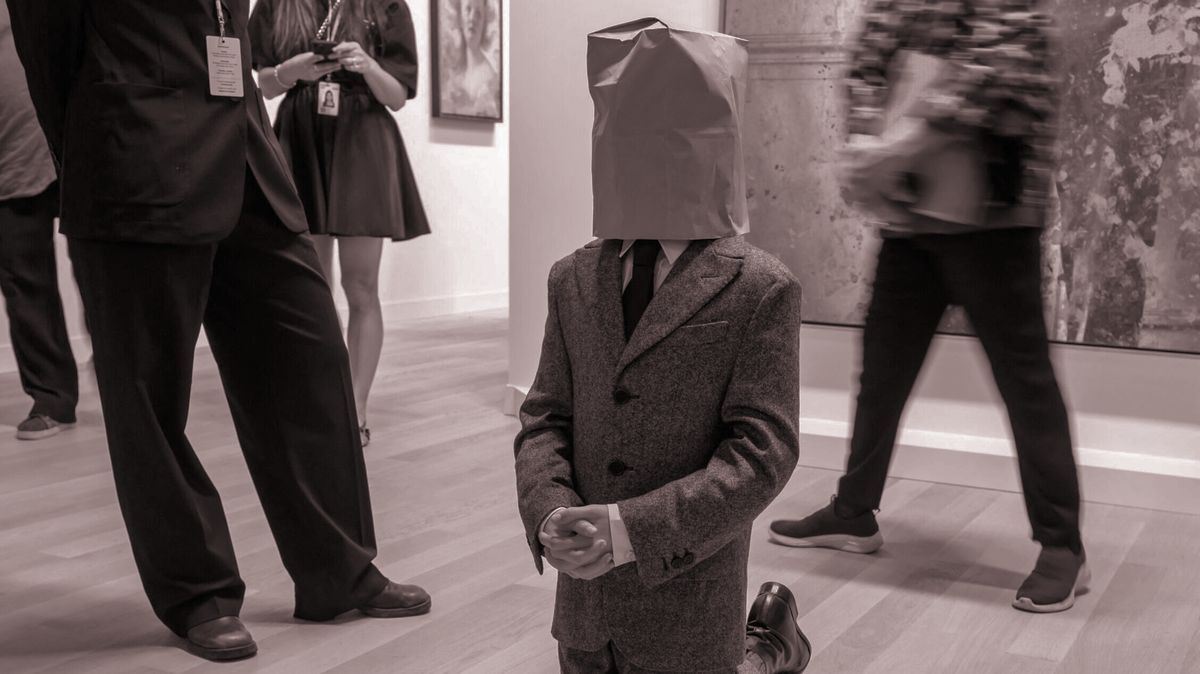
Attending Art Basel used to feel like having membership in an exclusive club: Not many people knew about it,
and the perks included an early entrance time to the V.I.P. preview, a stroll around the summer show at the Fondation Beyeler, a stock of envy-stoking tales from gallery dinners, and late nights at the bar of the Trois Rois. This year, while I’m told that the “exclusive” preview was packed, there was a notable absence of American and Asian collectors at the fair, and an uncomfortable feeling that the place was crawling with art advisors. Worse, the biggest-ticket items didn’t seem to be
selling.
After so many years of Basel serving as the place where buyers came to find the best and most-expensive works, the outcome this year seemed to beg the question: Is Basel still the apex art fair?And, if it isn’t, and nothing seems waiting to take its place, does that mean that people just don’t want to buy very expensive art anymore?
|
|
|
A MESSAGE FROM OUR SPONSOR
|
|
|
An art advisor in London I spoke to, a guy who has recently been involved in a number of
very high-value transactions, was quite confident that Basel’s slowdown didn’t reflect an absence of demand for expensive art, but rather a change in collector behavior. The most active and aggressive collectors—the ones who aren’t afraid to spend big money—don’t want to transact publicly, whether at auction or at a fair. They want something they feel they are being given a unique opportunity to buy—which means sellers have to carefully manage the amount of information that the rest of the
market receives.
So this advisor felt strongly that several of the works that were being debuted on the stands of prominent and prestigious secondary market dealers at Basel would have been sold had they been offered to collectors individually, and privately. For example, Hauser & Wirth brought to Basel a significant Mark Rothko painting, the kind that could have easily sold for well above $30 million a few years ago. And yet it didn’t appear to receive much
interest. Is Rothko’s market soft, or do buyers now simply believe that anything offered for sale publicly already feels, well, burned?
You can see how this argument applies to Basel. If you want to buy art that no one else has seen, you don’t go to places where so much art is on offer. Following this logic, the flagship fair—where galleries used to wait years to be admitted by a selection committee—no longer feels like an essential trip.
For
many, Basel is no longer a place where collectors can prove their bona fides, and gain favored access to a gallery’s best works, often at better prices than at auction. Conversely, there’s already a widespread impression among dealers and advisors that works in the auctions are cheap, and sell without much competition. This creates a self-reinforcing cycle in which lower auction volumes, and the prevalent use of third-party guarantees, have made them seem like afterthoughts to earlier private
sales, further driving down their ability to project market health. This outcome is not lost on the auction house people, at least the ones I spoke to, especially those responsible for private sales, who may be generating many of the third-party guarantees on lots that later feel like anticlimactic sales.
The bright spot, though, is in the market for recently made works. With primary market prices still high, the only way to get new works right now is if some early collector just wants
out, and buyers can pick up a bargain. Sellers of more-established, historic work have to generate interest, which means educating the buyers and making a good case that the work is important and essential. One private dealer I spoke to sees a long-term opportunity in many of the historically important artists whose work is not moving well today. The problem is that most of the owners of these works are not motivated to sell, and certainly not at today’s uninspiring prices.
How will the
market break this cycle? The continuing run of solid sales from the Roy Lichtenstein estate offers a clue. One private dealer admitted that he couldn’t get anywhere near the prices that Sotheby’s has been generating for those works. Of course, it helps that they come from the artist’s estate, and are being offered at very attractive estimates. But when collectors see the depth of demand for Lichtenstein’s work outside of the canonical 1960s pieces that have always been
stratospherically priced, it should start a virtuous cycle of demand. We’ll have to wait to see whether that happens.
|
Where Are the Collectors?
|
This morning, I was talking to an advisor about the state of the market, and he referenced this
quote from Tim Blum that appeared in The Art Newspaper last week. “We are in the midst of a paradigmatic shift, and to not acknowledge this is to peddle an outdated narrative,” Blum said. The advisor and I discussed how many of the art market’s problems seem to have been generated by its own success.
Indeed, there appears to be plenty of demand for art, but the distribution system is now standing in the way of that demand, in many cases, rather than satisfying it. “We are all culpable of having made the art system so huge,” Blum went on to say later in the article, “which makes it harder for us to pivot when change comes.” The mood coming out of Basel may reflect this.
|
|
|
Art Basel, and other art fairs in general, have become more like trade fairs, where professionals speak to
professionals and consumers are not really welcome. At least one art advisor, Benjamin Godsill, remarked on his podcast during Basel that the gallery dinners he attended were filled with art advisors—as was the fair—but short on actual collectors.
Several older collectors and advisors also told me they don’t think younger collectors are interested in immersing themselves in art and art’s stories the way they do—or did. But younger collectors may not want to
immerse themselves in an art fair as the older generation did. Twenty years ago, collectors lined up at the glass doors to the fair, leaning in for a sprint to be the first person at a particular gallery’s booth; good art felt scarce, and buying it seemed to depend on access and relationships. Now an art advisor is more likely than the collector to have the relationships.
When I asked someone who interacts with a number of galleries about this, he marveled at the challenges
facing a gallery director who no longer sells to the collector, but instead must convince the middleman art advisor that a particular work would be ideal for their client’s collection. Everybody seems to complain that they’re not able to sell directly to the buyer anymore. (Of course, the joke in all of this, as this person pointed out, is that the biggest buyer in the market today, Ken Griffin, doesn’t work with an art advisor.)
From my conversations this week, I
wouldn’t say that the market mood is bad. In fact, when speaking to those who have active clients, or are selling to them, there seems to be an underground layer of activity, and even something that might eventually look like momentum. It’s just that, aside from the depressing overlay of political and economic uncertainty, there’s also a sense that the buying process lacks the fun and excitement of the old days, which is true of almost everything today. I was told by several advisors that
collectors who had planned trips to Basel canceled last minute for various reasons. The implication wasn’t that they were turned off, but rather that no one seemed to want to make it a priority—perhaps signaling that art collecting has become too much like real work.
|
I’ll have another contribution to this discussion on Friday.
Speak then,
M
|
|
|
The ultimate fashion industry bible, offering incisive reportage on all aspects of the business and its biggest players. Anchored by
preeminent fashion journalist Lauren Sherman, Line Sheet also features veteran reporter Rachel Strugatz, who delivers unparalleled intel on what’s happening in the beauty industry, and Sarah Shapiro, a longtime retail strategist who writes about e-commerce, brick-and-mortar, D.T.C., and more.
|
|
|
Finally, a media podcast about what’s actually happening in the media—not the oversanitized, legal-and-standards-approved version
you read online. Join Dylan Byers, Puck’s veteran media reporter, as he sits down with TV personalities, moguls, pundits, and industry executives for raw, honest, sometimes salacious conversations about the business of media and its biggest egos. New episodes publish every Tuesday and Friday.
|
|
|
Need help? Review our FAQ page or contact us for assistance. For brand partnerships, email ads@puck.news.
You received this email because you signed up to receive emails from Puck, or as part of your Puck account associated with . To stop receiving this newsletter and/or manage all your email preferences, click here.
|
Puck is published by Heat Media LLC. 107 Greenwich St, New York, NY 10006
|
|
|
|