Welcome back to Wall Power on a snowy, pre-Christmas-party-week morning in New York. I’m
Marion Maneker.
The art market’s fall season has officially concluded. But while the rest of us pack it up for the holidays (and maybe a winter vacation), the auction house folks are already thinking through their targets for next season’s sales. Business-getting never stops.
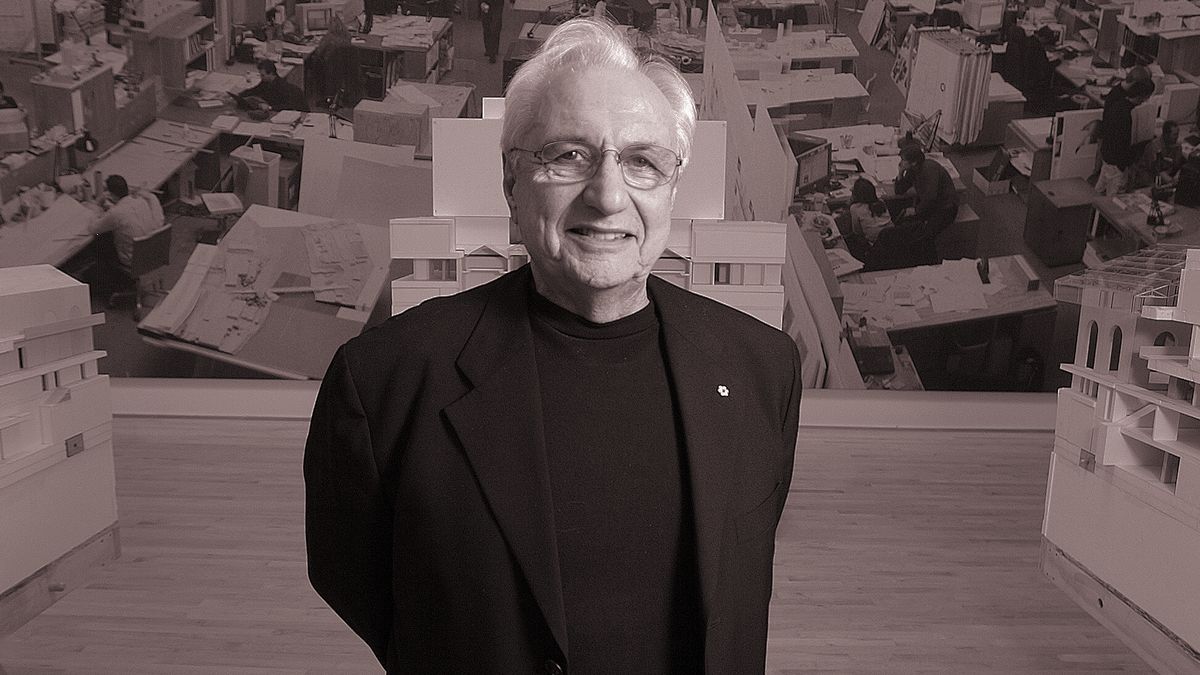
Here at Wall Power, we’re also shifting into a different, maybe more reflective mode. Tonight we have the inimitable Paul Goldberger’s remembrance of Frank
Gehry, from our colleagues at Air Mail. As Goldberger points out, Gehry was an architect who hung out with artists like Ed Ruscha, Ken Price, and Larry Bell—and shared their love of the sprawling, raffish Los Angeles. We’ll get into all of that below.
Mentioned in this issue: Paul Goldberger, Frank Gehry, Ed Ruscha, Maria Balshaw, Judy
McKie, Guy de Rougemont, Hans Coper, Lucie Rie, Claude Lalanne, Louis Kahn, Frank Lloyd Wright, Mies van der Rohe, Woody Allen, Berta Aguilera, and many more… |
|
|
A MESSAGE FROM OUR SPONSOR |
|
|
- Who
will replace Maria Balshaw?: It’s not easy being a museum director anywhere these days. But the job has been especially tough for Maria Balshaw at the Tate in London. Tate’s chairman, Roland Rudd, announced on Friday that Balshaw would be leaving in 2026 after nine years at the helm, and the institution recently revealed a
deficit of nearly $7 million. The cost of running the Tate museums, in other words, is greater than the earned revenue, partly because they’re running behind pre-pandemic visitor numbers. But even before the looming cuts, the unhappiness of the staff had been building—most visibly in last month’s walkout
by 150 workers.
Some have pointed the finger at programming. Only five years ago, an emphasis on more inclusive shows seemed long overdue and essential. But when I was in London in October, I heard complaints that the recent Nigerian modernism show was thrown together without much planning, disappointing many on all sides of the equation. That leaves an important question going forward: Is Balshaw’s departure a comment on her ability to manage an admittedly difficult situation, or a sign
that museums are out of touch with the mood of the broader culture?
As I’ve mentioned, the art world has been lacking a guiding narrative or broader theme that can build excitement and attract new participants. Where that sense of cultural momentum will come from is one of the tantalizing unknowns. How Balshaw's position is filled, and with whom, will be an interesting indicator. - McKie and de Rougemont lead in Phillips’ $3.2 million design sale:
Kim Sørensen of Phillips told us that works by Judy McKie and Guy de Rougemont would do well in her design sale, and she was not wrong. Two McKie coffee tables each sold for $245,000. De Rougemont’s cloud table sold for just over $540,000—a record for the designer, surpassing the nearly $330,000 paid just two months earlier for another cloud table in more subdued colors. And a Hans Coper footed pot with four indents made
$154,000.
- Speaking of Coper…: A large spade form by the artist sold for $330,000 in Christie’s design sale, the top lot among a dozen works by Coper and Lucie Rie from the Weis collection that appeared in the auction. The design sale was one of three the house held last week—alongside a Tiffany sale and another celebrating the 100th anniversary of the International Exhibition of Modern Decorative and Industrial Arts. Together,
the three sales brought in $27 million and achieved a hammer ratio of 1.25—evidence that the market for design remains strong even as sellers’ expectations rise.
|
|
|
A MESSAGE FROM OUR SPONSOR |
|
|
- Les
Lalanne hold on: At Christie’s, Claude Lalanne’s chandelier sold for just under the estimate, but still achieved the second-highest price paid for one of her chandeliers. A François-Xavier “agneau”
from the New Sheep series made nearly $700,000, which is just below the prices of two others sold in recent years. And a small maquette for a Wapiti meant to be displayed in the Central Park Zoo sold for just under $460,000.
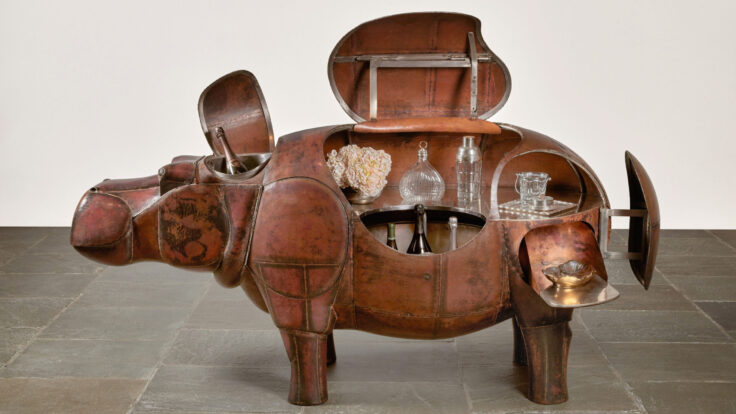
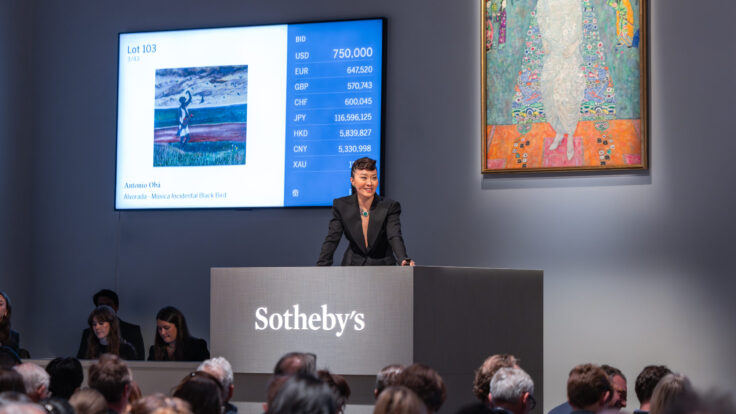
- Sotheby’s racks up $58 million in design sales: With the Lalanne hippo accounting for $31.4 million
and the Tiffany “magnolia” lamp another $4.4 million, it might not be a surprise to see the total for Sotheby’s design sales come in at $58.4 million. That’s still a noteworthy number.
|
Now, let’s talk about Frank Gehry… |
|
|
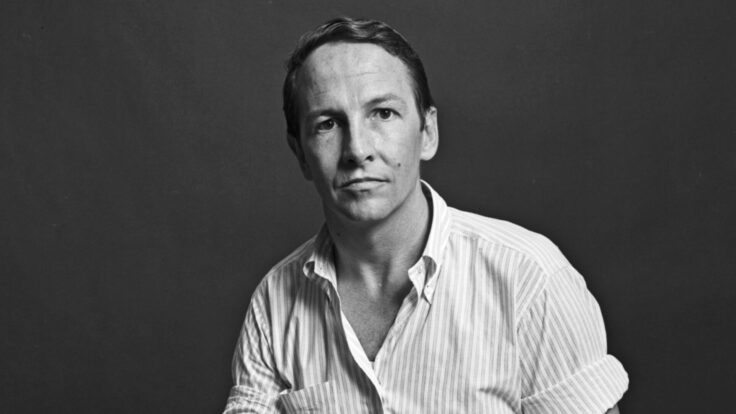
Frank Gehry, more than anyone since Frank Lloyd Wright, made cutting-edge buildings that
were genuinely popular. |
|
|
When I began working on Building Art: The Life and Work of Frank Gehry, the subject said to me, “You
really should call this book ‘Goldberger on Goldberg.’” Born Frank Owen Goldberg in 1929, he changed his name at the urging of his first wife, Anita Snyder. Gehry had mixed feelings, but he was just starting his career, and his wife told him she was sure he would get more jobs without an obviously Jewish name. He went along with it, partly to please her and partly because he worried that she might be right.
And in the early 1950s, she might well have
been, given the extent to which architecture was still largely a profession of Protestant men who looked like lawyers or insurance salesmen. But it was probably the last time Gehry did not follow his own instincts. His career, which spanned more than 70 years and ended only at his death this month at the age of 96, was the most influential, not to say profound, one in American architecture since that of Louis Kahn.
Like Kahn, and like another great American architect who
made buildings that did not look like those that had come before, Frank Lloyd Wright, Gehry was an artist as much as he was an architect, which is not to say that he was indifferent to practical matters. He understood that buildings needed to stand up, and that you couldn’t call yourself an architect if you didn’t know where to put the toilets. He was not a sculptor. But he made buildings that had a powerful sculptural presence, and that at their best could combine the function
of architecture with the power of art, as great architecture does.
Although Gehry was born in Canada and lived there until he was 18, it is fair to call him American, not only because he lived and worked in Los Angeles for all of his adult life, but because his creative energy came from that city, which so many others dismissed as sprawl and which he saw as full of vitality.
He once told me that he loved the way suburban tract houses looked before their framed structures of
two-by-fours were covered up, and he made raw materials—plywood, chain-link fencing, asphalt, corrugated metal sheets—the elements of his early designs. It was not an accident that after he graduated from architecture school Gehry spent most of his time not with other architects but with artists; people such as Ed Ruscha and Larry Bell and Ken Price saw the city as he did, whereas his fellow architects were always trying to neaten it up.
|
|
|
He did not, of course, really love chaos, and his work was no more random than that of Mies van der
Rohe. The side of him that reveled in celebrity loved the episode of The Simpsons that showed him crumpling up a piece of paper and discovering in it the form for a concert hall, but he knew that the price he paid for being famous enough to play himself in a cartoon would also mean that his work could be portrayed as a cartoon. That led some people to mistake it for something arbitrary and simple, even silly, which it never was. |
He was as driven and ambitious as anyone I have ever met. But unlike most driven and ambitious people, he was
full of self-doubt. The switch from Goldberg to Gehry was not sufficient to purge him of anxiety. I once described him as a curious combination of Frank Lloyd Wright and Woody Allen. When he saw his Guggenheim Museum in Bilbao, Spain, finished in 1997, which had already been acclaimed as one of the great buildings of modern times, his first thought, he told me, was “Oh my God, what have I done to these people?”
He quickly came around to agree with the world that what he
had done to the people of Bilbao was just fine, and he took immense satisfaction when that work of avant-garde art achieved mass appeal, a rare feat in any field. Gehry, more than any other architect since Wright, made cutting-edge work that was genuinely popular, and that in itself was an extraordinary achievement.
It was not, however, enough for Gehry. He was proud of Bilbao’s popularity, but he was frustrated by it because he knew that it could be a trap. “Success,” he said, “is much
harder to deal with than failure.” Success made it harder to do what he felt was most important, which was not to coast on his triumph and make the same thing again and again, but to keep creating. And so he pushed himself to be always making it new, in Ezra Pound’s phrase, and we got Walt Disney Concert Hall in Los Angeles, and 8 Spruce and the IAC Building in New York, and the Eisenhower Memorial in Washington, D.C., and the Fondation Louis Vuitton in Paris, and the Pierre
Boulez Saal in Berlin and so many other buildings, each one different from Bilbao, not to mention furniture and jewelry and a new house for himself and his wife Berta that they moved into when he was well past 80.
His passion for making it new kept him working almost to the end, meeting with colleagues about current projects only a few days before he died. His desire to find a fresh way for us to make an emotional connection to architecture—for that is what he was doing,
making you feel the warmth and intensity of feeling that the richest architecture of the past gave you, but through entirely different forms—will resonate as long as there are people wanting to take joy in the art of building. |
Thank you, Paul. That was insightful and enlightening. I’ll be back on Tuesday with more end-of-the-year
notes.
M |
|
|
The ultimate fashion industry bible, offering incisive reportage on all aspects of the business and its biggest players.
Anchored by preeminent fashion journalist Lauren Sherman, Line Sheet also features veteran reporter Rachel Strugatz, who delivers unparalleled intel on what’s happening in the beauty industry, and Sarah Shapiro, a longtime retail strategist who writes about e-commerce, brick-and-mortar, D.T.C., and more. |
|
|
Finally, a media podcast about what’s actually happening in the media—not the oversanitized, legal-and-standards-approved
version you read online. Join Dylan Byers, Puck’s veteran media reporter, and Julia Alexander, a longtime media analyst, as they sit down with TV personalities, moguls, pundits, and industry executives for raw, honest, sometimes salacious conversations about the business of media and its biggest egos. New episodes publish every Tuesday and Friday. |
|
|
Need help? Review our
FAQ page or contact us for assistance. For brand partnerships, email ads@puck.news.
You received this email because you signed up to receive emails from Puck, or as part of your Puck account associated with {{customer.email}}. To stop receiving this newsletter and/or manage all your email preferences, click here. |
Puck is published by Heat Media LLC. 107 Greenwich St., New York, NY 10006 |
|
|
|