Welcome back to Wall Power. I’m Marion Maneker, having completed my
barista duties on the Puck Airstream. Thanks to everyone who stopped by while we were at TEFAF on Thursday and Christie’s and Sotheby’s on Friday. It was great to see everyone bring their enthusiasm for the bright red Airstream, Wall Power, Puck—and free ice cream.
On Thursday afternoon, there was a palpable hope at TEFAF that the evening sale might unleash a sea change in the market. That didn’t happen—and maybe that’s a good thing. Still, last night’s sale at Sotheby’s was solid, with
some fascinating moments, and I’ll have more on all that below. Up top, notes on Ronald Lauder’s decision to merge his Neue Galerie with the Met, and some reflections on TEFAF, which was the strongest it’s been in years.
Also mentioned in this newsletter: Josh Baer, Max Hollein, Grace Hartigan, Robert Mnuchin, Agnes Martin, John
Chamberlain, Magnus Resch, Alma Thomas, the de Gunzburgs, Brigitte Bardot, David Hammons, George Condo, Christopher Wool, Jeff Koons, Lucio Fontana, Franz Kline, Yu Nishimura, Ed Ruscha, Gunter Sachs, Helena Newman, Kathleen Ryan, and
more… |
- Can the Neue Galerie become the Cloisters?: By now you’ve surely heard that Ronald Lauder—at 82 years old—will be merging his museum, Neue Galerie, with the Met in 2028. The Lauders have cited the Cloisters as a model for the Met to maintain an outpost, but a recent cautionary tale is the fate of the Breuer Building, which was once used as the Met’s annex for contemporary art but never got well integrated into the mothership a few blocks
north.
Maybe this outcome isn’t much of a surprise—Lauder and Met C.E.O. Max Hollein have a long-standing relationship. But it’s a reminder that the costs of establishing and maintaining private museums, as so many have done over the past two decades, can be far more onerous than initially imagined. (Although donations can surely be very tax-efficient when structured the right way.) - TEFAF highlights: The
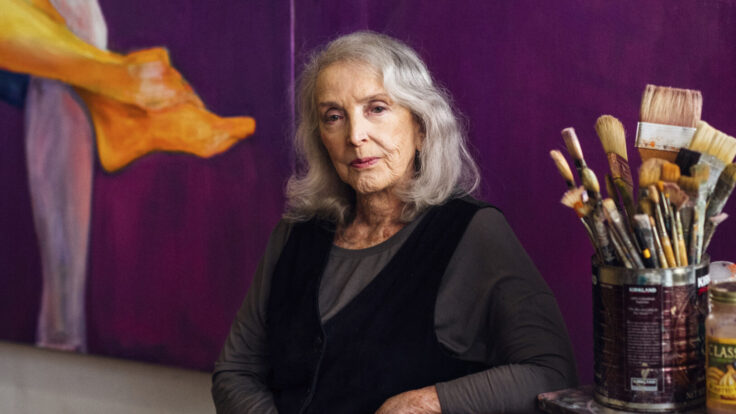
mood at TEFAF was quite good yesterday. The crowds were thick, and the booths had some great art. A few things that made a lasting impression were the big John Kacere once owned by Botero, at Salon 94; a Grace Hartigan painting at Edward Tyler Nahem; Gagosian’s booth of Kathleen Ryan’s rotting fruit; and Paul Coulon’s Christopher Wool word painting of four black
“O”s that’s been lurking in a private collection for decades. There was more to see, but these are a few that stayed with me.
- Magnus reboots: Magnus Resch has revived his namesake app where you can take pictures of artworks and get prices and information about them. Image recognition and
information gathering through artificial intelligence have improved greatly over the past year, which made Magnus 2.0 possible. If you use the code WallPower100, you’ll be able to test it out for yourself.
|
Now, about last night at Sotheby’s… |
|
|
|
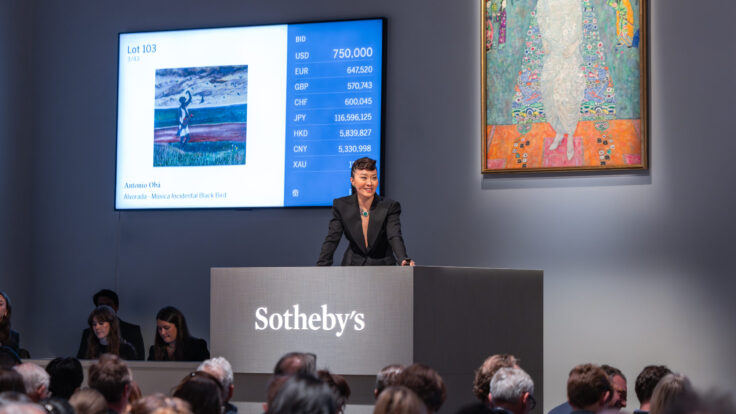
The numbers from Sotheby’s last night were very strong—the Mnuchin sale totaled
$166 million, and the various owners’ sale made nearly $267 million—but the market still hasn’t rebuilt the confidence necessary to see real momentum pick up again. |
|
|
|
It was a strange scene last night at Sotheby’s, where a teenager in the front row of the salesroom
bid on a lot while a dealer, who must have been 90, brought home at least two contested lots. Meanwhile, a pair of out-of-place, free-champagne-guzzling ladies were hopping into empty auction-room seats as quickly as the rightful ticketholders were able to evict them. It’s tempting to spin this into a metaphor for the night, in which a raft of young painters were still able to attract aggressive bidding, plenty of works by classic names sold for very high prices, and the kind of interested
onlookers the art market is hoping to reengage remained a little lost. But maybe that’s too cute.
In any case, there’s no denying that the numbers from Sotheby’s last night were very strong. Robert Mnuchin’s sale totaled $166 million, and the various owners represented at the Now and Contemporary evening sale made nearly $267 million. That’s $433 million in an evening—good business for Sotheby’s. |
Going into the evening, there was a palpable hope—at least among a number of people I ran into at
TEFAF—that the sale would see some bidding drama that would attract attention to the art market from interested bystanders. The conventional wisdom is that there’s plenty of money sitting on the sidelines of the art market, but that this money is desperately in need of confidence-building. Of course, as a very seasoned collector told me outside TEFAF, the time to buy was last year, when confidence (and competition) were low. He said the market was overly pessimistic at the time—and, perhaps, a
little too optimistic this season.
Did Sotheby’s results prove him right? Yes and no. Even among the Mnuchin works—all 11 of which sold—the performance was varied. Remember that Mnuchin was an art dealer; all of these works had been for sale at the right price. Now, at least, we knew they were going to sell at whatever price the market would bear.
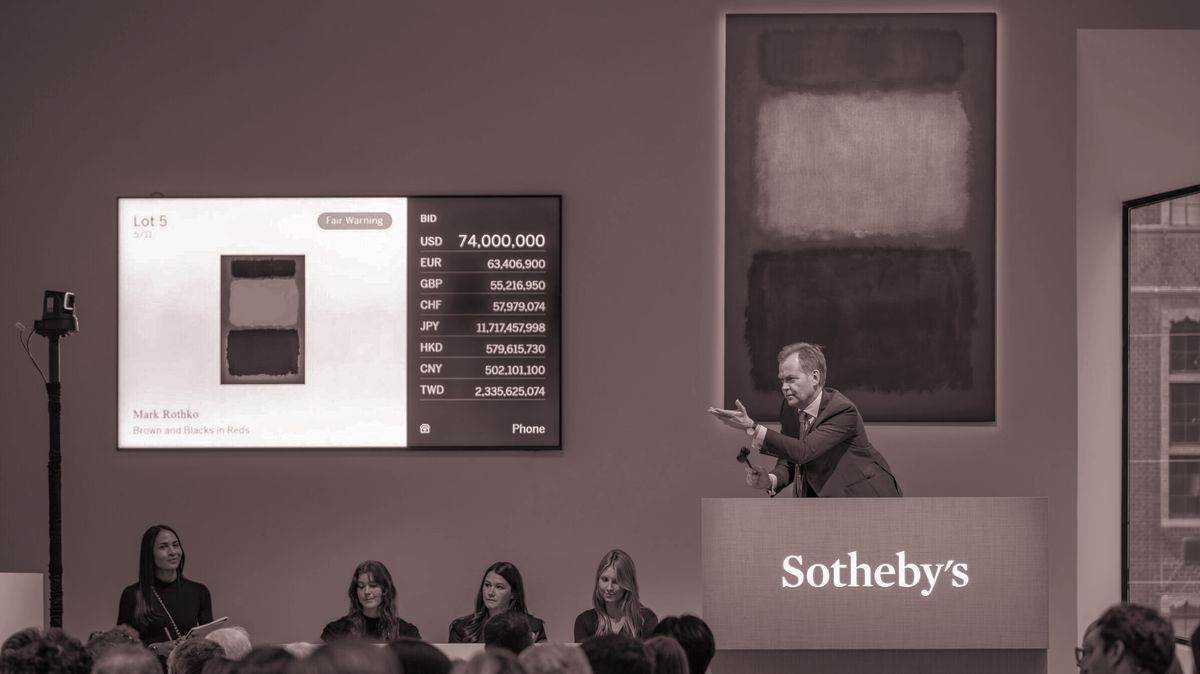
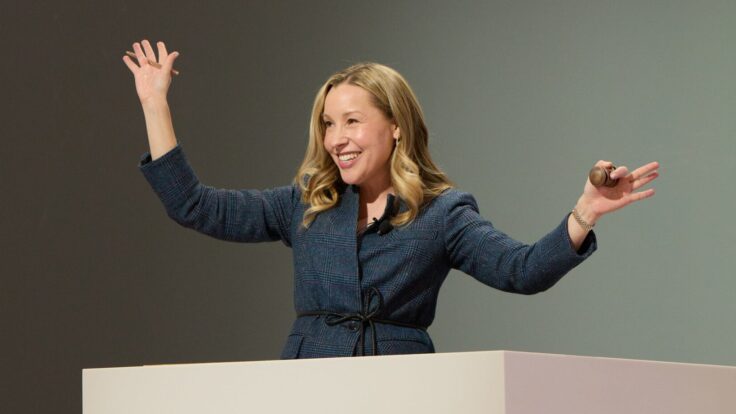
Two or three of the works saw limited bidding. Sotheby’s Helena Newman put in the winning bid on the
red Rothko, and based on her affect, I would guess her bidder was not the guarantor, although the final hammer price of a little more than $74 million was not much above the estimate. Sotheby’s lists the selling price as almost $86 million, which is close but not quite the record for a Rothko. By any measure, it was a very successful sale.
Mnuchin’s other Rothko, No. 1, from 1949,
sold for almost $21 million. Nine years ago, Mnuchin bought the painting for $13 million. That’s more than a 50 percent rise in price for an artist with a mature market. Of course, many have been hoping to see the top of the art market reprice—the recent inflation makes many of these prices technically cheaper than their
comparable past prices—but the market wants a good story to drive competition, and it’s not clear that Mnuchin built enough lore to propel the top of the market forward.
Otherwise, the three Willem de Kooning paintings sold well, but his 1970 abstract on paper did exceptionally well, making nearly $11 million with fees against an
estimate of $4 million without fees. Mnuchin’s Miró and Picasso paintings also sold well; the Franz Kline and Jeff Koons works found new homes at decent prices; and David Hammons’ small
tarp painting got away after what was probably a concerted effort on Sotheby’s part. The team did their jobs well.
On the discretionary sales side, there were some different stories. The top lot, Jean-Michel Basquiat’s Museum Security (Broadway Breakdown), from 1983, sold for an odd
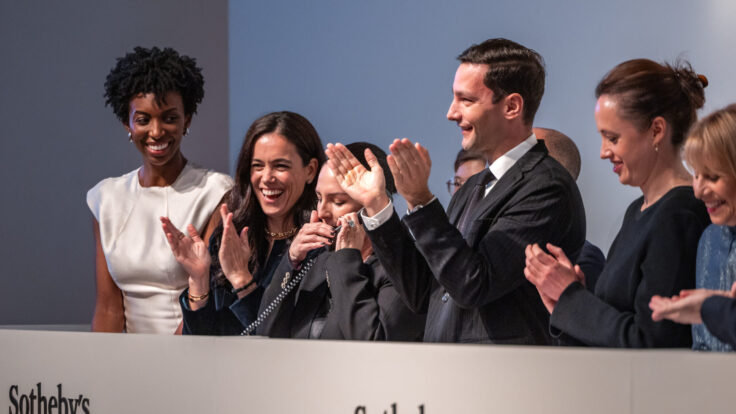
hammer price—just $250,000 above the unpublished estimate. As I wrote in the Inner Circle issue on Wednesday, the lack of a guarantee was a good sign for the market. Naturally, I learned moments after the email was sent that the consignor had taken an irrevocable bid. Sotheby’s performed some auction theater, where $45 million was bid on a telephone, followed by
$45.25 million from another phone. The sequence led Josh Baer, one of the most sophisticated art market observers, to wonder aloud who might guarantee a lot, only to give it up for a small financing fee that he estimated to be in the high four figures.
On Wednesday, I also noted that the fate of the Basquiat would give us a sense of the demand for the artist’s work in the upper reaches. People knowledgeable about the Basquiat market thought the $52.7
million (that’s the $45.25 million plus fees) was a great price, which gets to something at the heart of last night’s sale: Much of the selling effort took place well before the sale. The Basquiat might have landed a third-party backer late in the game, but that was the sales process. It doesn’t make good auction theater, but it did achieve the best result for all parties involved.
Along with Mnuchin’s de Koonings, there was another significant painting by de Kooning, from 1975, on offer
with an estimate of $25 million. This morning, I ran into one advisor who told me they had gone to the sale intending to bid on the painting, but decided against it once the irrevocable bid was called out but no other bids came. The advisor’s concern was that the backer was not a collector, and concluded that the de Kooning market was too thin to justify chasing the work. After all, if the client still wanted the painting, better to buy it from the backer. The advisor added that prominent
dealers seated nearby came to the same conclusion. This is a fundamental issue with the auction market. The money to bid up that 1975 de Kooning was sitting in the room, but decided not to engage in the absence of competition. |
Andy Warhol’s Brigitte Bardot, commissioned by Gunter
Sachs and being sold by his son Gunnar, performed exceptionally well. Estimated at $14 million based on the sale of another work from the series last season, the bidding carried the painting up to a premium price of nearly $25 million. The three paintings from Jean and Terry de
Gunzburg also sold well. Their purple-and-black Rothko made nearly $16.5 million, advancing nicely from the $10 million estimate. Their Agnes Martin painting, Untitled #6, from 1977, sold for more than $5.2 million. The estimate was $3 million, and there were two other Martin paintings in the sale; they both sold well, at prices above and below the de Gunzburgs’ painting. Finally, a Lucio Fontana Venezia painting sold for a robust
$16.5 million.
Works by Ed Ruscha and Helen Frankenthaler saw healthy prices. The Ruscha was an important work that had never been to auction before. It was estimated at $4 million without fees, but sold for nearly $7 million with fees. Even though another Frankenthaler was bought in (and there are
many other works around town at auction and on view at Gagosian), Cape Orange, from 1964, estimated at $3.5 million, saw sustained bidding to make almost $7.3 million. A big red George Condo, Figure on a Red Field, from 2016, was estimated at $2 million but sold for almost $5.9 million.
I’m not sure anyone was expecting that.
Alma Thomas’s Pinks of Cherry Blossoms, from 1970, made a $3.2 million price, just $20,000 shy of her previous record set three years ago. John Chamberlain’s Jo-So, from 1960, was
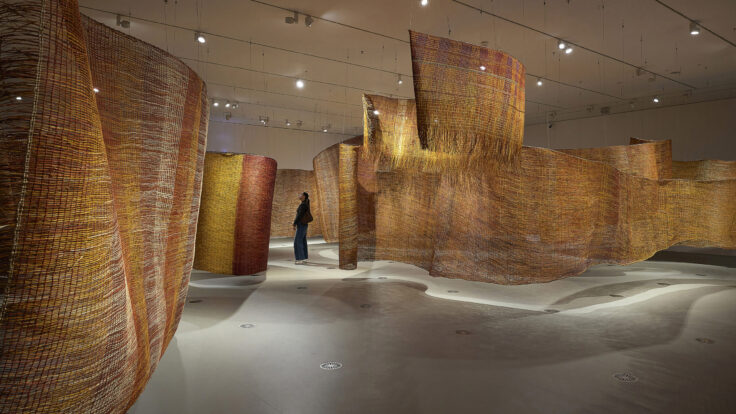
estimated at $800,000 but ended up selling with fees for just short of $2 million. Warhol’s The American Indian (Russell Means), from 1976, estimated at $1.5 million, saw plenty of bidding to $3.2 million. Yu Nishimura’s Leaves carpet, from 2017,
sold for a record price of almost a million dollars. Again, I’m not sure anyone thought that was going to happen.
The results are a reminder that this is one of those rare seasons when everyone in the art market is in it together. Dealers are not competing with auction houses or one another, and the auction houses have every
interest in seeing their competitors do well. For today, the health of the art market and optimism toward collecting art is the goal. Everybody can go back to beating each other up once we’ve made progress in bringing more buyers back to the market. |
That’s it for today. Have a great weekend, everybody. I’ll be back on Sunday with some more
thoughts on Sotheby’s sales, and a look ahead to next week’s action.
M |
|
|
|
Puck founding partner Matt Belloni takes you inside the business of Hollywood, using exclusive reporting and insight
to explain the backstories on everything from Marvel movies to the streaming wars. |
|
|
|
Unique and privileged insight into the private conversations taking place inside boardrooms and corner offices up and
down Wall Street, relayed by best-selling author, journalist, and former M&A senior banker William D. Cohan. |
|
|
|
Need help? Review our FAQ page or contact us for assistance. For brand partnerships, email ads@puck.news. You received this email because you
signed up to receive emails from Puck, or as part of your Puck account associated with {{customer.email}}. To stop receiving this newsletter and/or manage all your email preferences, click here. |
Puck is published by Heat Media LLC. 107 Greenwich St., New York, NY 10006 |
|
|
|
|