|
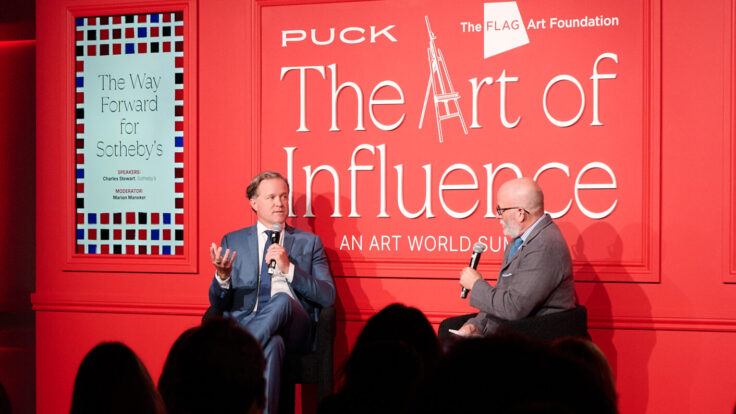
Welcome back to Wall Power. I’m Marion Maneker.
We’re cramming in a lot of material tonight before the big weekend. Julie Davich went to see the Ben Shahn show at the Jewish Museum. Plus, she has the results from the Saunders sale that failed to break the record for an Old Masters collection.
For the main event, I look at the new show of paintings by Lorna Simpson at the Met. Simpson’s is the last of a run of shows by important Black artists that just coincidentally appeared in museums a few weeks after the Trump administration launched its anti-D.E.I. blitz. How are the museums and these artists holding up? I’ll try to answer that below the fold.
But first…
|
- Heffel sells C$22 million of Canadian art: Canada’s swelling national pride—and defiance of its overbearing neighbor to the south—spilled over into the art market yesterday as Heffel, the Canadian auction house, held its very first all-Canadian sale of postwar and modern art. Three lots from members of the Group of Seven—modern painters who helped define Canadian national culture in the early 20th century—were sold by the University Club of Toronto, and together brought in more than C$7
million.Lawren Harris’s Northern Lake, from 1926, sold for a little more than C$3.1 million; Franklin Carmichael’s Leaf Pattern, from 1922, made almost C$2.3 million; and Arthur Lismer’s McGregor Bay Islands sold for just above C$1.6 million. Also contributing to the record-setting evening sale were works by other Group of Seven painters like A.Y. Jackson, whose Night on the Skeena River sold for nearly C$1.1 million; Tom Thomson, who had three paintings each sell for more than C$1 million, for a total of nearly C$3.3 million; and Emily Carr, who had two works sell for a combined total of more than C$1.4 million. The rest of the world’s art market may be stuck in second gear, but Canada is feeling itself. Robert Heffel summed it up: “Tonight was a true celebration of Canada.”
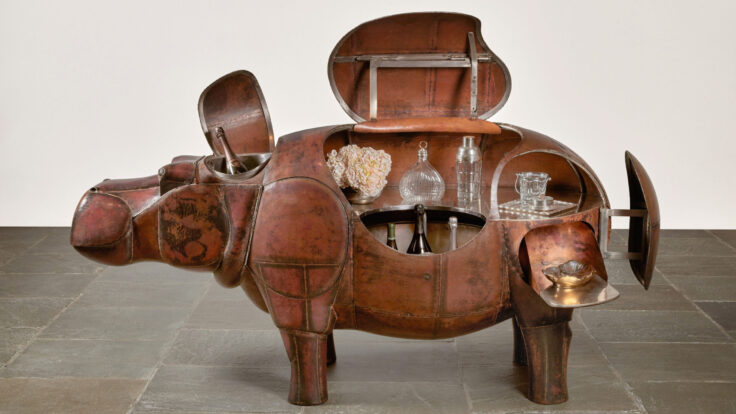
- Lalanne ostriches go for $12.6 million in Paris: On Tuesday, Sotheby’s held a €27 million design sale in Paris that featured 30 lots of work by François-Xavier and Claude Lalanne. The top lot was an ostrich bar that was estimated at €3 million but sold for €11.1 million. That’s $12.6 million, which makes the ostrich bar the second-most-valuable Lalanne work ever sold at auction. Also in the sale was a duck estimated at €700,000 that sold for €1.9 million.
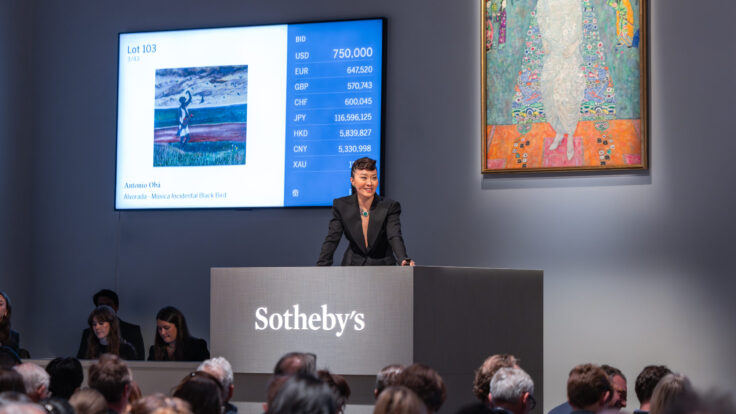
- Phillips revamps Hong Kong sale to suit “discerning” market: Earlier this week, I had coffee with a Hong Kong–based art advisor who was excited for this September, when we might finally see all three auction houses mount comparable sales in Hong Kong. In March, they held simultaneous sales for the first time, but Phillips’ event was a New Now sale, a smaller midseason offering of contemporary art, not a full-fledged evening sale. That house’s Hong Kong evening sale will take place this coming Tuesday, and Phillips is eager to let bidders know that 70 percent of the lots in the day and evening sales are new to auction. In the evening sale alone, that figure is 90 percent.The top lot is George Condo’s Blues in F, from 2021, estimated at HK$12 million, or $1.5 million. The painting is priced below his primary work; a not-dissimilar painting from 2011, also priced at $1.5 million, just sold last week at Christie’s for almost $2.3 million with fees. Wu Guanzhong’s Springs and Autumns is estimated at HK$3.8 million, or nearly half a million U.S. dollars. There’s a Rashid Johnson, Untitled Escape Collage, from 2017, estimated at HK$3.5 million, or just about $450,000. A similar work sold last fall in New York, with fees, for just about where the before-fees estimate is for this one. (The consignor must be hoping that Johnson’s big show at the Guggenheim will stoke demand.) Anish Kapoor’s untitled lacquered concave mirror work, in organic green and apple red, is estimated comparably to Johnson’s work as well as other recent lacquered mirror works that have sold well. There’s a 2015 Jonas Wood painting, Punch and Judy, with an HK$3.3 million estimate; and a 2014 Hernan Bas painting, Case study (Harvey, Palmist/glove collector), estimated at HK$3 million. Zao Wou-Ki’s 07.04.59, estimated at HK$2.5 million, has had only two owners in 66 years, the latest for the past 16 years.
|
|
|
|
A MESSAGE FROM OUR SPONSOR
|
The first steps towards a masterpiece starts with a dream. The all-electric BMW i7 – the evolution of brilliance. Learn more at
BMWUSA.com
|
|
|
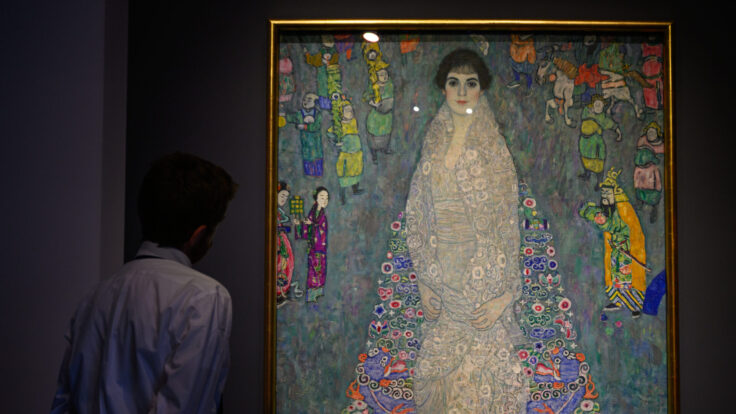
- The Jordan and Thomas Saunders sale makes $64.7 million: The sale of Jordan Saunders and the late Thomas Saunders’ Old Masters paintings at Sotheby’s on Wednesday fell well below expectations, achieving a total of $64.7 million with fees, less than the presale, pre-fee estimate of $73 million. That estimate takes into account two lots valued at $4.2 million that were withdrawn. Of the 41 lots in the sale, Sotheby’s sold only 25 of them, implying that the estimates were too aggressive for the current market. That said, most of the masterpieces found buyers.A rare Luis Meléndez still life with a cauliflower sold to an Asian buyer for a record $6.3 million after a five-minute battle among four bidders. Sotheby’s also set a record for Frans Post when a Brazilian landscape, estimated at $6 million, made $7.4 million. (The previous record of $4.5 million was set in 1997, underscoring the rarity of his works at auction.) Estimated at $8 million, the Jan de Heem floral still life made a record $8.8 million. The top lot was a pair of Guardi paintings estimated at $10 million that squeaked by at $10.5 million. (Another Guardi estimated at $4 million was withdrawn.) Also notable was the $5.7 million achieved for Gerrit Dou’s Man Writing by an Easel in an Artist’s Studio, estimated at $5 million. —Julie Brener Davich
|
|
Now here’s Julie with a look at Ben Shahn’s art…
|
|
|
 |
Julie Brener Davich |
|
The Ben Shahn retrospective that opened today at the Jewish Museum, in New York, is the first dedicated to the social realist artist and activist in nearly 50 years. Conceived around 2020 by guest curator Laura Katzman, it comes to New York from the Reina Sofía in Madrid, and feels particularly timely at this moment in America. With 175 paintings, posters, photographs, and ephemera, the exhibition tells the story of Shahn’s career, but it’s also the story of the United States during the political unrest of the mid-20th century—the wave of anti-immigrant sentiment in the 1930s, the fight against Nazism in the 1940s, McCarthyism in the 1950s, and the struggle for Civil Rights in the 1960s—all of whose effects we still contend with today.
The retrospective opens with what’s arguably Shahn’s most famous painting, The Passion of Sacco and Vanzetti, from 1931-32, on loan from the Whitney Museum. It depicts the funeral of the Italian immigrant anarchists who were executed for murder in 1927 after a trial steeped in xenophobia. Shahn preferred to paint in water-based mediums like tempera, gouache, and watercolor, which were humbler than oil paint and allowed him to layer colors without waiting a long time for the underlayers to dry. He often painted from his own photographs (he once shared a studio with Walker Evans), and some of that source material is shown alongside works like Handball, 1939, on loan from MoMA. Publications in which his finished works appeared, like magazine covers for The Atlantic and Fortune, are also on display.
The small section of the exhibition dedicated to Shahn’s Great Depression murals includes studies for The Meaning of Social Security, which still adorns the hallway of the Wilbur J. Cohen Building in Washington, D.C. (That federal building, which housed some General Services Administration agencies, is now up for a DOGE-mandated sale, and the future of the mural is unclear.) The exhibition continues with Shahn’s wartime posters encouraging people to vote and showing Nazi atrocities. In the 1950s, under pressure from the rise of abstract expressionism, Shahn took on a slightly more painterly style. Second Allegory depicts an accusatory finger, perhaps a stand-in for McCarthyism, looming over a fallen figure. Another room displays his work from the Civil Rights era, including three portraits of murdered Freedom Riders.
Despite being a major figure of 20th century American art, and one still beloved by those who lived through the political upheaval of the 1950s and 1960s, Shahn has been reduced to relative obscurity. This retrospective does its best to resurrect him when we may need him most. As the museum’s director, James Snyder, said, “We can look at art history of the 20th century to understand what’s happening to us in the 21st.”
|
|
|
|
Now to the so-called main event…
|
|
|
|
A wave of high-profile, years-in-the-making exhibitions offers a national counterpoint to MAGA efforts to delegitimize inclusion. As the Met’s Lorna Simpson exhibition proves, showing underrepresented artists has always been less about an artist’s identity and more about an artist’s work.
|
|
|
|
We’re coming to the end of an awkward museum season in which two large, immovable cultural fronts have converged to create some strange and unexpected localized effects. On the one hand, we have the ferocious populism of the MAGA movement, back in power and hell-bent on erasing what it sees as the special pleading of diversity, equity, and inclusion programs. On the other, we have the slow-moving, well-meaning machinery of museum programming that has all at once brought the work of half a dozen prominent Black artists to major museum shows in New York and Washington.
After declaring an end to D.E.I. among federal employees, cutting the funding of the nation’s most prestigious universities in the name of fighting antisemitism, and generally being cringe-worthily obvious in their efforts to blot out the discussion and presence of anyone who doesn’t fit their idealized lost world, the MAGA cultural movement seemed to have lost at least some of its mandate. And for now, at least, even as the administration continues to undermine universities, museums have not come under direct
attack.
|
|
|
|
A MESSAGE FROM OUR SPONSOR
|
The first steps towards a masterpiece starts with a dream. The all-electric BMW i7 – the evolution of brilliance. Learn more at
BMWUSA.com
|
|
|
|
To me, the test of this has been the reception to the string of prominent museum shows for Black artists that have rolled out this spring. MoMA’s revelatory Jack Whitten retrospective, the Whitney’s triumphant exhibition of Amy Sherald’s paintings, and the Guggenheim’s coronation of Rashid Johnson all opened in the past few months to strong, supportive crowds, positive coverage, and respectful, if not always ebullient, critical reception. In addition, there have been shows in Washington, D.C. for Adam Pendleton and Elizabeth Catlett. The Brant Foundation just opened a show of Glenn Ligon’s work. (In a separate but related sphere, the Met Gala’s Black dandyism theme, pegged to the Met’s show on the same subject, also seemed to come off without provoking any pop culture blowback.)
The last of these museum shows to open, this week at the Met, is Lorna Simpson’s Source Notes, a survey of her painting since she first started making large-scale works, for the 2015 Venice Biennale. The show isn’t a retrospective, but an isolated sampling of a specific corpus created over a decade: large-scale works on fiberglass that mix screen printing with painting.
Simpson’s Blackness is essential to her art, but her art isn’t reducible to her identity, and the most interesting things about the show are the echoes of and innovations upon the work of a variety of artists, such as Andy Warhol, Robert Rauschenberg, Helen Frankenthaler, Sam Gilliam, David Hammons, and Richard Prince. Indeed, the great success of this season of Black art has been not the representation, but the ability to see each of these artists in their own right, and respond to their talent as artists without ignoring their identity as Black people. You’d think that would go without saying, but we all know it’s a big step forward—especially in the context of the MAGA movement’s presumption that D.E.I. negates actual merit.
|
Lorna Simpson’s paintings are very big and can be overpowering. What makes them interesting isn’t always obvious, and in some cases requires some time and reading to detect. The show doesn’t help matters with the space in which it’s presented. Displayed in the same tall but narrow gallery in the back of the Met’s contemporary wing where Cecily Brown’s show was held last year, Simpson’s large works—often painted with saturated washes of indigo, aqua, or cerulean blue, or simply left in black-and-white—can seem monotone or even repetitive. Seeing them next to each other, which usually helps, in this case sometimes hinders one’s ability to really see what’s going on in the paintings.
Met curator Lauren Rosati helpfully includes a vitrine of collage work—the “source notes” of the show’s title—to situate the larger works within the more conceptual artwork that made Simpson so popular among curators and academics. (If you want to get a sense of that work, especially some of the installations from the early 1990s, you can see them on Simpson’s
studio’s website.) Her collages really are something, and they do make you want to see the large-scale installations she created earlier in her career.
|
|
|
|
The exhibition catalogue has a bit of a grad-school vibe, alleviated by Hilton Als’s essential essay that’s one part memoir and two parts tone poem. The remainder of the catalogue has an arcane, adjective-heavy academic approach, which is somewhat understandable. After all, it describes the work of an artist who painted a huge meteor because of a historical newspaper account that included the name of the landowner upon whose land the meteor fell, but not that of the sharecropper at whose feet it came to rest. Out of context, the meteor is simply an impressive image—big, detailed, and dominating.
In some of her more seemingly straightforward works, like the haunting Three Figures, from 2014, Then and Now, from 2016, and Detroit (Ode to G.), from 2016, we see images of racial violence or street confrontations collaged alongside abstract painterly embellishments that immediately bring to mind Warhol’s race riot paintings. In many ways, they’re better.
The abstract Quotation Marks, from 2016, and the two composite image paintings, Polka Dot & Bullet Holes #1 and Polka Dot & Bullet Holes #2, appealed to me personally. So did Shift, from 2016. Then there’s a whole series of images—and collages—built upon Ebony and Jet magazine pictures, where Simpson superimposes minerals for hair or paints over the models’ faces.
Anyway, there’s a lot to think about after seeing Source Notes. The issue of representation is obvious and necessary. But it’s hardly the only takeaway. And to me, that is the show’s great success.
|
|
We’re running long and I’m keeping you from your weekend (unless you’re reading this on Tuesday morning). At any rate, enjoy the Memorial Day holiday. Try not to eat too many hot dogs.
M
|
|
|
Need help? Review our FAQ page or contact us for assistance. For brand partnerships, email ads@puck.news.
You received this email because you signed up to receive emails from Puck, or as part of your Puck account associated with . To stop receiving this newsletter and/or manage all your email preferences, click here.
|
|
Puck is published by Heat Media LLC. 107 Greenwich St, New York, NY 10006
|
|
|
|