{{ 'now' | timezone: 'America/New_York' | date: '%b %d, %Y' }} |
|
|
|
Hi, and welcome back to Line Sheet. I’m running around today, prepping for a week in Italy. First
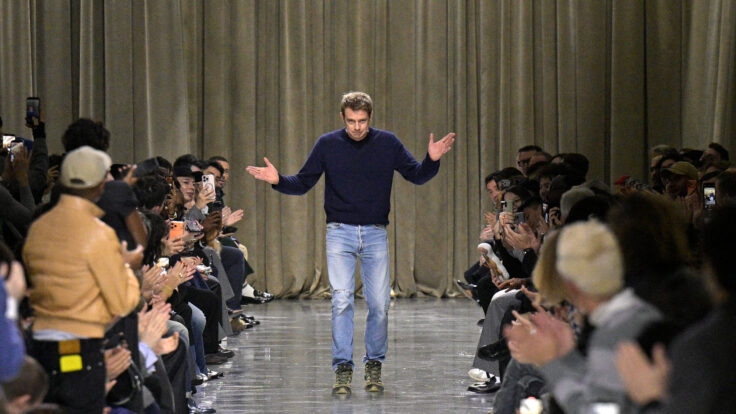
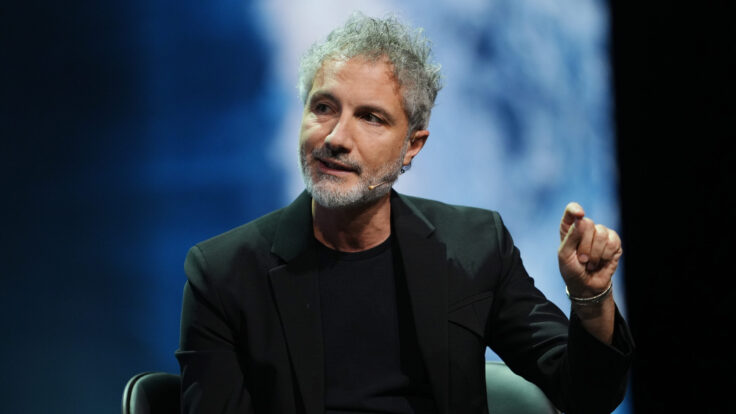
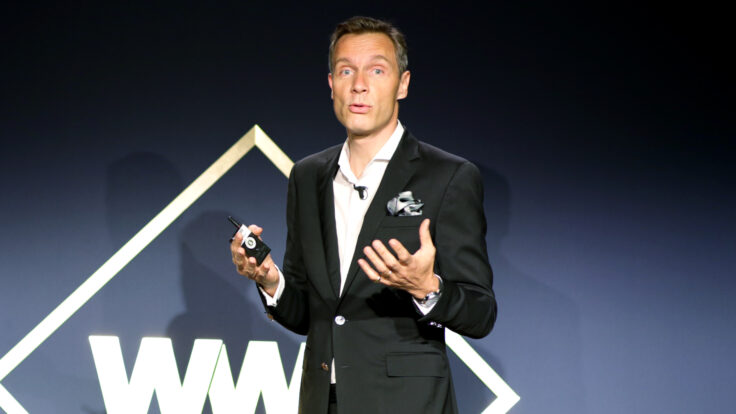
stop: Florence, where I’ll be attending what I’ve dubbed Fête du Kering, Thursday’s supercharged investor presentation, where group C.E.O. Luca de Meo will present his vision for the company. Kering has already released its first-quarter results, and I have some thoughts and context below, plus details on the launch of W Youth, a new title from W magazine editor-proprietor Sara Moonves. Plus, Malique
“Malique@puck.news” Morris has a scoop on a major executive exit at Adidas that says a lot about the state of that biz.
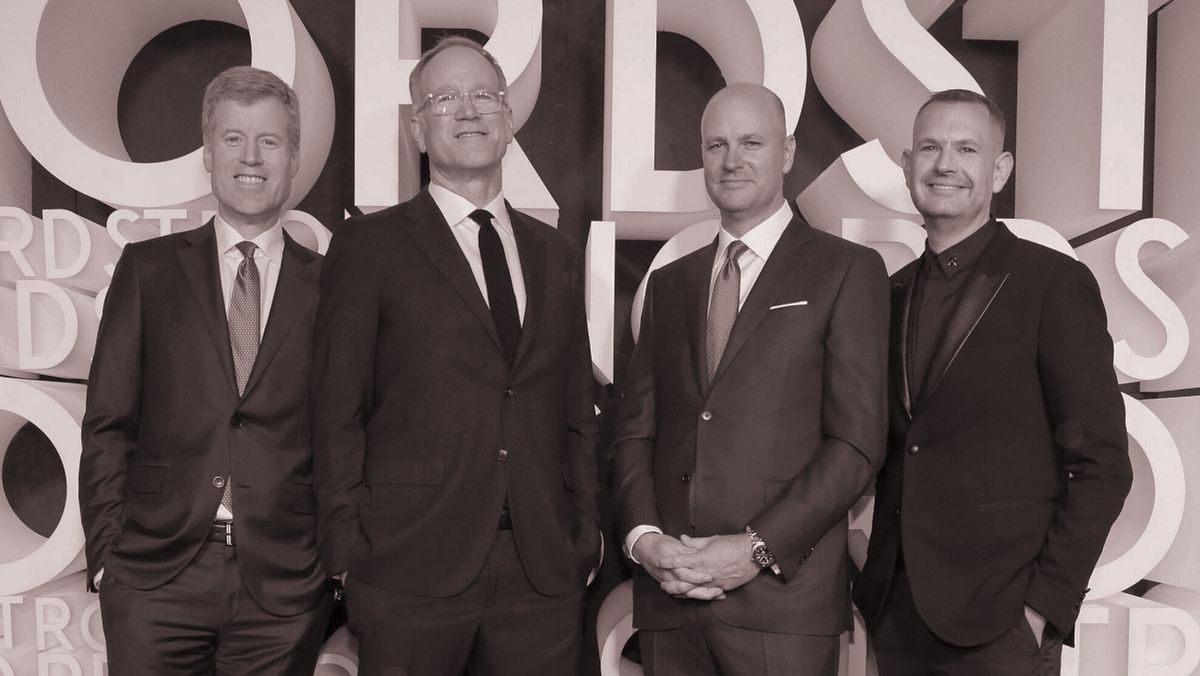
For the main event, Sarah “SShapiro@puck.news” Shapiro checks in on Nordstrom, post-privatization. Sarah and I both scratched our heads
when the department store announced that it was partnering with Marks & Spencer—love the M&S Foodhall and the knickers, but still—and there’s plenty more to digest.
Also mentioned in this issue: Sofia Coppola, Marc Jacobs, Pharrell Williams, Bad Bunny, Lena Dunham, Ye, Bjørn Gulden, Erik Nordstrom, Pete Nordstrom,
Jerry Lorenzo, x-Girl, Ava Nirui, Heaven, Torben Schumacher, John Targon, Yumi Shin, Catherine Bloom, Steff Yotka, Erin Ayanian Monroe, Kenya Hunt, Cosima Mars, and more… |
Three Things You Should Know…
|
- Teen
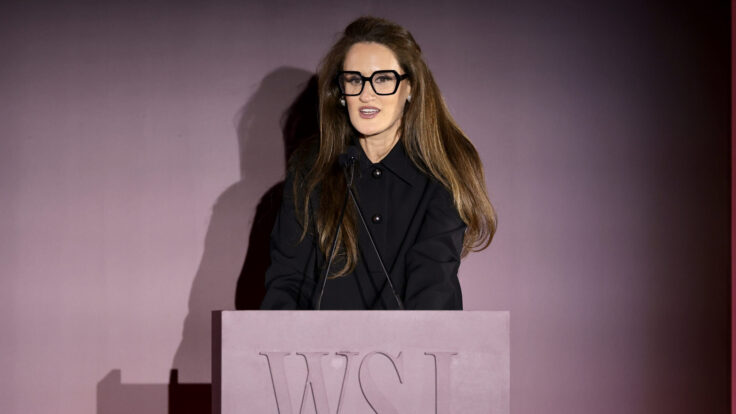
queens: In what may be the ultimate form of fan service (but also not a bad business idea), W co-owner and editor-in-chief Sara Moonves is launching WYouth, a biannual magazine designed for teens and other young people. The twist is that she hired Ava Nirui, the creative director behind Marc Jacobs’s hit spinoff line, Heaven, as editor. Their first issue hits newsstands in
September.
Naturally, Sofia Coppola—Marc Jacobs scholar, documentarian, and eternal-coolest-teen-in-the-world—and her daughter Cosima Mars have been named contributing editors. The core W magazine staff will work across both publications. Yes, there will be original digital features published between print issues. But the idea is to capture the essence of the era when we were all reading about X-girl in
Sassy magazine, only through the lens Nirui brought to Heaven: less nostalgic, more appreciative of the past.
Some early feedback I received after the news broke this morning: People are iffy on the name, but this is a smart, relatively low-risk move to pull in different kinds of advertisers that W would typically eschew. There’s a real hunger for tactile media among consumers of all ages, and Moonves is targeting an advertising demographic that has largely been
neglected by the legacy publishers whose generic content got swallowed by TikTok. (Of course, like the original Teen Vogue, WYouth is bound to attract readers outside the 12-19 age range, too.) But having Nirui as the ideas person might be the thing that makes it hit: Last week on Fashion People, Steff Yotka, the global editorial director of i-D magazine,
suggested that a designer should become the editor-in-chief of The Face, the now-shuttered British fashion institution that Moonves tried to buy a couple of years ago. In the end, she’s probably better off building on the W name.
|
|
|
|
A MESSAGE FROM OUR SPONSOR |
Once just another sales channel, wholesale has become a strategic engine for sustainable growth. The 7th edition of
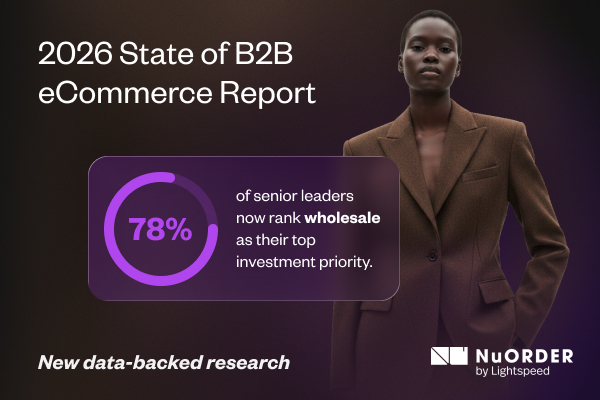
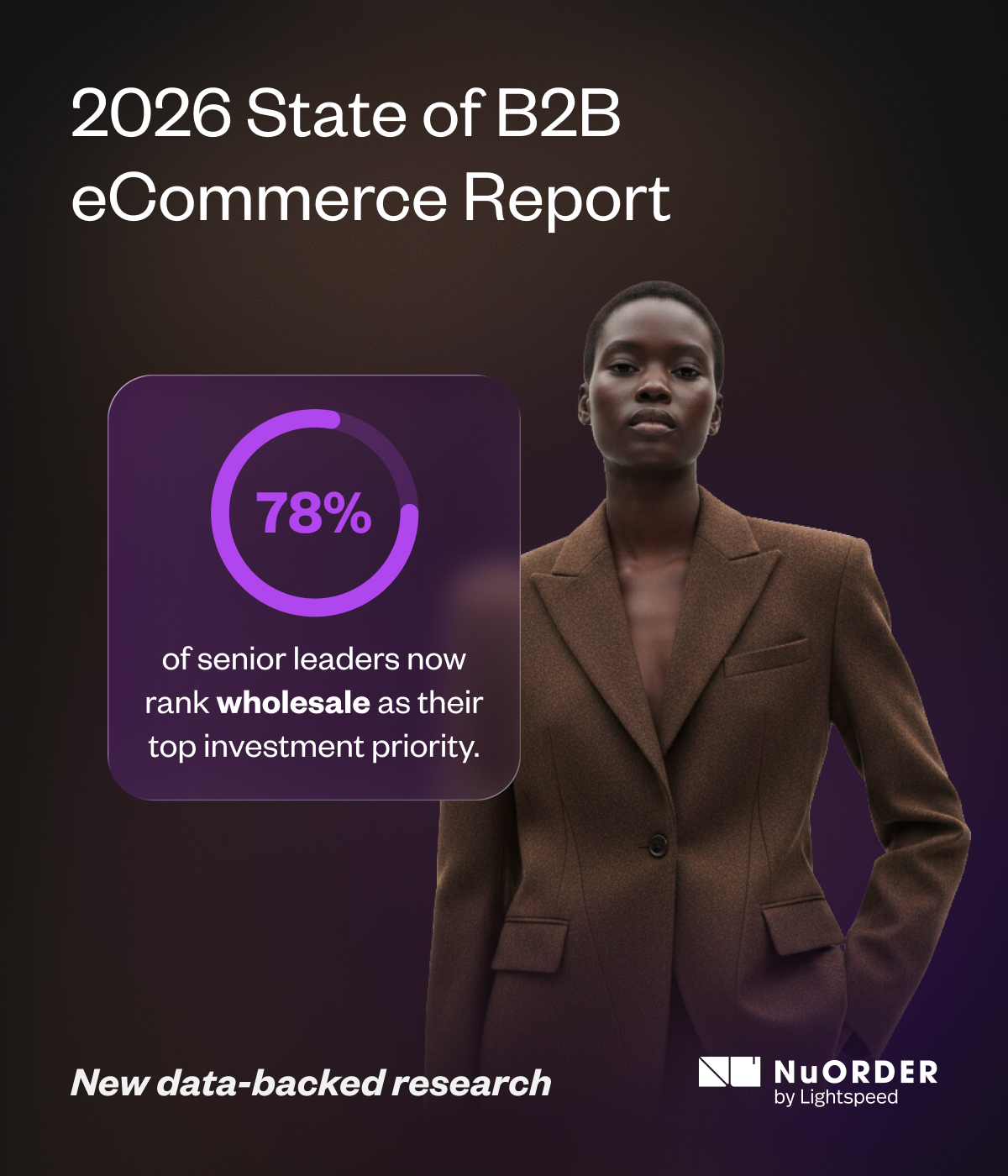
NuORDER’s State of B2B eCommerce Report shows why 2026 is a turning point from reactive uncertainty to operational discipline. According to a survey of 200 brands, the shift is real. They are focusing on margin protection, tighter distribution, and more intentional partnerships, with 67% now using sell-through data and 78% doubling down on wholesale as their top investment.
Download the full report. |
|
|
|
- The
Gucci sitch: Kering’s first-quarter earnings, a prequel of sorts to its big Capital Markets Day on Thursday, revealed that Gucci missed analyst projections by a whole lot. The good news is that retail sales at Gucci were up 9 percent in North America on the back of the first Demna drop, but still down in Asia and Western Europe, which is a tough region for pretty much every luxury brand right now—except, of course, Chanel.
Some other notables from the report: At
Saint Laurent, ready-to-wear and shoes are selling well, but remember that handbags account for the vast majority of sales. At Balenciaga, the handbag business is strong, even if it’s still hard to understand how Pierpaolo Piccioli fits into the narrative. As with every group, hard luxury is succeeding, and was a bright spot. But the report raises more questions than it answers: Why isn’t there more new Gucci product in the store? How can Saint Laurent fix its handbag problem?
Will Bottega Veneta ever pop? What does Balenciaga stand for post-Demna? Hopefully, Kering C.E.O. Luca de Meo will answer these questions and more on Thursday.
Much like an American Fortune 500 company, Kering has invited a large cohort of financial reporters not only to observe its investor day, but to participate via a series of planned activities that will, if successful, help attendees understand de Meo’s vision and whether he can please customers and shareholders
alike. De Meo warned employees a while back that the stock pop early in his tenure was driven by hype, and that the Pinault family–backed group still had a ton of work to do. He was right.
|
|
|
|

| Malique Morris
|
|
- Adidas’s executive
shake-up: A leadership reshuffle is potentially underway at Adidas. I’m told that Torben Schumacher, who has led the Adidas Originals franchise, is leaving after 21 years at the company. Schumacher, who oversaw key partnerships with the likes of Pharrell Williams, Jerry Lorenzo, and Bad Bunny, was a “powerful figure at Adidas,” according to an industry insider, tasked with growing the North American business.
The
circumstances surrounding Schumacher’s exit remain murky. I’m told his departure was announced in a company-wide meeting sometime in March, although an Adidas spokesperson told me he “continues to be employed” but wouldn’t clarify whether that was a condition of his contract. I’ve also heard there may have been tension between Schumacher and C.E.O. Bjørn Gulden. (Schumacher didn’t respond to a request for comment.)
Anyway, the timing is certainly curious. Adidas’s sales
rose 5 percent year over year, to €25 billion, in 2025, a notable downshift from the company’s 11 percent growth the year before. Could Schumacher’s exit signal another downturn for Adidas? The company has outpaced Nike in global growth by cashing in on dressier, low-profile sneakers. The brand also charted a tremendous rebound after dropping its lucrative Yeezy line in 2022 following Ye’s antisemitic flameout. But much of that momentum has been driven by legacy products like
the Sambas. We’ll know more when the company reports first-quarter earnings on April 29.
|
|
|
|
A year after going private, Nordstrom looks financially disciplined—so why are they bringing
in British basics brand Marks & Spencer? |
|
|
|
On a recent visit to Nordstrom at The Grove in Los Angeles, the floor actually felt like it had a point of
view: Emily Dawn Long, Diotima, and Haikure were merchandised in a way that suggested something more considered than the usual department store mélange. But at another Nordstrom, in Northern California, none of those brands was anywhere to be found. (Alas, I’m told they are present at fewer than six locations.) The inconsistency was telling—flashes of differentiation that didn’t go the distance. |
|
|
|
A MESSAGE FROM OUR SPONSOR |
Wholesale growth isn’t the goal anymore. Profit is. According to 200 senior brand leaders, chasing volume is
out. Control is in. In fact, 54% are focused on cost reduction and protecting margins, tightening distribution and choosing partners more deliberately. This disciplined approach to growth protects brand equity as much as revenue. It’s why 78% now rank wholesale as their top investment.
Download the 2026 State of B2B eCommerce Report: Wholesale Reengineered. |
|
|
|
Which is partly why Nordstrom’s latest move—a partnership with the U.K. department store Marks & Spencer,
offering a 60-piece womenswear collection in 30 stores and online—has puzzled many in the industry. At a moment when Nordstrom could be going after the Saks and Neiman customer—shoppers hungry for discovery and a more elevated mix—it’s introducing a relatively unknown British basics brand, priced under $200, into stores already heavy on basics that aren’t exactly flying off the shelves.
It has
now been nearly a year since Nordstrom went private in a $6.25 billion deal with Mexico’s El Puerto de Liverpool. The thesis was straightforward: Escape the tyranny of quarterly earnings, clean up the family-run business, and position the company to capitalize on the dislocation caused by the Saks Global bankruptcy. Erik
Nordstrom, who is co-C.E.O. alongside his brother Pete, framed the move as an opportunity to get their story clear amid a chaotic moment in multibrand retail. The question now is whether the story is resonating with customers or brands.
On paper, it seems to be. Revenue hit $15.8 billion in 2025, up 7 percent year over year, with EBIT at its strongest level in a decade. From the brand side, there’s real goodwill. One accessories company C.E.O. who foresaw the
Saks situation deliberately opted to partner with Nordstrom due to its combination of scale and stability. Bloomingdale’s was a strong partner, but limited in footprint. Macy’s had reach, but not the right assortment alignment. Nordstrom offered both—and, crucially, a willingness to engage. The company reached out, traveled to visit the brand, listened, and made a strong case for partnership.
Another founder described a similar embrace—selected as a brand highlight, scaled from zero
stores to 30, with Nordstrom providing the infrastructure to expand beyond coastal markets. It was all reminiscent of Nordstrom’s investment in Dôen, an example of how the retailer can help brands grow without forcing them to overextend.
But stability and scale, increasingly, are table stakes. The more pressing question—one that keeps surfacing among brands and wholesale advisors—is whether Nordstrom is ready to take the bigger swings that were supposed to follow the take-private. One
consultant who advises multiple brands summed up the current moment as a “boring soap opera”—financially sound, but creatively underwhelming. The refrain from Nordstrom has been that the real excitement is coming next quarter.
There’s also a clear merchandising gap. The $300–$1,000 price band—contemporary with an edge, where specialty retail is winning—is widely viewed as underserved. One boutique recently did $150,000 in a single weekend with a single brand; a comparable Nordstrom
location wouldn’t come close in the same timeframe. The traffic is there. The conversion isn’t. |
Which brings the focus back to Marks & Spencer. M&S hasn’t forgotten its failed U.S. expansion more than two
decades ago, and this time it’s avoiding the overhead of stand-alone stores in favor of a lower-risk wholesale strategy. The retailer is well-regarded in the U.K. but largely unknown to American shoppers beyond a brief cameo in Target, which once carried its Percy Pig gummy candy. Meanwhile, Nordstrom is actively recruiting luxury talent from the Saks Global wreckage: former Bergdorf Goodman chief merchant Yumi Shin, who is now the executive V.P. of global brand partnerships at
Nordstrom; Neiman’s top personal shopper, Catherine Bloom; and a cadre of high-performing sales associates and personal shoppers. The open question is whether a British high-street basics player is the right magnet for the Saks Global customer, or the best use of open-to-buy dollars. |
|
|
|
The momentum, for the moment, may be elsewhere. Nordstrom Rack is doing the heavy lifting. Comp store growth
across both banners is the strongest in over a decade, according to an insider. The company opened 22 new Rack locations in 2025 and is expanding further this year in markets like McAllen, Orlando, and downtown Atlanta. Today, Nordstrom operates 90 mainline stores, 299 Rack locations, and seven Nordstrom Local outposts. There’s also an appointment-only location for Catherine Bloom on Melrose. With Saks Off 5th effectively exiting the market, Rack has a clear runway to capture both that customer
and inventory. Nordstrom Local, by contrast, is more of a service play, focused on pick-ups, returns, and alterations, with modest expansion underway in California.
The numbers suggest the privatization is doing what it was supposed to do. Nordstrom has stabilized its business and restored a measure of discipline. What it hasn’t done—at least not yet—is generate that real excitement. Brands and customers are looking for a sharper point of view, something that signals where
Nordstrom is going, asking the kinds of questions shareholders would have been asking a year ago. |
John Targon, another Marc Jacobs alum whom we will never escape (I mean that with affection),
has been named president of the Austin and New Orleans specialty store ByGeorge. [Inbox]
Dying to visit Fondazione Dries Van Noten in Venice, which opens April 25. [WSJ.]
Elle Fanning’s makeup artist, Erin Ayanian Monroe, is so good. Love this cover of Elle U.K.
[Kenya Hunt’s Instagram]
Lena Dunham on SoHo’s ever-changing retail landscape. [Shop Rat] |
Until tomorrow,
Lauren
P.S.: We use affiliate links because we are a business. We may make
a couple bucks off them. |
|
|
|
Need help? Review our
FAQ page or contact us for assistance. For brand partnerships, email ads@puck.news.
You received this email because you signed up to receive emails from Puck, or as part of your Puck account associated with {{customer.email}}. To stop receiving this newsletter and/or manage all your email preferences, click here. |
Puck is published by Heat Media LLC. 107 Greenwich St., New York, NY 10006 |
|
|
|
|