Hi, and welcome back to Line Sheet. I landed in New York this morning and hope to see you tonight—either at Cultured’s Cult 100 extravaganza at the Guggenheim, or the little dinner that Eva Chen and I are hosting beforehand downtown. Otherwise, I’ll catch you this weekend after I check in with my aunt.
In today’s Inner Circle special—accessible only to Puck’s most exalted tier of membership—we’ve got the most insidery of insider intel: the scoop on Kim Kardashian’s new stylist, plus the curious case of Naked Cashmere and what its former parent company’s foreclosure portends for other middling brands struggling amid all the current chaos. For the main event, I am doing my best to make sense of what’s going on at Saks Global. Our finance guy Bill Cohan has the bond issue on lock, but I’m focusing on the industry’s second-order effects. Many of you who work regularly with Saks Fifth Avenue, Neiman Marcus, and Bergdorf Goodman have a lot riding on this all turning out okay.
🚨 Programming note: Friday on Fashion People, I chat with M/M Paris co-founders Mathias Augustyniak and Michael Amzalag—who have worked closely with everyone from Björk to Carine Roitfeld to Nicolas Ghesquière to Jonathan Anderson—about their new gig creative directing Harper’s Bazaar Italia. We also delve into the art of collaboration, the pursuit of originality in the digital age, how not to get (work) divorced, and plenty more. We go deep! I love them. Listen here and here.
Mentioned in this issue: Marc Metrick, Richard Baker, Saks, Kim Kardashian, Jahleel Weaver, Barneys, Naked Cashmere, Rihanna, Moët Hennessy, Phoebe Philo, Max Wigram, Jo Ellison, Patti Cazzato, Kering, LVMH, Bernard Arnault, Joe Biden, Lina Khan, and many more…
|
|
|
|
A MESSAGE FROM OUR SPONSOR
|
Tariffs are coming fast — but Swap moves faster. Built for ecommerce brands that manufacture in China and sell cross-border, Clear by Swap Global is your B2B2C compliance solution for surviving—and thriving—in this new reality.
➡️ Clear goods at fair market (not retail) value
➡️ Reduce tariff exposure via intra-company transfers
➡️ Get fast 2-day delivery from UK/EU warehouses
➡️ Achieve full compliance & eliminate surprise border fees
Margins are shrinking and complexity is growing. Clear by Swap Global helps your brand stay compliant.
Get a demo today.
|
|
|
Three Things You Should Know…
|
- Kim’s new guy: Anyone who is working with Kim Kardashian around this year’s Met Gala knows that she has a new stylist: Jahleel Weaver, a contributing fashion editor at Perfect, for which he styled Kardashian as part of a Steven Klein portfolio that was transformed into a 34-page spread. The editorial—shot in November, published in March—received mixed reviews online. Kardashian is part of the fashion establishment these days, but for some reason, posing with a Cybertruck and a Tesla robot irked a good number of people. Perhaps that’s partly why she’s since enlisted Weaver—who also works with Rihanna—as a sounding board. After all, she is best when she is raising eyebrows.Kardashian has cycled through several stylists over the years. The most influential and least official, of course, was her former husband Kanye West, who constructed her image for several years and provided an entrée into the world of high fashion that had roundly ignored her prior to his intervention. (Stefano Tonchi and Carine Roitfeld got it before pretty much anyone else.) As for what Kardashian will be wearing on Monday? I have no idea.
- If you want to control the media… become the media: I’m going to buy the Phoebe Philo–edited issue of the Financial Times weekend supplement HTSI (née How to Spend It) on Saturday and will give you my page-by-page review. For now, though, I just have to say that it’s pretty smart of Philo and her business-partner husband, Max Wigram, to engage with media this way. HTSI editor-in-chief Jo Ellison has incredible taste, a sense of fun, and will never poke too hard. Plus, choosing the subjects is, in some ways, far better than being the subject for someone like Philo, who loves control. (She was one of the first famous people to allow a publication to photograph her for a cover without granting an interview, Beyoncé-style.) The magazine will become a collectible in the vein of her early-day Céline pamphlet-zines, which were on the seat of every runway show attendee. Far more effective than paying for an advertisement.
- Read this if Naked Cashmere owes you money: As with the Covid supply shock, a lot of brands are going to experience the confluence of tariffs, retailer liquidity problems, and the looming recession as a real perfect storm. Many will close altogether; others will go bankrupt. Meanwhile, vendors owed money by Naked Cashmere, the Santa Monica–headquartered brand, received an unpleasant email earlier this week. C.E.O. Patti Cazzato conveyed to partners that the assets of Naked’s parent company, 360Sweater, were sold in a “public foreclosure sale,” meaning that many bills may never be paid. The assets were transferred to a company called Italian American Fashion Group. “Please note that any debt owed by 360 was not transferred to Italian American Fashion Group and that entity is in no way liable to you for such debts,” Cazzato wrote. “Any collection efforts regarding outstanding balances should be directed solely to 360Sweater Co. as it proceeds through its wind-down process.”Naga Brands, a holdco I first wrote about in 2017, has had a controlling stake in 360Sweater Co. since 2022, as mentioned in a recent WWD piece. According to a source familiar with Naga’s structure, however, the company no longer has any control over Naked Cashmere and zero association with the Italian American Fashion Group. If I find out more, so will you.
|
|
|
|
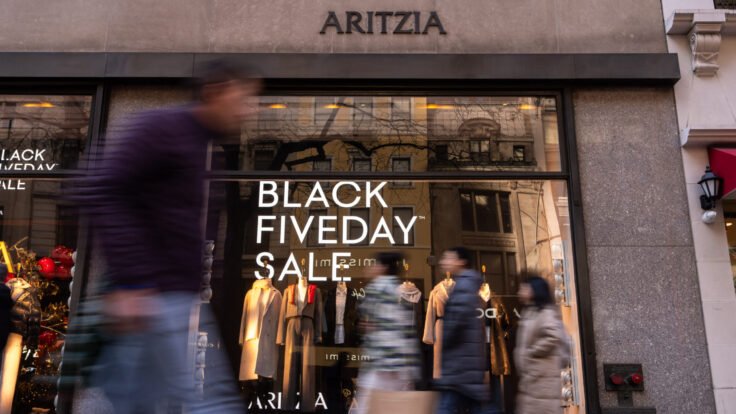
Wall Street is getting nervous that the company can’t repay its creditors. Vendors are worried about outstanding invoices. And the tariff pain hasn’t even hit yet. Can Saks Global turn things around with “synergies” and an Amazon store? And what happens if it can’t?
|
|
|
|
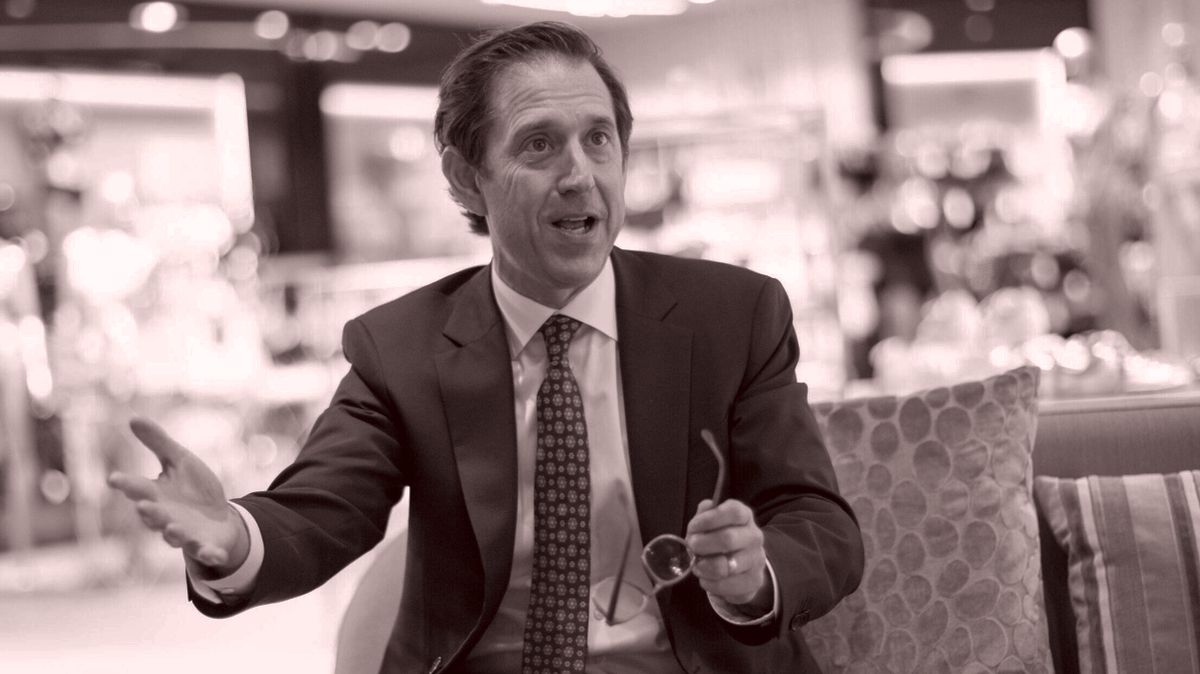
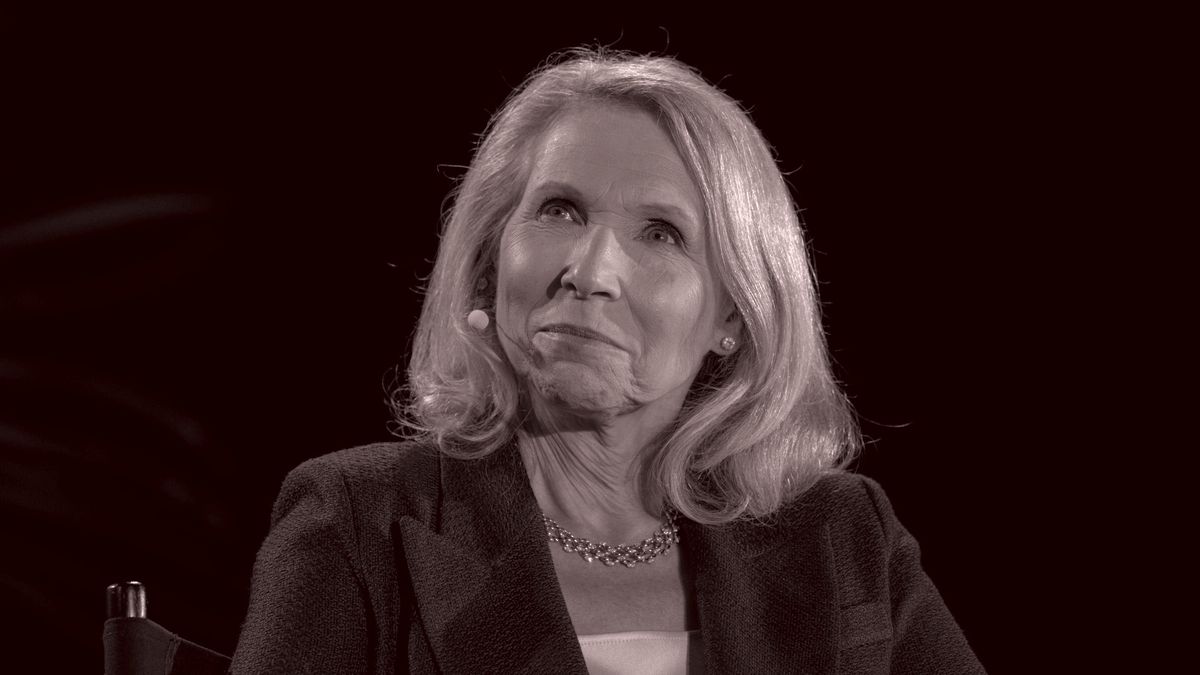
Last week, Saks Global C.E.O. Marc Metrick commenced layoffs of more than 500 employees—the latest in a series of steps to shore up the company’s balance sheet as it struggles to reassure creditors that it can repay its $2.2 billion bond, due in 2029. A few days later, Metrick sent a note to investors and brand partners, insisting that the company’s $400 million of liquidity was more than enough “to service our debt while investing in our future growth.” He focused on various “synergies” (also known as layoffs) and cost-saving initiatives after absorbing Neiman Marcus Group and Bergdorf Goodman. Investors were somewhat placated, and the value of the bond ticked up about 10 cents.
Of course, the bond situation is but one of several issues being closely watched by the fashion industry. On Tuesday, Saks finally opened its controversial storefront on Amazon, a platform that’s been shunned by luxury brands in the past. Saks on Amazon is currently selling about 40 brands—with more to come in the months ahead, they promise. Saks Fifth Avenue sells thousands of brands, so launching with a mere 40 indicates that onboarding has not been easy.
|
|
|
|
A MESSAGE FROM OUR SPONSOR
|
Tariff turmoil is here. Is your ecommerce business prepared to weather the storm? In a survey of 100 ecommerce executives, 83% expressed concern that new regulations could threaten their business. So how can you stay ahead and stay competitive?
Download Swap Commerce's "5 Ecommerce Growth Strategies for the Age of Tariffs" for insights and future-proof tips including:
➡️ The hidden costs that could disrupt your business
➡️ How to protect margins and prevent shipping chaos
➡️ Tips to get ahead of uncertainty
Download the playbook.
|
|
|
|
Sure, Saks could very well say that they aren’t looking to flood the market, but none of the brands thus far are from LVMH or Kering. Dolce & Gabbana is probably the most prestigious of the luxury brands that have signed on for the Amazon experiment. Then there’s Balmain, Erdem, and Stella McCartney. The one thing these brands all have in common is that they probably can’t afford to say no to Saks.
Nevertheless, even the biggest luxury players—not merely LVMH and Kering, but also OTB and Richemont—want Saks Fifth Avenue and Neiman Marcus Group to succeed in some form to be able to continue servicing customers in the United States. Mega luxury brands may view most American department stores as landlords, but they need distribution centers. A potential default would be catastrophic for the global fashion industry—far worse than the destabilization during the pandemic. Many brands would close. Others would have to shrink their operations. The factoring firms, like Hilldun, would bear substantial losses.
It would be crazy to think that a transaction that closed four months ago—with buy-in from the likes of Salesforce and Amazon—would already be in trouble. And indeed, I’ve talked to people close to the company, and investors who helped finance the deal, who believe it’s still sound.
But there’s a real fear among industry executives that the company could go the way of executive chairman Richard Baker’s other department store business, Hudson’s Bay in Canada, which just announced it’s closing its six remaining stores. After all, Saks owes a lot of money to a lot of different parties. Plenty of brands that negotiated 60-day terms in February are waiting on payments—Saks insists it’s up to date on anything due at the moment—while the 90-day term payments will be due in June. Then there are the back-payments, which Metrick has promised will commence in July. For some brands, as you may recall, these payments are in the multimillions. Meanwhile, Saks needs to ensure clients shop in order to maintain
liquidity—and I’m not even factoring in the effect of the tariffs on consumer confidence.
|
How did this all happen, exactly? It’s easy to say this is all Baker’s fault—that, no matter how hard he tries to be a merchant, he’s actually just a real estate developer, and that he has poorly managed these businesses while overpromising investors. While there’s a sound argument there, I think we need to go back to July, when the deal was announced, and reconsider what happened over the following months.
By late August, I’d heard gossip from multiple sources that Baker was bragging to friends that the Biden administration had approved the Saks-Neiman deal. “The dogs were in the White House,” he was quoted as saying. When I reached out to a source close to Baker about this, they roundly denied it, accusing a well-known industry executive of stirring the pot by leaking this to me. (The executive was not one of my multiple sources, which made me believe it even more.)
Anyway, I wasn’t surprised that it looked like the Federal Trade Commission would approve the deal. Lina Khan already had a bee in her bonnet about the Tapestry-Capri merger, which was very much about the off-price segment. Saks Fifth Avenue and Neiman Marcus Group’s average order value was, I assumed, far too high to bother Khan’s more populist, consumer-oriented F.T.C. (It also helped that Saksoff5th.com was not part of the Saks Global deal.)
|
|
|
|
When you survey the landscape, though, there’s no denying that Saks Global now dominates the market of luxury department stores in the U.S. I may not go so far as to call it a monopoly, but many people have. Either way, there are certainly people at LVMH and Kering who see a future where they control even more of this network. This week’s announcement that Saks Fifth Avenue in downtown San Francisco would close—following in the footsteps of Nordstrom and Bloomingdale’s—was merely the latest indication that the market can’t bear so much physical retail. I love to speculate about Bernard Arnault’s eternal longing to own Bergdorf Goodman, and that won’t be out of the question if creditors were to get a hold of the assets. (The Bergdorf women’s building is owned by the Goodman family.)
It’s all giving me déjà vu to the summer of 2019, when Barneys New York was on the brink of bankruptcy. I had viewed a fundraising deck created by the company that revealed proprietary information, including annual sales and projections. The reality of that business was that the Madison Avenue store was hugely profitable, as were a couple of other locations, like Los Angeles. Everything else was a drag.
The powers that be at Barneys were upset that I published that information: Negative media attention only exacerbated their attempts to raise the necessary capital. Barneys, too, was accused by vendors of everything from withholding checks to sitting on payments. (Saks Global, for its part, has vowed to set up ACH and wire transfers for vendors by August. Metrick personally had the check machine moved from Canada to New York to ensure checks would be cut in a timely fashion.) Of course, there are differences, too, and they all point back to Baker’s original deal from the summer. While the Barneys situation felt more urgent in some ways, it was a smaller business, and its debt was less than $500 million. Saks Global’s is over $4 billion.
|
What I’m Reading… and Thinking About… and Listening to…
|
Nancy Steiner, one of my all-time favorite costume designers ( Lost in Translation, Promising Young Woman, Twin Peaks: The Return), is hosting a closet sale with the equally illustrious Arianne Phillips, Sophie De Rakoff, Paula Bradley, and others, on Sunday, May 4, in the parking lot of Shabon on Melrose from 10 a.m. to 4 p.m. The address is 8316 Melrose Ave., Los Angeles, CA 90069.
Moët Hennessy will eliminate about 1,000 jobs over the next few years, which makes sense given that the business is shrinking. [ La Lettre]
Fabiola Beracasa Beckman was best-dressed at the Brooklyn Artists Ball (underwritten by Christian Dior) in vintage John Galliano–era Dior. [ Instagram]
I’m becoming a massive fan of the River Café owner Ruthie Rogers’s podcast, and this episode with YNAP’s Alison Loehnis is a lovely exit interview. [ Ruthie’s Table 4]
“Chanel stands above all—above any individual designer,” Chanel exec Bruno Pavlovsky said at the Cruise show on Lake Como this past Tuesday. The collection was proof of that concept. [ Vogue Runway]
I will say it again: Jacquemus won this season of The White Lotus. [ NSS]
For those who can’t get enough: Dylan interviewed Graydon Carter. [ The Grill Room]
I’m not sure there is a better advertisement for Vuori than the Gerber family. [ Instagram]
|
And finally… Get a load of the sponsor list for the Lycée Français 2025 New York Gala. (A great place to send your kids if you are a French person living in New York and working for an American subsidiary of a French company.)
Until tomorrow,
Lauren
P.S.: We are using affiliate links because we are a business. We may make a couple bucks off them.
|
|
|
|
Puck’s daily art market email, anchored by industry expert Marion Maneker, offers unparalleled access to the mega-auctions and galleries, elite buyers and sellers, and the power players who run this opaque world. Wall Power also features Julie Brener Davich, a veteran of Christie’s and Sotheby’s, who provides unique insights into how the business really works.
|
|
|
|
Finally, a media podcast about what’s actually happening in the media—not the oversanitized, legal-and-standards-approved version you read online. Join Dylan Byers, Puck’s veteran media reporter, as he sits down with TV personalities, moguls, pundits, and industry executives for raw, honest, sometimes salacious conversations about the business of media and its biggest egos. New episodes publish every Tuesday and Friday.
|
|
|
Need help? Review our FAQ page or contact us for assistance. For brand partnerships, email ads@puck.news.
You received this email because you signed up to receive emails from Puck, or as part of your Puck account associated with . To stop receiving this newsletter and/or manage all your email preferences, click here.
|
|
Puck is published by Heat Media LLC. 107 Greenwich St, New York, NY 10006
|
|
|
|