Welcome back to Wall Power. I’m Marion Maneker.
I hope you had a happy
Christmas. In the Wall Power household, we spent the day listening to some of the 100 different versions of The Pogues’s “Fairytale of New York”—who knew?—while we cooked a roast and got ready for our guests. Brandi Carlile closed her Christmas livestream with a rendition of the song. And, of course, they played a
version at Shane MacGowan’s funeral.
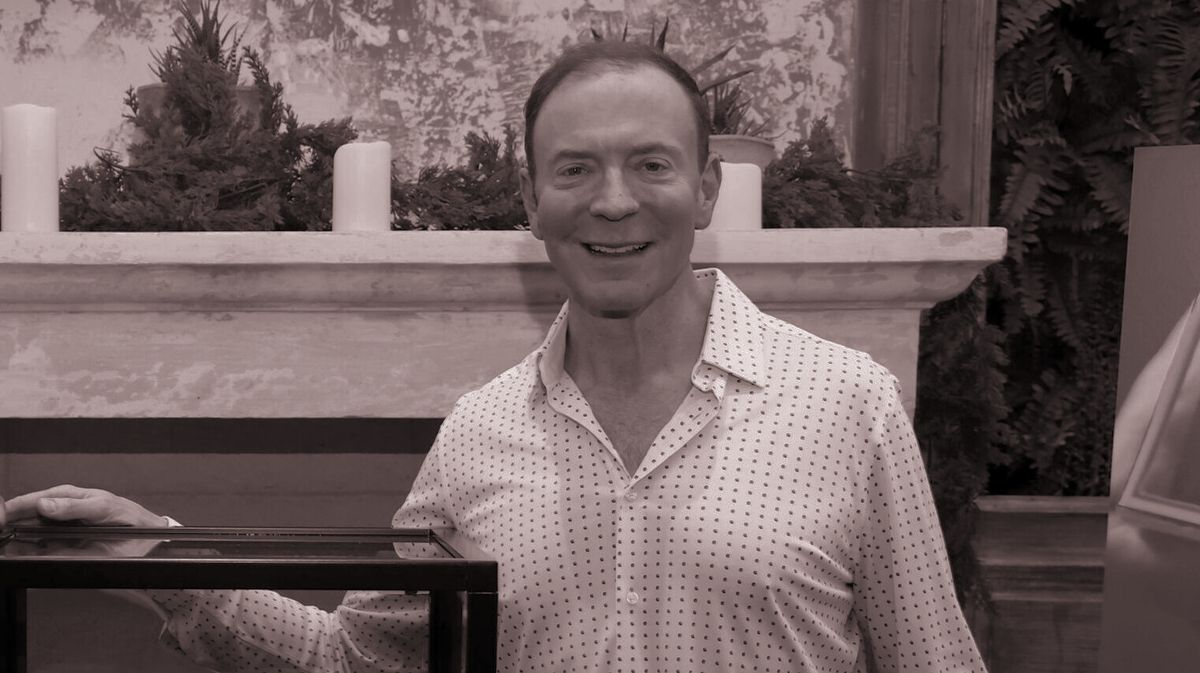
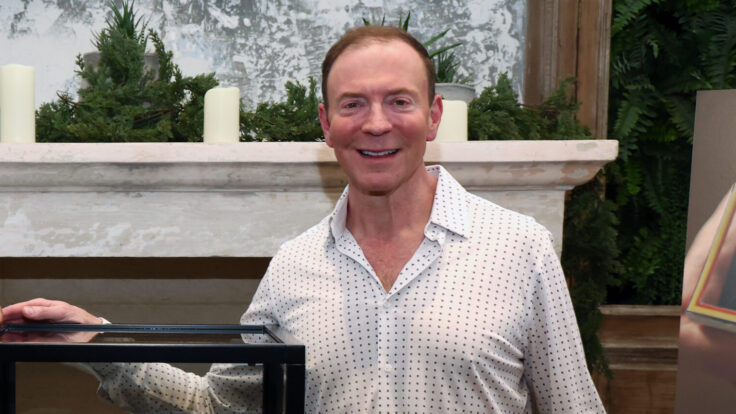
Also over the holiday, Netflix dropped the third season of The King of Collectibles: The Goldin Touch—the popular reality show that goes behind the scenes at Ken Goldin’s sports collectibles auction house. So we sent guest contributor Alex French to the show’s launch party in
Philadelphia to profile Goldin, his company, and his transformation into a bona fide television star. We’ll get to all of that below the fold.
Also mentioned in this issue: Michael Plummer, Michael Jordan, Dave Amerman, Peyton Manning, Bob Ross, Pablo Escobar, Lionel Messi, Kate Winslet, Shaquille O’Neal, Ken Griffey
Jr., Barry Bonds, Ted Williams, Joe DiMaggio, Leonard Nimoy, Mark Hamill, Steven Cohen, Kevin Durant, Scott Boras, and many more…
But first…
|
- Michael
Plummer dies at 67: Heritage Auctions announced just before the holiday that Michael Plummer, who recently joined the company as an executive, had died suddenly earlier in the month. Plummer had a long career in the auction world, beginning at Sotheby’s and continuing at Christie’s. He was then a principal at Artvest, the advisory firm that launched what became the TEFAF New York art fair. There will be a memorial service later this winter.
-
Rolex’s $500 million resale program: The Wall Street Journal has some interesting numbers on Rolex’s certified preowned watch program. Rolex accounts for one-third of the $50 billion-a-year primary market in Swiss watches. The secondary market is estimated to be about half that size, and though Rolex does not make a
profit from its certified preowned program, it has undeniable benefits for the brand. Since Rolex’s production is limited to 1.2 million watches a year, the secondary market is where a great many of the brand’s customers are able to skip the waitlist and acquire their first watch.Customers are willing to pay 28 percent more on average for a used Rolex if it is certified by the company as genuine, has been maintained or restored to factory specifications, and has an additional two-year
warranty from the Swiss manufacturer. Secondary market examples of popular models, like the GMT Master II with the blue and red bezel, can sell for more than twice the current retail price. The WSJ cites an average price of $12,150 with sales tax for the model. Resale websites carry the same watch for $22,750. So far, the certified preowned program at Rolex, which was started in 2023 but has gained momentum this year, has accounted for $500 million in sales in 2025.
|
Now, let’s get to Ken Goldin…
|
|
|
The reigning king of collectibles is celebrating a third season of his Netflix show and a
new stability in the collectibles and memorabilia market, which is better informed and more properly authenticated than ever. That doesn’t mean he’s above selling a Cheeto if there’s a market for it—especially if it makes for good TV.
|
|
|
Last winter, Goldin Auctions took receipt of a bizarre consignment: a one-of-a-kind, 3½-inch Flamin’ Hot
Cheeto with an unmistakable resemblance to Charizard. Of course, the auction house, whose headquarters is situated next to a hospice center in a New Jersey industrial park, doesn’t deal exclusively in Pokémon-shaped snack foods. Over the past three decades, Goldin has brokered the sale of ultra-rare comic books, treasured pop culture relics, and traditional sports memorabilia, from Babe Ruth–autographed baseballs to the Nikes worn by Michael Jordan during his
infamous Flu Game in the 1997 NBA Finals. In fact, they’ve brokered so many collectibles that it’s easy to conflate Goldin Auctions with the sports memorabilia market itself. At least, Goldin would be happy for you to believe that.
Ken Goldin, the founder of the firm and a master of on-the-spot appraisal, was incredulous when presented with the oddly shaped corn puff. “It’s friggin’ food,” he told me, recounting the episode. “Who was going to buy it?” But Goldin’s top
lieutenant, Dave Amerman, had a gut feeling and a bigger vision for “Cheetozard,” as the morsel was christened by Goldin’s office staff. It had the same aura of folk-art absurdity as the slice of toast bearing the image of Jesus that once sold for $25,000, but with the added benefit of appealing to two fervent constituencies: Pokémon obsessives, and a growing class of collectors willing to spend serious cash on food novelties.
Perhaps most importantly, it would make for
good television. Goldin was then in the process of filming the third season of his Netflix reality series, King of Collectibles: The Goldin Touch. Months earlier, Goldin had entered into a partnership with eBay, and Cheetozard would give them a chance to test the online auction behemoth’s global reach. Amerman believed that with the right promotion, Cheetozard could become a viral sensation. So he and the Goldin marketing department put together a pithy video and blasted it
out.
The plan worked. Morning shows and news programs picked up the Cheetozard story, and social media did the rest. When the Cheeto went up for auction, mounted in a custom “Pokémon card” and encased in a clear protective display, it drew 60 total bids. In the end, the gavel dropped at $72,000, for a total price, including buyer’s premium, of $87,840. Amerman told me that the winner, whose name was not made public, is a dedicated Pokémon collector who happens to own a
food-processing company. “It goes to show that anything can be a collectible if somebody wants it,” Goldin told me. “I don’t get to decide. It’s in the eye of the beholder.”
The sale, however silly, suggested that the collectibles market—after a Covid-era spike in values followed by the consumer belt-tightening driven by post-pandemic inflation—might finally be finding a steady groove. Or maybe Cheetozard was simply a reminder of the sheer quantity of dumb money floating around in the
world.
|
To celebrate the third season of King of Collectibles, which has proven to be a reliable hit,
Netflix took over a ballroom at the W in Philadelphia, where friends of the production, including Logan Paul, noshed on short rib sliders and took full advantage of the open bar. Brought to Netflix by Peyton Manning’s Omaha Productions, the show follows Goldin’s staff as they crisscross the globe in search of auction-worthy consignments, then brace themselves through live sales, watching in real time as each lot strains toward—or shoots past—its
projected estimate. It plays like Selling Sunset with a Jersey accent, borrowing the stakes and spectacle but sparing us the brawls and backstabbing.
The artifacts range from breathtaking to bizarre—game-worn jerseys and iconic comic books feel pedestrian next to a papal zucchetto. There’s a Bob Ross original; a leather-bound cartoon book signed by Pablo Escobar and his gang of psychotic sicarios; a gnarled, mummified hand, severed at the wrist,
believed (albeit not by everyone) to have belonged to Cleopatra. There’s a tiny polyester jersey once worn by a 5-year-old Lionel Messi, and Kate Winslet’s pink, embroidered overcoat from Titanic.
Goldin, who’d been buying and selling cards since he was twelve, founded The Score Card Inc. with his father Paul in 1986, signing athletes to exclusive contracts for autographs, personal appearances, and the like. By the early 1990s, the company had gone public and had deals with well over 300 athletes across all four major sports, ranging from ascendant stars like Shaquille O’Neal, Ken Griffey Jr., and Barry Bonds to legends including Ted Williams and Joe DiMaggio. Between 1991 and 1993, it expanded aggressively into licensed trading cards, professional wrestling, and entertainment properties, securing rights tied
to Star Wars and Star Trek and signing stars like Leonard Nimoy and Mark Hamill.
Still, the collectibles market lives and dies with sports memorabilia, and a series of sharp market shifts, with buyers suddenly hoarding unopened card sets and manufacturers flooding stores with new product, overinflated the market. When the bubble burst, card shops closed and an entire generation of collectors learned the hard way that nostalgia without
limits has a short shelf life. In 1994, all four major sports experienced labor stoppages, and The Score Board was hit with $40 million in merchandise returns. Goldin left the business in late 1997, and it declared bankruptcy shortly thereafter.
|
His reascent didn’t take long. In the late ’90s, mega-agent Scott Boras hired him to handle
marketing and licensing deals for his clients, and QVC reached out for his services as well, putting him on camera, live, and giving him a short time period to move a product before the clock ran out. Goldin told me it forced a discipline: “Know the item, understand the setting, read the moment, and keep talking.” For a time, televised retail was good to Goldin. But in 2011, as the likes of Katy Perry and Kim Kardashian began appearing on the home shopping
channels to promote products, air time became constrained and he moved on.
Goldin launched his own online auction house the following year. “My thinking was that I know this world better than anybody,” he explained. “I can bring fresh product to market because of all the relationships I cultivated. I have the ability to reach ordinary sports fans.” In his first year, he made roughly $800,000 in sales. Growth came gradually, as the operation established itself in the lower ranks of the
auction world. A turning point arrived in 2016, when Goldin secured a T206 Honus Wagner on consignment and made the absolute most of it, staging what it billed as the Great American Card Auction—a tightly curated sale that ranged across eras and categories, which also included a signed 2003 LeBron James rookie card. The Wagner sold for $3.12 million, a record at the time, and the James card, issued when he was still a teenager, brought in $312,000—the first
post-1980 card to cross the six-figure threshold, and a signal to collectors holding modern material that the ground had shifted.
That shift coincided with another structural change in “the hobby”: the growing dominance of Professional Sports Authenticator, better known as PSA, which introduced grading standards for sports cards and made it possible for buyers to transact with confidence at a distance. Grading, which had been a staple in the markets for other collectibles, including coins
and comic books, helped turn cards into something closer to a financial instrument—fungible enough to trade, rare enough to compete over. Now, Goldin’s Netflix show encourages collectors to get their cherished items PSA-graded.
By 2019, sales had reached roughly $27 million, placing Goldin behind only Heritage among sports-focused auction houses. The next year reset the scale entirely. As the pandemic locked down much of the country, the market for collectibles surged. Goldin’s sales
jumped to more than $100 million. But he had lived through earlier cycles and recognized the familiar signs of excess: Prices rose across the board, often without much distinction between strong material and weak.
During the collectibles boom of early 2021, Goldin Auctions raised roughly $40 million in a funding round led by The Chernin Group, with participation from Mark Cuban and Kevin Durant. (Chernin is also an investor in Manning’s production
company.) That July, the company was sold to Collectors Holdings, led by Nat Turner, who sold his cancer research app to Swiss pharmaceuticals firm Roche for $1.9 billion in 2018 before starting Collectors.com with funding from New York Mets owner Steve Cohen and fellow hedge funder Dan Sundheim. That deal folded the auction house into a broader, vertically
integrated platform that included PSA, which Collectors had also acquired.
The market cooled, of course, in 2022 and 2023, with prices dipping and speculators retreating, but what came next was a surprise, at least to Goldin. Rather than losing momentum, “the hobby” retained a large share of its new participants, and attracted still more. Today, Goldin argues, the market is healthier than it’s ever been—not because prices are uniformly high, but because buyers have become more
discerning. The correction, in his view, forced a kind of education. Great items now command higher prices than weaker ones (the occasional Cheeto notwithstanding). That distinction, he believes, leaves the market sturdier—and him more bullish on collectibles than ever.
|
By the time King of Collectibles arrived on Netflix in 2023, Goldin’s business had crossed a pivotal
threshold. The exposure simply accelerated a feedback loop that had already formed. Goldin’s auctions produced headline prices, and the headlines attracted yet more consignments that reinforced his stature. That stature is reflected in, among other things, the company’s 350,000 followers on Instagram. “We kill everybody on social media,” Goldin said.
Goldin’s present-day relevance comes from price authority: His auction results don’t merely reflect the market; they anchor it. When a
Goldin lot clears at a record number, that price becomes a reference point for dealers, collectors, and investment funds across platforms. Mainstream outlets including ESPN and Bloomberg routinely treat Goldin sales as market indicators.
In 2024, Goldin’s pricing authority helped set the stage for a strategic move by eBay, which acquired Goldin outright from Collectors.com in a multipart deal involving the sale of eBay Vault to PSA, which is still owned by Collectors.com. In acquiring
Goldin, eBay wasn’t just getting an auction platform; it was buying the attention economy that the Netflix exposure, social reach, and price authority helped create.
The market for sports collectibles is currently estimated to be around $38 billion, and it’s projected (or hoped) by some to reach a couple hundred billion in the next decade. For now, value continues to accrue where attention does, and Goldin—part auctioneer, part narrator—stands at the center of that
correlation, translating sentiment into price, one improbable object at a time. Or perhaps collectibles now serve another purpose. In a market jittery with algorithmic trading, blockchain assets, and the potential bubble of artificial intelligence, physical objects—authenticated, graded, and stubbornly analog—offer a kind of reassurance. “If you go on ChatGPT and ask who the most knowledgeable person in collectibles is, it spits me out,” Goldin said. “Collectibles are easier to
explain; it’s easier to help people understand them as an alternative asset class—something that can function as a hedge against inflation. Passion matters, too. When people care deeply about what they’re buying, it holds up better.”
|
Thanks, Alex. I’ll be back again after the New Year. Then we will be back to it four times a week. Can’t
wait.
M
|
|
|
Finally, a media podcast about what’s actually happening in the media—not the oversanitized, legal-and-standards-approved
version you read online. Join Dylan Byers, Puck’s veteran media reporter, and Julia Alexander, a longtime media analyst, as they sit down with TV personalities, moguls, pundits, and industry executives for raw, honest, sometimes salacious conversations about the business of media and its biggest egos. New episodes publish every Tuesday and Friday.
|
|
|
The ultimate fashion industry bible, offering incisive reportage on all aspects of the business and its biggest players.
Anchored by preeminent fashion journalist Lauren Sherman, Line Sheet also features veteran reporter Rachel Strugatz, who delivers unparalleled intel on what’s happening in the beauty industry, and Sarah Shapiro, a longtime retail strategist who writes about e-commerce, brick-and-mortar, D.T.C., and more.
|
|
|
Need help? Review our
FAQ page or contact us for assistance. For brand partnerships, email ads@puck.news.
You received this email because you signed up to receive emails from Puck, or as part of your Puck account associated with {{customer.email}}. To stop receiving this newsletter and/or manage all your email preferences, click here.
|
Puck is published by Heat Media LLC. 107 Greenwich St., New York, NY 10006
|
|
|
|