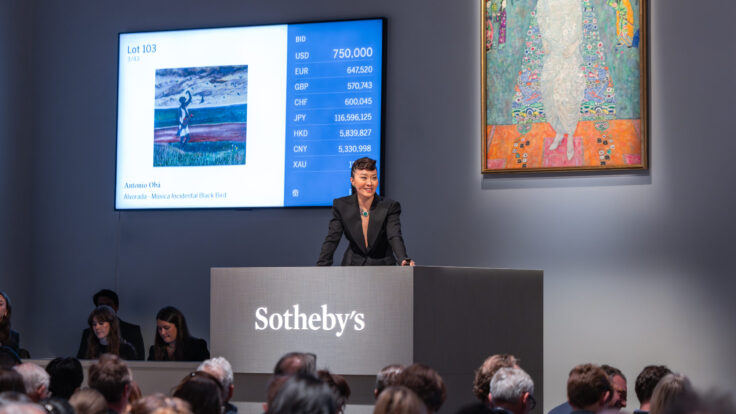
Welcome back to Wall Power. I’m Marion Maneker, happy to be back after
a holiday weekend of sailing in the rain—and sleeping.
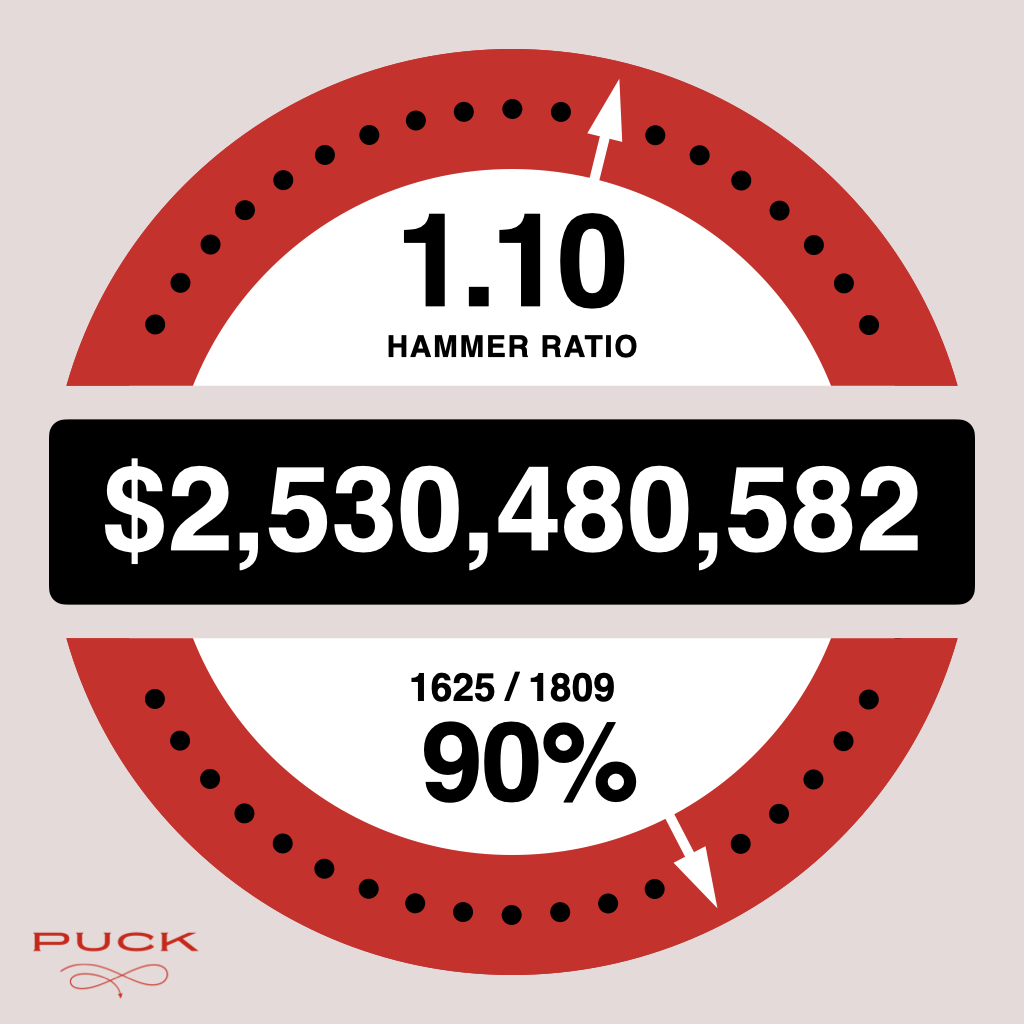
The sleep was mostly to make up for the hectic pace of last week’s auctions. Speaking of which, I have a total for all of the sales, and some of the other important metrics, in The Dial™ below. Next week, I’ll do a deeper data analysis. But the quick summary is that the art market is in a good place right now. Let’s see if we can keep it there for a while.
Tonight, Glenn Adamson is back with his Hot Hand column
spotlighting the artists, especially with a craft background, whom we’ll all be talking about in a year or two. He’ll introduce us to Patrick Bongoy, the Congolese artist who works with the rubber from tire inner tubes. Up top, Christie’s has a few new board members, there’s a verdict in the grisly murder of an art dealer, Basic.Space goes global, and Munich auction house Ketterer Kunst has a lost Kandinsky painting on offer that ought to make a splash.
If
you’re not a Puck subscriber, fix that now. If you want to get in touch with me, hit reply to this newsletter or contact me on SMS, WhatsApp, or Signal at +1.917.825.1391.
Also mentioned in this newsletter: François-Henri Pinault, Guillaume Cerutti, Bryan Lourd, Daniel Sikkema, Brent Sikkema,
Wassily Kandinsky, Chakaia Booker, El Anatsui, Hamed Ouattara, Ibrahim Mahama, Magdalena Abakanowicz, Anni Albers, Barbara Chase-Riboud, Sheila Hicks, Ann Coxon, and more. |
|
|
|
A MESSAGE FROM OUR SPONSOR |
Writing essentials for the journeys ahead. Explore the new Montblanc collection.
|
|
|
|
-
All in the Pinault corporate family…: On Friday, Christie’s announced that François-Henri Pinault, who owns the auction house through Artémis, the family holding company, will become the new chairman of its board of directors, a position that had been open since Guillaume Cerutti left it, in April. The house also announced that Bryan Lourd, the C.E.O. of the talent agency CAA, will join the board. The Pinaults became CAA’s
majority shareholder when Artémis purchased private equity fund TPG’s stake, in 2023. Lourd is also a trustee of LACMA. (Disclosure: TPG is an investor in Puck.)
- Daniel Sikkema convicted: The Wall Street Journal reported on Friday that Daniel Sikkema, the estranged spouse of art dealer Brent Sikkema, had been
convicted of conspiring to kill his former partner amid a bitter divorce. The dealer was murdered in Rio de Janeiro two years ago by a Cuban American with ties to Daniel. (For a quick summary of the case from our partners at Air Mail, click
here.)
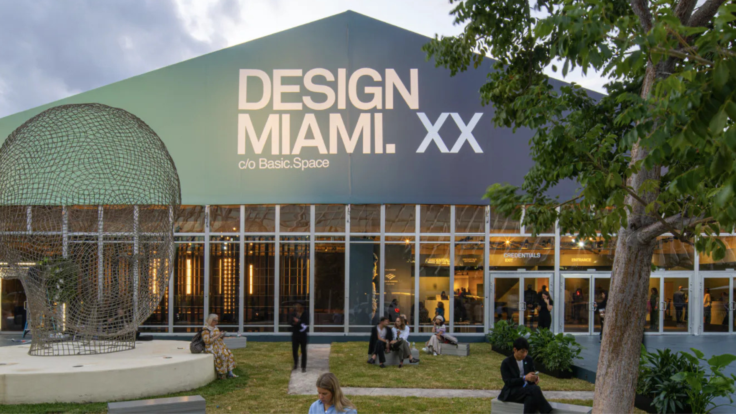
- Basic.Space in London: After holding similar events in Los Angeles and New York, Basic.Space is expanding its live programming to London. Their three-day event at the Old Selfridges Hotel opens with an invitation-only preview on June 12, followed by two days of public viewing on June 13 and 14. The London show combines
design vendors like Carpenters Workshop Gallery and art dealers like Platform, which was founded by the Zwirner family.
|
The Dial: New York’s May Auction
|
As you can see above from The Dial™, the New York sales at Bonhams, Christie’s, Phillips, and
Sotheby’s made a healthy $2.5 billion last week. The overall hammer ratio—the aggregate hammer price of all sold lots divided by the aggregate estimate for all lots offered, calculated from data provided by ARTDAI—is a positive but not at all overheated 1.10. So the art market has returned to a level of solid health without runaway enthusiasm, which makes sense in this turbulent economic and geopolitical environment.
Most noteworthy here is the very high 90 percent sell-through rate across
all of the auctions. It suggests that the turn toward historical art is building momentum, and buyers have an appetite to see more historical art on offer. That’s a good thing, considering the many collections created in the postwar period that will continue to come to term in the next few years. In other words, there seems to be real demand for what the “great wealth transfer” has to offer the art market. |
|
|
|
A MESSAGE FROM OUR SPONSOR |
Writing essentials for the journeys ahead. Explore the new Montblanc collection.
|
|
|
|
Ketterer Kunst to Auction Lost Kandinsky
|
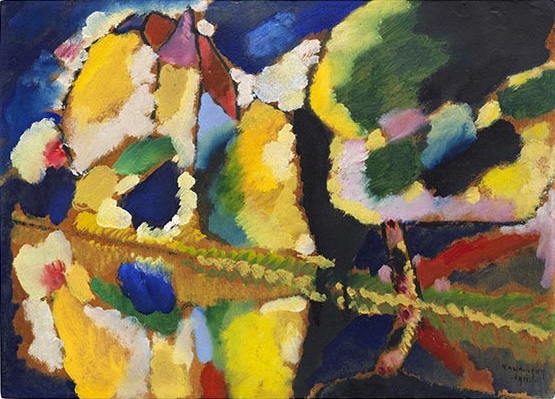
Wassily Kandinsky, Villa Seeburg am Staffelsee (1911). Photo: Courtesy of Ketterer
Kunst |
On June 12, the Munich auction house Ketterer Kunst will hold a sale featuring a small painting by
Wassily Kandinsky. The work, Villa Seeburg am Staffelsee, from 1911, was previously only known through a sketch in the artist’s notes, and hasn’t been exhibited in 100 years—Nell and Herwarth Walden, important collectors from Berlin, purchased it directly from the artist, and it was later sold to collector Oskar Kirchner, whose family has held it ever since. Larger works from this period, when Kandinsky was making the
transition to abstract art, have sold for almost $45 million, and smaller works—albeit larger than this 13-by-18-inch painting—have sold for around $25 million. But the consignors have taken a more conservative approach to the estimate by setting it at just €2 million, or $2.3 million. That should attract the
attention of serious collectors around the world.
Now here’s Glenn with another artist to watch… |
|
|
|
Patrick Bongoy weaves, stretches, and manipulates the discarded rubber that
afflicts Africa, transmuting waste not only to evoke environmental exploitation or his homeland’s painful colonial past, but to express the power of creative rebirth. |
|
|
|
What happens to your car’s tires when you’re through with them? They might end up in Africa, which
has become a dumping ground for waste of all kinds from Europe and America. This low-value trade is often justified as a form of recycling, but Africa is already besieged by millions of its own waste tires, and its relatively small number of industrial processing facilities can’t keep up. The result is an avalanche of rubber. Huge piles of tires sit by the roadsides, collecting water where malarial mosquitoes breed. Eventually, many tires are simply burned, sending choking smoke and pollutants
into the atmosphere.
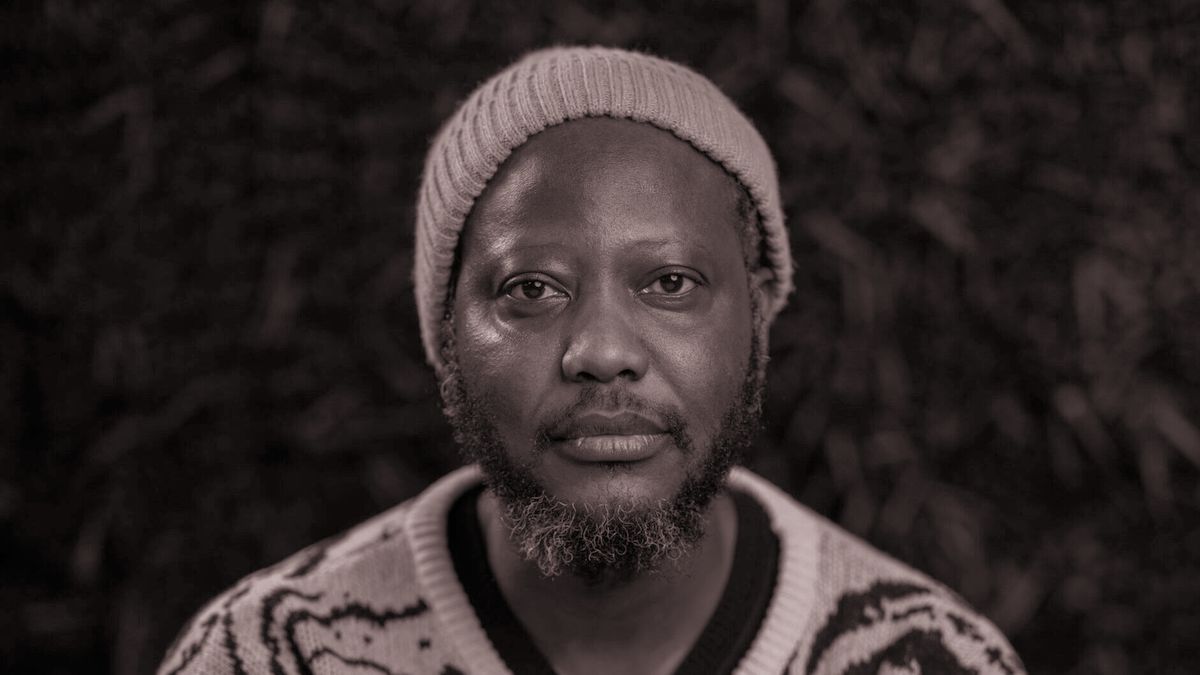
Patrick Bongoy has made a point of puncturing this ecologically disastrous situation, letting in revealing light. Born in 1980 in the Democratic Republic of the Congo, he became an artist at a young age, partly for lack of alternatives; if he wanted a toy, he had to make it himself, from whatever materials were available. He went on to study painting at the Academy of Fine Arts in Kinshasa. Then, at age 23, after creating a protest artwork that was
critical of the Congolese regime, he was forced to flee to South Africa. There he began working with waste rubber, gradually realizing large-scale wall hangings and figural installations. To this day, he remains in exile in Cape Town.
Rather than using thick, treaded tires—as the celebrated African American sculptor Chakaia Booker does—Bongoy focuses on thin, pliant inner tubes. He used to scavenge them from scrapyards himself, but as the ambition of his studio has
increased, he has come to rely on a Zimbabwean salvage team whose main business involves repairing the tubes for re-use, or else cutting them up to use for slingshots or D.I.Y. plumbing gaskets. In Bongoy’s hands, this material takes on animate life. Using advanced basketmaking techniques, he and his assistants gradually build up dense textures that variously suggest feathers and scales, grasses and leaves, roof shingles and ships’ rigging. |
|
|
|
He broadens the palette by integrating other materials, like packaging plastic, jute sacking,
cloth, and ropes—and, in some cases, leaves the metal valves on the tubes intact, letting them stick out like spines. The rubber itself is either black or red, the traditional colors of revolution. |
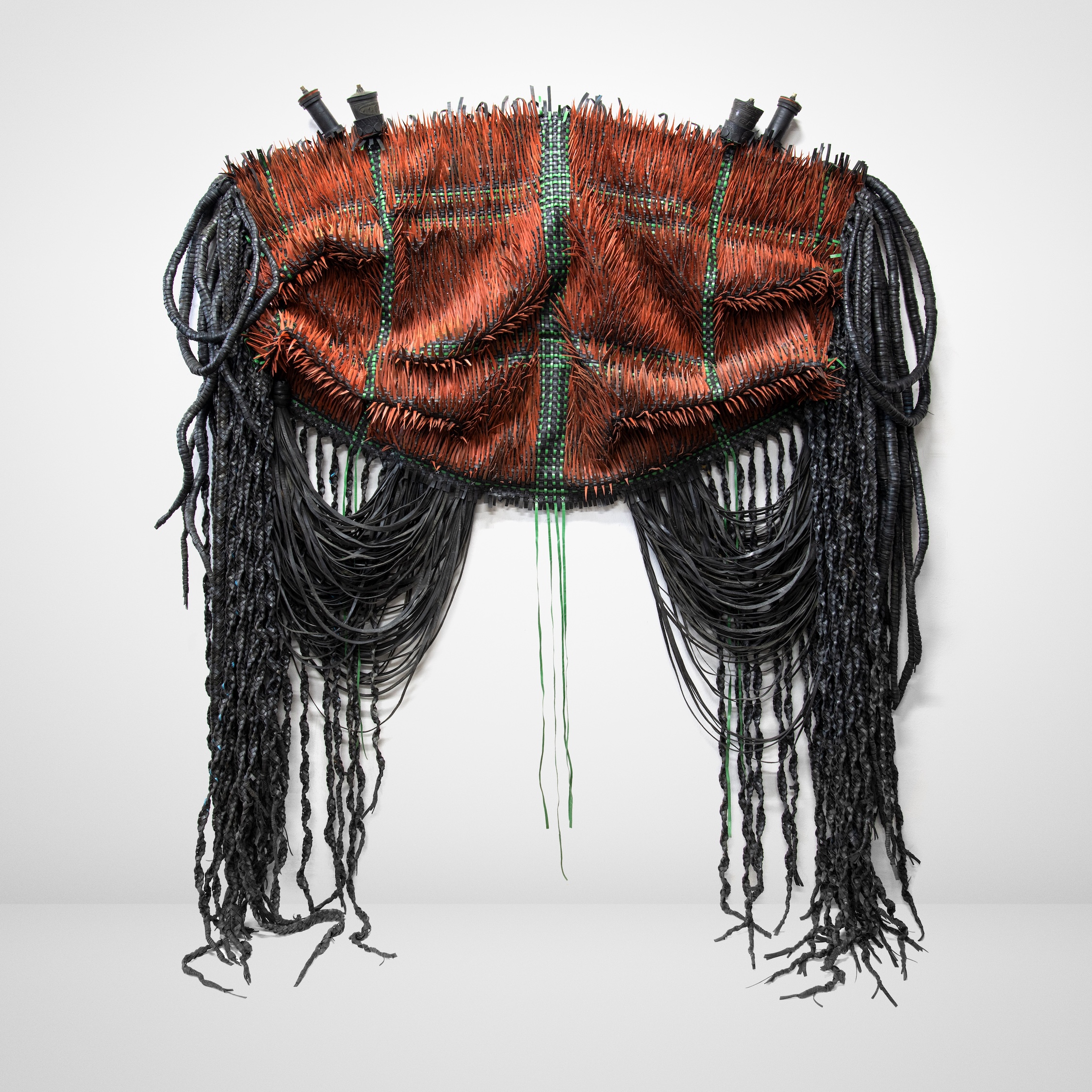
In Bongoy’s monumental wall hanging Way of Ancestors, from 2026, suspended sheaves of
braided rubber frame the composition, resembling an African woman’s luxuriant tresses but also the whips of plantation overseers. Roosting at the top are four kerosene lamps, a motif that Bongoy associates with frequent power cuts in the D.R.C., a regular reminder of its failures as a state. The work’s primary material summons a deeper, still darker history: the colonization of the Congo by Belgium, in the late 19th century, a brutal campaign of exploitation and violence that was motivated and
financed by the extractive-rubber industry. |
Patrick Bongoy, Way of Ancestors (2026). Photo: Courtesy of Sarah Myerscough
Gallery |
From the threads of this painful past, Bongoy weaves an emblem of glorious emergence. More than 2
meters high and 2 meters wide, Way of Ancestors has the aspect of a great bird with its wings furled, ready to take flight. One look is enough to see that recycling detritus, for him, is not just a practical solution or a method of social commentary. Rather, as with other leading African artists and designers like El Anatsui, Hamed Ouattara, and Ibrahim Mahama, Bongoy transmutes waste as a way to express the power of imaginative
rebirth. |
I encountered Way of Ancestors at Sarah Myerscough Gallery, in London, in a survey of
contemporary textile art. Simply entitled Thread, the exhibition emphasized Bongoy’s patient craftsmanship as well as his debt to fiber artists of other geographies, such as Magdalena Abakanowicz, Anni Albers, Barbara Chase-Riboud, and Sheila Hicks. Though those names have always commanded respect, others working in the genre have suffered comparative neglect, and even mockery; someone seems to always have a joke to make about
macramé plant hangers and shag rugs. This has changed dramatically in the last few years, however. The Myerscough show—partly inspired by Tate Modern’s recent retrospectives on Albers and Abakanowicz, both curated by Ann Coxon—is only the latest project to draw attention to fiber art, which is often imposing in scale but seductive in its detail, an accumulation of slow, skilled structures.
It would be a mistake, however, to understand Bongoy as simply the African exponent
of a Euro-American craft tradition. The formal affinities are there, but ultimately his work is anchored in his own experience, and that of his country. This year he was invited to join eight other artists in the D.R.C.’s first-ever national pavilion at the Venice Biennale: Simba Moto! Seize the Fire! Saisis le Feu! (Bongoy dryly describes the trilingual title, which repeats the same phrase in Lingala, English, and French, as “pretty much literal.”) In addition to two of his signature
wall hangings, he has created a group of figural sculptures that are in communion with themselves. One seated figure holds a baby, perhaps symbolizing the future; a three-legged dog is caught mid-hobble, a poignant emblem of endurance. As Bongoy notes, “Ours is not the only struggle.”
The installation perfectly expresses Bongoy’s complex and contradictory relationship to his homeland. Completely sheathed in patches of rubber, the figures seem somehow both armored and vulnerable. Bongoy
thinks of the work as a portrait of cross-generational trauma and individual futures foreclosed. His sculptures are allegorical stand-ins for young Congolese who find themselves without prospects, “in a place of limbo,” as he puts it, “exposed to so many things, but given no opportunities.” What will happen to these people, and to their children, and their children’s children?
Bongoy, for one, knows that art can only do so much. All the difficult labor, all the reclaimed material that
goes into his work, is nothing compared to the scale of economic exploitation and environmental degradation that Africa faces today. But he does what he can. “This is the fundamental thing about people where I come from: Life is built of hope,” he told me. “Even in an ongoing situation of socioeconomic failure, beautiful things can arise. I myself am a good example.” |
Thanks, Glenn. That was great. I’ll be back tomorrow with more on the May auction cycle. Join the
Inner Circle so you don’t miss out.
Yours,
M |
|
|
|
Puck founding partner Matt Belloni takes you inside the business of Hollywood, using exclusive reporting and insight
to explain the backstories on everything from Marvel movies to the streaming wars. |
|
|
|
Unique and privileged insight into the private conversations taking place inside boardrooms and corner offices up and
down Wall Street, relayed by best-selling author, journalist, and former M&A senior banker William D. Cohan. |
|
|
|
Need help? Review our FAQ page or contact us for assistance. For brand partnerships, email ads@puck.news. You received this email because you
signed up to receive emails from Puck, or as part of your Puck account associated with {{customer.email}}. To stop receiving this newsletter and/or manage all your email preferences, click here. |
Puck is published by Heat Media LLC. 107 Greenwich St., New York, NY 10006 |
|
|
|
|