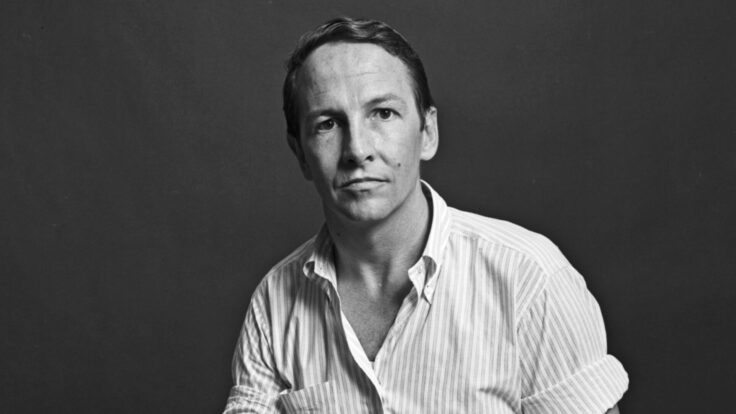
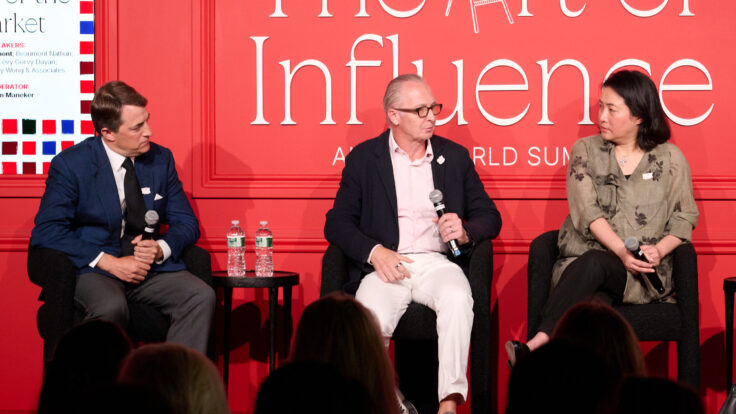
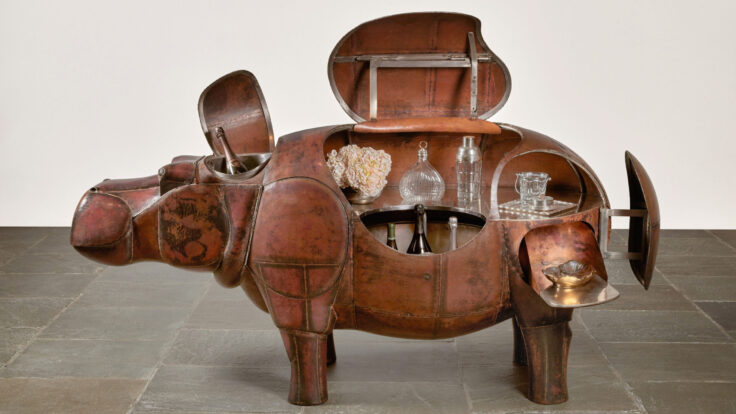
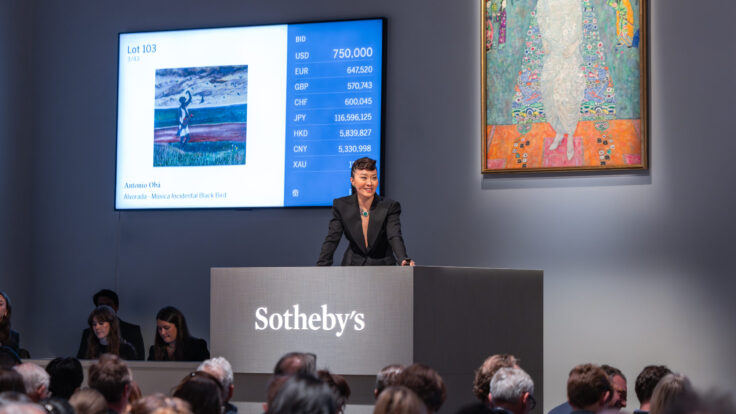
Happy New Year! And welcome back to Wall Power. I’m Marion
Maneker.
Tonight, my colleague Mark Healy interviews Netflix founder Reed Hastings about his post-Netflix project, the Powder Art Foundation, inspired by New York’s Storm King Sculpture Park, that’s integral to his Utah real estate venture, Powder Haven. How does a massively successful entrepreneur approach art? That’s the
conversation tonight.
Also mentioned in this issue: Gordon Bunshaft, Norman Foster, Leo Villareal, David Rockefeller, Isamu Noguchi, Jean Dubuffet, Jamie Dimon, Maya Lin, Gerhard Richter, Refik Anadol, Patty Quillin, Nobuo Sekine, Nancy Holt, Davina
Semo, Kayode Ojo, EJ Hill, Griffin Loop, James Turrell, Jenny Holzer, Alex Zhang, Eli Broad, Don Fisher, and many more…
But first…
|
- Chase’d
away: If you commute to New York via Grand Central Terminal, as I do, you’ve undoubtedly spent the last five or more years monitoring the transformation of 270 Park Avenue. The 1960 Union Carbide building, designed by modernist master Gordon Bunshaft, is now the JPMorgan Chase headquarters ziggurat—an extremely refined example of Norman Foster’s high-tech modernism. The bank has commissioned five new artworks for the building, which its website asserts will
“enrich the cultural fabric of New York City.” Celestial Passage, a programmable LED artwork by Leo Villareal, appears at the top of the tower and enhances “New York City’s skyline and streets with public art,” or so the bank claims.Public art is in the bank’s corporate DNA. The Chase of JPMorgan Chase
was run for decades by the legendary collector David Rockefeller—his own downtown headquarters at One Chase Plaza, another Bunshaft-designed building finished in 1960, included a public plaza and sunken garden designed by Isamu Noguchi, as well as Jean Dubuffet’s Group of Four Trees, which he described in 1970 as his “gift to the bank and the downtown community.”
Times have changed, though. The new 270 Park, a decade-long
ambition of C.E.O. Jamie Dimon, is as much a Midtown fortress as a public good. Signage extols the expanded public plaza along Madison in front of A Parallel Nature, the massive Maya Lin stone wall that adorns the street-level facade on that side of the building. But if you, like me, want to get a better look at the two Gerhard Richter works, Color Chase One and Color Chase Two, that adorn the lobby, best of luck to
you.
On Tuesday, I was passing by 270 Park on my way to catch a Metro-North train and tried to get a peek. Photographs suggest the Richters were not the nonagenarian’s best work, but you never know until you stand in front of a piece of art. I assumed it would do no harm to assess the gargantuan Richters from just inside the lobby, but still
outside of security. (I didn’t expect anyone to let me into the elevator bank to see the Refik Anadol…) But a security guard bolted out into the 25-degree weather before I could make it through the revolving doors. No dice, I was told. “This is private property.”
|
Now, let’s get to Reed Hastings…
|
|
|
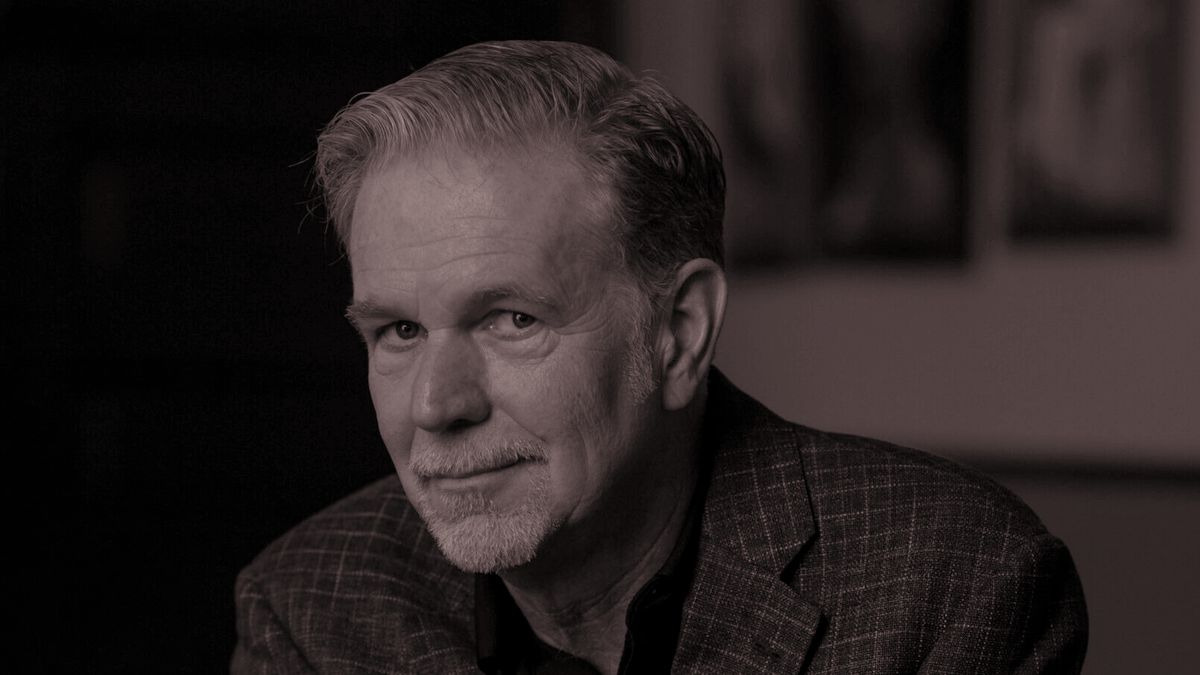
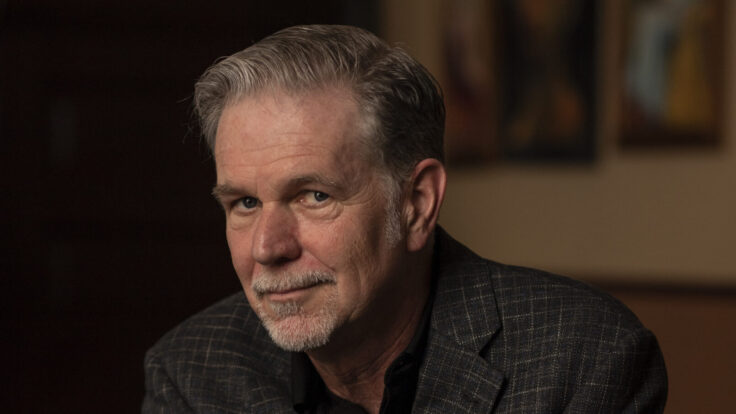
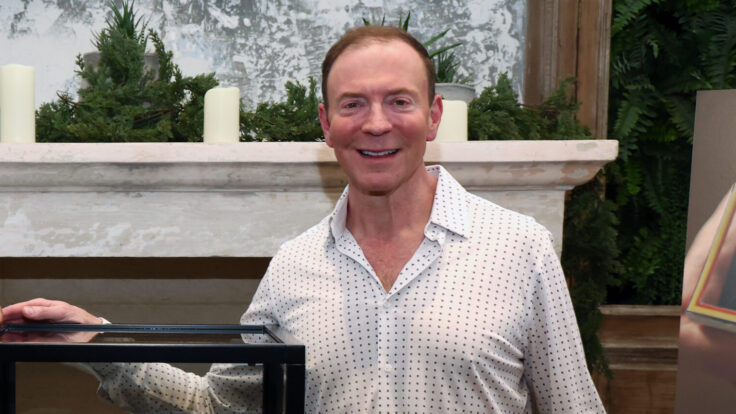
Since stepping down as C.E.O. three years ago, Netflix co-founder and executive chairman
Reed Hastings has largely devoted himself to philanthropy and Powder Mountain—his Utah ski resort that now includes an ambitious public art park and is changing the very notion of a mountain town.
|
|
|
Since founding Netflix in 1997, Reed Hastings has had plenty of opportunities—and no
shortage of invitations—to start collecting art. But it’s only now, three years after ascending from C.E.O. to executive chairman, that Hastings has gotten into art in a big and rather visible way: creating an art park on Utah’s Powder Mountain, the ski resort he acquired soon after stepping back from day-to-day management of the company he’d led for 25 years. The Powder Art Foundation is accessible to the public year round—by foot, by ski,
by mountain bike.
The outdoor sculptures are part of the overall appeal of Powder Haven, the exclusive public-private ski resort/real estate development whose lots are part of Hastings’ remit to sell. The art park, which is still in its early stages, includes slope-side pieces by Nobuo Sekine, Nancy Holt, Davina Semo, Kayode Ojo, EJ Hill, and Griffin Loop, whose massive metal paper plane
is incorporated into a mountain biking trail and precedes Reed’s involvement. Works by James Turrell, Jenny Holzer, and others are coming.
I spoke to Reed in December, less than a week after Warner Bros. Discovery announced it had accepted Netflix’s $83 billion offer for its Studios and Streaming assets, a deal Paramount Skydance is contesting with a hostile bid. The outcome likely won’t be settled for a while. For his part, Hastings seemed to be eager to
wind down the year alongside his wife, Patty Quillin, the philanthropist and education advocate, and to get up to Powder Mountain to snowboard among the artworks he’s made possible. As always, this interview has been edited for length and clarity.
|
In Conversation With the Mountain
|
Mark Healy: Is what you’re accomplishing with the Powder Art Foundation satisfying in a different way from
building Pure Software, your first company, or Netflix, or even your philanthropic work?
Reed Hastings: Very much so. I do all this philanthropy around the world, and there’s the charter schools, there’s Netflix, and somehow it’s just not visual. As a percentage of assets and time, Powder has been quite low, and yet it has this incredible draw and, if I’m being honest, this sense of pride of being associated with it, because it’s really cool. The Sekine we put
in this summer is fantastic, and meeting his widow and seeing it already in two different seasons—it just makes my heart sing. Everything else in my life is very functional—building a big company and getting a culture working, doing all that—and this is more emotional.
Have you had the experience of just stumbling upon any of the art that you’ve commissioned or acquired while snowboarding or hiking? What was that moment like?
The
first one was Davina’s bells. We’ve got them strung up between trees, and you can ski to it and it’s got a chain down the middle that allows you to ring the bells. She casts these 3-to-7-foot-tall bells, and they ring out across the landscape. It’s a little bit discreet—they’re in the trees—so you kind of gotta know. And of course, it’s an Instagram moment, and that helps spread the word. Then we just put in the Nancy Holt, which is a series of outdoor fire pits in a very unique grid
representing the constellations. I’ve only been to that once, but in the evening when it’s lit, it’s pretty remarkable.
And mostly, the team— Alex Zhang and Alex Magnuson and Matthew Thompson—operate independently. I’m not involved, nor really sophisticated enough to be involved in the picking, so a lot of it is installed, and then they tell me about it. So I really do get to experience it de novo. That’s very fun, and they’ve got
incredible taste, and it’s deeply satisfying to see it coming together.
Are people in the art world ever surprised by how hands-off your approach is?
When I think of people I’ve worked with a lot, like Eli Broad or Don Fisher, they’re very proud of their curatorial chops. They’re a generation older than me, so maybe by the time I’m 80 I’ll be like that—but I don’t think so. I wrote a whole book for
Netflix on freedom and responsibility and giving people a brief—in this case, making a reflective place where the pieces are in conversation with the mountain—and the money, and then letting them go. So it’s consistent with the whole culture I developed at Netflix.
|
Do you have a history of collecting art?
No, my time at Netflix was work and family,
and that’s it. I really didn’t indulge or develop any passions outside of that. I watched a lot of films and went to film festivals, but that was partially for work. So we’ve never owned anything worth stealing. All this is the first capital-A art I’ve ever been associated with.
Creating public art experiences comes with an extra obligation because the general public is going to have to live with it for a long time. Do you just trust your team to make it
great?
I’d be disappointed if it was trashy, but I don’t worry about it not being great. Because “greatness” is not very measurable. I’m not trying to win an art-collection award. And some of the pieces may seem not great at first, and then they age very well and become that much more sublime over time. So I’m not trying to judge it or measure it. I think the variety of the pieces is part of what makes for a magic landscape. The challenge is not
getting overwhelmed by the landscape, and having it stimulate something special where, frankly, people start to come to Powder for the art, and the skiing and hiking are secondary.
When did you and Patty first go to Storm King?
Patty’s family lived just north of West Point, so right there basically. You know how you get a little restless visiting the in-laws, so one afternoon we went up there, and it was just so
unexpected.
My last trip there was about a month ago. It’s fun seeing it with the crowds in summer, or with the foliage crowds, but I’m trying to see it in different seasons just to see how that plays. So it was cold and there was a little bit of snow that day, and it was sublime because there are not many people around.
We’ve been overt about saying Storm King is the inspiration. We could also say Naoshima, but that’s less wilderness-y, and it’s on such a large scale, especially on Teshima, that it feels like one level up from what we’re doing.
Did you go to Naoshima on a research trip for Powder?
No, I went as a tourist. It was 2018, 2019, and I was still full-time at Netflix. We like visiting places like that, but I haven’t been down to Inhotim in Brazil, so it’s not like I’m a systematic visitor to those
places. There’s a number of ones I want to see, and that part’s exciting.
Were there any commissions or artists that you were closest to?
The Turrell, which we first experienced in Naoshima—he’s got at least two pieces there. When I first started talking to [Powder Mountain chief creative officer] Alex [Zhang], about three years ago, he said, “Well, there is a Turell you might be able to get.” And for me, that was like, What? That’s awesome! Now, we still
haven’t installed it. It’s not quite like buying a sculpture and you can just put it somewhere. We have to build a building for it. But we finally found what we think is the right site for it, and we’re working with the architects, and so that’s coming together.
[Turrell] and I have a slightly similar background in that we both studied a lot of math in undergrad. So we started talking about that, and then he invited us out to Roden Crater, which is highly unfinished, but it is shocking in scale. It just dwarfs everything around it. So that was super exciting to see the beginnings of what they’ve done.
At the time you were planning this, the intersection of art and skiing was still an uncrowded space. Did you sense that opportunity to do something the way you think it should be done?
I think you should think about it not as
art and skiing, but as art and mountains, because the large visitation will be in summer and fall. But mountains has been done less. And it’s particularly nice because of the walking around and exploring them.
When you and I spoke previously, you talked about the ski culture tradition of tossing bras from the chairlift onto a tree. You said, basically, Can’t we do better than that? Now when you look at Kayode Ojo’s chandeliers strung
between the trees at Powder, you can’t help but think it’s an elevation of ski culture.
I’m trying to avoid class-laden language, but I would say I think it’s more intentional. If we call the bras a sort of folk art, it’s getting at this juxtaposition—you’re a little bit taken aback. It’s fine the first time you see it, but then you see it in many resorts over and over. I wouldn’t be surprised if at some point there’s, like, the golden bra that
we do, or something that plays off it more directly, but more durably. But our chandeliers are in a place where there’s no lift, so it doesn’t invoke throwing anything. But it’s beautiful skiing, and when you ski through it, it could be in a grand ballroom, and nature is the ballroom. And so it’s got its own statement it’s making.
You said at a recent Bloomberg event that you’re still learning the real estate business. Are you also learning that creating exceptional art helps sell
real estate?
Not particularly. All of the art is in the public zone. It’s not in the private zone. I mean, I think making the whole mountain beautiful—and Powder Haven, which is the private side, is also focused on beauty with a design and complementary sense—is part of the uplift of all of Powder Mountain, which also includes the real estate. If you want to sell real estate, you focus on real estate appreciation. It’s a little more like Bitcoin
than I realized, where everybody loves it when it’s going up. You just want to manage that carefully. I would say that’s the real estate lesson.
Do you feel like this is not just part of your legacy, but a way of giving the West something that you experienced in the East?
I don’t feel like we’ve done that yet because it’s so incomplete. But that is the ambition. So in 10 years, I hope that it feels like that.
|
Thanks, Mark. I’ll be back on Sunday with more as we get geared up for the New Year.
M
|
|
|
Finally, a media podcast about what’s actually happening in the media—not the oversanitized, legal-and-standards-approved
version you read online. Join Dylan Byers, Puck’s veteran media reporter, and Julia Alexander, a longtime media analyst, as they sit down with TV personalities, moguls, pundits, and industry executives for raw, honest, sometimes salacious conversations about the business of media and its biggest egos. New episodes publish every Tuesday and Friday.
|
|
|
The ultimate fashion industry bible, offering incisive reportage on all aspects of the business and its biggest players.
Anchored by preeminent fashion journalist Lauren Sherman, Line Sheet also features veteran reporter Rachel Strugatz, who delivers unparalleled intel on what’s happening in the beauty industry, and Sarah Shapiro, a longtime retail strategist who writes about e-commerce, brick-and-mortar, D.T.C., and more.
|
|
|
Need help? Review our
FAQ page or contact us for assistance. For brand partnerships, email ads@puck.news.
You received this email because you signed up to receive emails from Puck, or as part of your Puck account associated with {{customer.email}}. To stop receiving this newsletter and/or manage all your email preferences, click here.
|
Puck is published by Heat Media LLC. 107 Greenwich St., New York, NY 10006
|
|
|
|