 |
 |
|
Hi, and welcome to Line Sheet. I’m tired, you’re tired, let’s make this quick. I’ll have more on this Matches insanity—it’s going into administration!—on Monday.
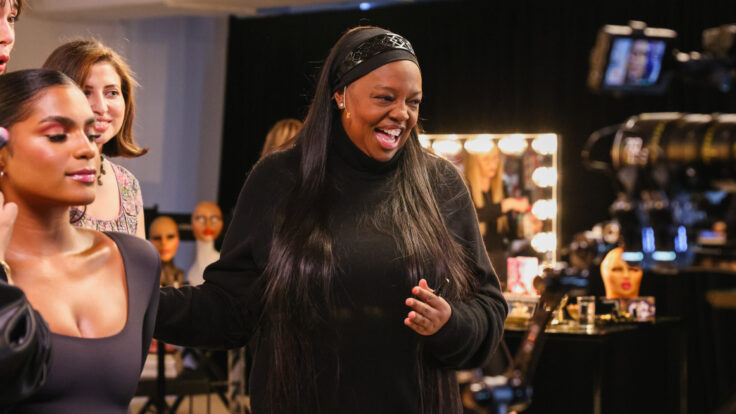
As you might’ve heard, I’m back in Los Angeles and will be bopping around all Oscars weekend, trying to figure out why this pesky CAA-Art Partner rumor won’t die. Tonight alone there’s the opening of the Prada Double Club at Luna Luna (more on that Monday), a Versace cocktail party with Net-a-Porter (jazz hands), and an Ilia get-together with celebrity makeup artist Molly Stern (love her).
I promised you no more Fashion Month talk, so I’ve got something completely different for today: Intel about the red carpet this Sunday, plus some notes about the changes in the celebrity dressing business. Enjoy.
Mentioned in this issue: The red carpet, Karla Welch, Emma Stone, Barry Keoghan, Phoebe Philo, leather jeans, Sandra Hüller, flip-flops, Roger Lynch, Condé Nast, Beka Gvishiani, Hanan Besovic, Luke Meagher, Rian Phin, Janine McGrath Shelffo, quillwork, Lily Gladstone, Gwyneth Paltrow, Louis Vuitton, Chanel, Tiffany, Emily Blunt, Noodle Stories, and many, many more.
|
|
A MESSAGE FROM AKRIS
|
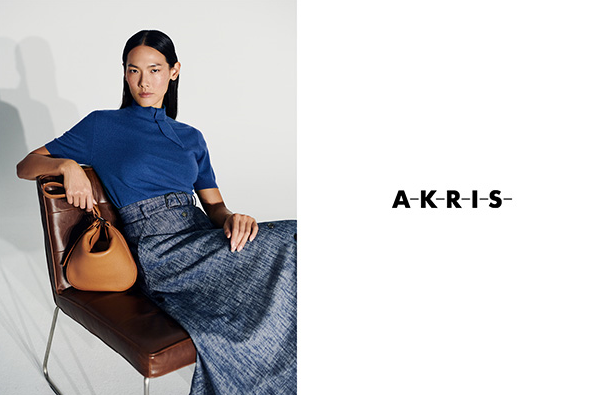 |
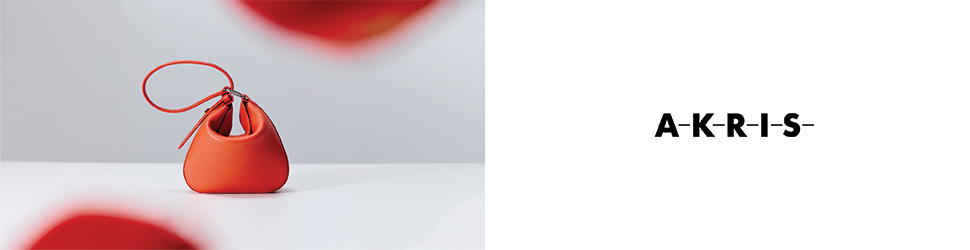
| Discover the new ANNA HOBO collection in a range of hues. Crafted with the same impeccable craftmanship and attention to detail that has made AKRIS the fashion world’s best kept secret. |
|
|
|
|
- Phoebe, Part Deux: Today, the second “edit” of Phoebe Philo landed online at 6 a.m. PT/9 a.m. ET/2 p.m. BT/3 p.m. CET. (Also known as My Life in Time Zones.) The company sent out a set of press facts, which were actually helpful. This second collection features 60 new styles, and it’ll be released over March, April, and May. This first release will be the largest.
Like the debut collection, this initial drop is primarily made up of what I would now consider Phoebe Philo “basics,” including iterations on styles from the first drop: more shirting, trousers, and knits. (I suspect the next drops will be more conceptual.) There’s a new bag, too, as well as several really good leather pieces which are, unfortunately, embarrassingly expensive. As much as I want them, and I want them badly, I can’t afford $5,200 leather jeans or an $8,800 leather blouson jacket in berry. But even if I could, it feels a little gauche, no? One friend asked if these items were lined in gold leaf. Another said that it is “so incredibly inaccessible that owning it does not bring any joy.” This sensation sent her to the old-Céline page on Resee. “I feel like Julia Roberts in Pretty Women,” she added, “I have ‘money to spend here’ but I don’t wanna.”
You might remember that I sort of pooh-poohed all the hullabaloo around the pricing at the time of the debut. After all, everything is expensive now. What makes this different? After seeing this collection, which is sharper and even more desirable than the first, I am increasingly convinced that people need a place to go try this stuff on. (Unfortunately, there is no news of those shop-in-shop concepts I heard about.) After all, even wealthy consumers have some price fatigue. I’m not saying those leather jeans should be $800 (although that would be nice), but there is a lot of psychology that goes into pricing, and something is just off about how they’re doing it.
All that said, I’m generally positive about this collection and the direction. Now that the Phoebe Philo language is established, I think you’ll start seeing its influence on the market overall. Also, tapping German actress Sandra Hüller as the campaign star couldn’t be a more correct decision for this brand. I hate flip-flops, but if they’re not $3,000, I might buy a pair when they land on the site.
- As a follow-up to my report from last week: Condé Nast C.E.O. and Line Sheet Cinematic Universe semi-regular Roger Lynch has sent a memo to staffers noting that revenue was “flat” year-over-year in 2023, meaning he missed his goal. (The memo was leaked to Axios.) This announcement sort of aligns with what I reported last Monday: In a meeting with senior executives two weeks ago, Lynch said that the company’s rev was flat if you removed print advertising from the equation. (Come on, people…) This also sort of aligns with what Danielle Carrig, Lynch’s panicky head of comms, told me last December, when she said that revenue would be down 3 percent overall. (I guess you could consider that flat?)
Given everything that’s happening in journalism, this financial performance—even if it’s reliant on some Condé-Adjusted EBITDA formulation—isn’t terrible. And, frankly, it’s a lot less terrible than many inside the company speculate. Yet the rollout is sort of disappointing and revealing. The knock on Lynch is that he’s a very smart guy and solid operator who was brought in to dispassionately transform a legacy business and, along the way, became a bit seduced by some of the trappings of the role (the shows, the global events, the proximity to famous people).
The biggest perk of Condé Nast, after all, is that it’s a private company and no one besides the Newhouses, their banker Janine McGrath Shelffo (who was recently promoted into a strategy role at their parentco/family office), and a small board of directors really know what’s going on. And yet, Lynch shot himself in the foot in his early days, bragging about the company’s wins and suggesting that it would be profitable by 2023—a milestone that’s likely more important to his comp package than his rank-and-file employees. Oversharing with the media may have elevated his profile, but it set expectations and generated a level of curiosity that has likely become a distraction at a time when there are other pressing considerations. Oh, and P.S., the union members waiting to get laid off are still waiting.
- When the commentators came for fashion: I’m old enough to have witnessed a time when influencers were called bloggers, and Bryan “Bryanboy” Yambao’s platform of choice was LiveJournal. So I’ve watched with great interest as this crop of new voices—the fashion commentators—creep into the front row these past few seasons. I’m talking Style Not Com’s Beka Gvishiani, yes, but also Hanan Besovic (@Ideservecouture), Luke Meagher (@hautelemode), and Rian Phin (@thatadult), among others. What’s different about this crew? Well, they are mostly about delivering news and analyzing information. Some of them, like Phin, are willing to be critical about what they see on the runway. Some are not. But I like them all a lot, no matter. Gvishiani is my biggest source of news at this point: he picks up every little thing in an efficient, entertaining way. I love it.
The commentators are also reminding us—or at least me—of a time when fashion blogging was in its infancy, and half of it was taking place on forums like The Fashion Spot (where Susie Lau, a.k.a. Susiebubble, started out), and it wasn’t easy to make yourself look good on the internet. Along with the rise of Instagram, filters, free gifting, etcetera, bloggers became mini models; success was not only based on looks but how much product they could move. While there are still plenty of successful influencers who mostly pose and link to e-commerce sites, I’ve observed that more forward-thinking fashion brands are distancing themselves from this still kinda tacky behavior and instead opting to embrace this new generation, which prides itself on having opinions about the clothes beyond obsequious Bravo!-ish sophistry. I also suspect that the R.O.I. on many of the conversion-focused accounts was waning and it was worth the risk. What I like about the new kids, though, is that it is very much not about what they look like. Although that may help to explain why most of them are men. That part is a little depressing.
|
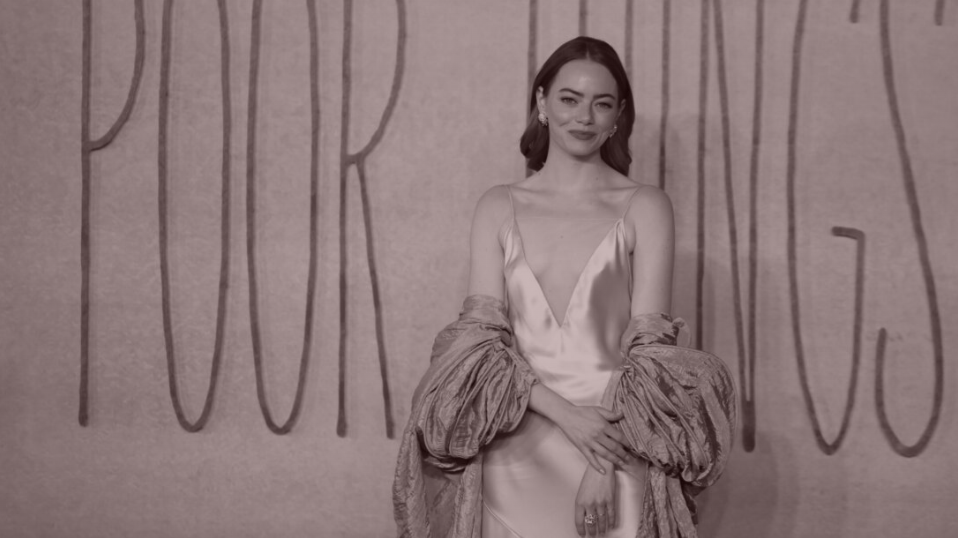 |
| The Red Carpet Shadow Wars |
| The movie business may be in decline, but the celebrity dressing business is only getting bigger, more professionalized, and more complex. And the brands have never been thirstier for influence or market share. |
|
|
|
| This is a unique year in the Oscars red carpet competition—not because of the nightmarish strike that lasted into the fall, but rather because the majority of best actress nominees (the most photographed people in attendance) do not have long-term contracts with big luxury brands. These deals allow the largest fashion houses—the ones with the ability to design, construct, and fit a custom dress—an opportunity to sneak into the fray and dine out on that exposure for a whole year and, sometimes, for decades. We still remember Nicole Kidman’s chartreuse Dior column, worn at the 1997 Oscars, and Gwyneth Paltrow’s crinkly pink princess pouf, designed by Ralph Lauren and worn in 1999.
Emma Stone is the only best actress nominee with a long-term advertising contract—she is a Louis Vuitton girl—but I’m hearing that Anatomy of a Fall’s Sandra Hüller, star of the new Phoebe Philo campaign, struck some sort of deal with a big luxury house, and Maestro’s Carey Mulligan may have as well. Nyad’s Annette Bening likely will not—she often wears Armani as a friend of the house. Nor will Killers of the Flower Moon’s Lily Gladstone, who is apparently looking to commission a dress featuring quillwork. On the best supporting actress front, Barbie’s America Ferrera was described to me as a “good grabber”: She works with über-stylist Karla Welch, who has a magic touch with the brands when it comes to creating custom looks. (Ferrera recently wore a pretty Dior gown that the internet liked.)
The movie business may be in decline, but the celebrity dressing business is only getting bigger, more professionalized, and more complex. Luxury brands, which grew by as much as 40 percent a year during the pandemic rebound, have more money than ever, and they are spending a larger share of their marketing budgets in this space. Post-SAG-AFTRA strike, starting with the Emmys in September, multibillion-dollar houses including Dior, Armani, Louis Vuitton, Celine, and Prada flooded the scene, typically dressing several stars in one night. Even smaller houses, from Loewe and Thom Browne to Fendi and Schiaparelli, increased their volume of placements. At the Golden Globes this year alone, the 10 most visible fashion brands earned an estimated $83 million in “Media Impact Value”—a metric that factors the number of social media posts, tags, likes, comments, etcetera—according to data-tracking firm Launchmetrics. That’s up from $56 million two years earlier, in 2021.
At this point, who needs whom more? Do the brands need the stars, or do the stars need the brands? Fashion is holding the purse strings, yes, and talent needs to diversify their revenue streams. But the world is so noisy now, and marketing only works if people are paying attention. Even now, there are few bigger opportunities than the Oscars. |
|
A MESSAGE FROM AKRIS
|
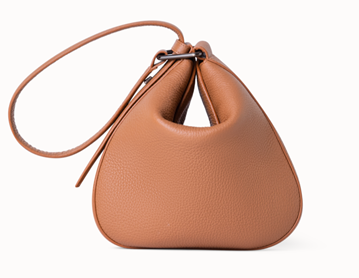 |
| Discover the new ANNA HOBO collection in a range of hues. Crafted with the same impeccable craftmanship and attention to detail that has made AKRIS the fashion world’s best kept secret. |
|
|
|
|
| The contract or deal or handshake agreement—or whatever it actually is—between the brand and star can vary widely. Multi-year advertising contracts—which often require a star to wear a brand publicly a certain number of times per annum—can pay as much as $6 million to $10 million for three to five years. Sometimes more. But there are other arrangements. For instance, if you are an ambassador versus a spokesperson, you might be contracted to wear a certain designer a few times a year, but will get paid far less because you’re not also fronting a campaign. (Chanel, for instance, has its campaign stars, but it also has a deep bench of celebrities, influencers, and general It girls associated with the brand.) There are also one-time appearance deals, which can range from $25,000 to $250,000—sometimes, even $1 million. The only requirement, other than wearing the look, might be to post images on social accounts. (Brands often won’t admit to paying to dress someone, but they don’t mind saying that they paid them to create content.)
Then there are the jewelers, which started paying stars long before most of the couturiers did, as early as the late 1990s. The going rate in those cases is more like $500,000 or $1 million per appearance. I hear best supporting actress nominee Emily Blunt will be wearing Tiffany on Oscars night, so her hunt for the right dress will also be related to making the jewelry look good.
The stylists often have to be paid, too. As one brand rep put it, they are “getting more greedy,” but with reason because “they get the shit end of the stick.” While talent agencies are more proactive than ever about developing relationships between their stars and brands, historically the stylists were the ones who would often facilitate and help land a contract for their clients. Sometimes, stylists would get paid for that work, sometimes they wouldn’t, and so now, as day rates decrease, they are demanding more on the back end from brands. For the brands, that’s a minor expense in service of a greater good. |
|
|
| What I’m Reading… and Listening to… |
|
| I was on Matt Belloni’s podcast talking about the business of the red carpet. I mention many of you; all nice things, I swear! [The Town]
If you have also always wanted to talk to Mozza’s Nancy Silverton about her love of clothes and Noodle Stories, one of the best stores in Los Angeles (you can buy Arts & Science there), then it’s worth listening to this. [How Long Gone]
I also listened to Kyle Chayka on HLG, and that was pretty good, too. (Friendly reminder that co-host Jason is rude and doesn’t subscribe to Puck.) [How Long Gong again]
If you’re at Noodle Stories, you should also stop by Nickey Kehoe, as recommended by Kirsten Dunst. [Kirsten Dunst]
Miu Miu sales are up 82 percent in the fourth quarter of 2023. Remarkable. Believable. [BoF]
Barry Keoghan is now a Burberry ambassador—that means that if he’s coming to the Oscars, or any Oscars-related events this weekend, he’ll likely be wearing Burberry. [WWD]
Mel Ottenberg defends the nipple. [Interview]
Puig’s sales were up 19 percent in 2023. [Vogue Business]
If you weren’t wearing an Old Navy American flag T-shirt in 1995, were you even alive? (Maybe not. People born in 1996 turn 28 this year.) Thanks to Mattie Kahn for quoting me in this story. [Vogue]
Kering is managing its liquidity by issuing a dual-tranche bond worth €1.75 billion. [Inbox]
LVMH Fashion Group C.E.O. Michael Burke is moving a former Louis Vuitton deputy, Pierre-Emmanuel Angeloglou, onto his team. [Bloomberg]
More good news at Abercrombie & Fitch. Wild. [WWD]
There’s too much stuff in this world. [BoF] |
|
|
| And finally… I’ve learned that the gray T-shirt and sweatshirt worn by Victoria in the Beckham doc were both her designs. They are no longer available (wah), but alternatives include this, this, and this. (I might get the last one.) Happy shopping.
Until Monday,
Lauren |
|
|
|
| FOUR STORIES WE’RE TALKING ABOUT |
 |
| Jack & Bobby |
| The bizarre story of Jack Dorsey’s political flirtation with R.F.K. Jr. |
| TEDDY SCHLEIFER |
|
 |
| Fashion Deal Heat |
| A close look at the M&A buzz surrounding Summer Fridays. |
| RACHEL STRUGATZ |
|
 |
|
 |
|
|
|
|
|
 |
|
|
|
Need help? Review our FAQs
page or contact
us for assistance. For brand partnerships, email ads@puck.news.
|
|
You received this email because you signed up to receive emails from Puck, or as part of your Puck account associated with . To stop receiving this newsletter and/or manage all your email preferences, click here.
|
|
Puck is published by Heat Media LLC. 227 W 17th St New York, NY 10011.
|
|
|
|