 |
 |
|
Hi, and welcome back to Line Sheet. I’ve landed in Los Angeles after spending approximately 47 minutes zipping up my suitcase last night. (I don’t know how that happens, I did not buy a thing. Only pre-ordered…)
We’re all tired. This’ll still be fun though, I promise. Today, I’ve got some initial thoughts on José Neves’ Farfetch exit, a crucial business update on every hetero male’s favorite skinny jean, some intel on the developing i-D story, plus a catchup with Thom Browne, who is truly living the American fashion dream, and has some thoughts on why his brand made it while so many others didn’t.
To those of you who signed up for a Line Sheet subscription this week, thank you. I love you! To those of you who didn’t, how do you live with yourself? Don’t forget, you not only get access to me and our all-star beauty correspondent, Rachel Strugatz, but to all of Puck. There’s no one else in the world covering Wall Street machinations like William D. Cohan, media tomfoolery like Dylan Byers, the business of sports like John Ourand, foreign policy like Julia Ioffe… the most elite circle of journalists with whom to build parasocial relationships.
Mentioned in this issue: Andrew Rosen, Rag & Bone, Nicolai Marciano, Gildo, Guess?, Ralph Lauren, the Courreges turtleneck, Karlie Kloss again, Derek Blasberg, Madeline Weeks, Olivia Singer, Mark Guiducci, Bom Kim, Anna Wintour’s Biden fundraiser, Donald Rumsfeld, and Carrie Coon x Edgar Allan Poe.
|
|
A MESSAGE FROM OUR SPONSOR
|
 |
From Ethan Coen and Tricia Cooke, this comedy caper follows Jamie, an uninhibited free spirit bemoaning yet another breakup with a girlfriend, and her demure friend Marian who desperately needs to loosen up. In search of a fresh start, the two embark on an impromptu road trip to Tallahassee, but things quickly go awry when they cross paths with a group of inept criminals along the way.
|
|
|
|
|
- The Farfetch Red Wedding: I was on a plane this morning when someone sent me the internal memo noting that José Neves will be leaving the business now that the Coupang deal is done. (I honestly don’t know who officially broke this news. I think WWD. But they have an archaic policy of not linking to other outlets so I’m going to give them the same courtesy here.) Bom Kim, the Harvard Business School grad and C.E.O. of Coupang, is stepping in to help oversee the business.
Anyway, there’s a lot to unpack there. Such as: Did José really broker a deal with Coupang so that he could stay on, screwing over investors along the way? I plan to dig into much of it on Monday. But for now, I’ll leave you with this. It’s not just José, everybody is leaving. (Except for Stephanie Phair, who comes from Net-a-Porter and should have maybe been Farfetch’s C.E.O. all along. She’s currently C.E.O. of New Guards Group, so she’s likely staying on to help negotiate the sale of that property.)
Exiting bold-faced names include: Tim Stone, the C.F.O. (duh), and Elizabeth von der Goltz, most recently the chief fashion and merchandising officer of Farfetch and C.E.O. of (Farfetch-owned) Browns. Von der Goltz is super well-liked within the industry and has, at least from the outside, been through the eye of the online luxury storm, moving from disaster to disaster (Net-a-Porter to Matches to Farfetch) during her time in the U.K. She’ll be fine, but it’s annoying. There will also be broader layoffs starting on Friday in Portugal, where the tech people are based, and continuing on Monday in the U.K. and elsewhere. What. A. Mess.
- Rag & Bone has a new owner: A few weeks ago, I heard that the family behind Guess, the Marcianos, were over in the Middle East trying to raise capital for a take-private of the company, which trades on the New York Stock Exchange and is currently valued at almost $1.3 billion. The headline, though, was that they were hanging this potential step change on the acquisition of Rag & Bone, the Andrew Rosen and John Howard-owned business that has been looking for a buyer for several years.
Turns out, Guess is indeed buying Rag & Bone, and the deal is set to be announced any day now, according to three sources familiar with the situation. (Is the take-private still a part of the equation? I don’t know, but an announcement could help with the fundraising.) Rosen could not be reached for comment. (A rep for Guess did not respond either.)
While Howard and private equity firm Irving Place Capital wanted out after initially investing more than a decade ago, as I previously reported, Rosen—the founder of Theory and an investor in dozens of fashion brands—will remain involved in the business, and join the Guess board. He recently hired designer Robert Geller to lead menswear, and I hear there are more changes ahead.
As for whether this is a good thing for everyone or anyone: It’s certainly good for Howard, who wanted out. It’s also good for Rosen, who can continue to work on the brand’s turnaround but without worrying about how he’s going to fund it. Hopefully, it’s good for co-founders Marcus Wainwright and David Neville, who still own part of the business.
Is it good for Guess? The company’s value has depreciated over the years, thanks to a #MeToo scandal and a general lack of interest in changing with the times. (The advertisements, which are all over Los Angeles, look exactly as they did 30 years ago.) Despite all that, it’s a remarkably resilient business, with more than 1,000 directly operated stores globally. Access to that retail footprint may allow Rag & Bone to scale more quickly: My curiosity is whether Guess has the operational capacity to sell contemporary-priced fashion at scale when they’re in the business of accessibility—and amid a turnaround, nonetheless. (Having Rosen around will help.)
There is also a next-gen Marciano involved: Nicolai. Late last year, he was tasked with the launch of a new line of denim targeting Gen Z. (You can buy Guess on Ssense, after all.) Let’s see if he and Rosen can keep you all in your skinny jeans, or convince you to try out a straight leg.
- Let’s talk about Derek Blasberg: By the time I left the Thom Browne show and settled into drinks with some of my legacy media brethren, there were panicked texts and DMs regarding a tweet from reporter Mario Abad, suggesting that journalist and person-who-is-not-weird-to-celebrities-so-they-like-him Derek Blasberg was the new editor-in-chief of i-D magazine. The timing seemed almost too on the nose. Earlier in the day, Alastair McKimm, who Karlie Kloss promoted after she bought the magazine from decrepit Vice Media late last year, announced that he was leaving. Was Blasberg, a Kloss B.F.F., really about to relaunch his Blasblog? (R.I.P. Style.com.)
I am told by someone who would know that no, Blasberg is not going to be E.I.C. of i-D. Do I think he might end up securing some sort of title and contributing in some sort of way? Maybe. This E.I.C. gig, though, is a job for a person looking to move into the front row, not someone already there. And also someone who is either based in London or willing to be in London… a lot. Remember, Kloss is restructuring the business, but she can’t extract its British heritage entirely. There is also a team in place running editorial day-to-day that she likely wants to keep intact, at least to a degree. As for who the new editor-in-chief could be, this game is getting harder and harder because who in the world knows what it means to be an editor-in-chief other than Jon Kelly?
For i-D, I’d suggest Vogue’s Mark Guiducci, but he has a good situation at the mothership. (He worked on that Galliano doc, has a big hand in Vogue World, which is heading to Paris this year, and so on.) Olivia Singer, i-D’s current editorial director, is another idea. I wonder if it’ll be someone with an entrepreneurial spirit, given that Kloss does seem to want to re-engineer things. Who are you hearing? Because really, it’s not Derek!
- The Courreges turtleneck is a thing: So many people are wearing the French label’s simple ribbed turtleneck around New York (loved it on my friend Sierra in yellow), and it also makes an appearance in an episode of the new series Mr. and Mrs. Smith, worn by co-star Maya Erskine. Turns out that former GQ fashion editor Madeline Weeks did the costumes.
The clothes (especially Erskine’s jeans-belt combo) are as good as the Amazon MGM-produced show—at least that’s my take from watching the first episode and a “This season on…” montage. (I know, I find Donald Glover insufferable, too, but… he’s good at making television?) Someone also told me they bought the turtleneck after seeing it on the show. Anyway, as you probably know, Courreges is owned by Artemis, the family office of François-Henri Pinault, and has a smart, young C.E.O. in Adrien Da Maia. Fin.
|
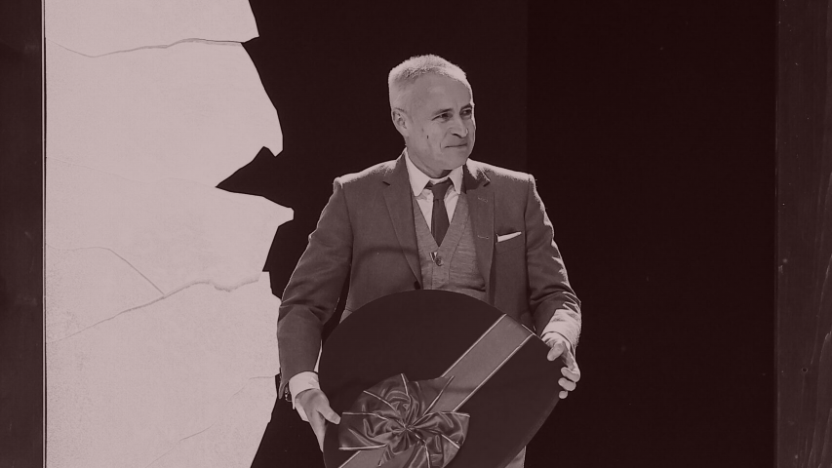 |
| Thom Browne Is the New Black |
| A candid and efficient office chat with the tough-love, stubborn, very honest, and bullshit-free CFDA chairman and American fashion success story. |
|
|
|
| American designers who came up in the 2000s aspired to a certain way of life. This was a time of rapid industry consolidation and globalization, fueled by the success of Tom Ford at Gucci, Marc Jacobs at Louis Vuitton, and John Galliano at Dior, with Karl Lagerfeld at Chanel as a guiding light. For the young designers following in their footsteps, the goals were simple: find a good investor, land a creative director gig at your heritage brand of choice, and become rich and famous. But they were nearly impossible to achieve. If the American fashion industry was one giant Y Combinator, I swear the success rate would be even lower than it is in the tech world.
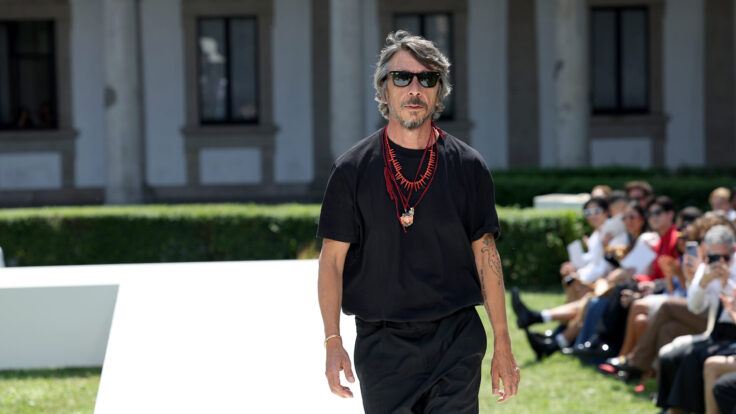
Thom Browne, though: He managed to land the proverbial house with the white picket fence and three kids running around. When Browne founded his namesake brand in 2001, his shrunken wool suit—in medium gray—was the foundation of his brand, and it remains so today. While many of his peers had great fun hogging the spotlight, Browne was operating, often quietly, off to the side. He participated in the fashion circus at times, but he refused to adjust his big idea to the whims of the market. In the end, the steadfast approach won out. In 2018, Sandbridge Capital, the investment fund backed by Domenico De Sole and Tommy Hilfiger, sold their stake in the Thom Browne business to Ermenegildo Zegna Group at a $500 million valuation. Since then, Browne’s brand has flourished, with annual sales topping €330 million in 2023. And now, after all these years, he is the stateside fashion industry’s de facto leader as chairman of the Council of Fashion Designers of America.
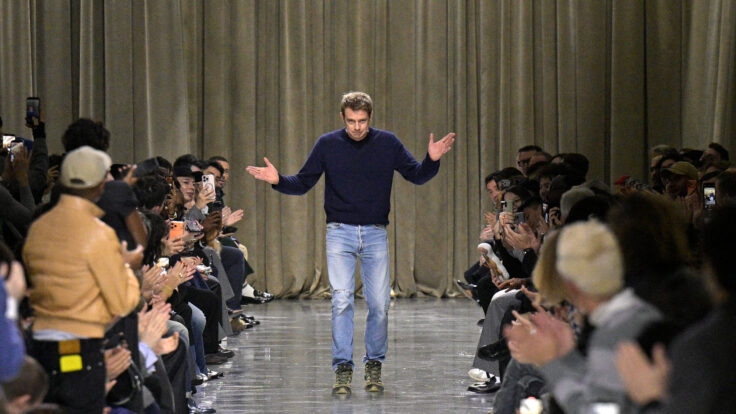
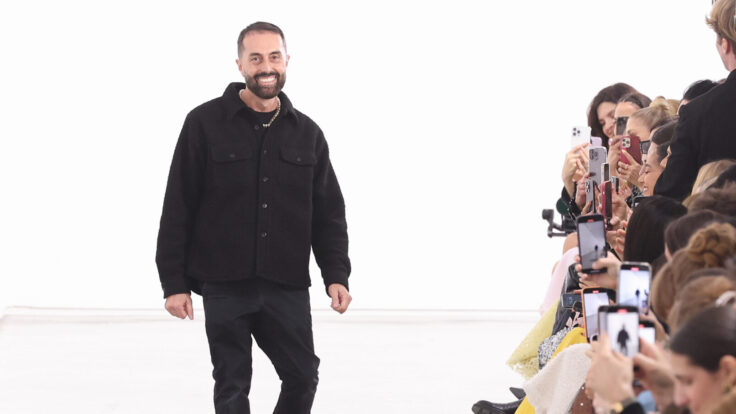
On Wednesday, he closed New York Fashion Week with an ode to Edgar Allan Poe, with the actress Carrie Coon’s rendition of The Raven serving as the runway’s soundtrack. Browne is one of the more theatrical designers working today. For instance, the scene set for last night’s show was a snow-covered lawn, with little children in Thom Browne uniforms scurrying out of the bottom of an enormous, floor-length, A-line puffer jacket, worn by a male model who must have been propped up 50 feet in the air. Strangely beautiful stuff, and yet the clothes themselves aren’t all that strange. Underneath the layers of pomp are the Thom Browne fundamentals: shirting, tailoring, sportif. It’s the most American of success stories.
On Monday, I stopped by Browne’s offices in the Garment District, right off Seventh Avenue, where we covered all this and more in a speedy 20 minutes. There is no designer more concise, but I somehow managed to edit and condense this further. |
|
A MESSAGE FROM OUR SPONSOR
|
|
From Ethan Coen and Tricia Cooke, this comedy caper follows Jamie, an uninhibited free spirit bemoaning yet another breakup with a girlfriend, and her demure friend Marian who desperately needs to loosen up. In search of a fresh start, the two embark on an impromptu road trip to Tallahassee, but things quickly go awry when they cross paths with a group of inept criminals along the way.
|
|
|
|
|
| How has your process changed since the Zegna acquisition, in terms of fabric sourcing or manufacturing?
It’s 90 percent the same. We have the luxury on the fabric side of developing a lot with Zegna. Most of the collections are done here in the atelier, but there’s just a wealth of production knowledge. It’s a great relationship in that [chairman and C.E.O.] Gildo [Zegna] appreciates all of this and understands why I do these things. He understands that the fundamental core of my wanting the best quality is what this is all about.
You came up with all these other brands in the 2000s, but I don’t associate you with those brands. And yet, you ended up getting the thing that everybody wanted: a big deal that lets you still be a designer.
I mean, it was a whole lifetime. It was a good, almost 15 years of really staying true to one idea. It took a long time.
Did you ever feel pressure from retailers to bend to their will and compromise your vision?
Every second.
How did you withstand it?
I said no. It’s the power of no. And you have to want to be in it for a long time. Maybe it’s because I was a little older [than many of the other designers who launched brands around the same time]. I was, and I am, stubborn. I loved it more than anybody else. That’s why it is easy to say no respectfully.
It’s hard for a lot of people to say no.
I knew that, eventually, people would start understanding it. I would not have been as interesting or valuable to anyone if I had diffused it in any way. It needed to be so specific for as long as I felt it needed to be. And now I feel like I can do anything because everybody knows, or has an image in their mind, of what it is. When I started women’s, it wasn’t as commercial and I didn’t have as many stores. Look, I can make a dress, but that’s not what people are really coming to me for.
You have a big red-carpet presence now. How involved are you in creating those looks?
I do lean on these guys a lot [nodding to the communications team]. Sometimes, they’re more engaged with who’s out there. The most important thing for all of us is that there’s a relationship and a mutual respect. That I love what they do. And they’re coming to me for a reason. It works because it feels free. I don’t want to ever look at someone and think, Oh, they just look like they’re being paid. Also because, we don’t pay.
It’s very clever the way you work with sports teams, because this is a uniform, too. It’s a way to embed in culture rather than just throw stuff out there.
It is very real to us. We care about them. We care how they look and how they feel in the clothes.
How has it been running the CFDA for the past year? I’ve heard that you are pretty engaged compared to your predecessor. I’m assuming you’re getting emails every day from kids saying, I need your help. I need your help.
The thing is, sometimes I can’t help. I’m more of a tough-love chairman. Sometimes it’s like, You know what? You have to figure it out on your own. But most importantly, I ask them, Do you really want to do this? Because it’s not going to be easy. It wasn’t easy for me. It wasn’t easy for Ralph. It wasn’t easy for any of us. You have to want to do it more than anyone else in the world. And you have to love what you do more than anyone else in the world. Because if you don’t, then why should somebody else engage in what you’re doing? And you have to want to be in it for a long time. It’s not going to happen overnight. And if you’re in it for fame or money, then you’re kidding yourself. |
|
|
|
|
| Do you feel like the industry is bifurcating into product on one side, and fashion on the other? As someone who sells commercially but also makes clothes with ideas, how do you see the whole ecosystem working right now?
The commercial side of what we do doesn’t exist without [the runway]. People are only interested in our sweats and our classic tailoring because of these concepts. Every six months, you see it moving some different way. They might not understand it at first, but it makes it more interesting because they don’t get it immediately. A lot of these young designers have to realize that. You can make something salable, but it can’t be at the expense of what has made you interesting to people. The show colors in everything else. When we do fittings and put people in the classic gray suit, it still looks good because every couple of months, there’s a new idea that keeps it feeling good.
It does feel like the consumer is starting to notice when there are no ideas.
I do believe that if you are doing something interesting, people will find it. They will find it, and they will eventually buy it, but you have to try.
What is the industry not talking about enough?
There is a little bit of safety in regard to not truly supporting newer ideas long enough. Things take time and energy to actually become something. When you get people who just open up spreadsheets and consume according to what’s happened in the past, as opposed to taking chances on the most beautiful thing that you see, that’s a problem. It’s disappointing. |
|
|
| Anna Wintour is hosting a Biden fundraiser during Paris Fashion Week on March 4. [BoF]
A diatribe on limp tote bags. [Shop Rat]
Stefano Tonchi’s new print product, TheWrapBook, is out. [The Wrap]
Vox is investing in New York magazine’s The Cut, and has hired my co-author and longtime work wife Chantal Fernandez. Unfortunately, that means the end of our shared Pacer account. [Digiday]
Next time anyone writes something about High Sport, give Max Stein a call. [The Cut]
One great thing about this era of magazines is that you no longer have to worry about newsstand sales. Let’s put more people like Miuccia Prada on covers. [Vogue]
Kerry Diamond’s women-in-food magazine Cherry Bombe raised almost a million dollars via crowdfunding. Great news. [Instagram]
Candice Bergen went to Truman Capote’s Black and White Ball, and her daughter, Chloe Malle, now the editor of Vogue.com, interviewed her about it. It’s funny. [Vogue]
I don’t have anything to say about the McQueen ads just yet, I’m sorry. Actually: True Detective, Season 1. [WWD] |
|
|
| And finally… for something different, here’s a Quote of the Day: “R.I.P. Donald Rumsfeld, you would’ve loved Elena Velez.” —A decent publicist who likes and works for Republicans
|
|
|
Until Monday,
Lauren |
|
|
|
| FOUR STORIES WE’RE TALKING ABOUT |
 |
|
 |
| The Age of Biden |
| Suddenly, it’s open season for the POTUS age question. |
| DYLAN BYERS |
|
 |
| Sturm und Drang |
| Diving into the $240 million deal with Puig. |
| RACHEL STRUGATZ |
|
 |
| Klein of Arabia |
| Why are the Senate and Saudis both after Michael Klein? |
| WILLIAM D. COHAN |
|
|
|
|
|
 |
|
|
|
Need help? Review our FAQs
page or contact
us for assistance. For brand partnerships, email ads@puck.news.
|
|
You received this email because you signed up to receive emails from Puck, or as part of your Puck account associated with . To stop receiving this newsletter and/or manage all your email preferences, click here.
|
|
Puck is published by Heat Media LLC. 227 W 17th St New York, NY 10011.
|
|
|
|