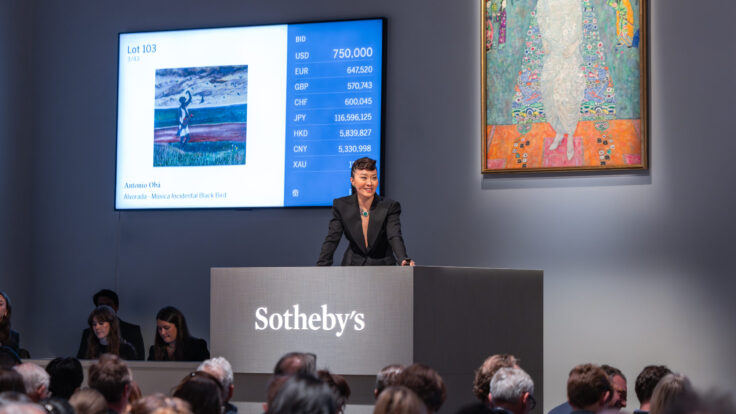
Welcome back to Wall Power. I’m Marion Maneker.
Last week, I
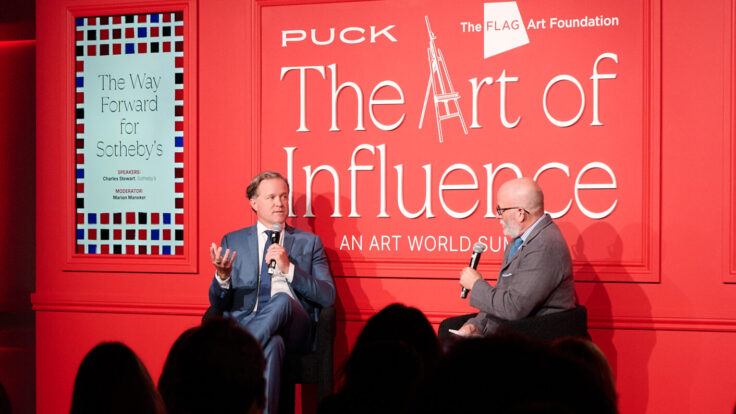
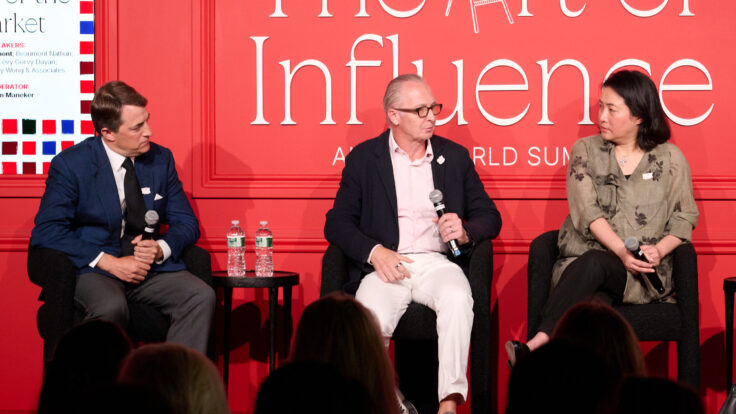
spoke to Kymberly Pinder about her campaign to make the Yale School of Art’s M.F.A. program debt-free for the artists who train there. It was a fascinating conversation that touched on a number of themes in the industry. Before we get there, though, I have some new names to announce for The Art of Influence, our summit on September 15: Christophe Cherix, the
incoming director of the Museum of Modern Art, will join us on a panel with the Whitney’s Scott Rothkopf and Anne Pasternak of the Brooklyn Museum.
Brett Gorvy, of Lévy Gorvy Dayan and New Perspectives Art Partners, and Wentworth Beaumont, co-founder of Beaumont Nathan, will also join Patti Wong on a panel of art advisors. All of that is in addition to our previously announced speakers: Larry
Gagosian, Nicolas Party, Charles Stewart, Dasha Zhukova, Michael Ovitz, Tom Hill, and Glenn Fuhrman.
It’s going to be a fascinating day. There are still a few tickets left. I hope you’ll join us.
Let’s get started… |
-
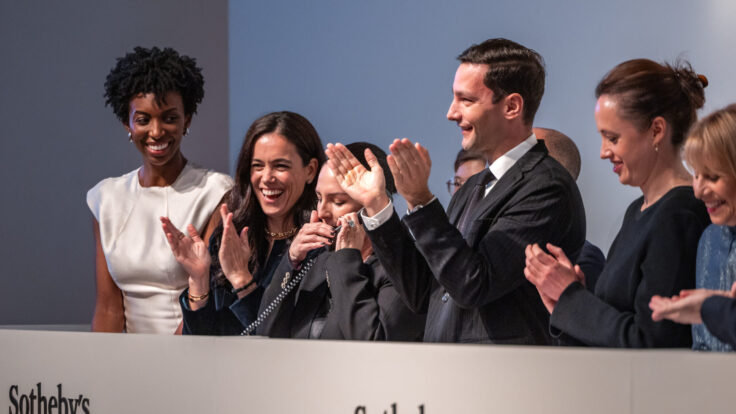
Sotheby’s announces Breuer building opening: Mark your calendar. Two years after it acquired the Madison Avenue landmark, Sotheby’s will open the newly renovated Breuer building on November 8 to coincide with the previews for the November auctions taking place only nine days later. That’s a tight schedule. The auction house says there will be a series of events and panel discussions to mark the opening.
|
|
|
A MESSAGE FROM OUR SPONSOR |
ALWAYS CONTEMPORARY
With a bold silhouette that conveys movement even at standstill, the Range
Rover Sport is striking from every angle.
EXPLORE |
|
|
- Christophe de Menil dies at 92: After a long life that intersected with many other famous personages, the socialite, designer, and art patron Christophe de Menil died a week ago; her obituary ran yesterday in The New York Times. Coming from a family of art collectors funded by the Schlumberger oil services fortune,
Christophe continued her parents John and Dominique’s arts patronage. She was married briefly to Robert Thurman, as well as to artist Enrique Castro-Cid; worked with Frank Gehry on an early renovation project that was then aborted, though the carriage house was later sold to Larry Gagosian; and collaborated with Robert Wilson to design costumes for his theater productions. She
was also involved in projects by Philip Glass, Twyla Tharp, Trisha Brown, and Michael Heizer, and her friendship with Willem de Kooning led to her collecting his art.
- A deadpan Deposition: I couldn’t help but smile reading Andrew Russeth’s great take on Richard Prince’s Deposition, from 2025. As part of a now-settled copyright infringement case, Prince sat through a notorious seven-hour deposition, which he has now turned into a work of video art in its own right. Russeth does a great job summarizing the appeal and mystery of the work, which was screened at Gavin Brown’s Sant’Andrea de Scaphis exhibition space in Rome, and gives some great one-liner excerpts. When
the lawyer asked whether he thought commercial photographers were artists, Prince replied, “I never think about commercial photographers.” (You can watch it for yourself here. The password is “prince”.)
Prince has had two major lawsuits brought by three different photographers (the second suit combined two different claims) who felt he was using their work unfairly. But that’s less important than
the fact that Prince is taking his appropriation talents to new heights—appropriating a legal document about his own appropriation. As Russeth puts it, the video “offers something for just about everyone: art historians, Prince aficionados, skeptics of contemporary art, students hoping to learn about appropriation (or performance) art, copyright scholars, and plenty more.” Perhaps more significant is the fact that this deposition now exists as Prince’s own final statement (he’s
76 years old) on his art, why he does it, and what he thinks he’s doing. Surprisingly, that doesn’t really exist anywhere else. (Though you can try this podcast interview with Rick Rubin.) And it is an important piece of the puzzle, especially since Prince has defied the odds in recent years—his work seems to get a lot of attention from
the market, and there are shows at the Fondazione Prada and Museo Jumex in the works for next year.
|
Now, let’s get to the main event… |
|
|
The Yale School of Art has launched the careers of many famous artists.
Now its dean is on a mission to make sure the art students don’t have to take on debt. |
|
|
One evening this summer, I found myself at a cocktail party thrown by a prominent art
advisor in her Connecticut home. It was a very Greenwich kind of place: each room decorated in a different style. There was a red lacquer library that harked back to ’80s New York, when the Kravises and Gutfreunds ruled society, and a jungle-print “playroom” with arcade games, just to pick two.
The party was meant to bring together the collectors, dealers, and advisors of surrounding Fairfield County. But our host also included curators and leaders
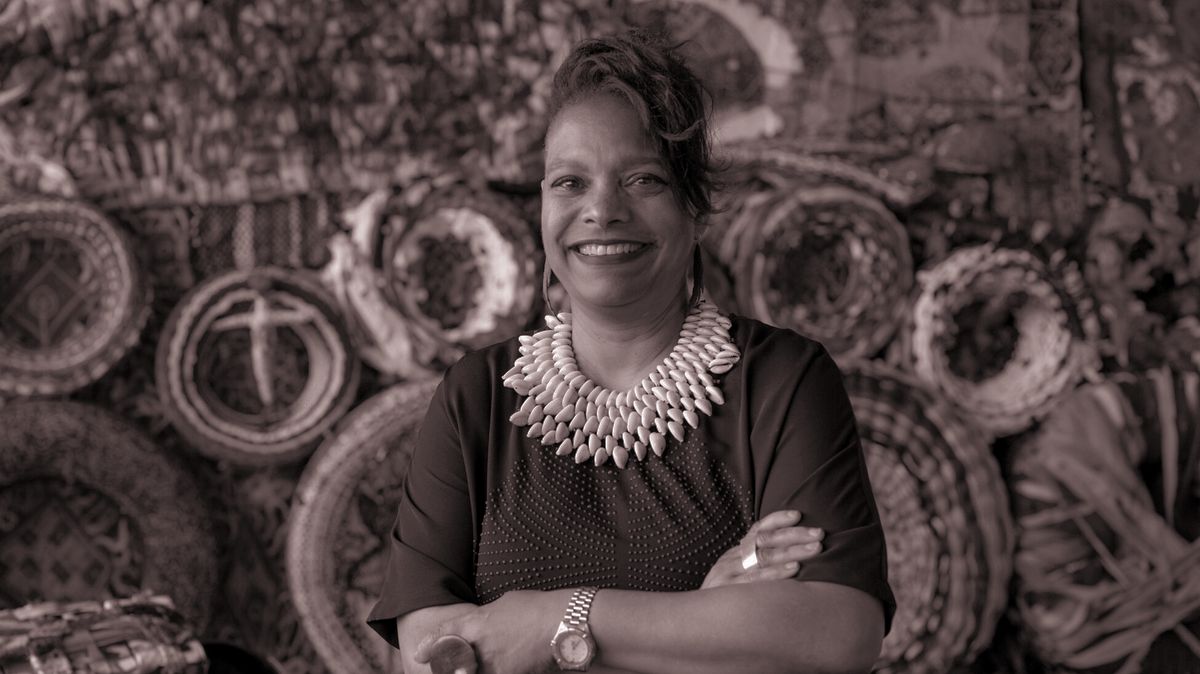
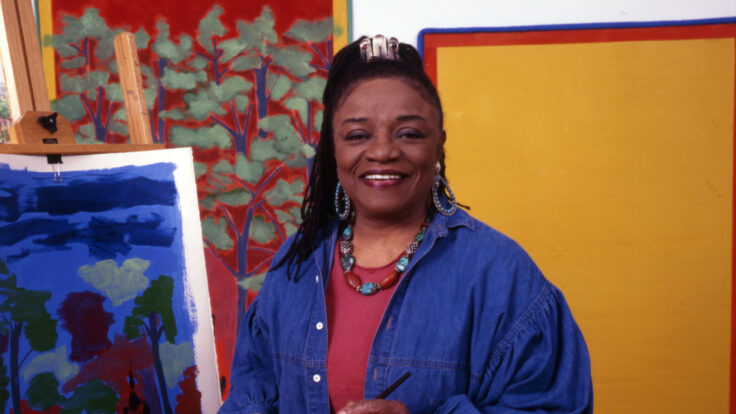
from other institutions she supports in the area, including the Yale School of Art. On my way out, I was introduced to the art school’s dean, Kymberly Pinder, whose M.F.A. program is widely recognized as an on-ramp to a successful career as an artist. The institution has launched John Currin, Mickalene Thomas, Christina Quarles, Martin Puryear, Lisa Yuskavage, Do Ho Suh,
Howardena Pindell, Barkley Hendricks, Stanley Whitney, and many others. |
|
|
A MESSAGE FROM OUR SPONSOR |
ALWAYS CONTEMPORARY
With a bold silhouette that conveys movement even at standstill, the Range
Rover Sport is striking from every angle.
EXPLORE |
|
|
Pinder surprised me with the revelation that she’d been hired as dean, in 2021, with
a particular mission: to make their highly competitive M.F.A. program debt-free for students. For example, in 2005, Yale’s School of Music received a gift of $100 million from Stephen Adams—who graduated from Yale in the late 1950s, before attending the Stanford Graduate School of Business with Nike’s Phil Knight—which allowed the school to become tuition-free. Adams had made his fortune not in running shoes, but in fields as disparate as community banking,
outdoor advertising, media, soda bottling, wine, R.V. sales, and camping equipment. Learning to play the piano late in life inspired his gift to the school.
Not to be outdone, David Geffen donated $150 million to the Yale School of Drama in 2021—an act of generosity that got the school named after a man who made his first fortune in music. With that money, Yale’s drama school was also able to go tuition-free. I couldn’t help but wonder how Geffen, who might easily be
named one of the greatest art collectors of all time, had not been tapped by the School of Art first. But I soon learned that Pinder had other ideas.
Although annual tuition at Yale’s School of Art is $48,500, only about a quarter of its 116 students pay in full, while a third pay nothing at all; the rest get some form of financial aid. But tuition isn’t the entire cost of going to art school: Yale estimates living expenses of almost $23,000, supplies and materials costs of nearly $6,000,
and, of course, health insurance—impressively cheap at around $3,000, but that’s a lot of money if you’re not working at all.
All in, Yale estimates that the ticket for a year at the School of Art is nearly $78,000, and it’s a two-year program. To add to the financial burden, the average graduate student in art at Yale is 29 years old—these are adults, who often have families to support. Yale’s goal isn’t to make its art school tuition-free, but to allow their graduates, most of whom will
not have great earning potential during their working lives, to leave without debt. |
Pinder got her Ph.D. in art history at Yale in 1995, but her career trajectory afterward
would not have seemed likely to land her back in New Haven. She made her academic bones at the School of the Art Institute of Chicago, where she rose to become department chair and director of the graduate program. From there, she became dean of the University of New Mexico’s College of Fine Art, a role that also made her the director of its art museum. Later, she moved back east to run the Massachusetts College of Art and Design.
During her decade or more working at state schools, Pinder
developed an admiration for their ability to provide access to an arts education. “I really appreciated, and really am committed to, the way in which state systems make art education affordable,” she told me over a Zoom call from her family’s home in New Mexico when we caught up again. “So when I was approached for the Yale job, I wasn’t necessarily thrilled, believe it or not.”
It took a little coaxing, but Pinder soon learned that Yale had changed a fair bit in the 30 years since she’d
last been there. For one thing, the School of Art is now “the most diverse professional school in the university,” she told me. Her predecessors had done admirable work raising money to fund her Stavros Niarchos Foundation deanship, as well as supporting the school’s emphasis on art and social justice. Pinder’s background as a committed educator and community builder dovetailed nicely with all of that.
Since arriving, she has worked to hire an exhibitions manager and turn some of Yale’s
downtown storefront real estate into gallery space featuring local artists. Yale may be famous, but New Haven is also an artists’ community that has grown substantially in recent years, as graduates stay in the city to take advantage of an affordable cost of living and relatively easy access to New York. |
|
|
Still, staying in New Haven isn’t an option for every student. And Pinder takes
Yale’s side of the bargain quite seriously. It’s not enough, in her view, to select a small number of applicants and then let them fend for themselves. “It’s not ethical for us to commit to these students, some of whom have applied multiple times to get into Yale,” if the school isn’t going to help them to have a sustainable life after graduate school, Pinder said. That means not just achieving the debt-free goal, but also providing professional education that, according to the school’s five
pillars of an ethical M.F.A., involves “ample professional development programs … including courses on finances and taxes, archiving artwork, and gallery and museum negotiations,” and ensuring “every student’s mental health and well-being are fully supported.”
It’s a serious responsibility, given the economic precarity to which many artists will commit themselves. “You know, they’re quitting jobs,” Pinder said, “because they made it. They got into the Yale School of Art.” |
It turns out the School of Art’s fundraising goal would not be a ginormous nine-figure
number like at the music or drama schools. That’s good, because Pinder didn’t want to go after a funding whale and risk naming the school after someone whose reputation might be damaged by later revelations (see: the Sackler family). Instead, all she needed was to raise an achievable $35 million by gathering together mere financial mortals. She’s landed $8 million so far, helped along by a strong 2024—the school’s best year ever, when she managed to land $5.5 million in
commitments.
Working with Nicole Freeman, who joined Yale after a similar role at Harvard, Pinder has been bundling support for students to make the fundraising lift easier. (One of Pinder’s conditions for taking the role was that the School of Art get its own development director, rather than share one with other departments—a key reason there had been little outreach between Yale and its prominent artist alums in the past.) Getting a cohort of, say, four to six
successful graduates to donate as little as $50,000 each enables the school to fund a student, but it takes a total of $1.5 million in the endowment to get that spot funded in perpetuity. That’s a big lift, artists being artists, though Freeman told me some alums donate because they received financial support and are now in a position to make a contribution themselves; others do it because they recognize how lucky they were not to need the university’s support.
No one really thinks the
artists will be enough to get this job done. That’s where collectors come in. Lisa Goodman, a prominent Seattle collector, got stuck in a downpour in Venice during the Biennale several years ago, and persuaded a kind Samaritan—Pinder—to share her cab. Both of them happened to be headed to the airport and then on to Paris, where they hung out for a weekend and bonded over art. Goodman then joined a fundraising task force at Yale, in addition to her other duties at L.A.’s Hammer,
London’s Tate, and the Seattle Art Museum.
For collectors, the idea of supporting students should not be a leap. “It’s rare to not have one Yale alum in a collection,” Goodman pointed out to me on a phone call. Most collectors are in it for the artists as much as the art—they want to see young artists succeed, and donating is not that much different from buying early work. “It’s an opportunity for someone to make a connection,” Goodman says, referring to the collectors who not only have
financial support to give, but can also open other doors. “When you’re around long enough, you develop a network.” |
I’ll admit that I’m a newcomer to the hobby, as sports collectible enthusiasts
refer to their obsession. So maybe I’m taking too much notice of the coverage of the five-day National Sports Collectors Convention in Rosemont, Illinois, two weeks ago. If you follow Ken Goldin or his Goldin auction house on Instagram, you saw their nearly nonstop updates on cards consigned to auction. Darren Rovell’s Cllct.com claimed that $308 million was
spent on cards in more than 5.5 million transactions in July alone. The site even ran a story on compulsive collectors.
But what really made an impression on me was that The Athletic
seems to have added sports memorabilia as a vertical, including articles on what’s working and not working in the hobby, as well as an overall take on the rising
frenzy of card trading. “Several area hotels reportedly had to call police,” Brooks Peck wrote in his report, “to clear out their lobbies that were filled with card enthusiasts making endless deals with each other.”
That’s enough for today. Tomorrow, by special request from many of you, I’m going to look at the top 50
artists from the mid-tier auction houses. It should be interesting, so upgrade tonight to the Inner Circle if you want to be part of the action.
M |
|
|
The ultimate fashion industry bible, offering incisive reportage on all aspects of the business and its biggest
players. Anchored by preeminent fashion journalist Lauren Sherman, Line Sheet also features veteran reporter Rachel Strugatz, who delivers unparalleled intel on what’s happening in the beauty industry, and Sarah Shapiro, a longtime retail strategist who writes about e-commerce, brick-and-mortar, D.T.C., and more. |
|
|
Finally, a media podcast about what’s actually happening in the media—not the oversanitized,
legal-and-standards-approved version you read online. Join Dylan Byers, Puck’s veteran media reporter, as he sits down with TV personalities, moguls, pundits, and industry executives for raw, honest, sometimes salacious conversations about the business of media and its biggest egos. New episodes publish every Tuesday and Friday. |
|
|
Need help? Review our FAQ page or contact us for assistance. For brand partnerships, email ads@puck.news. You received this email because you signed up to receive emails from Puck, or as part of your Puck account associated with {{customer.email}}. To stop receiving this newsletter and/or manage all your email preferences, click here. |
Puck is published by Heat Media LLC. 107 Greenwich St, New York, NY
10006 |
|
|
|