Hi, and welcome to Line Sheet. We have entered a season of pool days and I.P.O.s.
R.I.P. to Leonard Lauder, and condolences to the many of you mourning him. Rachel Strugatz will be back later this week with some thoughts on the best to ever do it in beauty. In today’s packed issue, I’m following up on the news that Renault chief Luca de Meo has been appointed C.E.O. of Kering. Meanwhile, I’ve got the scoop on Dôen’s Series A, details on the stylist dressing Brad Pitt’s midlife crisis, and the latest iteration of Hermès’s anti-marketing marketing efforts. And, yes, I do get into the outrage over the first-look images from American Love Story, Ryan Murphy’s upcoming series about John F. Kennedy Jr. and Carolyn Bessette-Kennedy.
Programming note: Tomorrow on Fashion People, my guest is Harper’s Bazaar executive editor Leah Chernikoff. We’ll discuss this American Love Story wardrobe situation, Brad Pitt in velvet, and plenty more. Listen here and here.
For those of you with the Shoppies: Like many bougie couples, my husband and I went to see Celine Song’s Materialists this weekend. (A24’s third-biggest opening ever.) I’ll spare you my full review, but it’s difficult to feel good about a movie where two out of the three people in the love triangle are so cold that it appears as though their sweat glands have been removed. I still think it’s worth seeing for plenty of reasons, including the “$12 million” apartment. As for the clothes: While both Pedro Pascal and Chris Evans were arguably better dressed than the incredibly beautiful Dakota Johnson (whose character somehow only makes $80,000 as a matchmaker living in New York City), her corpcore look was nothing if not accurate.
I’m sure plenty of people will attempt to score the movie’s Proenza Schouler blue dress (read Eliza Brooke’s saga here), but my personal realization was that I need a creamy-colored satin blouse, mostly to wear with jeans. Unfortunately, the truly perfect, unwrinkleable satin shirt I sourced in black from the Banana Republic outlet store is long sold out (you have to get it if they ever reproduce it), but I was able to find a similar, silk charmeuse version in the main line. They named the color “transition cream white,” which is so rudimentary it’s sort of great.
Mentioned in this issue: Luca de Meo, Kering, François-Henri Pinault, Marco Bizzarri, Jean-François Palus, Francesca Bellettini, Dôen, Margaret and Katherine Kleveland, Holly Soroca, Chanel, Kendrick Lamar, Timothée Chalamet, Taylor McNeill, Brad Pitt, Carolyn Bessette-Kennedy, Hermès, Nadège Vanhee, and many more…
|
|
|
|
A MESSAGE FROM OUR SPONSOR
|
|
|
Three Things You Should Know…
|
- The new power stylist: Who is the woman behind Kendrick Lamar’s bootcut jeans, Timothée Chalamet’s Chanel drip, and, perhaps most importantly, Brad Pitt’s, uh, transformative velvet looks from this past weekend?It’s a complicated question. Brad Pitt, who is very into fashion and even has his own cashmere line, typically self-styles himself for daytime and works with George Cortina on red carpet appearances. But there is a new person in the mix: none other than Taylor McNeill, who also dresses Lorde and Daniel Craig.
McNeill, who got her start in the fashion closets of Vanity Fair and Vogue, did time assisting Karl Templer and Alex White before building an impressive editorial and commercial portfolio. Now she’s best known for putting often-polarizing capital-F Fashion on her celebrity clients, especially the men. McNeill seems driven to push the limits of good taste: Her choices are flashy, a little trashy, and designed to get under the skin of more patrician types.
Anyway, it seems that Pitt, who is ramping up his press tour for F1 by going out on the town with girlfriend Ines de Ramon (who you may know because she’s a very senior sales executive at jewelry brand Anita Ko), has enlisted McNeill to help position him, perhaps, as something greater than Brad Pitt. For dinner with Bradley Cooper and Gigi Hadid on Friday, Pitt opted for a satin shirt (Vogue called it “Fabio-esque”), ripped velvet jeans, and square-toe shoes. Then, on Saturday, he wore Look 39 from Willy Chavarria’s Fall/Winter 2025 collection, including a strong-shouldered velvet blazer.
Do we like it? I won’t go that far, but I would say that I’m here for it. Whatever you think about McNeill’s gauche approach, it’s clearly a launchpad for bigger conversations: Who can wear what? What is good? What is appropriate? Also, I’d note that every celeb mentioned here has an interest in design and fashion, so she’s starting with richer material than most.
- The CBK costume kerfuffle: Oh man, people are upset—outraged, devastated—over the first-look images from Ryan Murphy’s upcoming series, American Love Story, which tells the saga of John F. Kennedy Jr. and Carolyn Bessette-Kennedy, who died in a plane crash off Martha’s Vineyard in 1999. The show starts shooting in New York this week, and when I say everyone is upset, I mean everyone—from the most insidery of fashion insiders to people who obsess over Bessette-Kennedy’s
looks online. (There are dozens of Instagram accounts dedicated to her style alone.)Not only are the looks (a white shirt and jeans and a “leather coat” with pointy heels) worn by actress Sarah Pidgeon all wrong—proportionally, materials-wise—but even her hair color is incorrect. Bessette-Kennedy dyed her light-brown hair a warm, buttery blonde with roots perennially peeking out; Pidgeon’s dye job is a too-strict platinum. And then there’s the Hermès Birkin 35—not only did Bessette-Kennedy carry Birkin 40s, but the costume team also failed to fill it for the staging.
To say CBK is the most important fashion figure since Jane Birkin, or her mother-in-law, Jacqueline Kennedy Onassis, would not be hyperbole. Every single look she was ever photographed wearing has been scrutinized millions of times over for the past 26 years, and that’s not counting the obsessive examination they received before her death. The frustrating thing here is that it’s actually pretty easy to source many of these pieces—she wore a lot of Yohji Yamamoto, Calvin Klein, and Prada. And there are also plenty of high-profile people who own the originals—Sarah Staudinger, for one—or were friends with Bessette-Kennedy, and are willing to help with creating exact replicas, or even loaning originals.
Upon further investigation, however, my understanding is that these images do not represent the American Love Story wardrobe, but were instead lighting and camera tests. The choice to release them had more to do with getting ahead of the paparazzi and softening the bounty, as they say, than giving viewers a real look into what’s to come. For Murphy and American Love Story director Max Winkler, the lesson here is that the global obsession with these two people may help them break ratings records, but it is also going to attract a new level of scrutiny. Murphy has plenty of experience with fashion-driven stories—he’s depicted Roy Halston, Gianni Versace, and of course, Babe Paley and co. And costume designer Leah Katznelson, who won an Emmy for her work with Murphy before on Feud: Capote vs. The Swans, is engaging a number of consultants—from celebrity stylists and industry insiders to the person behind the moodboard Instagram account @calvin.klein.arxiv—to get it right. Here’s hoping they do, for everyone involved.
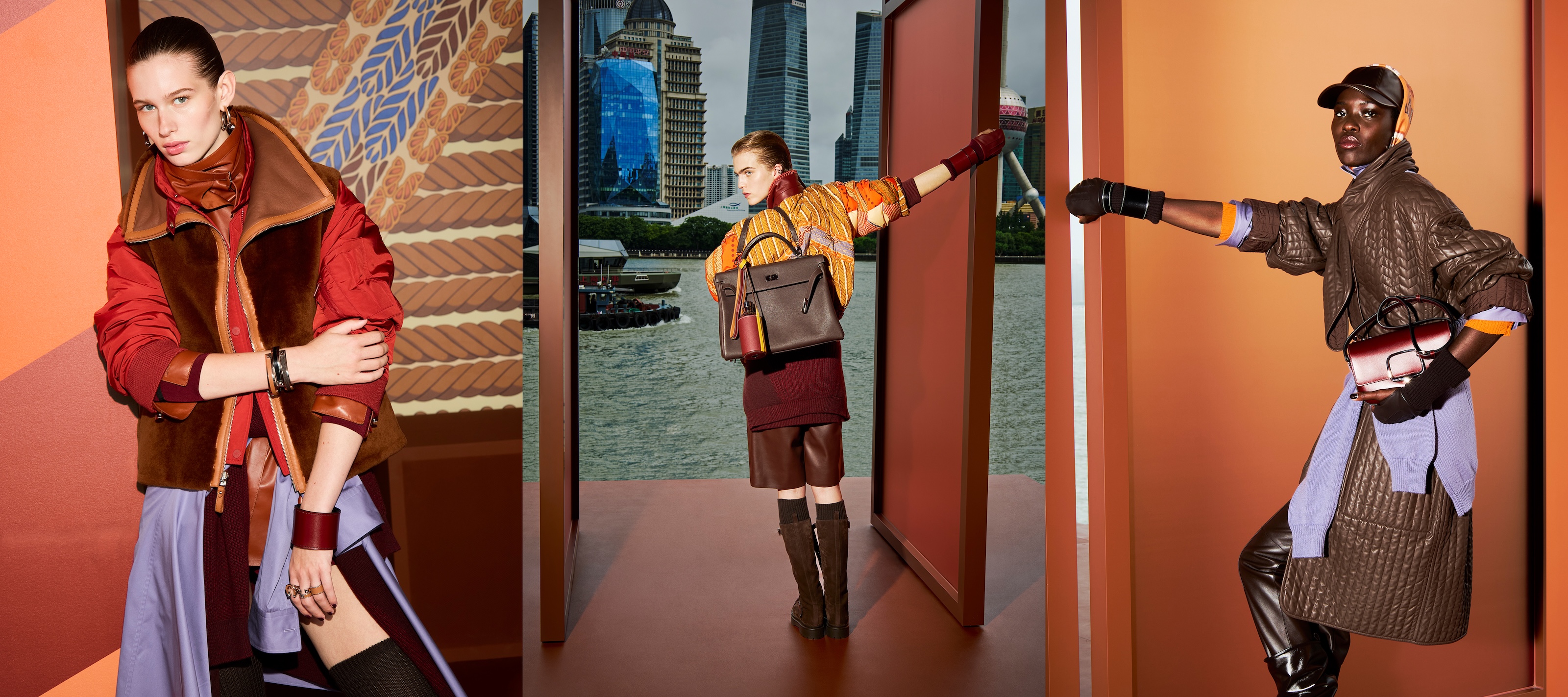
- Hermès raises the stakes: What do you do when everyone starts copying you? Hermès, which famously doesn’t have a marketing department, has been staging immersive, customer-facing events for decades, and now plenty of its lesser competitors have followed suit. How does a brand like that innovate? I see two opposite-end strategies being put into place here.
|
|
Photos: Feng Li/Courtesy of Hermès
|
- Last Friday, womenswear designer Nadège Vanhee showed a new collection in Shanghai—the second time the brand has done one of these cruise collection–style events, a sort of throwback to the way more-traditional luxury brands are marketed. (The first time was last year in New York. Both are priority markets for Hermès, which is still growing in China despite everything.) Then, starting this week in New York, from June 19 through June 29, Hermès will open Mystery at the Grooms, a sort of Sleep No More for the horsey set, at Pier 36. (Some spots are fully booked, but it says walk-ins are welcome if you need something to do with your aged-7-or-older kid.) Both of these events—one old-school, guaranteed to generate millions of dollars in sales via private-client invitees; the other out-of-the-box with zero direct conversions—likely cost millions to produce. The hope is that the goodwill felt for Hermès for all the delight they conjure is priceless.
|
|
|
|
News and notes on Kering poaching a French car executive to replace François-Henri Pinault, and some major fundraising intel out of Southern California, where the Kleveland sisters just scored some well-deserved capital to fuel Dôen’s next stage of growth.
|
|
|
|
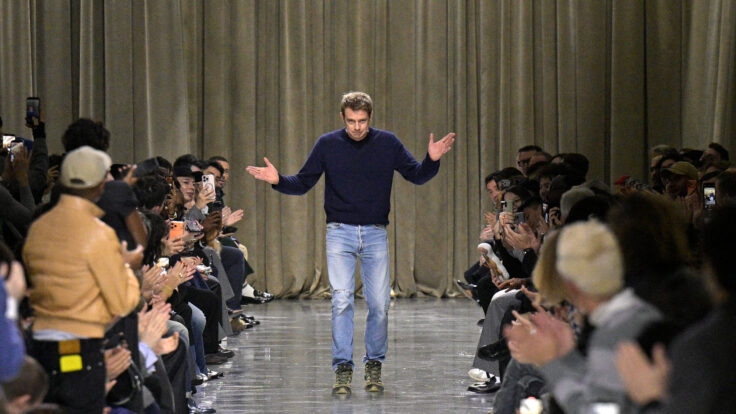
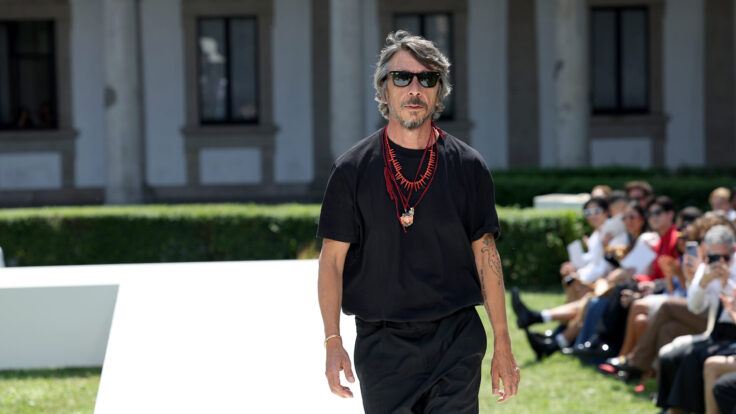
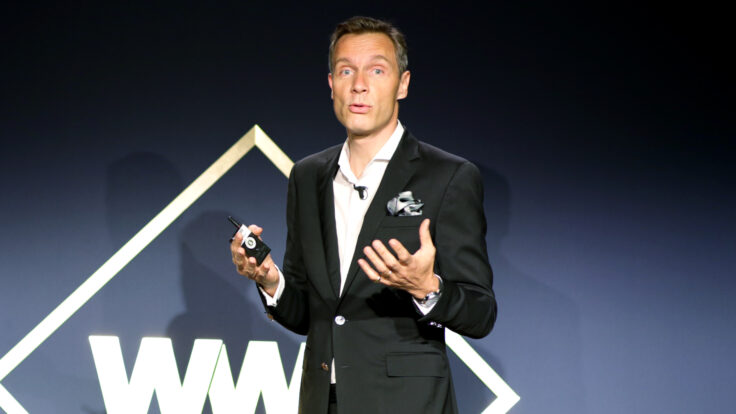
Luca de Meo, who stepped down from his post as the C.E.O. of the French carmaker Renault on Sunday, is the new C.E.O. of Kering. Current chief François-Henri Pinault, whose family office controls the fashion group, will stay on as chairman of the board. De Meo’s first day will be September 15, just in time for Milan Fashion Week. The market reacted favorably to early reports of the appointment, with Kering shares up 12 percent.
Succession planning has been underway for some time, as I wrote about a year ago, and likely began in earnest when FHP let go of Gucci C.E.O. Marco Bizzarri in 2023. In his note to press and investors after the close of the European markets on Monday, Pinault confirmed as much, expressing that he initiated the search two years ago, engaging two separate search firms, I’m told, including Jouve.
|
|
|
|
A MESSAGE FROM OUR SPONSOR
|
The quiet force behind fashion's fastest growing brands.
LEARN MORE
|
|
|
|
I’ll go deeper into this on Thursday (please send me your thoughts), but de Meo makes a heck of a lot more sense than internal candidates Jean-François Palus (a C.F.O.-type consigliere who knows very little about product) and current deputy C.E.O. Francesca Bellettini, who remains unproven in her current role. To be honest, there really aren’t any soft-luxury industry executives—not even the hard-nosed guys who will never get the top job at LVMH—prepared for this sort of turnaround project. Kering, after all, has lost two-thirds of its value over the past four years.
De Meo, however, is a brand guy with experience in turnarounds. He’s also an Italian with experience working with the French—which matters a lot here because Kering is a French company mostly run by Italians. (Two of its top three brands are based in Milan.) And while de Meo will rely heavily on Pinault, Palus and Bellettini will also need to educate him on the ways of soft luxury.
There are actually plenty of similarities between soft luxury and autos—brand power and positioning, global trade and economies of scale, craftsmanship, marketing execution, the marriage of innovation and hero products, temperamental executives, etcetera. For this next phase of the turnaround, however, Pinault needed a seasoned C.E.O. who knew how to manage through crisis, uncertainty, and scrutiny. De Meo, after all, helped Renault recover from the Carlos Ghosn nightmare.
|
|
Meanwhile, far, far away in Los Angeles, where Pinault has been spending time since Artémis, his family office, acquired CAA at a $7 billion valuation, a promising young label is getting a well-deserved boost. Dôen, the Southern California–based, decade-old maker of milkmaid dresses and lace separates, has raised a Series A funding round, led by Silas Capital, the New York–based investment firm with positions in Makeup By Mario, Tracksmith, etcetera. While a rep for Dôen confirmed the investment, the company declined to share the size of the round, or the valuation, although I’m told by sources familiar with the raise that it was about $25 million at a valuation north of $200 million.
Dôen, co-founded by sisters and West Coast fashion industry veterans Margaret and Katherine Kleveland, alongside a group of female friends that they deemed a collective, was developed at the height of the #MeToo movement, and initially much of the brand communication was around the startup being female-led. That’s true—Margaret is the C.E.O., Katherine is
the designer, and Holly Soroca is the president—but Dôen quickly rose above the rhetoric, thanks to its above-par photography and product and careful brand-building. Today, the company is on track to generate around $100 million in net sales this year, and is sold globally, from Le Bon Marché in Paris all the way to Tom Greyhound in South Korea. They’ve seen double-digit growth in every category: Sales at physical stores are up 80 percent year over year (46 percent at stores open at least one year) and e-commerce is up 40 percent, while wholesale is up 110 percent.
|
|
|
|
The Kleveland sisters bootstrapped the business on a sub-$1 million friends-and-family round, and waited until what felt like the last possible minute to raise significant capital, which will mostly be used to open more stores. (There are already seven.) This was a deal that a lot of different parties wanted in on, and I heard months ago that a team at Mousse Partners—the Wertheimer family’s investment fund—was poking around the business. Instead, Brian Thorne, the Silas partner who led the investment, won the opportunity. As most consumer investment firms started backing away from apparel in particular, Thorne—whose projects include Jenni Kayne’s beauty brand Oak Essentials and Roz haircare—made it clear to the market that Silas was open to investing in the category, despite its general headaches.
A $200+ million valuation for Dôen is rich, and it’s going to take a lot of expansion to get to the point where a private equity firm like L Catterton or Permira might show an interest. It also adds a fair amount of pressure on the Kleveland sisters, placing them further down the waterfall on a business that they bootstrapped themselves. The good news is that the brand has a lot more room to grow beyond retail, such as denim and shoes.
That said, if I know anything about the Kleveland sisters, their success has been predicated on a level of shrewdness and discipline that escapes most founders. And I expect that to continue. They operate in service to the brand, as do all great fashion executives, no matter if you’re running a $10 billion business out of Italy or a $100 million business out of Van Nuys.
|
If you want to know everything about the Warner Bros. Discovery split—I do!—read Bill Cohan here, Dylan Byers here, John Ourand here, Julia Alexander here, and Matt Belloni here and here. [ Puck]
My hilarious friend Sarah Miller wrote about her search for a comfortable shoe other than a sneaker, and along the way derided me as a millennial who recommended she wear sneakers. [ The Guardian]
Fulham will never be cool, but Ladbroke Grove? I’m feeling it! [ The New Statesman]
Do better, Bradley Cooper. [ Vogue]
|
|
Until tomorrow,
Lauren
P.S.: We are using affiliate links because we are a business. We may make a couple bucks off them.
|
|
|
|
Puck’s daily art market email, anchored by industry expert Marion Maneker, offers unparalleled access to the mega-auctions and galleries, elite buyers and sellers, and the power players who run this opaque world. Wall Power also features Julie Brener Davich, a veteran of Christie’s and Sotheby’s, who provides unique insights into how the business really works.
|
|
|
|
Puck founding partner Matt Belloni takes you inside the business of Hollywood, using exclusive reporting and insight to explain the backstories on everything from Marvel movies to the streaming wars.
|
|
|
Need help? Review our FAQ page or contact us for assistance. For brand partnerships, email ads@puck.news.
You received this email because you signed up to receive emails from Puck, or as part of your Puck account associated with . To stop receiving this newsletter and/or manage all your email preferences, click here.
|
|
Puck is published by Heat Media LLC. 107 Greenwich St, New York, NY 10006
|
|
|
|