Good evening. I’m Marion Maneker, and you’re reading Wall Power, the private email I write four times a week with Julie Davich about the inner workings of the art market.
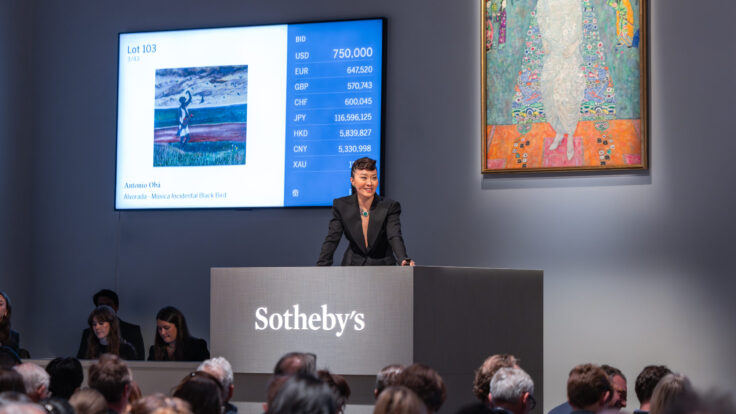
As I was preparing to distribute Wednesday’s Inner Circle email ( upgrade here), which included an interview with Mattia De Luca about his Giorgio Morandi show last fall in New York, some major news broke: Christie’s would soon have a new C.E.O., Bonnie Brennan, its longtime head of the Americas. My phone started to blow up with speculation about why the Pinaults were moving Guillaume Cerutti into a new role running their family collection. On the chessboard where Cerutti’s selection is just an opening move, I’ve got some thoughts regarding strategy and tactics below.
But first…
|
- Frieze Los Angeles is on: Finally, some good news about L.A., where the art world is gearing up to do its part to support its own. Moments ago, I received this statement from a Frieze spokesperson: “After careful consideration and extensive conversations with galleries, partners, and city-wide stakeholders, we can confirm that the sixth edition of Frieze Los Angeles will go ahead from February 20–23, 2025. Our hearts are with everyone affected by the devastating fires in Los Angeles. Since the fair’s founding six years ago, Frieze has been proud to support and be part of this vibrant community. The challenges the city is currently facing only strengthen our commitment to work alongside the community to rebuild and recover together.”
- Yves Saint Laurent’s “intimate” drawings for sale at Sotheby’s: Sotheby’s design department is holding sales coinciding with Men’s Fashion Week in Paris next week. They’ve got the last of the Karl Lagerfeld sales, and some of Saint Laurent and his partner Pierre Bergé’s keepsakes, such as Polaroids taken by Andy Warhol and some objects acquired from the Kugel gallery which are being sold by a friend of the couple. But the attention-getting items are a series of Y.S.L.’s erotic drawings, which the couple’s foundation has authenticated for the sale.
Despite splashy coverage in WWD, Sotheby’s is being exceptionally discreet in its management of these drawings. Less than a week before the sale, none of the lots are visible on Sotheby’s website. (Sotheby’s says all of the lots will be online next week.) In fact, there will be a private room dedicated to these intimate works during the public viewing—a surprising touch in an art world where Tom of Finland is regularly featured.
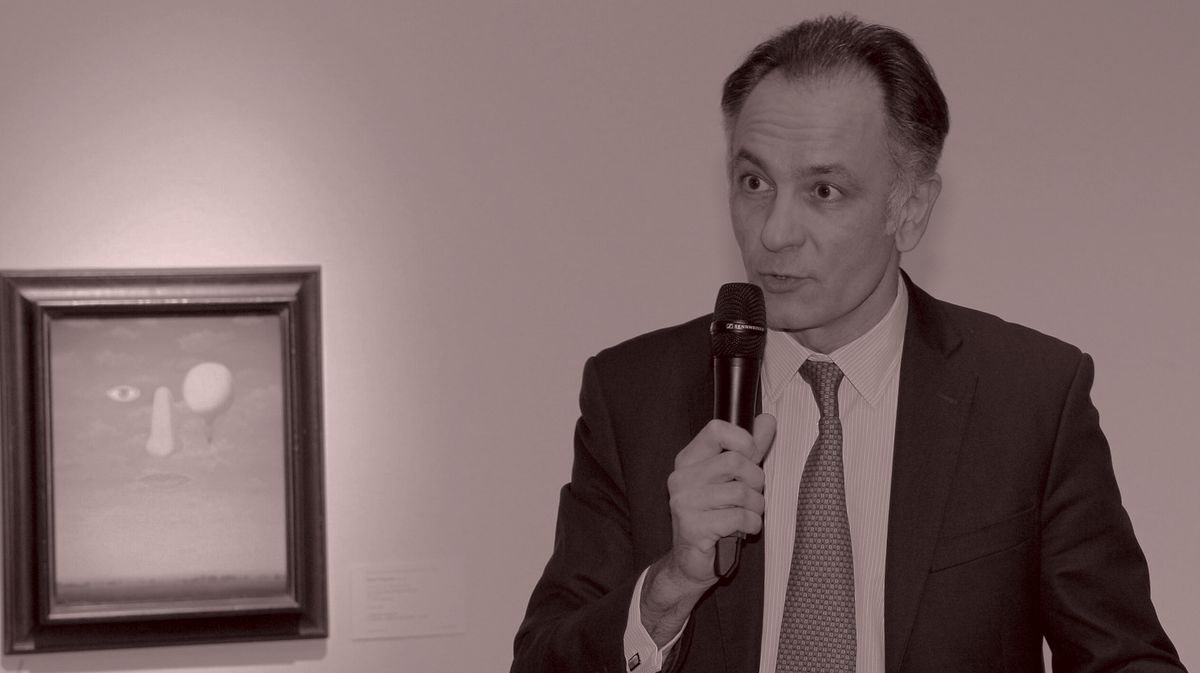
- For the cheapskates among you…: If you’ve not yet availed yourself of the opportunity to upgrade to the Inner Circle, I’ve saved a sliver of my interview with De Luca to convince you of the error of your ways. The Magnani-Rocca Foundation’s collection of 50 Morandis, assembled by Italian musicologist and art critic Luigi Magnani, opened at David Zwirner last night. Here are some more of De Luca’s thoughts on Morandi:
Marion Maneker: Morandi was very active as a painter for 40 to 50 years, but there are only around 1,300 paintings.
Mattia De Luca: He was exacting. How many would that make, 20 to 30 paintings a year? If you think about it, it’s not that much. Did you ever see pictures of the table where he painted? He put these very thin sheets of paper on the table. He would place the objects and then draw circles around the circumference of the bottom of the object. That way, he knew if he wanted to go back to the same position the day after or in a different light, he would know where to put them back.So he didn’t have a studio, where he could set up a still life and leave it there. He had to reassemble it every day? There’s a beautiful show in Paris now at the Giacometti Institute called Morandi Giacometti. It ties the artists together very well. They were both obsessive. They both had very small studios. They had a bed in the studio, both of them. Morandi had a single bed, the easel, and table.
There’s something about these images stripped down that makes it possible for people to feel strong emotions.
What we know is that during both World Wars—because he was there for both wars—he had a huge depressive crisis. So he was even more locked within himself and his world during those years. I think that is quite evident also in the works themselves. The wars were very, very tough for him.
But I discovered something that I didn’t know, which is quite funny to imagine about Morandi. Everyone has this idea of him being locked in that room, and all he did was paint. Which was true. But, also, he would go to the brothel every morning before starting to paint. Obviously, sexuality was very different at the time. He would go have his encounters and then work all day in his room. So he did have some sort of life outside his four walls. I didn’t know this before. I just discovered it.
|
|
|
|
And now, on to the Christie’s subplot…
|
|
|
|
News of Guillaume Cerutti’s ascent to run the Pinault Collection set off a predictable game of telephone in the art market, filled with all sorts of informed (and uninformed) speculation about what the family might be plotting. Herewith, a summary of the inside conversation, from the Qataris to the Arnaults.
|
|
|
|
The announcement of Guillaume Cerutti’s ascent to a new role as chairman of the board at Christie’s and president of the Pinault Collection—which the initial press release described as “a new organization for the artistic and cultural activities” of François Pinault and his son François-Henri Pinault’s holding company, Groupe Artémis—prompted a number of people in the auction business to contemplate the meaning of the appointment. After all, Pinault père, who turns 89 this summer, is approaching the inevitable destination for all mankind. His most cherished projects need a steward.
In that sense, Cerutti is the ideal person to take charge of Pinault’s three museums (two in Venice, one in Paris); the extensive art collection of 10,000 objects; and assorted residencies and initiatives. Since the Pinaults hired him to run Christie’s, eight years ago, he’s restructured some important parts of the business. Before that, he served in a variety of French governmental posts, including as chief of staff to the minister of culture.
But a larger clue may lie in his previous appointment. Cerutti spent five years as the managing director of the Centre Pompidou, which includes an art museum that has become a symbol of Paris’s forward thinking, sophistication, and cultural prestige. Designed by a young Richard Rogers and Renzo Piano, the architecture was a harbinger of the institution’s status as the second largest museum of modern and contemporary art in the world, behind MoMA.
In France, the politics of culture are, of course, hugely important. Just look at the way both the Pinaults and Arnaults leaped into action to rebuild Notre Dame after it burned, in 2019, or how Bernard Arnault ostensibly piloted the Paris Olympics last summer. “The Pinaults have big plans,” one close Christie’s observer texted me after the news broke. But for what?
The Pinault Collection has sponsored, spawned, and sent out into the museum world many highly regarded shows. Nevertheless, it has been edged out by Arnault’s Fondation Louis Vuitton, which has scored more attention and social prestige. In this view, Cerutti could do for the Pinault Collection exactly what he did for Christie’s: raise its metabolism and push it relentlessly to the forefront.
Others, connecting the news to rumors of M. Pinault’s poor health, made different conjectures. Without his father’s personal passion for collecting, they posited, François-Henri would be inclined to reconfigure the art and museums for Artémis’s interests. Although a great deal of money was spent on the art, it’s not as simple as shutting the museums and selling the assets (not that there’s any indication François-Henri would want to). Under Cerutti’s trusted guidance, the family’s private art collection could be transformed into a public institution—maybe one to rival the Pompidou in carrying Paris’s reputation as the capital of art (and luxury and fashion) well into the 21st century. There might even be significant tax breaks in it.
|
But why would Cerutti give up a job he relished to run a smallish museum? Some pointed to the fact that, despite his surname, the 58-year-old is a Frenchman living in London, and Cerutti may be eager to get back in the mix on his home turf. There’s no reason a few years in Paris building up the Pinault collection wouldn’t give him a shot, with the right political breaks, at becoming minister of culture himself. What former chief of staff doesn’t dream of having the job he knows he could do better than his boss?
Some former Christie’s employees, however, turned their thoughts in the opposite direction: With Pinault gone and Cerutti back in Paris, wouldn’t the family begin to put out quiet feelers to sell the auction house? The art world continues to speculate—without much evidence—that François-Henri is eager to part with his father’s other passion project. Even if that were so, however, a dispassionate review of the Artémis portfolio—Kering, CAA, Christie’s, a large chunk of Puma, several vineyards, a chain of restaurants that make Bretagne crepes (Pinault is from Brittany), and the Stade Rennais football club—might favor keeping Christie’s in this day and age, when fashion and art ricochet off each other in unexpected ways.
The oldest parlor game in the auction business, after all, is the rampant speculation about who might buy Christie’s if the senior Pinault were persuaded to sell. And while it might be easier to sell Christie’s after the transition at Artémis from father to son, it isn’t clear if such a transaction would ever be easy.
Christie’s is locked into a highly competitive duopoly that can cause wild swings in revenue from year to year. Even if it weren’t so competitive with Sotheby’s, the supply of art and the business cycles still make the company anything but predictable. The lack of steady—even steadily declining—revenue and returns likely makes a deal less appealing to private equity.
Fifteen years ago, Sheikh Hamad al-Thani, the emir of Qatar, floated the idea of making a bid for the company in the Financial Times. Pinault didn’t flinch, so the Qataris instead hired Christie’s C.E.O. Ed Dolman to run their museum authority and glorify the state. Would the al-Thanis revisit the idea? There was talk that the al-Thanis turned down the chance to buy Sotheby’s from Patrick Drahi. (They weren’t willing to meet his price, which included a slight profit.) Again, this talk may just be conjecture and schadenfreude. Almost no one has the access to actually know this. But the rumors convey the curiosity and concern surrounding both the auction house and Cerutti’s transition.
Anyway, to play out the thought, just for fun: if the al-Thanis were to buy Christie’s while ADQ holds a significant stake in Sotheby’s, an interesting new dynamic could unfold in the marketplace. What would the Saudis do? Buy Phillips?
That said, there’s always a chance that some centibillionaire tech bro or art- hoovering finance sky lord could swoop in and make François-Henri very happy. The only other obvious buyer is the man who tried to buy Sotheby’s in the wake of the price-fixing scandal, in 2000, then pivoted to backing Simon de Pury in acquiring a then much-smaller (can you imagine it) Phillips auction house. Having gotten burned in the auction business, and effectively abandoning his stake in Phillips, it would be another two decades before he took a run at Gagosian, only to wind up with a likely disappointing financial relationship rather than an ownership stake. I’m talking, of course, about Bernard Arnault.
Personally, I don’t doubt the Arnaults would want to buy Christie’s. But if they expressed interest, would the Pinaults ever sell to them? Welcome to the art world…
|
|
Okay. I’m exhausted after playing fantasy French billionaire. I need to go lie down.
And, as you can tell from tonight’s story, I’m always happy to hear from you. Hit reply or use 917.825.1391 on Signal, WhatsApp, or plain old SMS text. Try it. I’ll get back to you toot sweet.
See you Sunday,
M
|
|
|
|
Puck founding partner Matt Belloni takes you inside the business of Hollywood, using exclusive reporting and insight to explain the backstories on everything from Marvel movies to the streaming wars.
|
|
|
|
The ultimate fashion industry bible, offering incisive reportage on all aspects of the business and its biggest players. Anchored by preeminent fashion journalist Lauren Sherman, Line Sheet also features veteran reporter Rachel Strugatz, who delivers unparalleled intel on what’s happening in the beauty industry, and Sarah Shapiro, a longtime retail strategist who writes about e-commerce, brick-and-mortar, D.T.C., and more.
|
|
|
Need help? Review our FAQ page or contact us for assistance. For brand partnerships, email ads@puck.news.
You received this email because you signed up to receive emails from Puck, or as part of your Puck account associated with . To stop receiving this newsletter and/or manage all your email preferences, click here.
|
|
Puck is published by Heat Media LLC. 107 Greenwich St, New York, NY 10006
|
|
|
|