{{ 'now' | timezone: 'America/New_York' | date: '%b %d, %Y' }} |
|
|
Hi, and welcome back to Line Sheet, reporting live from rainy Los Angeles. Thanks to everyone who
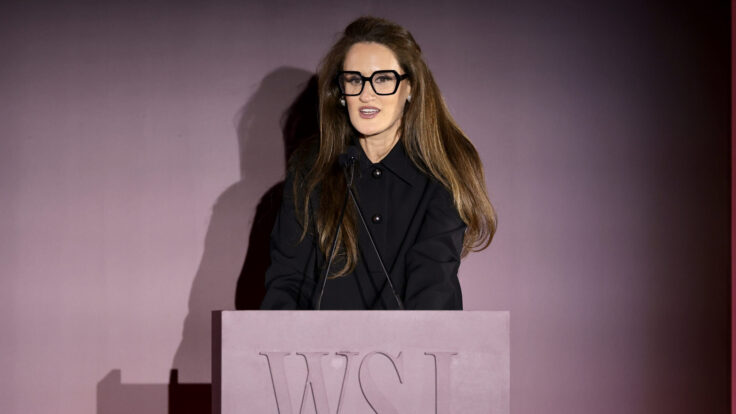
came out on Friday evening for the second annual Oscars edition of Puck’s Stories of the Season event. My conversation with four incredible, award-worthy costume designers will appear in the Fashion People feed soon.
In today’s issue, lots of intriguing news from Rodeo Drive to Brooklyn Heights. For the main event, I check in on Phoebe Philo, whose proposal of how women should dress in 2025 is influencing everyone else. Can Philo, husband-business
partner Max Wigram, and board member Delphine Arnault (LVMH is a minority investor) scale that vision in fashion’s new reality?
Tomorrow on Fashion People: Back by popular demand, stylist Kate Young has returned to offer her perspective on the Phoebe Philo situation, current awards season fashion, and French twists. Listen
here and here.
Mentioned in this issue: Saks Global, Marc Metrick, Phoebe Philo, Matthieu Blazy, Jonathan Anderson, Luca Guadagnino, Emily
Weiss’s stoop sale, Bernard Arnault, Galeries Lafayette, Bergdorf Goodman, Caitlin Soetendal, Sun Mizrahi, Governors Awards’ best dressed, Max Wigram, Khaite, Peter Doig, and many more… |
Three Things You
Should Know…
|
- More
vendor questions at Saks Global: Saks Global executives have been working hard during the past few weeks to mend relationships with brands to which they still owe millions of dollars. C.E.O. Marc Metrick has teamed up with Paolo Riva, the head of brand partnerships, to address concerns directly on a daily basis. Unlike the recently departed chief commercial officer, Emily Essner, Metrick
has deep relationships with the industry and his direct engagement offers a highly consequential form of customer service.
The results vary vendor by vendor. I’ve heard from several companies that they are getting some form of back payment every month, and that they are getting paid for 2025 shipments on the regular, if not always in the 90-day window. Others have suggested that Metrick might even be able to move the payment window back up to 60 days. (This timeline, of course, would
contradict his previous position that a 60-day window was unhealthy for all participants because of the pace at which inventory actually sells. For now, I’m told, the payment terms will stay as is, but…who knows.) Other vendors are still unhappy with the pace at which they are getting paid, obviously.
As this all plays out, I’m focused on chairman Richard Baker’s attempt to sell that 49 percent stake in Bergdorf Goodman that was floated in the press a few
weeks back. It’s unclear whether that kind of liquidity event would directly impact the receivables schedule, at least right now, but everything at Saks these days seems downstream from its liability management and debt service sitch. A rep for Saks Global had no comment.
|
|
|
A MESSAGE FROM OUR PARTNER |
|
|
- Baby’s
first Cruise show: One of the most fun things about all these new designers is the prospect of reimagined off-piste shows. First up, Matthieu Blazy will debut his first Métiers d’Art collection—a unique Chanel thing that showcases the company’s incredibly specialized crafts—in New York this December. And I hear that Jonathan Anderson’s first Cruise show for Dior is tentatively scheduled to take place May 15 in or around Los Angeles. (With the caveat that
these things can change, May is a long way away, etcetera. But they are scouting venues.) The location makes sense, given the importance of the Southern California market for all luxury brands, especially Dior, as well as Anderson’s personal connection to the entertainment industry as a working costume designer. His next film is Artificial, Luca Guadagnino’s Sam Altman biopic, which is set to be released next year. Never forget Altman’s double polo
collar circa 2008. A rep for Dior did not respond to a request for comment.
- The stoop sale to end all stoop sales: This past weekend, Glossier founder and former C.E.O. Emily Weiss decided to host a stoop sale at her $22.1 million Brooklyn Heights brownstone. Books on the literal block included Marx’s
Das Kapital, Dorothy Wall’s The Complete Adventures of Blinky Bill, an old copy of Forbes with Bernard Arnault on the cover. The books (about 500 in total) were all free. Other stuff included an Uppababy stroller that was priced at $425, a Margaux bag ($4,500), a knit set from The Row ($600), and lots of Elder Statesman sweaters. There was also a D.J. Weiss herself was on hand to share information about the designer clothes and other
items for sale.
Was this public display of obliviousness a sign of incredible vulnerability or merely jaundiced wealth-brain? An observer noted that at least one neighbor screamed, “This isn’t the West Village!” where Weiss and husband Will Gaybrick famously lived for a hot second prior to purchasing the Brooklyn home. Anyway, I reached out to Weiss to ask whether there was a charitable element to the sale, and also what motivated her to stage it. She responded with a
good deal of information, including multiple videos and images from what ended up being a major weekend event for little ladies (and some gentlemen) in the five boroughs looking to snag a piece of Weiss’s Instagram-perfect life.
Weiss said the event was “SO fun,” and that 10 percent of the proceeds would go to a to-be-chosen Brooklyn-based charity. “The idea wasn’t to make the most money (honestly I could make more on The RealReal) but to create a fun event to bring surprise and delight
to the community,” she texted me. “And to see and talk to the people who bring new life to a treasured item. You can’t do that with online sales!” She came up with the idea two weeks ago. This is why Emily Weiss is Emily Weiss.
|
Now, on to the main event… |
|
|
Two years into her big experiment launching an independent brand, it’s clear that Phoebe
Philo remains the visionary of her generation. At some point, though, Philo will have to decide how much she wants to integrate into the larger fashion system, which has long appropriated and profited off her ideas. |
|
|
Last week, Phoebe Philo released another series of looks from Collection C,
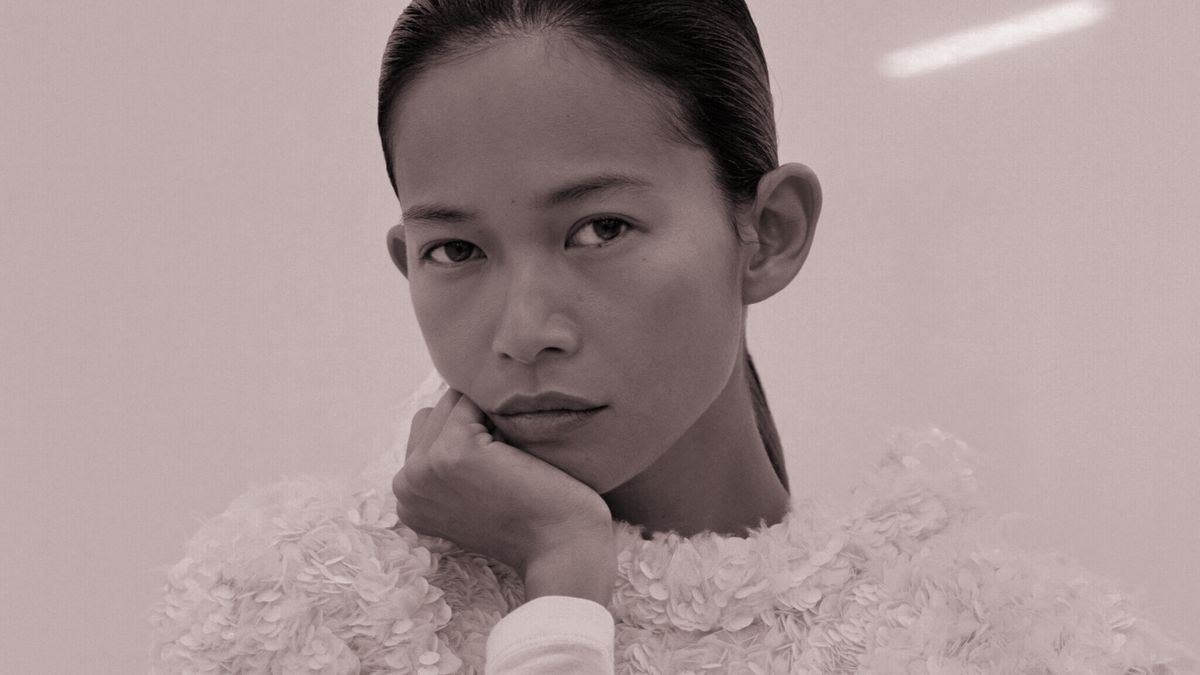
her third articulation of what it means to be a fashion brand in 2025. Imagery of the 16 pieces was shared widely across social media: model Caitlin Soetendal smiling with her teeth, wearing a napkin-collar sweater in sculpted cashmere; Sun Mizrahi’s hair arranged in a deep wide part, framed to show off silvery earrings made from a burst of organic-looking resin pearls; etcetera. They make abundantly clear how this drop, which was previewed by images that were
originally released in March 2025, has already influenced other designers during the intervening months. After all, Philo is the leading visionary of her generation—the last real authority. She dictates how people dress, and other designers follow her rules consciously or not.
Since its 2023 launch, Philo has developed the company along a far different path than the one she walked at Céline for LVMH or, previously, Chloé for Richemont. The process was fraught, and success was initially in
doubt amid mounting losses and some uncertain early operational decisions—the natural order of things for a startup. But many of the early principles that Philo and her husband-business partner, Max Wigram, laid out are still being honored. The drip feed of the product, inspired by the drop model, provides the requisite newness throughout the year. The focus on the owned and operated platform—now amplified by proliferation in select physical retail—is still viewed as the way to
do things in this post-multichannel world. The brand retains momentum as it gathers data, all while positioning Philo as a true artist sending white smoke signals from the maison.
Then there’s the way the imagery and clothes have inspired others, from the analog style of the photography to the silhouettes, materials, and concepts. (Philo’s fluo-red will be the defining color of the 2020s.) Meanwhile, her and Wigram’s entanglement with the art and hospitality worlds—the brand’s sponsorship
of Peter Doig’s “intoxicating” show at the Serpentine Galleries in London; Wigram’s purchase of the Three Horseshoes pub in Batcombe, Somerset; etcetera—all contribute to the feeling that the brand is ground zero for a particular fragment of culture, real or contrived.
All of that is for naught if the product doesn’t sell. And therein lies the good news: From what I am told, it is moving. The swingy Gig bag, first introduced in a larger, commuter-friendly style, has been
shrunk down for car culture cities, where there’s no need to lug so much stuff around. The tinier version retails for $2,700, and has become a go-to for those wanting to cycle out their Margauxs and Andiamos. “When you see people like [stylist] Lotta Volkova carrying, it’s the beginning of it,” one industry executive said. “It’s happening.”
Similarly, the zip-back pants have become a staple in urban wardrobes in Paris, Milan, and London. In fact, you’ll
observe them all over these days, and not just on women. At many of its major physical retail spaces—including Bergdorf Goodman and Galeries Lafayette—some 40 percent of the customers are men. (A rep for the brand did not respond to a request for comment regarding this intel.) |
|
|
A MESSAGE FROM OUR PARTNER |
|
|
Phoebe Philo is a private company and shares figures only when it has to via the British registrar, which
means the only available public financial information on the company is from 2023—a virtually prehistoric time, when it had been operating for just two months. But given the retail expansion (shop-in-shops in China, plus plans for a store on Mount Street in London) and the high-level distribution throughout Asia (not to mention the peak brand awareness among fashion consumers, and a robust private client business), I’d estimate (with help from industry sources with knowledge of these things)
that the business is already generating $20 million-30 million in annual revenue. And I’d surmise that the business could double quickly, albeit less profitably, by scaling distribution and opening up stand-alone stores.
Think about it this way: It took Khaite nine years to get to $120 million a year in revenue, but a lot of that business has been concentrated in the U.S., with a chunk in Asia. Also, Khaite had zero name brand recognition or clientele when Cate
Holstein founded the company. Philo had a running head start for all the aforementioned reasons, which facilitated a path to an investment from LVMH and the support of board member Delphine Arnault, providing a potential lever for scale and the wisdom to know how to deploy it. |
Going forward, Phoebe Philo has two clear challenges it needs to rationalize. First, the company needs to
sync its pricing in Europe with the U.S. market, where goods can cost nearly twice as much. Earlier this year, I bought a suit in Paris at Galeries Lafayette that cost roughly $3,000 total after I received my tax refund. If I had bought the same suit in New York at Bergdorf Goodman, it would have been close to $6,000. That’s easier said than done: Tariff hell and the rising cost of raw materials make it difficult for a brand like Phoebe Philo to harmonize prices across regions like Chanel or
Hermès. But given the stressed-out retail environment stateside—the stores were dead this past weekend, and some brands are down 40 percent from last year at this time—offering value is increasingly important.
You can see Philo attempting to do this to a certain extent already—the small (better) version of the Gig comes in at $2,700, while most other “It” bags start at $4,200. There are also some downright good deals in this latest drop. I reckon that the cluster sequin dress—a liquidy knit
paired with a chunky, matte-sequin cropped top—which retails in the U.S. for $3,900, could cost more like $10,000. But that same dress retails for €2,800, or $3,200 at current exchange, in Europe. Factor in the tax refund and you are saving more than $1,000 if you buy it when you’re abroad.
Second, and more broadly, Philo and Wigram will have to decide how much they want to integrate into the larger fashion system, which has long appropriated and profited off her ideas. So far, from a
marketing perspective, Philo has essentially done the opposite of what she did at Céline, where there was no social media and no online commerce. It was a very traditional way of disseminating content: She hosted a small, exclusive fashion show, and those images would travel around the internet. Long before The Row was hosting no-photo shows, Philo staged a private viewing for her last collection at Céline.
But people tend to make different decisions when their own capital is at stake:
Just as she has moved back into wholesale—perhaps more quickly than she had imagined—one can’t help but wonder if it is worth Philo getting back into the runway game. From what I know about her, she is a person who needs a deadline, and while the demand for seasonal collections is strong enough now that she is forced to produce something, a runway show would organize her creativity.
Yes, yes, Philo has gone to great lengths to demonstrate that she is developing the brand by
creating sheer desire, void of all the tricks most peers have to employ in order to get people to buy stuff. On the other hand, her ideas are so seminal and important to the work of other designers that it would be fun to see them within the context of the Fashion Week conversation again. And, most of all, scaling to the level where the business must consider tactics it once forswore isn’t a bad thing. Some call it selling out, and yet that is also the goal. |
What I’m Reading… and
Looking At…
|
One of my favorite colleagues,
What I’m Hearing’s Matt Belloni, was the subject of a glowing profile in the paper of record this weekend, written by the one and only Irina Aleksander. He is an inspiration to us all (but especially me!) and the leading example of how to cover an incredibly powerful industry… especially one in decline.
[New York Times]
Dev Hynes performing with Zadie Smith is, as one editor put it, “the chicest thing I have ever seen in my life.” [BBC]
Best dressed at the Governors Awards (What are they, anyway? We’ll
never know): Jacob Elordi in Bottega Veneta, Celine Song in Thom Browne, Eva Victor in the first custom Loewe under Jack and Lazaro, Jennifer Lawrence in Dior and JAR (!!!!) jewelry, Emma Stone in Louis Vuitton, Mia Goth in Dior, Dakota Johnson in Valentino, Alexander Skarsgård in Saint Laurent (with red nail polish),
Josh O’Connor in Dior (it’s getting better), Queen Latifah in Lanvin. [Vogue and Esquire]
Gift guide queen Kaitlin Phillips interviews New York mag
staff about their impressive gift guide process. It’s not an easy thing. [Gift Guide]
I’m not sure I need to read the book but I am sure that I loved the profile.
[New York Times]
Do we all need this Givenchy top? [Net-a-Porter]
These sketches of six New York chefs’ dream kitchens are… dreamy.
[Magasin]
There were a lot of fun book launches last week in Paris, including the release of Duran Lantink and Mark Borthwick’s Wildness at the
Broken Arm last Friday night. (Borthwick captured Lantink’s final runway show before taking over at Jean Paul Gaultier.) Also: They served madeleines covered in pink icing at the party for the Important Flowers pop-up at 7L in Paris. [Sofia Coppola’s
Instagram] |
And finally…
“Tender” is the real word of 2025!
Until tomorrow,
Lauren
P.S.: We use affiliate links because we are a business. We may make a couple bucks off them. |
|
|
Puck’s daily art market email, anchored by industry expert Marion Maneker, offers unparalleled access to the mega-auctions and
galleries, elite buyers and sellers, and the power players who run this opaque world. Wall Power also features Julie Brener Davich, a veteran of Christie’s and Sotheby’s, who provides unique insights into how the business really works. |
|
|
Puck founding partner Matt Belloni takes you inside the business of Hollywood, using exclusive reporting and insight to explain
the backstories on everything from Marvel movies to the streaming wars. |
|
|
Need help? Review our
FAQ page or contact us for assistance. For brand partnerships, email ads@puck.news.
You received this email because you signed up to receive emails from Puck, or as part of your Puck account associated with {{customer.email}}. To stop receiving this newsletter and/or manage all your email preferences, click here. |
Puck is published by Heat Media LLC. 107 Greenwich St., New York, NY 10006 |
|
|
|