Welcome back to Wall Power, sports fans. I’m Marion Maneker, writing to
you from Nantucket, where I’ll be cohosting a Puck event tomorrow at an undisclosed but suitably worn-in location.
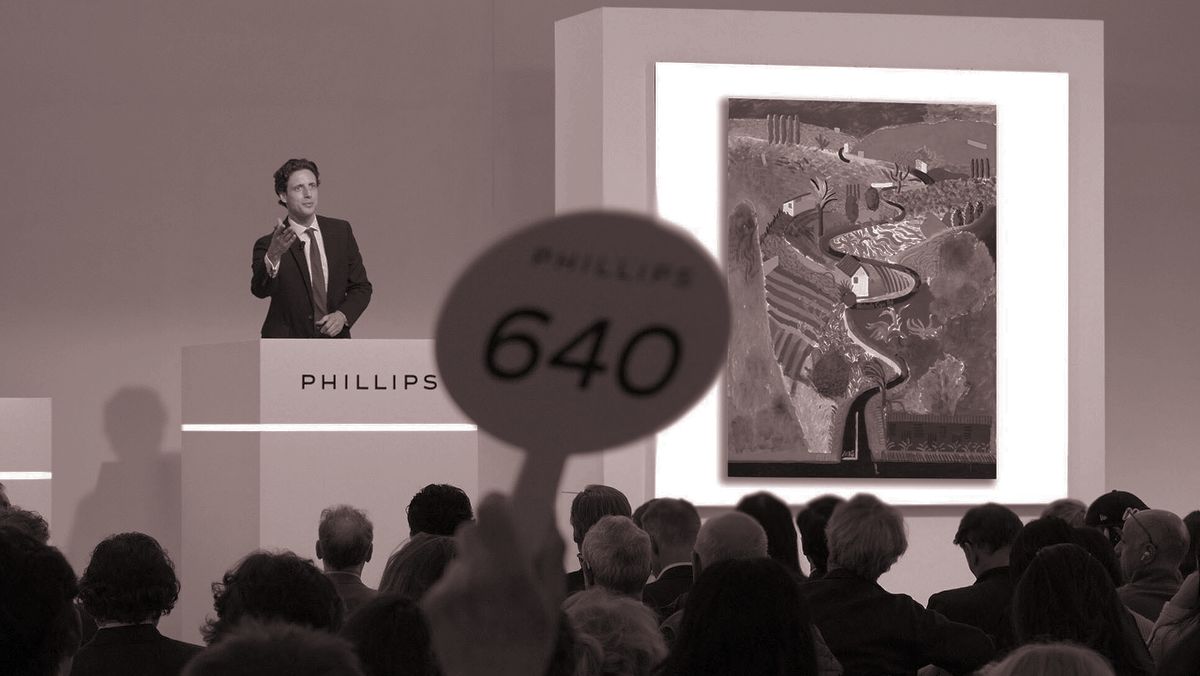
Today, Phillips announced both a new fee structure and a totally new wrinkle in the live auction process. Starting this fall, its bidders will be able to take an early position on a lot that will enable the bidder to pay a lower fee—not just on the initial bid at the low estimate, but also on any subsequent bid. I’ll explain more about this dynamic model
below.
Also, there’s been a lot of talk in the chat and over lunches and drinks about the legal papers that art advisor Abigail Asher filed as a counterclaim against her former partner Barbara Guggenheim, the Los Angeles art advisor who was married to the late Bert Fields and just wed the legendary venture capitalist Alan Patricof. In the endnotes, I’ll explain why some of the heavy breathing over the whole thing is
unwarranted and wholly disconnected from the perception that the art market is in a malaise.
But first… |
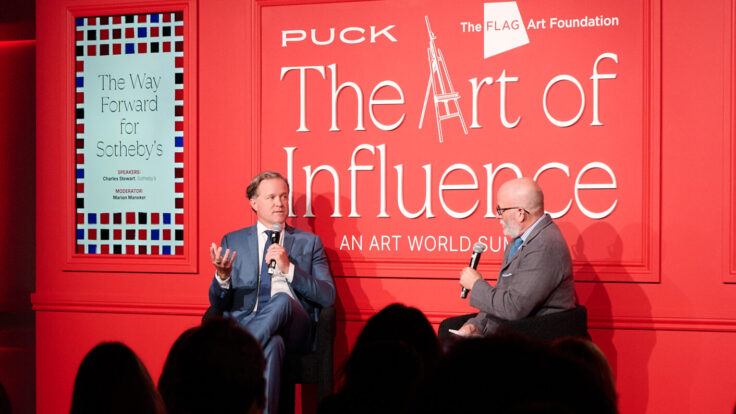
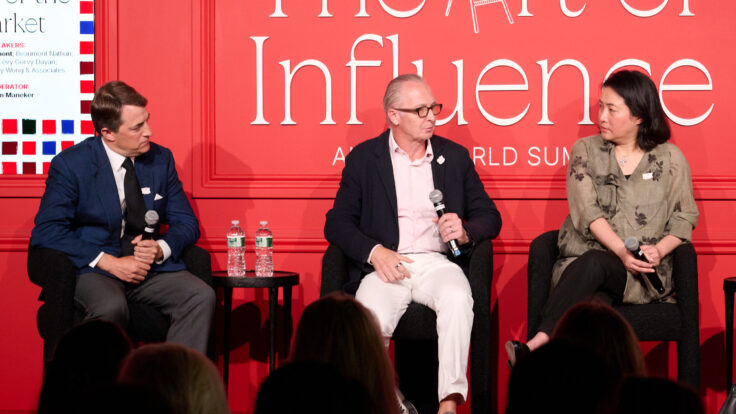
We’ve added some speakers to The Art of Influence, the one-day (10 a.m. to 4 p.m.) event Puck is holding in
partnership with the FLAG Art Foundation at SECOND in Chelsea on September 15. The gathering will offer a candid discussion about the current state of the art market and all its key constituencies: artists, collectors, dealers, auction houses, museums, and art advisors.
Joining us will be Sotheby’s C.E.O. Charles Stewart, collectors Michael Ovitz and J. Tomilson Hill, and the director of the Brooklyn Museum, Anne
Pasternak. We’ve previously announced that Larry Gagosian, Nicolas Party, Dasha Zhukova, and Glenn Fuhrman will appear at the event, and we’re not done announcing names yet. Get your tickets before they sell out. We’re keeping the summit small so the conversation stays intimate and forthright. I hope you’ll join
us.
Now, right to the main event… |
|
|
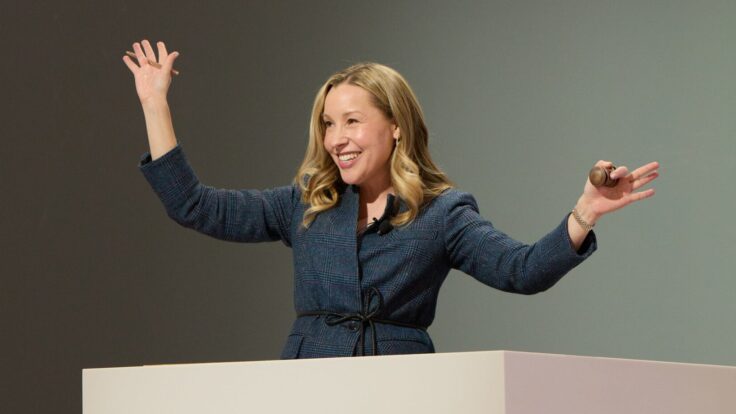
As auction houses look to regain their mojo by tweaking pricing and structures, Phillips has
announced a true potential game-changer—a triple whammy that increases the buyer’s premium, offers a discount to early bidders, and previews intent. So… will it work? |
|
|
Sandy Heller, the powerful art advisor, was being interviewed by Christie’s global president
Alex Rotter last week during a conference at Radio City Music Hall when he mentioned winning a lot at auction for his client. “Then I have to deal with your fees,” he said, taking a good-natured swipe at the buyer’s premium Christie’s charges. Regardless of how much money one has, of course, no one likes paying fees. Yes, rich people can often seem stingy, but sometimes that’s just downstream of the feeling that there’s always more to pay. (Or maybe the feeling
that they shouldn’t have to pay the fees everyone else pays.)
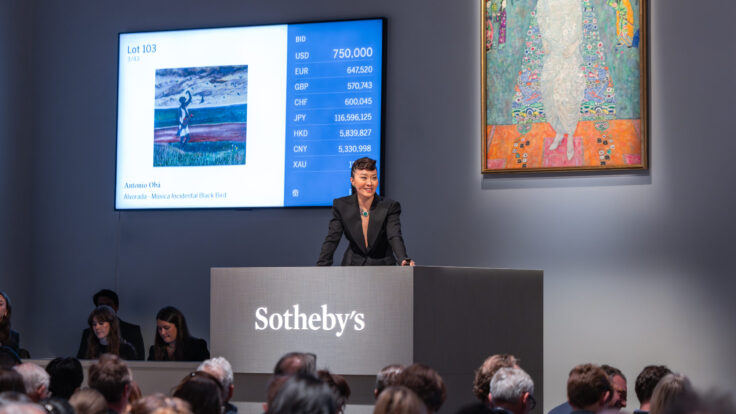
The matter of rising fees and bidder incentives came into focus today as Phillips announced both a higher fee structure and, notably, a new priority bidding system. The house ostensibly hopes that these changes will spread out some of the advantages of third-party guarantees to a broader pool of buyers, while simultaneously encouraging more bidding in the room—in addition to enhancing the house’s ability to
gather market intelligence in advance of a sale.
The smallest of the three main fine art auction houses, Phillips doesn’t have the chance to compete on volume and must charge slightly more than their rivals. So with its new buyer’s premium, Phillips will have the highest buyer’s premium on the first $1 million (£800,000 or HK$7.5 million) spent, at 29 percent. Above that first-million threshold, the house will charge 22 percent up to $6 million (£4.5 million and HK$50 million).
Phillips will then charge 15 percent on any amount over that. (For comparison, Christie’s charges 26 percent on the first $1 million or £800,000; 21 percent up to $6 million or £4.5 million; and 15 percent thereafter. Sotheby’s charges 27 percent up to $1 million; 22 percent from $1 million to $8 million; and 15 percent thereafter.)
More notable, however, is a new wrinkle that Phillips is calling “priority bidding,” where buyers who commit to the low estimate any time up to 48 hours
before the live auction will pay a lower fee. In the press release, the house’s new C.E.O., Martin Wilson, suggested that priority bidding would encourage “early engagement” and ”generate spirited bidding” from buyers, “while also providing greater certainty for sellers.” He continued: “Rewarding all buyers who commit early will create more momentum in the early stages of bidding and a compelling auction experience.”
The auction houses have been trying to address the
pricing structure conundrum for some time. A year ago, most memorably, sellers were trying to digest Sotheby’s dramatic resetting of its fee structure: In exchange for ending enhanced hammer deals—wherein the consignor keeps some of the buyer’s premium—Sotheby’s introduced a novel concept: reducing its buyer’s premium and moving some of the revenue burden onto the seller, who is, after all, the auction house’s true client.
In the words of a former boss of mine, it made too much
sense, and no one would ever go for it. And, indeed, no one did—not the consignors who wanted to be wooed with deal sweeteners, nor the other auction houses, which let Sotheby’s take the risk and bear the consequences. Less than a year later, Sotheby’s reverted to its former fee structure and even raised its initial fees slightly. All of which makes Phillips’s proposed innovation that much more bold and interesting to watch. |
Will Phillips’s tweaks really create more momentum? If a buyer submits a priority bid for (or above)
the estimate some 48 hours or more before the auction and has the winning bid, that buyer will pay only a 25 percent buyer’s premium on the first $1 million. From there, they’ll shell out 20 percent from $1 million to $6 million, and 14 percent thereafter. If there are subsequent bids after the priority bid, but the priority bidder wins the auction, that bidder will still only pay the priority bid fee structure—starting with 25 percent, not 29 percent, on the hammer price.
Houses
like Heritage and Sotheby’s already have an early bidding system, but only for day sale lots. Phillips is taking this one step further by offering the lower fee structure to buyers who commit to acquiring works at the low estimate. After all, discounted fees—lower than Phillips’s customary fees and those of the other two houses—should greatly incentivize bidders to both submit an early priority bid and stay engaged. In other words, Phillips hopes this will encourage activity in the room
by converting interested bidders into engaged bidders. (Priority bidding only applies to the house’s live auctions and will not be employed in the watch sales.) This new priority bidding system doesn’t eliminate the third-party guarantee structure, but it does create advantages, for bidder and house alike, to making an early commitment to a broader range of material at lower price points.
There is a growing sense of boredom with the third-party guarantee process in the
auction world. On certain lots, bidders do take the presence of a guarantee as a form of validation. Many buyers won’t play at all if they cannot get the third-party guarantee for themselves. Now Phillips is adding another layer. Will priority bids fuel the interest of other bidders who see the works validated by a willing buyer at the estimate? Or will the knowledge that at least one rival is going to pay lower fees give the bidders less incentive?
Phillips is aware of the risks and has
only committed to the priority bidding system through the fall auctions. The new structure is being announced now to assist the specialists in their property gathering. |
Interestingly, the house views the new priority bidding system as benefitting sellers more than buyers. The
prevalence of art advisors in the business, and the widespread engagement online, has reduced the auction houses’ first-hand knowledge of bidder intent. Put simply, with more people viewing the catalogues and registering for a paddle online, especially at Phillips, the house is deprived of valuable feedback from direct conversations with potential buyers.
The priority bidding system, Phillips hopes, will restore some of that knowledge. Since bids are due 48 hours before the auction,
sellers will have a better sense of buyer intent. If no one has taken the priority bid, the consignor might want to rethink their reserve price or even withdraw the lot.
As a result, of course, the priority bidding system might lead to more withdrawn lots. But is that really such a terrible thing? In the end, the houses are looking for something that will help attract new buyers and engage what appears to be a changing client base in a new way. Something’s got to give. |
Judging from my inbox, everyone has read Abigail Asher’s recent countersuit against her
former partner Barbara Guggenheim, who sued Asher a year ago. Some of the papers in that suit have been sealed, so we don’t know the full extent of Guggenheim’s claims against Asher. According to Katya Kazakina at Artnet, however, “Guggenheim alleges that Asher misappropriated $20.5
million in commissions, contract fees, and payments. She claims that Asher used the firm as her ‘piggy bank.’” Collector Sylvain Levy, a prolific LinkedIn poster, proffered that it was “more
than a private dispute between two prominent figures. It is a public moment of reckoning for an industry that has long operated on trust, discretion, and informality at the highest levels.” I’m not so sure about that.
I know July is a slow month for the art world, but there’s little in this legal case that resonates beyond the business divorce. Nothing about it connects to Tim Blum’s announcement that he is burnt out or Adam Lindemann’s declaration that
everyone was nicer to him when he was a collector. Nor is there anything here that echoes the fraud that Lisa Schiff perpetrated upon her clients. For her part, Asher has launched a scorched earth campaign also accusing Guggenheim of misusing company funds. But the bulk of the complaint is just, well, mean. There are multiple prudish references to Guggenheim’s sex life. But the real headscratcher is how many pages are devoted to examples of Guggenheim’s purported emails
containing jumbled letters or confusing references. The accusation seems to that… she’s bad at email.
A detail that’s gotten less attention may lend some perspective to Guggenheim’s initial suit from a year ago. Some will remember that Guggenheim’s husband, Bert Fields, died in 2022. According to the complaint, Guggenheim told Asher she was broke in 2023, and that “Guggenheim decided to remedy this problem by marrying her longtime paramour, Alan Patricof.
But the marriage didn’t provide the financial security that Guggenheim was hoping for. Guggenheim told Asher that Patricof would provide Guggenheim with no more than $100,000 a year. And Guggenheim told Asher that Patricof would not provide for her to any large extent in his will.”
Guggenheim’s lawyer, William Charron, emailed me tonight flatly denying Asher’s claims. “Ms. Guggenheim showed class by keeping her own, more serious $16+ million lawsuit relatively under wraps
for the last year,” he wrote. “Ms. Asher, on the other hand, decided to create a press spectacle with her own stunt suit filed in the same court. We are looking forward to clearing Ms. Guggenheim’s good name, and to holding Ms. Asher fully accountable.”
But Asher’s suit does raise a good question: If Guggenheim’s initial claims against her were without merit, why go public with these thin allegations? After all, it’s not a crime to be bad at email. |
|
|
Finally, a media podcast about what’s actually happening in the media—not the oversanitized,
legal-and-standards-approved version you read online. Join Dylan Byers, Puck’s veteran media reporter, as he sits down with TV personalities, moguls, pundits, and industry executives for raw, honest, sometimes salacious conversations about the business of media and its biggest egos. New episodes publish every Tuesday and Friday. |
|
|
The industry’s go-to source for unflinching reporting on the trillion-dollar business of artificial intelligence - perhaps the
single most important technology of our time. Ian Krietzberg, the powerhouse journalist behind The Deep View, delivers twice-weekly insights into the latest dealmaking and breakthroughs in A.I., and how the intersecting worlds of finance, entertainment, media, and politics are being transformed in its wake. |
|
|
Need help? Review our FAQ page or contact us for assistance. For brand partnerships, email ads@puck.news. You received this email because you signed up to receive emails from Puck, or as part of your Puck account associated with {{customer.email}}. To stop receiving this newsletter and/or manage all your email preferences, click here. |
Puck is published by Heat Media LLC. 107 Greenwich St, New York, NY 10006 |
|
|
|