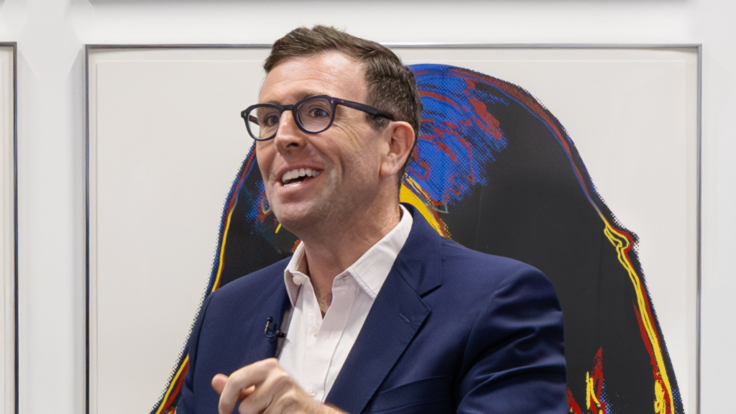
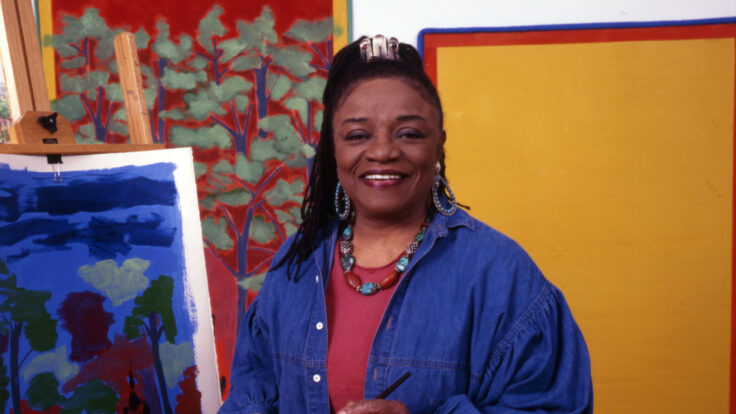
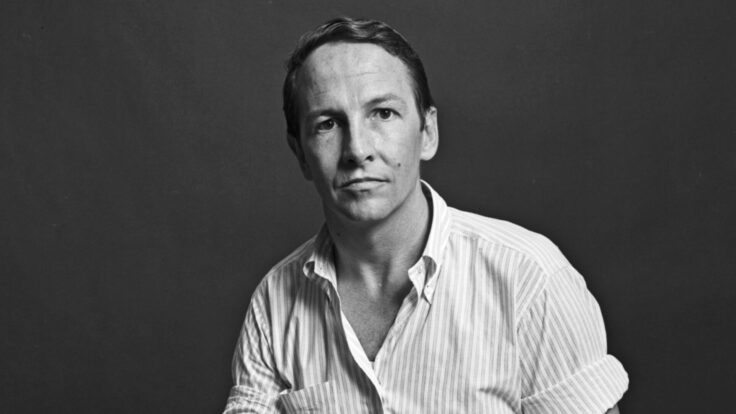
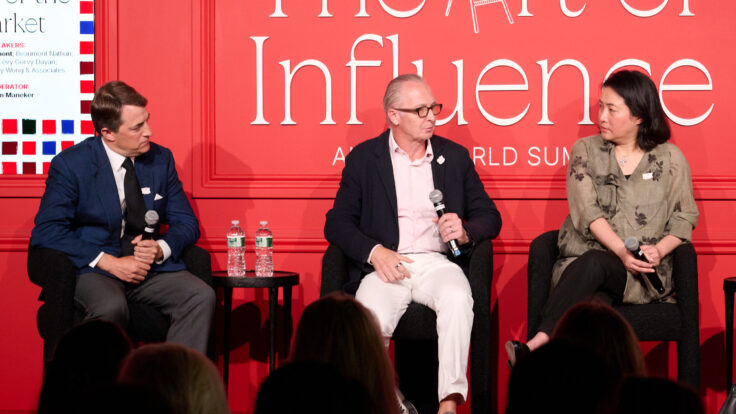
Welcome back to Wall Power. I’m Marion Maneker.
Tonight, we’re
returning to Philadelphia to discuss A Nation of Artists—the massive two-museum show that celebrates the 250th anniversary of the United States, Philadelphia’s own history of art institutions, and the collection of the Middleton family. With more than a thousand objects on display, the twin shows explore the integral role that art plays in America’s material wealth and social expression.
Up top, there’s a new C.O.O. at Frieze; a new partner joins Fair Warning;
and David Nahmad loses his Modigliani. Also, Guillaume Cerutti has some unvarnished observations on why the buyer’s premium keeps going up and up and up.
Also mentioned in this issue: Frank Lasry, Loïc Gouzer, Saara Pritchard, Lynne Drexler, Oscar Stettiner, Patti Wong, Sasha Suda, Daniel Weiss,
Charles Willson Peale, William Rush, Thomas Eakins, Cecilia Beaux, and many more…
Let’s get started… |
-
Frieze’s new C.O.O.: Earlier today, Frieze announced that Frank Lasry, a veteran of Christie’s, Phillips, Art Basel, and Perrotin gallery, will join the company in June as chief operating officer.
- Saara Pritchard gets conviction: Fair Warning, which founder Loïc Gouzer styles as a “conviction-based auction house,” has raised new capital from a tech investor. In addition to improving the live
auction experience and developing new ways to sell art, Gouzer will also use the money to add Saara Pritchard as a partner. A veteran of Sotheby’s and Christie’s, Pritchard has a track record of finding overlooked talent like Lynne Drexler and promoting the work with, dare we say it, conviction. She will source works for auction and private sales, and continue to work with artists and estates.
- Will the Nahmads lose their
Modigliani?: In case you missed it, a judge ruled that Amedeo Modigliani’s Seated Man with a Cane, from 1918, belongs to the estate of Oscar Stettiner—or at least that Stettiner’s heirs have a superior claim to the work. The painting is currently in the possession of David Nahmad—who, the judge pointed out, was not the one who misled the Stettiner heirs or kept the work from them for 50 years. He was just the one who bought it at Christie’s
in 1996.
According to the documents in the case, a man named John Van der Klip bought the work in a forced auction in 1944, but claimed to have sold it when Stettiner’s representative showed him the restitution order two years later. J. Livengood, who sold the work in
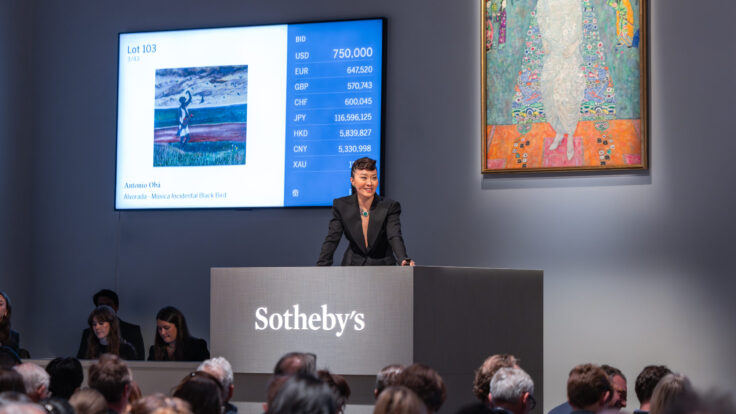
the 1996 sale, turned out to be Van der Klip’s grandson, though that was not clear at the time. - Cerutti fires a shot at art advisors: If you thought Guillaume Cerutti would go dark on the subject of auction houses after departing as chairman of the board of Christie’s, you’d be wrong. He took to LinkedIn the other day to spar with Patti Wong, his former Sotheby’s colleague turned art advisor, after she implied to Artnet that
rising buyer’s premiums had become an incentive to transact privately—and blamed recent increases on auction houses’ need to cover overhead and maintain margins.
Cerutti countered that the fatter buyer’s premiums aren’t augmenting auction houses’ income—they’re delivering more cash to sellers due to smart, aggressive representation like Wong’s. Auction houses have raised the B.P., he said, “to finance increasingly competitive terms for sellers, often redistributing a significant portion
of that premium back to them.” He called this “a structural feature of the art market for the past 20 years,” driven by a new class of seller-side advisors—often former auction-house personnel—who maximize returns for their clients and assume buyers to be “relatively price-inelastic.”
|
Now, let’s head back to Philly… |
|
|
|
A sprawling two-part show celebrates the art of America—from Thomas Eakins to
Barkley Hendricks—as well as the city of its birth, 250 years ago. |
|
|
|
Philadelphia really is turning into quite the museum town—arguably starting with the Barnes
Foundation’s move to Center City 14 years ago. Just last September, the Calder Gardens joined the complex of museums that line the Ben Franklin Parkway. And despite the somewhat cringeworthy defenestration of Sasha Suda from the Philadelphia Museum of Art, her rapid replacement with museum turnaround specialist Daniel Weiss speaks to the city’s upward trajectory.
That ascent continues later this week with the debut of a new two-museum show celebrating
milestone events from the city’s past, including the nation’s founding in Philadelphia 250 years ago and the inauguration, a century later, of the Pennsylvania Academy of the Fine Arts’ ornate building on Broad Street. Both PAFA and the Philadelphia Museum of Art will debut new hangings of their collections, using items from the collection of local billionaires John and Leigh Middleton to fill holes, bridge gaps, and better tell the story of American art over
the last 250 years.
The entire show is called A Nation of Artists, in a nod to the importance of Philadelphia as a cradle of the arts in America. But it focuses as much on material culture as it does on fine art—a reminder that art and technology have been interdependent since the very beginning of the States. Each institution plays to its strengths here: The Philadelphia Museum has a fine collection of early American furniture and ceramics, while PAFA boasts an extraordinary
collection of paintings.
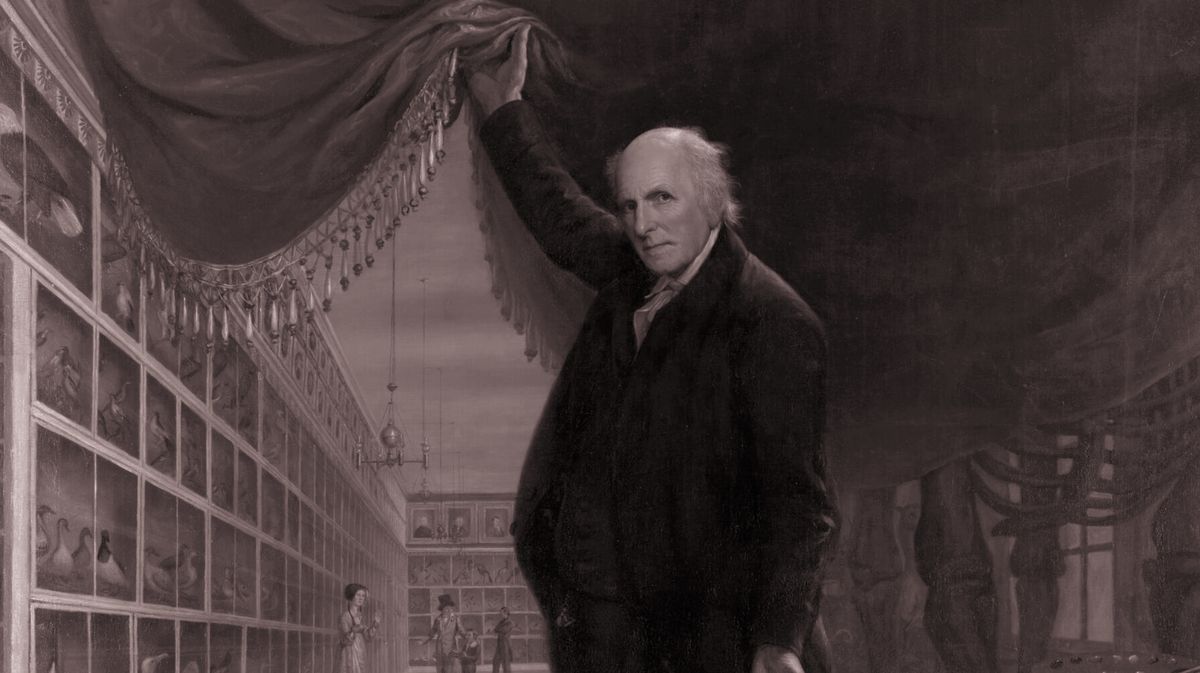
PAFA, in fact, has the distinction of being the oldest continuously operating museum in the United States, having been founded in 1805 by Charles Willson Peale and sculptor William Rush, along with other artists and local worthies. (It moved to Broad Street in 1876.) Over these many years, PAFA has amassed an impressive collection, including the work of former students and teachers like Thomas Eakins,
Cecilia Beaux, Mary Cassatt, Thomas Cole, Henry Ossawa Tanner, Daniel Garber, William Glackens, Barkley Hendricks, Mickalene Thomas, and many more. |
When I was in Philadelphia a few weeks ago to view Hank McNeil’s minimalist art
collection in his Rittenhouse Square home, I stopped by PAFA to see the preparations for A Nation of Artists. Lea Stephenson, the museum’s curator of historical American art, and Leah Triplett, its curator of contemporary art, took me through the back entrance of the Broad Street building. The long walk into the ornate main hall—through rows of lockers and plaster casts for students to practice their sketching—reminded me of one of those famous
single-shot Scorsese scenes, like in Goodfellas when Henry takes his girlfriend to the Copacabana through the kitchen. When we emerged at the top of the stairs, I was struck by the riot of tiles, patterns, and disparate architectural references that seemed to fight with the art being installed.
Nevertheless, the PAFA building was purpose-designed to display art. Even though it bears no resemblance to today’s white-cube galleries, its abundant skylights and large
expanse of unbroken wall space with long sight lines offer an exemplary experience. This is especially true for a show that wants to oscillate between a unified theme of Americanness and a diverse representation of what it can mean to be American.
Stephenson and Triplett have succeeded in creating a wide range of vignettes that group works around themes or periods, while also allowing for juxtapositions, discoveries, and some wry, subtle in-jokes about representation (an orientalist work
sits beside an Asian American artist from this century, for instance). They didn’t shy away from keeping the massive Benjamin West paintings—a somewhat famous feature of PAFA—visible in the main entryway. And, of course, they installed The Gross Clinic, the Eakins masterpiece that PAFA shares with the Philadelphia Museum, in a prominent spot hard by Cecilia Beaux’s moody Les derniers jours d’enfance, from 1883-85.
It’s worth the trip to Philadelphia just
to wander through PAFA for a game of “Can you guess this artist?” Sometimes it’s easy. The show has famous works like Winslow Homer’s Fox Hunt, Thomas Moran’s Mists in the Yellowstone, and Jasper Johns’ Flag, along with somewhat less familiar works by Richard Diebenkorn, Njideka Akunyili Crosby, and American modernists like Hugh Henry
Breckenridge (who was a PAFA faculty member). No matter one’s level of art history knowledge, there will be ample discoveries. These include Jane Irish’s Dewey Canyon III, from 2003, a painting that honors veterans who opposed the war in Vietnam, along with art from a plethora of other names. |
What connects the show across the two institutions is the loan from the Middleton family
collection, which comprises 120 objects. John Middleton, the majority owner of the Phillies, was born into a family with deep roots in the city, including a tobacco business dating back to the mid-19th century. After graduating from Harvard Business School, he doubled down on tobacco, taking advantage of a 2003 litigation scare to buy out his family members. That move paid off when he sold the company to Altria for nearly $3 billion just before the financial crisis.
Since then,
Middleton’s visibility has grown along with his stake in the Phillies—with almost half the team under his control, Middleton is the public face of the ownership group. Privately, he and his wife, Leigh, have also been very active players in the auction market. If you’re paying attention, you’ll see a number of works in A Nation of Artists that set records in the 21st century—like Clyfford Still’s 1949-A-No. 1, which sold for nearly $62 million in 2011;
John Singer Sargent’s Group with Parasols, which sold for $23.5 million in 2004; and Charles Willson Peale’s George Washington at Princeton, which sold for more than $6 million in 2004.
That last painting helps anchor the Philadelphia Museum’s branch of the show, which is chronological and emphasizes the material culture of early American life. Here we have finely carved furniture, silver and glass serving objects, and lots of ceramics, ranging
from the work of slave potters to Acoma vessels to pieces by modern designers. That doesn’t mean the PMA skimps on the paintings: You’ll see works there by Childe Hassam, Mary Cassatt, Georgia O’Keeffe, Daniel Garber, Edward Hopper, and so many more.
I wasn’t able to see the PMA galleries when I was in town last month. But I did speak to Kathleen Foster and Alexandra
Kirtley, who led the PMA’s curation. They told me the show was also an opportunity for the museum to present a revamped and rehung presentation of its American art collection. Of course, with the Middleton works, the team was also able to present the best examples of objects that the museum doesn’t own.
I asked Kirtley whether the Middletons had expressed any preferences about what the museum borrowed and how they used it. Quite the opposite, she said—the couple allowed curators
open access to their holdings. When John Middleton stopped by the museum to see how the show was shaping up, Kirtley gave him a tour, and he stopped at one point to ask why one of his favorite pieces from his collection wasn’t in the show. Kirtley replied with a shrug, “We already have three of those.” |
That’s it for today. I promise I have not joined the Philadelphia tourist board—this concludes my
boosterism for the City of Brotherly Love. The joint show, by the way, runs until September 5, 2027. I’ll be back tomorrow with some interesting data on women artists for Inner Circle members.
Until then,
M |
|
|
|
Puck founding partner Matt Belloni takes you inside the business of Hollywood, using exclusive reporting and insight
to explain the backstories on everything from Marvel movies to the streaming wars. |
|
|
|
Ace media reporter Dylan Byers brings readers into the C-suite as he chronicles the biggest stories in the industry:
the future of cable news in the streaming era, the transformation of legacy publishers, the tech giants remaking the market, and all the egos involved. |
|
|
|
Need help? Review our FAQ page or contact us for assistance. For brand partnerships, email ads@puck.news. You received this email because you
signed up to receive emails from Puck, or as part of your Puck account associated with {{customer.email}}. To stop receiving this newsletter and/or manage all your email preferences, click here. |
Puck is published by Heat Media LLC. 107 Greenwich St., New York, NY 10006 |
|
|
|
|