|
Welcome back to Wall Power. I’m Marion Maneker.
Tonight we’re going to Hill-Stead, the secret treasure house of impressionist masterworks, including two different Claude Monet grainstacks, hidden away in central Connecticut, available to anyone willing to make the trip. I’ll go into much greater detail below the fold.
But first…
|
- Get ready for London Gallery Weekend: This weekend, 126 galleries are participating in the fifth edition of London Gallery Weekend, which features 60 live events—including talks between artist Michaela Yearwood-Dan and curator Ekow Eshun, and between artist Jordan Casteel and Royal Academy curator Tarini Malik, plus a walkthrough of David Salle’s show at Thaddaeus Ropac led by Frieze editor-in-chief Andrew Durbin. There will also be educational workshops, book launches, public parties, and activities for kids. The LGW website even lets you pick routes curated by figures like Malik, artists Prem Sahib or Jasleen Kaur, former Gucci creative director Sabato De Sarno, and collector Shane Akeroyd. There’s a handy navigation feature that lets you put your chosen route on your smartphone’s navigation app.
|
|
|
|
A MESSAGE FROM OUR SPONSOR
|
ALWAYS CONTEMPORARY
With a bold silhouette that conveys movement even at standstill, the Range
Rover Sport is striking from every angle.
EXPLORE
|
|
|
- Born primitive: After we wrote about the opening of the Met’s new Michael C. Rockefeller Wing, and the tribal and oceanic collectors and dealers, I got a note from Chantal Salomon-Lee, who deals privately with Carlo Bella, pointing out that I had missed some 19 galleries that were holding exhibitions on the Upper East Side for the opening festivities. As I said in the piece, these dealers have largely gone to selling by appointment rather than having street-level galleries. Salomon-Lee pointed me to a very helpful catalogue of participating galleries that will allow you to follow up if you’re interested in learning more about their programs.
|
Pace’s $30 Million Picasso for Basel
|
|
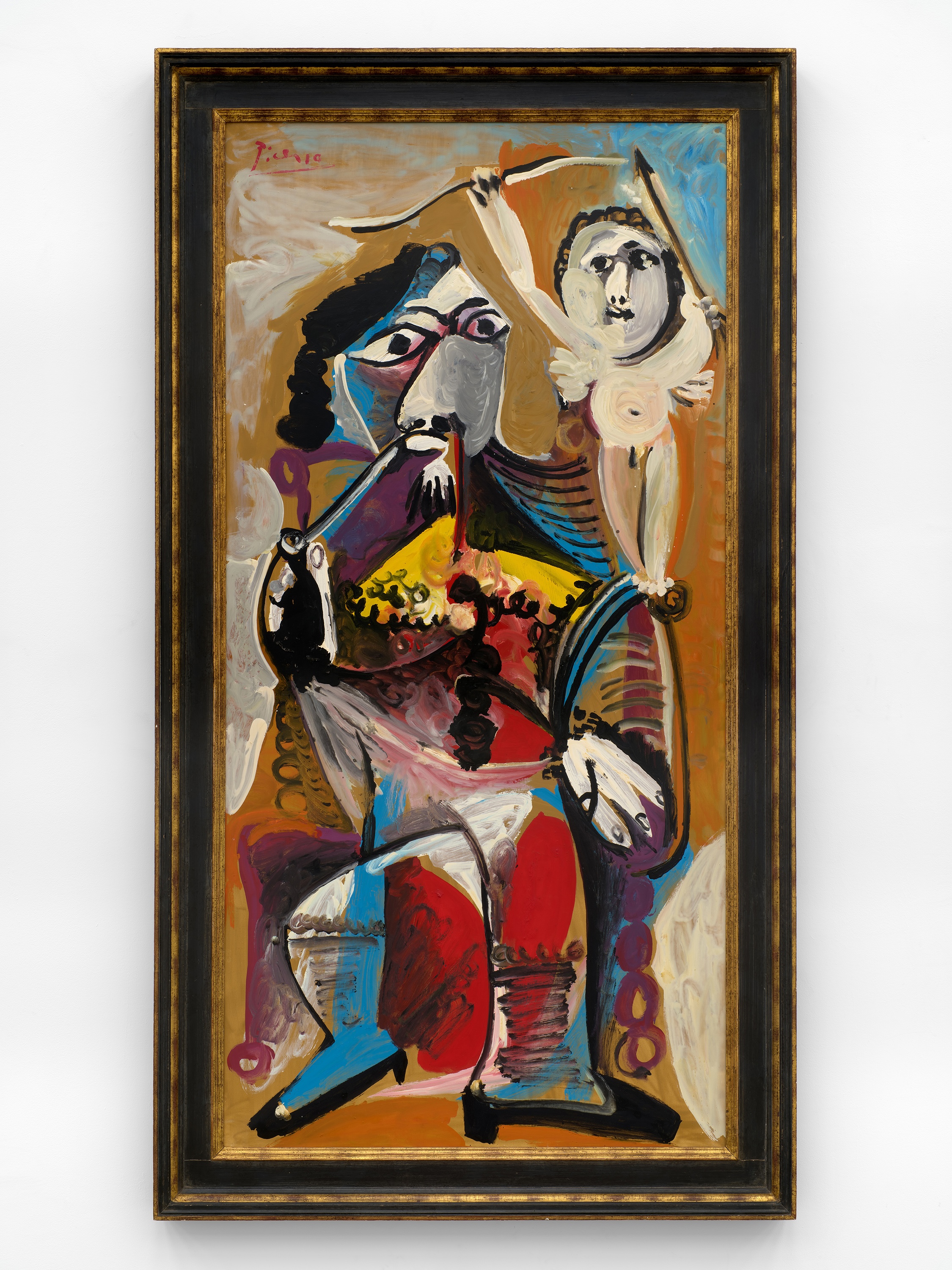
Pablo Picasso, Homme à la pipe assis et amour (1969). Photo: Courtesy of Pace Gallery
|
|
The packing lists and PDFs are starting to go out for Art Basel in its hometown, even though the fair is just about two weeks away. There’s a lot of talk about how American collectors are skipping Basel this year in favor of Paris in October. That may be true, but the galleries are still saving some very good material only for the Swiss edition. For example, Pace Gallery just announced it would be bringing to the fair this late Pablo Picasso painting, Homme à la pipe assis et amour, from 1969, with a $30 million price tag.
|
|
|
 |
Julie Brener Davich |
|
|
Dior is back in the news this week, with creative director Maria Grazia Chiuri’s departure and Jonathan Anderson’s arrival, so it seemed like a timely moment to visit the Solid Gold exhibition at the Brooklyn Museum. The encyclopedic exhibition of gold and gold-themed objects ranges from Dior fashions—like the gold dollhouse dress by surrealist artist Penny Slinger from the Autumn/Winter 2019 collection—to 17th century Japanese folding screens, to a Nam June Paik closed-circuit video installation of a golden Buddha looking at himself on a television opposite.
Part of the museum’s 200th anniversary celebrations, Solid Gold comprises 500 objects, heavy on fashion, about half of which are from its permanent collection. It’s a highly commercial show with widespread appeal—just the kind of light fare the financially beleaguered Brooklyn Museum needs to attract crowds at the moment. Organized into eight sections, including “Money and Art” and “Crowned,” the exhibition displays ancient artifacts alongside contemporary items, exploring not only the material of gold itself but also what it represents: achievement. The exhibition begins in ancient Egypt with a sarcophagus lid shown alongside pieces from the Brooklyn design duo the Blonds’ 2015 “Egyptian disco” collection, inspired by Elizabeth Taylor’s costumes in the movie Cleopatra. (That collection looks just like it sounds.) There are ancient Roman coins with profiles of the empire’s leaders, along with the gold-leaf Italian altarpieces created centuries later by melting down similar coins.
Interspersed throughout the galleries are contemporary works by El Anatsui, Titus Kaphar, Louise Nevelson, Michelangelo Pistoletto, Marc Quinn, William Kentridge, and unexpectedly, a 1963 gold canvas by Agnes Martin. The end of the exhibition references the beginning, with a feathered Dior dress that singer Aya Nakamura wore for her performance at the opening ceremony of the Paris Olympics. She wanted to look like a golden phoenix, and Chiuri designed a dress for her inspired by Taylor’s beaded cape in Cleopatra. Unfortunately, the French fashion house’s three-year sponsorship deal with the museum is coming to an end this year. Whether that arrangement continues under Anderson remains to be seen.
|
|
|
|
Alfred Pope’s Hill-Stead, teeming with works by Degas and Monet and Manet, is the Frick of New England: a privileged look into the vast wealth and groundbreaking taste of a 19th century robber baron.
|
|
|
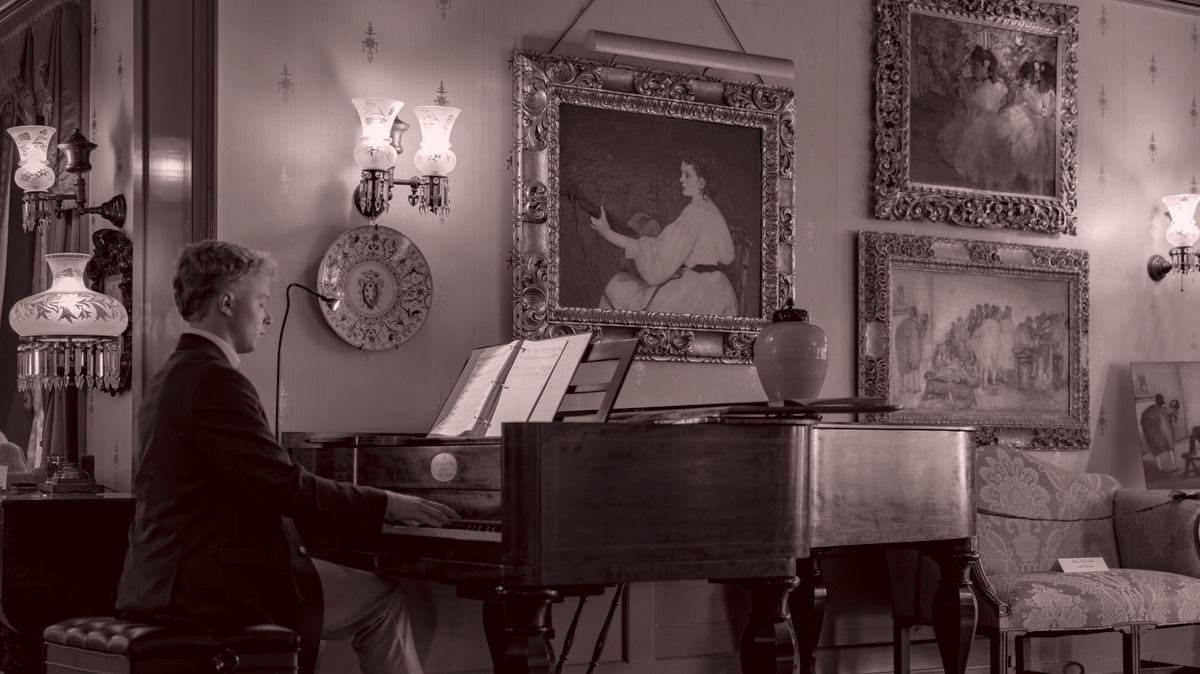
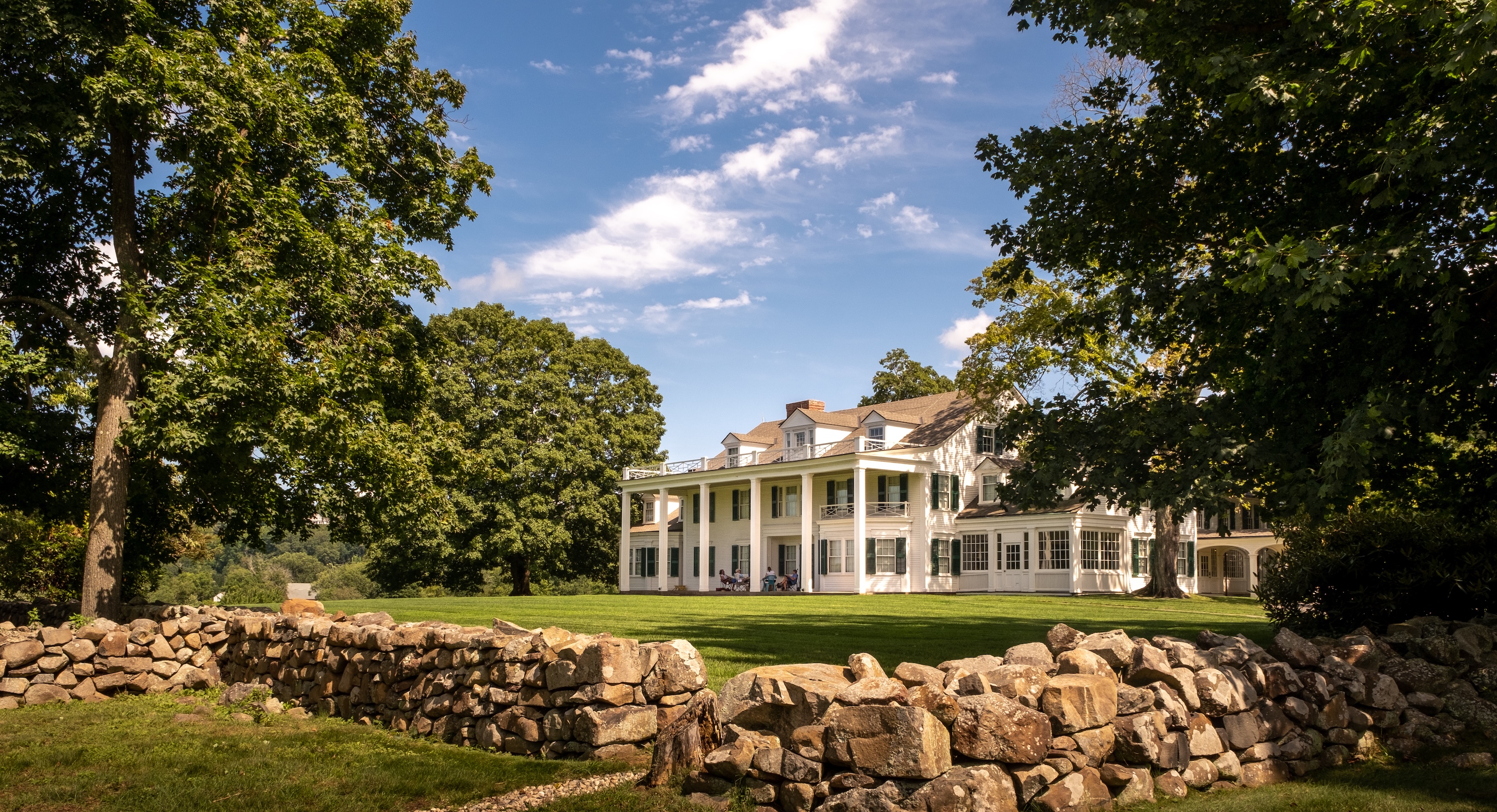
Anna Swinbourne’s eyes lit up when I mentioned the lack of great art in places like Newport, where the Gilded Age elite built their grandiose homes. We were having coffee on a misty recent morning in the formal garden of Hill-Stead, the former Connecticut home of Cleveland industrialist and pioneering impressionist art collector Alfred Pope. Naturally, we were discussing Miramar, the billionaire Stephen Schwarzman’s home on the Cliff Walk that the alternative asset sky lord has stocked with 18th century treasures. “He should come here,” Swinbourne said, gesturing back to the house that Pope’s daughter, Theodate Pope Riddle, built for him and his art collection. At the tail end of the robber baron years, Pope’s fortune was no less impressive than the ones that fueled the building in Newport. “He would see how a great collector actually lived with his art.”
Swinbourne is biased, of course. As the director of Hill-Stead—which is set on 150 acres of rolling farmland in Farmington, Connecticut, just outside Hartford—she’s the steward of an art collection that includes two grainstack paintings by Claude Monet, among four works by the impressionist; two paintings by Édouard Manet; three works by Edgar Degas; several paintings by James McNeill Whistler; and assorted other works, including a Japanese ukiyo-e print by Hokusai, an example of The Great Wave off Kanagawa. There are also hundreds of decorative objects that Pope collected during his day.
|
|
|
|
A MESSAGE FROM OUR SPONSOR
|
ALWAYS CONTEMPORARY
With a bold silhouette that conveys movement even at standstill, the Range Rover Sport is striking from every angle.
EXPLORE
|
|
|
|
Hill-Stead sits somewhere in the middle of the spectrum of monuments to 19th century collectors. It’s more remote than the Frick, two hours away in Manhattan, and yet not quite as far flung as the Shelburne Museum in Vermont. (The Shelburne’s rump group of impressionist paintings were once owned by the mighty Havemeyer family, whose collection forms the backbone of the Met’s great holdings in the category.) That suited Pope. Still more did it suit his headstrong daughter—one of America’s first female architects, and the founder of the nearby Avon Old Farms school, which plays an important offstage role in the story of the museum.
|
|
Pope made his money in Cleveland, building things out of iron, like railroad car couplers, during the height of railway expansion in the United States. An autodidact who eventually bought into an iron casting business, he rose to become its president and engineered the consolidation of other plants into the National Malleable Castings Company. Having become a successful and very wealthy businessman, with a daughter who was reaching maturity, Pope and his family did what other rich Americans did at the time: They went on an extended European grand tour in 1888. That’s where Pope first met Paul Durand-Ruel, his primary dealer, who had already opened a branch of his dealership in New York.
|
|
Hill-Stead Museum, Connecticut. Photo: Derek Hayn
|
|
The first painting Pope bought was Monet’s View of Cap d’Antibes, painted in 1888. He quickly fell for the impressionists, but didn’t buy easily or without great consideration. From 1890 to 1907, he bought some 40 works. The first three years, he bought five oil paintings by Monet, two by Degas, a Pissarro, a Sisley, and a Renoir—all from Durand-Ruel, whom he had determined held the best works.
Over time, like many Americans who visited Paris, he became acquainted with Mary Cassatt, who was instrumental in helping the Havemeyers with their collection. He ended up buying six of her works (though he returned one within the year), and eventually bought paintings and pastels by her friend Degas. In 1907, he bought his last work: Degas’ Woman in a Tub, from 1885-86. Thus his 17-year collecting spree ended on a high note: That Degas painting is among the artist’s best works and perhaps the apex of Hill-Stead’s collection.
Some time before the pandemic, I cannot remember when, dealer Will O’Reilly told me about Hill-Stead almost like it was a secret password. O’Reilly is a governor at the museum, which means he’s a booster and supporter. But he has a good eye, and I paid attention when he explained that no one knew about the museum and its collection of impressionist works—and that it would be well worth my while to make a detour to see it. During my first visit, I quickly learned that he was not wrong.
On my second trip, last week, Swinbourne explained that the museum had done research into the full breadth of Pope’s art collecting ahead of Hill-Stead’s 75th anniversary as a museum in 2023. They combed through their own archives and consulted with the family of Durand-Ruel to identify all the works of art that he bought and sold. Two years ago, they gathered those works—first in the galleries outside the original building, and then arranging them the way Pope had during his residence in the house from 1901 until his death in 1913.
|
|
|
|
During her tour, Swinbourne showed me the Degas where the family had hung it, behind the door into a guest bedroom on the ground floor—hardly an auspicious placement for a truly great work of art, though the family might have chosen that spot because the painting is a nude, however demure. But there’s also something exciting about seeing this great work standing next to a canopy bed and getting a glimpse of the Popes’ intimate lives.
|
|
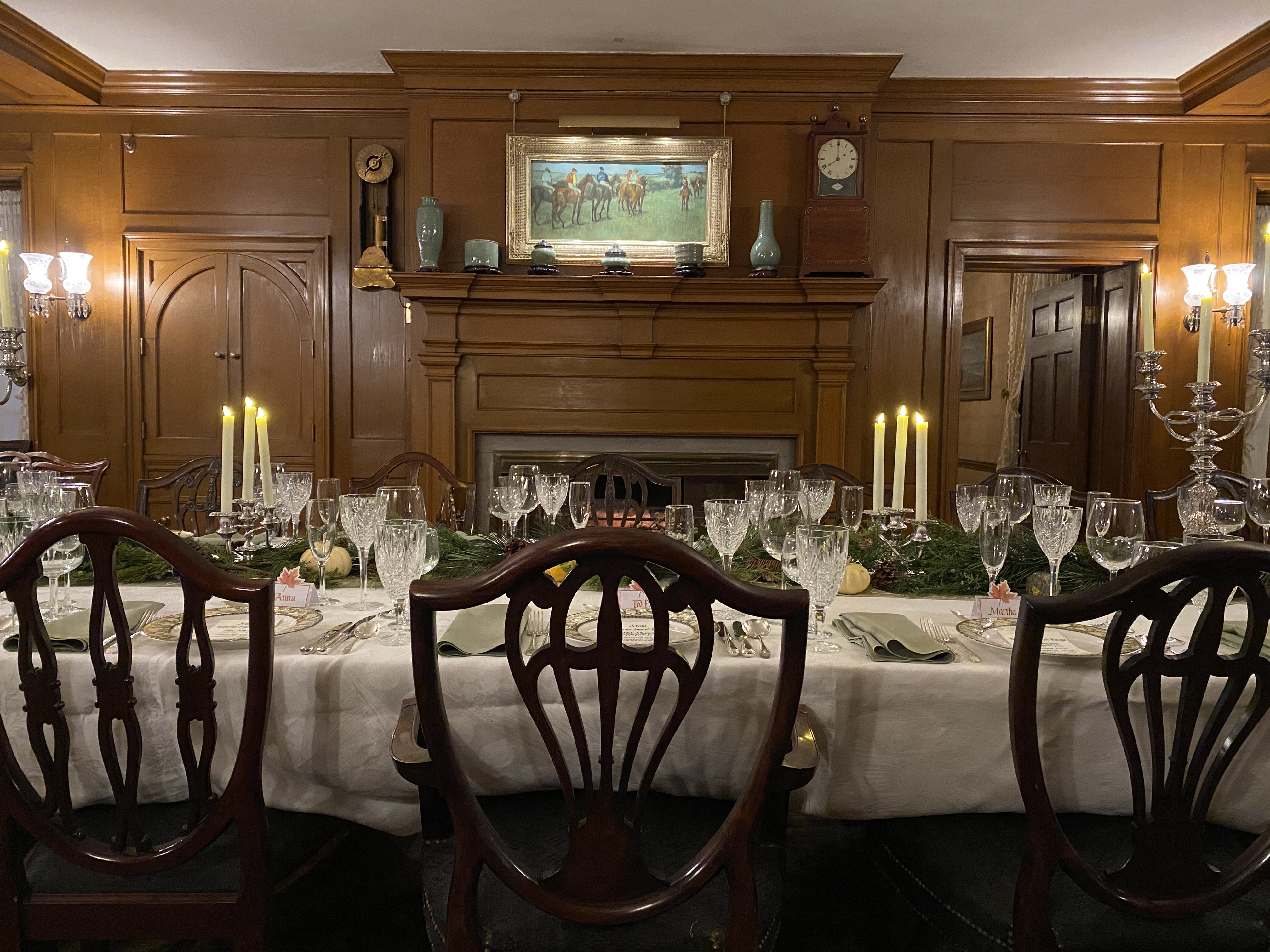
As Swinbourne had promised, the house gives you an unrivaled look at what it was like to live with a great art collection. In a dining room that seats almost two dozen guests, there is a Degas pastel of Jockeys, from 1886, that faces a wall of family portraits. When Pope lived here, that wall contained a Manet painting of Toreadors, from 1865-66, and a Monet painting of poppy fields, now in the collection of William Koch.
|
|
Edgar Degas, Jockeys (1886), inside the the Hill-Stead Museum dining room. Photo: Courtesy of Hill-Stead
|
|
In the living room you see a Degas painting of Dancers, from 1876, in bright fuchsia costumes, as well as works by Whistler, and two of the three Monet grainstack paintings Pope owned. There are also Manet’s bullfighters, now in the living room, and The Guitar Player, from 1866, which Pope purchased for a record sum that, as Pissarro recounted to friends, caused “amazement far and wide.”
Hill-Stead divides Pope’s collecting into two phases: from 1888 to 1893, when he was first honing his eye and returned 40 percent of the works he bought; and from 1894 to 1907, when he was more confident but bought far less, and returned works at about half the previous rate. Those returns are not the reason the magnificent collection that remains in the house is diminished. Theodate Pope Riddle, his daughter, who built Hill-Stead with the assistance of an architect from McKim, Mead & White, became an architect herself and founded the Avon Old Farms school in 1927 as a testament to her father’s legacy. The school suffered from leadership chaos and closed at one point during World War II to serve as a hospital; Pope Riddle sold some of her father’s artworks—the poppy fields and the Degas oil of horses and jockeys, along with several others—to support it through that difficult time. She died in 1946. In 1948, the school resumed operations without her.
In her will, Pope Riddle left money to maintain the house. But she stipulated that if someone wanted to sell any of her father’s art collection—you can only imagine how many people come calling with that idea!—they would have to sell all of it and give the proceeds to the school. That’s how we come to have Hill-Stead. I say we because the house is open to the public, a true school in and of itself.
|
While we’re thinking about old collections preserved for the future, London’s great Wallace Collection announced yesterday that it has appointed Annabelle Selldorf to lead the “design and delivery” of a new master plan for the trove of Old Masters paintings and armor.
And, with that, I will leave you until tomorrow, when we’re back with the Inner Circle and a discussion of the recently-revealed takeover of both Artnet and Artsy by Andrew Wolff’s Beowolff Capital. Sign up for the Inner Circle here if you want to be part of that conversation.
Yours,
M
|
|
|
|
The ultimate fashion industry bible, offering incisive reportage on all aspects of the business and its biggest players. Anchored by preeminent fashion journalist Lauren Sherman, Line Sheet also features veteran reporter Rachel Strugatz, who delivers unparalleled intel on what’s happening in the beauty industry, and Sarah Shapiro, a longtime retail strategist who writes about e-commerce, brick-and-mortar, D.T.C., and more.
|
|
|
|
Finally, a media podcast about what’s actually happening in the media—not the oversanitized, legal-and-standards-approved version you read online. Join Dylan Byers, Puck’s veteran media reporter, as he sits down with TV personalities, moguls, pundits, and industry executives for raw, honest, sometimes salacious conversations about the business of media and its biggest egos. New episodes publish every Tuesday and Friday.
|
|
|
Need help? Review our FAQ page or contact us for assistance. For brand partnerships, email ads@puck.news.
You received this email because you signed up to receive emails from Puck, or as part of your Puck account associated with . To stop receiving this newsletter and/or manage all your email preferences, click here.
|
|
Puck is published by Heat Media LLC. 107 Greenwich St, New York, NY 10006
|
|
|
|