Hi, and welcome back to Line Sheet. I had a great dinner (sashimi salad, fries, 1.5 martinis) at South Beverly Grill last night as the universe continued to disintegrate outside of those wood-paneled walls.
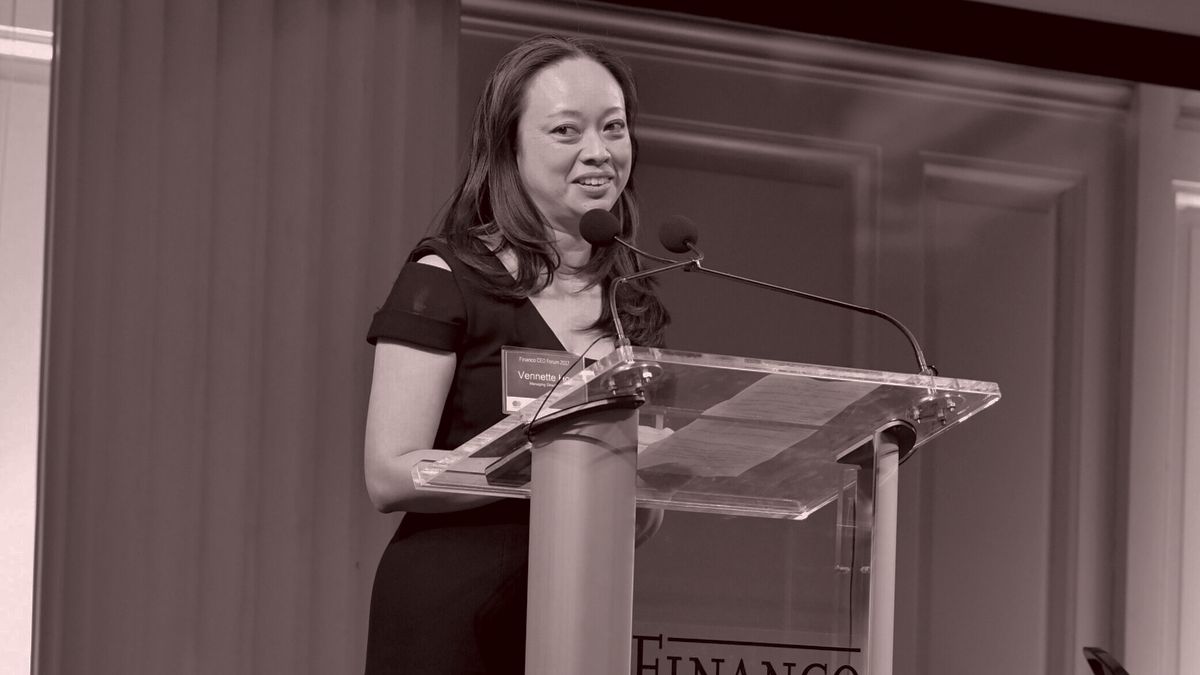
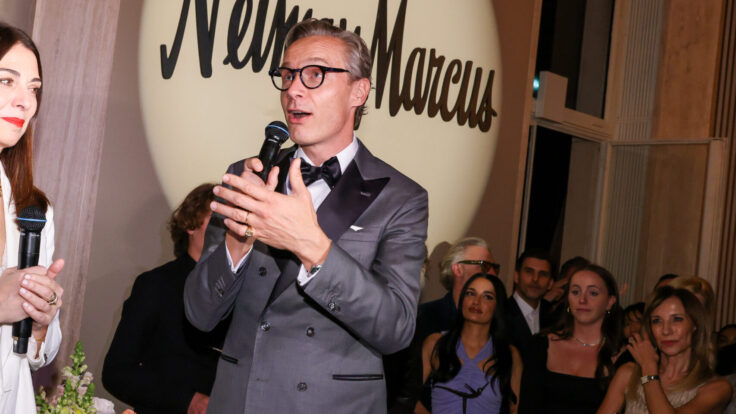
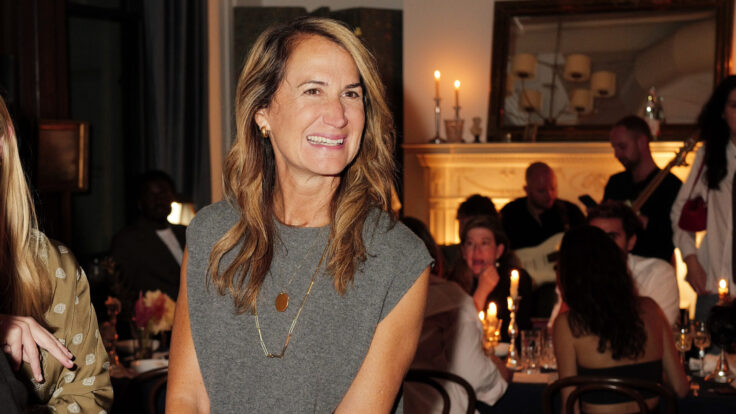
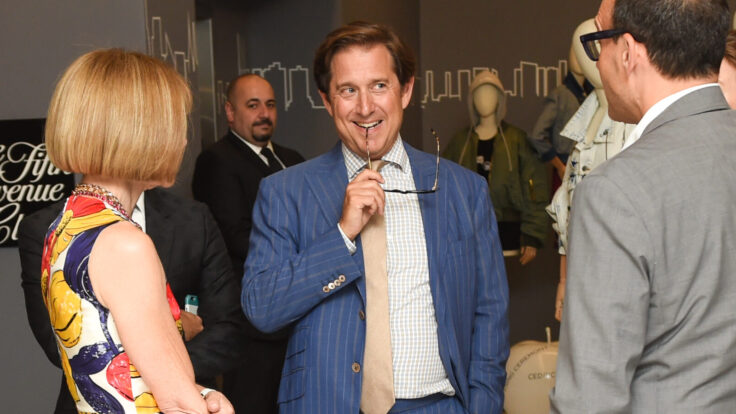
Rachel “ Rachel@puck.news” Strugatz is in the driver’s seat today, looking at the wild world of beauty M&A: Who’s on top? Who’s falling off? Which dealmakers are set to reap the benefits, and which are losing out? The piece has lots of good goodies and stars many of Line Sheet’s most formidable characters, from Hailey Bieber to superbanker Vennette Ho—who was, notably, not involved in any of the last three major beauty deals to be consummated.
But first, Rachel offers her thoughts on the late Leonard Lauder, who is top of mind for pretty much everyone in our orbit this week as they reflect on his legacy. Elsewhere, I’ve got an update on the American Love Story costume controversy—it’s going to get worse before it gets better?—and the designer exit we only sort of saw coming.
Mentioned in this issue: Raymond James, Vennette Ho, Rhode, e.l.f. Beauty, Drunk Elephant, L'Oréal, Ali Goldstein, Mary Carmen Gasco-Buisson, Carolyn Bessette-Kennedy, Liana Satenstein, OTB, Francesco Risso, Marni, Leonard Lauder, and many more…
|
|
|
|
A MESSAGE FROM OUR SPONSOR
|
Creator tools with tools built for growth, not guesswork.
LEARN MORE
|
|
|
Three Things You Should Know…
|
- The C.B.K. troll continues: The pap images released from the set of American Love Story, Ryan Murphy’s take on the John F. Kennedy Jr.–Carolyn Bessette-Kennedy saga, have not instilled confidence in various naysayers that the show is endeavoring to get the fashion right. Sarah Pidgeon, the actress who plays Carolyn, was photographed in what I would describe as a cheap-looking satin skirt, knit turtleneck, black leather blazer, and black high-top Converse All Stars outside of the real Calvin Klein office building at 205 W. 39th Street. “Should we start protesting?” one high-level multimillionaire stylist asked me.The good news is that the hair color has been adjusted, if not exactly correctly. And I’m fine with the Converse. It’s the casual shoe that a young, fashion-conscious person would have been wearing in 1993-94, when this scene is supposed to take place, and my understanding is that she slips into real shoes (Manolo Blahniks) before she enters the building. Also, this was not an actual shot, I’m told, but rather a test. (That explains that bodega plastic water cup that had everyone throwing fits.) Unfortunately, the rest of the look is still reading low-end-of-the-high-street-circa-2023, and did little to assuage fears that producers will not capture Bessette-Kennedy’s essence.
To be fair, costuming this show is a near-impossible task. “How could the American Love Story images not be demented?” former Voguette Liana Satenstein posited in her funny, contrarian newsletter about the wardrobe-so-far. “This is a drama pumped with kitsch. This isn’t an erotic thriller set in New York in 1999. This isn’t a film. This isn’t cinema. There’s no Adrian Lyne manning the lens, holed up on a Soho street, screaming about a wind machine. It’s television!” I don’t totally agree with Liana, but I am more hopeful than she is about the future of our culture. More on this from me tomorrow.
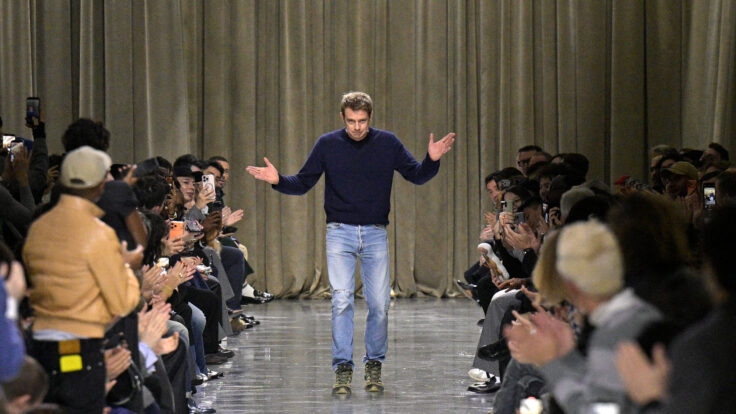
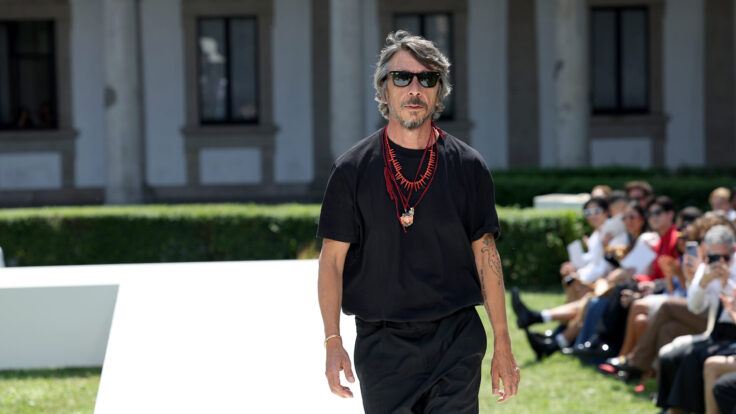
- OTB’s glow-up: See? The game of designer musical chairs never ends. This morning, in a careful and drama-free roll-out, OTB announced that Marni designer (and bucket hat aficionado) Francesco Risso was on his way out. From what I’ve been told, Risso’s exit has been in the making for about six months, and executives were still deciding on a replacement only a month ago. Originally championed by Anna Wintour, Risso was plucked from the Prada design team nearly 10 years ago to recalibrate Marni after founder Consuelo Castiglioni left the business. Risso’s interest in youth culture—“community” was the jargon of the day—alienated Marni diehards who collected Castiglioni’s highly intellectual, arty dresses and the like. (Los Angeles chef Nancy Silverton is the prototypical O.G. Marni customer. If you miss Old Marni, Plan C—designed by Castiglioni’s daughter, Carolina—is a worthy successor.)What Risso did manage, at least for a while, was to get young people in Europe (and likely Asia) to wear his knits, which became a part of the 20-something creative professional wardrobe over there. Risso’s name occasionally popped up for other jobs—he was mentioned now and again when the Loewe decision was going down. If he has something lined up, though, my guess is that it’s small in scale. For instance, I could see him doing well at the Qatari-owned Walter Albini.
To me, this change is another indication that OTB—the Renzo Rosso group that owns Jil Sander, Maison Margiela, and Diesel—is growing up as an organization. The hiring of LVMH vet Serge Brunschwig to lead strategy (on top of running Jil Sander), the recruitment of Simone Bellotti to design Jil Sander, and the appointment of Glenn Martens at Margiela all indicate that Rosso, who has expressed a desire to float the business on the public markets, is proceeding with the plan.
|
|
|
 |
Rachel Strugatz |
|
- On Leonard: Leonard Lauder, who was C.E.O. of The Estée Lauder Companies from 1982 to 1999 and chairman from 1995 through 2009, was truly the most influential beauty executive to ever do it. His mother, Estée, may have started the company, but Leonard created the modern beauty conglomerate and acquisition model. The brands that were established under his leadership, as well as those the company acquired—MAC Cosmetics, Jo Malone, Bobbi Brown, La Mer, etcetera—are still some of the biggest in the world. An insider once described Leonard’s approach as being “brand first,” compared to other beauty and C.P.G. giants that fell behind because they prioritized efficiencies of scale across categories. Leonard was the architect of the modern beauty company as we know it, and the person who gave America a seat at the table in the industry’s prestige and luxury sectors. By all accounts, he was a beloved visionary, leader, operator, and builder.
|
|
|
|
And now, on to the main event…
|
|
|
|
A flurry of recent beauty biz M&A deals are notable not just because they’re more targeted and considered—the days of the bidding war are on the wane—but because they didn’t involve industry rainmaker Vennette Ho.
|
|
|
|
After an underwhelming 2024 and sluggish start to 2025, we’re finally seeing a blitz of M&A activity in the beauty industry, with three major acquisitions announced in less than a month: Church & Dwight bought Touchland ($880 million), e.l.f. Beauty got its hands on Rhode ($1 billion), and L’Oréal scooped up Medik8 ($1.1 billion). Traditionally, the category’s M&A business has been dominated by a small handful of brand-name dealmakers. So I was somewhat surprised to learn that Raymond James’s Vennette Ho, the industry’s go-to banker, wasn’t attached to any of them.
Ho, of course, has been at the center of the industry’s deal flow for the better part of a decade. She’s best known for facilitating marquee sales like Paula’s Choice to Unilever ($2 billion), Drunk Elephant to Shiseido ($845 million), and K18 to Unilever (the price was never disclosed, but it was said to be around $700 million). When a brand goes with another bank, it’s often because they were turned away by Ho—either because she didn’t see a viable path to exit, wasn’t bullish on the category, or was conflicted out.
|
|
|
|
A MESSAGE FROM OUR SPONSOR
|
The platform high-growth brands use to scale.
LEARN MORE
|
|
|
|
But the beauty M&A business has become a lot more competitive in the past few years, and the industry has changed in structural ways, as well. “When Vennette built the practice, no one was covering it,” a person close to Ho told me. Ho stood up her business at Financo with an approach centered on doing $5 million to $20 million capital raises for small founders. “She got in with that community in a way that no one else had,” this person continued. To wit: Her facilitation of Drunk Elephant’s fundraise back in 2017 paved the way for Financo to co-lead its sales process two years later. Similarly, Financo advised on TA Associates’ investment in Paula’s Choice in 2016, and five years later orchestrated its sale to Unilever. When Raymond James acquired Financo, in 2021, Ho came over with the deal.
In those days, founders needed bankers to facilitate transactions. And yet, the era of an all-powerful banker casting a wide net, parading founders around like show ponies, narrowing down the finalists, and stoking a bidding war––Ho’s strong suit––is ending. “The banker-led, big-boy processes are sort of not happening,” a high-profile investor told me, adding that deals are getting done because of “more bespoke, one-off relationships and negotiations with super-interested parties.” Increasingly, brand founders and senior leadership are doing much of the legwork themselves, meeting and spending time with M&A leads and executives at strategics and P.E. funds well before a sale is even on anyone’s radar.
Ho pushed back on that characterization. “Investment banking and Raymond James’s success is not and never has been about a single person,” she told me. “It is inherently a team sport, and we are well known for having the best team in this sector, with five senior beauty bankers, including myself, who are experts in the field and experts at execution.”
Several insiders concurred that “Vennette is still the go-to” and that Ho “hasn’t lost her touch,” and I’m inclined to agree. But as one founder told me, “Things are just getting done a different way.” With the Rhode sale, for example, Hailey Bieber’s team started talking to e.l.f. Beauty last fall because it made sense for both businesses to potentially unite under one parentco, combining Bieber’s built-in marketing engine with e.l.f.’s expertise in scaling and maximizing retail distribution—no high-powered deal broker required. I heard that Rhode only engaged bankers from J.P. Morgan and Moelis & Co. once they’d already decided to move forward.
There is, perhaps, another reason that some founders aren’t approaching Raymond James when it comes time to sell. Several insiders have suggested that even if they were to engage the investment bank, they probably wouldn’t “get Vennette,” herself. “She has so much under mandate at any given moment,” one of these people said. “For the last seven years, there’s never less than eight to 10 beauty clients in-house in some form of prep, market, or later stage.”
Ho, however, pushed back on this, too. “Our level of service is second-to-none,” she told me. “And I recommend you speak with people we have done deals with to see how they felt about our execution and my level of involvement.”
|
|
In the past few years, strategics have gotten more discerning and perhaps more considered in their acquisitions. After all, they’d gotten burned on buzzy acquisitions that didn’t pan out, or deals that were made for reasons of competitiveness, not compatibility. Instead of feeling pressure from bankers to drag themselves through a formal acquisition process just to block a competitor from getting an asset, C.P.G. and beauty giants increasingly do deals that make sense for their portfolio. All three recent M&As would seem to fit the bill.
|
|
|
|
Another factor at play is the generational changing of the M&A guards at L’Oréal, Unilever, Shiseido, etcetera. Now, every founder and banker is clamoring to win over Ali Goldstein, who was recently named L’Oréal’s new head of acquisitions following the departure of the legendary Carol Hamilton. The same goes for Mary Carmen Gasco-Buisson, the new C.E.O. of Unilever’s prestige division, who succeeds Vasiliki Petrou (who famously oversaw the acquisition of 10 brands during her decade at Unilever). The departure of these executives puts the industry on even footing; relationships with Gasco-Buisson and Goldstein are brand new for everyone.
But is the era of the M&A beauty banker really waning? Perhaps the new “It” banker is not actually a banker, but simply the startup founder or C.E.O. who can build meaningful relationships with potential acquirers well before an acquisition is even on the horizon. It’s a process that’s worked for tech founders for decades. Either way, my money is still on Ho to close the deal.
|
What We’re Reading… and Shopping for… and Looking At
|
Rio Viera-Newton, New York magazine’s funny and frank skincare guru, launched a cleanser with Face Haus. I’m all for influencers-journalists-etcetera building beauty brands (they are educated), so perhaps this’ll only be Viera-Newton’s first dip in the pool. [ Buy It]
I can’t even bring myself to link to any Viva Technology write-ups in the media because they’re all such hooey, but I am truly fascinated by LVMH’s “rendezvous for startups and leaders to celebrate
innovation” and had a great time the year I attended. Lucky for all of us, the sessions are streaming online. [ Viva Tech!]
Ben Gorham has left Byredo. No one is surprised. [ WWD]
I read the new James Frey book months ago because Kaitlin Phillips is a good publicist on top of being a great writer and fabulous editor. (I love her newsletter so much.) I can’t say the book is good, but I can say I read the whole thing. And that’s saying a lot! But really, read The Ice Storm first, okay? [ Next to Heaven]
Yet another press trip in the running for best of the year: J.Crew in Puglia! With only good people! ( Becky, Chris Black, Laura Reilly, Olympia Gayot, Jeremy from Blamo!, Beverly Nguyen, Gabriella Karefa-Johnson, and so many more!) One of the attendees is next Monday’s Fashion People guest, so we’ll talk about it. [Instagram]
Lululemon instituted mass layoffs on Wednesday. Retail is hard, even when everyone at Solidcore is wearing your leggings. [ WWD]
|
|
Until tomorrow,
Lauren
P.S.: We are using affiliate links because we are a business. We may make a couple bucks off them.
|
|
|
|
Puck fashion correspondent Lauren Sherman and a rotating cast of industry insiders take you deep behind the scenes of this multitrillion-dollar biz, from creative director switcheroos to M&A drama, D.T.C. downfalls, and magazine mishaps. Fashion People is an extension of Line Sheet, Lauren’s private email for Puck, where she tracks what’s happening beyond the press releases in fashion, beauty, and media. New episodes publish every Tuesday and Friday.
|
|
|
|
Puck’s daily art market email, anchored by industry expert Marion Maneker, offers unparalleled access to the mega-auctions and galleries, elite buyers and sellers, and the power players who run this opaque world. Wall Power also features Julie Brener Davich, a veteran of Christie’s and Sotheby’s, who provides unique insights into how the business really works.
|
|
|
Need help? Review our FAQ page or contact us for assistance. For brand partnerships, email ads@puck.news.
You received this email because you signed up to receive emails from Puck, or as part of your Puck account associated with . To stop receiving this newsletter and/or manage all your email preferences, click here.
|
|
Puck is published by Heat Media LLC. 107 Greenwich St, New York, NY 10006
|
|
|
|