 |
|
Welcome back to Line Sheet, and hello from Men’s Fashion Week in Paris, where I’m slated to spend the next few days attending shows, taking meetings, and raiding the kids department at Monoprix. (I know everything and need nothing, but send me shopping recs anyway. New stores!)
This issue is plenty packed. I’ve got the scoop on the new E.I.C. of Marie Claire, solid intel on who’s next at Chloé, and what everyone was talking about in the hours following Pharrell Williams’ Louis Vuitton debut. If you’re still forwarding this private email to your colleagues (we’re watching you, by the way…), please do know that Puck has bespoke corporate memberships that will save you money and time. Hit up fritz@puck.news to learn more! Big kiss.
Mentioned in this issue: Chemena Kamali, the Christopher Kane bankruptcy, Gabriela Hearst, Chloé, Nikki Ogunnaike, Sally Holmes, Louis Vuitton, Pharrell Williams, Liya Kebede, Anna Ewers, the Olsens, Byron Trott, the Oracle of Omaha, Khaite, Kering, Zendaya and that crazy Obama rumor.
Let’s get started…
|
| Marie Claire’s New E.I.C. |
|
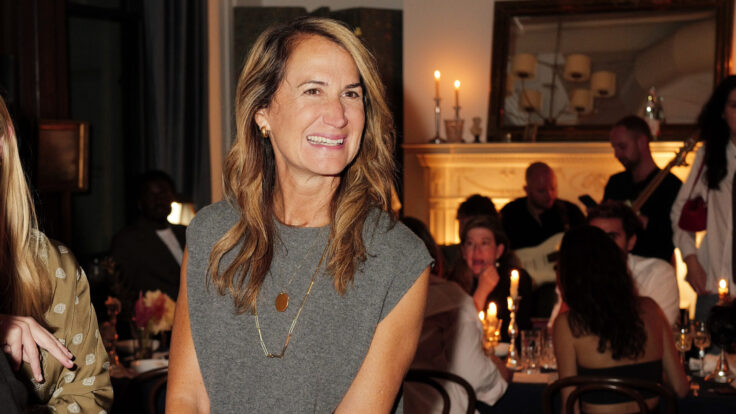
| Great news for believers in magazines: Nikki Ogunnaike has been named editor in chief of Marie Claire, replacing her longtime friend Sally Holmes, who decamped for InStyle in April. She starts August 8.
Ogunnaike, who is leaving her post as senior digital director of Hearst-owned Harper’s Bazaar to take over the still-sort-of-in-print publication, is one of the few editors in her cohort that could be certified as a star. (Most top talents have left publishing to do something more lucrative.) Like Holmes, she’s also internet-y, making her a practical match for the American edition of Marie Claire, which was acquired by the U.K.-based Future Publishing from Hearst about two years ago and is overseen by chief content officer Hillary Kerr, the co-founder of the online style site WhoWhatWear, also owned by Future.
Up until a few years ago, Future was best known for its geek-y, bro-y niche publications (Guitar World, PC Gamer), but has expanded its purview to include advertising-friendly categories such as lifestyle, fashion, and design (it also owns Decanter, Wallpaper, Horse & Hound and tons of other titles). It oversees 250 brands. Yep, 250. You might be thinking: Why would a publisher be buying titles right now instead of folding them? Well, the U.K. is a very different market than the U.S., and niche is where it’s at when it comes to pretty much any form of media.
Marie Claire is only printed three times per year, which means the primary focus for Ogunnaike, who will report to Kerr, will be online content and live events, like the Power Women conference, where everyone flies on a private jet cross-country for a two-day networking blitz. (She’ll also front a New York Fashion Week moment this September.) It helps that Ogunnaike has high-fashion credentials that will likely attract new advertisers, and impress existing ones. (A little disclosure: Like pretty much everyone I write about who works in media, I know Ogunnaike. In this case, I have watched the Super Bowl, and maybe an Oscars telecast, with her. And yes, I know Kerr as well.)
Ogunnaike is the ultimate team player, so it’ll be interesting to see how she approaches being in the driver’s seat. Especially since Marie Claire is a tricky title: Like Glamour or Cosmopolitan, it’s more about lifestyle than fashion—and traditionally known for leading with rigorously reported stories on “women’s issues.” How exactly to sharpen that focus, I do not know, but Ogunnaike said in a release that she wants her readers to feel like Marie Claire is “a destination that speaks to their entire identity.” Wouldn’t that be nice? |
| Chloé Succession & M&A Rumors |
|
| Word in Paris is that Chemena Kamali is replacing Gabriela Hearst at Chloé. Kamali, who was most recently consulting for denim-heavy label Frame out of Los Angeles, is a solid No. 2 type. Before her short stint at Frame, Kamali spent years as the women’s design director at Saint Laurent, a little time at Lanvin, and maybe most importantly, worked under Clare Waight Keller at Chloé for a significant period.
While Hearst’s team is hard at work on the Spring/Summer 2024 collection, slated to be her last, I hear that Kamali and her studio have already begun laying the groundwork for what’s next. (A spokesperson for Chloé did not respond to a request for comment.)
Some other bits of context here:
- If you can call a fashion brand feminist—and, like, I’m not sure you can—Chloé would fit the bill. Regardless, it’s pretty important to its design sensibility that the creative director be a woman, so it’s no surprise that owner Richemont is staying the course on that front. There have only been two male creative directors since its founding in the 1950s, and Karl Lagerfeld worked closely with the founder, Gaby Aghion, for much of his time there.
- The appointment of Kamali follows the trend of executives hiring a strong behind-the-scenes player rather than an already-established superstar. It’s especially important in the case of a brand like Chloé, which is mid-sized in luxury terms (probably not more than $1 billion a year), outpaced by heavily-funded competitors in the two big conglomerates, LVMH and Kering. The Chloé team needs to develop a sensational product that can’t be ignored in a sea of mediocrity: A seasoned professional who’s not crazy-expensive to hire is a good start.
Rumors are swirling at the company that Kamali’s arrival could indicate that Richemont is finally ready to sell Chloé off to Kering, her former employer. After all, Kering has the infrastructure to accelerate Chloé’s growth, and it would be a complementary brand in the portfolio. (There is nothing quite like the light, ultra-feminine Chloé at Kering.) However, I don’t think that Kering is in a hurry to buy anything right now, and Richemont execs have expressed time and again that they are committed to their soft luxury brands. (As I’ve mentioned before, Richemont’s expertise is in hard luxury: watches and jewelry.) I asked an analyst about this recently, and he said that the focus at Kering needs to be on increasing profits at the brands it already owns. Let’s revisit this after Kamali’s first collection debuts.
|
|
|
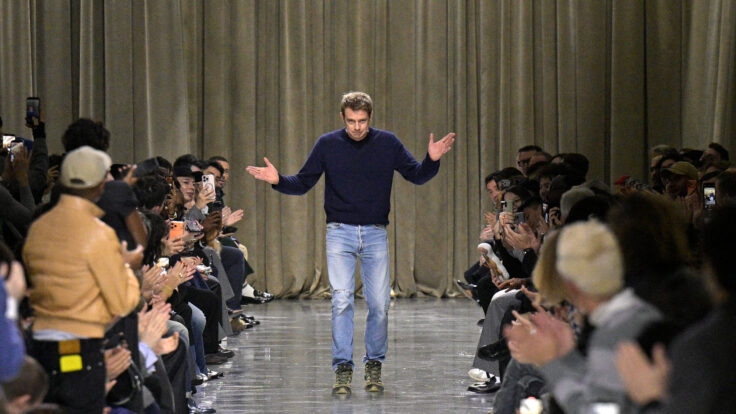
| By now, you’ve read the reviews, or at least the TMZ recap. Pharrell Williams’ runway debut as Louis Vuitton’s men’s creative director—which took place on Pont Neuf, the oldest-standing bridge in Paris—was an unequivocal success, from the casting (models included not only designers Stefano Pilati and Awake’s Hugo Mendoza, but also Clipse duo Pusha T and No Malice) to the performances (Williams’ hometown choir, plus himself… and Jay Z). The product, too, was exactly what it needed to be—texturized, three-dimensional takes on the house’s clichés: the checkerboard (all jumbled and digitized), the fleur motif (recessed on a furry lime overcoat), the monogram (gold-foiled on a top-handle bag; blinding white against a red backdrop on a duffle). The bags are good.
Honestly, the whole commotion was a clearer articulation of what Louis Vuitton should be than anything I’ve seen in the past decade. It wasn’t a mess, it wasn’t ill-conceived. It had a point, and it made that point. I know it’s hard for some people in the industry to accept this when it’s so tough for traditional designers—most recently underscored with the announcement of Christopher Kane’s bankruptcy—but we shouldn’t be comparing the two. They are not the same thing.
Williams has already been afforded more freedom than his predecessors. For instance, when it comes to gender, Louis Vuitton has always been bifurcated. No longer. First, there was the Rihanna campaign. Then, on Tuesday, female models like Liya Kebede and Anna Ewers walked the runway sporting heavy leather. But there were also guys in Mary Janes and sweet little jackets. That’s going to change the dynamic at this brand: Williams represents the future of fashion, while longtime womenswear designer Nicolas Ghesquière represents its past. Can they cohabitate?
As for what’s next, I regret to inform you that the Obama-as-campaign-star rumor is not true, per a well-wired source. Although I’m sure he’d look good in the pixelated camo. |
 |
| The Olsens, the Future of The Row & Those Fundraising Murmurs… |
| The ultimate quiet luxury brand has become a fully realized concept with genuine fashion bonafides. But the business is likely too small to sell to a strategic investor and needs additional capital to grow bigger and faster. Here come the term sheets… |
|
|
|
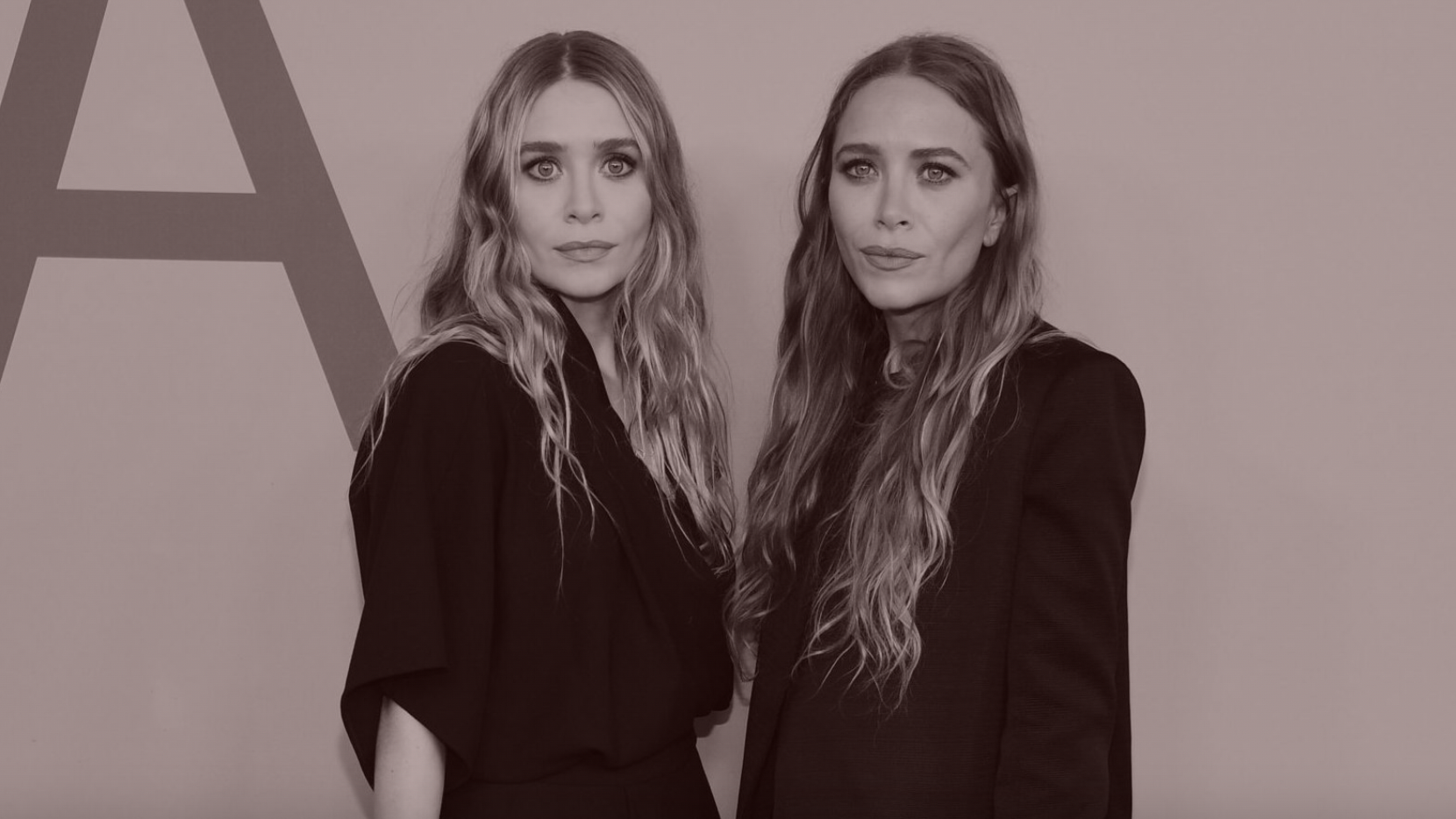
| People keep feeding me crumbs indicating that The Row, Michael Rapaport’s favorite brand and maker of dozens of versions of the perfect navy cashmere sweater, is looking for some fresh capital with an eye on expansion in the Asian market. One of the potential investors was said to be Hong Kong-based entrepreneur Adrian Cheng, son of the billionaire developer Henry Cheng, but that rumor was quickly shot down by a representative and Ashley Olsen and Mary-Kate Olsen, the twin sisters who design The Row.
As far as I know, the Olsens have yet to find the right backer. But what I do know, after talking to various people familiar with the business, is that they have been trying to figure out what to do about financing for a while. And they are not interested, I’m told, in putting more of their own money into it.
Along with the fortune they made as wildly popular child actors, the sisters have also developed several successful low-priced fashion lines for big-box retailers, including Walmart and Kohl’s. But they are extremely private, and how much money they actually have is hardly known, even after Mary-Kate Olsen’s very public divorce.
One of The Row’s known previous investors is Byron Trott, the former Goldman Sachs investment banker known for his friendship with Warren Buffett, who has spent the last decade and change running a merchant bank that mostly invests in sensible, privately held businesses, like Weber grills and Alliance Laundry systems. Trott also has a minority stake in Tory Burch, which is a multi-billion dollar operation at this point. But I understand that he is not interested in investing further in fashion, and that the Olsens were looking to work with someone new.
Why can’t the business, which was founded in 2006, sustain itself? Perhaps it can, but this is where the known unknowns of fashion kick in: Do the Olsens, or an investor, want to pull some money out? Do they have strategic growth plans? Will fresh capital be deployed to penetrate new markets with high barriers to entry? Or does the business simply need to fortify its balance sheet? When it went bankrupt, in 2019, Barneys New York famously owed The Row—which is a high-volume apparel business that sells a lot of different styles each season—$3.7 million, more than any other brand. That might not sound like a lot of money, but nearly $4 million can go far in development and production of clothing. Shortly after the Barneys catastrophe, of course, came the pandemic. Many big retailers never sent payments for products that were already shipped, which means pretty much every fashion brand that doesn’t sell most of its goods direct-to-consumer was short-changed in one way or another.
I heard a mix of rumors during that time about The Row: that they might close the burgeoning men’s line—a favorite of Rapaport, Jonah Hill, and Kendall Roy—or that they might go accessories-only. Handbags and shoes are a higher-margin business than clothing—if you’re lucky, it can be something like 65 percent. It’s also more likely that someone will spend $5,000 on a leather purse than $5,000 on a silk dress. But when I asked someone who worked on the production side of the business about these plans, they denied all of it.
Soon after, WWD ran a piece about layoffs at the company, which would make it no different from every other retailer or consumer business during Covid. In fact, The Row had a pretty similar experience to many other independent American brands in 2020 that had to fire people or take a season or two off, only to ramp up again in 2021 when the revenge-shopping rush took hold. Maybe they just want fresh capital to protect the business for when the next downturn comes? |
|
|
| Regardless of whether The Row is indeed raising money, there would be no better time for a major expansion. In fact, I’d argue that the fashion consumer has never been more captivated by The Row than in the past two years. Sure, there was the initial excitement when the brand first launched, in the late-aughts with pricey t-shirts. But at the time, it was just another label in a mighty cluster of celebrity-backed fashion lines. And while most of those other brands have fallen, The Row has kept getting better.
Over the past decade, the Olsen sisters shed their child-actor personas, becoming more famous—at least to those of us not watching Full House reruns on Netflix—for being veritable fashion designers, not merely celebrities. The industry has taken them seriously, too. While they’ve always hired top talent—former designers at the house include current Hermès women’s designer Nadège Vanhee-Cybulski, Fforme’s Paul Helbers, and Francesco Fucci—it’s clear that they are the key to the label’s success.
By the time The Row hit its 15th anniversary, in 2021, the Olsens had developed a knack for taking simple, recognizable items—the Teva sandal, the Prada Sport mule, the L.L. Bean boat tote—and tweaking them to a point of extreme desirability. (By rendering that Teva-esque sandal in leather and streamlining the silhouette just a bit, they made a convincing argument for spending $990.)
A key to making it in fashion is image and branding, yes, and The Row’s discrete approach—very little advertising, even less press—is meticulous. They’ve also managed to develop a broad, repeat customer base: wealthy women who will drop $70,000 in one visit to the Melrose Place store, but also Dimes Square-circling twentysomethings who spend hours scanning The RealReal for a single piece. Personally, it’s become my designer brand of choice in the years since Phoebe Philo left Céline. (Shopping is market research for me, but the truth is I just really love clothes—and they make great clothes. And the shoes are comfortable.) The brand is certainly a central figure in the q***t l**x*ry conversation that has dominated fashion news for the past few months. (The term, which has been co-opted by TikTok trash, is derogatory at this point.) |
| Money Is Always in Fashion |
|
| But all of that commercial success doesn’t necessarily equal profitability. Some fashion businesses are cash cows: if you can sell things for way more than they cost to make, keep your operating expenses down, and create so much consumer desire that you don’t have to do markdowns, then you’re good. But very few independent brands achieve this on a month-to-month basis given their limited levers for scale and distribution. A single off season, and things can go south fast—especially for a brand with high development costs. (I remember a designer once telling me about visiting a fabric mill in Italy and remarking on the rising cost of a particular silk. “Who buys this?” he asked. The answer? The Row. For suit-jacket lining.)
Pre-pandemic, The Row was estimated to have surpassed the $100 million threshold in annual sales, although given the streamlining that occurred, it’s unclear where it sits now. Perhaps a partnership could help pick up the pace: Rival label Khaite, where many former employees of The Row now work, recently secured backing from investment firm Stripes. The Row also recently hired a new C.E.O., Trish Donnelly, a former J.Crew and Calvin Klein executive with a good reputation.
The brand’s success at this critical juncture depends on several factors, but particularly on what the Olsens want to do with it long-term. A lot of times when these types of brands launch, founders will say they’re playing the long game, that they want to be a heritage brand, that they want to be around for the next 100 years. But I think the stress of the pandemic, combined with the extreme consolidation and vertical integration that is boxing out the indies from the factory to the retail floor, means that a lot of designer-entrepreneurs have resorted to taking things day-by-day.
The Row, after all, is a fully realized concept that can stand up against the European heavyweights in both clothing and accessories. But the business is likely too small at this point to sell to LVMH or Kering, which are mostly looking to buy brands that generate a billion dollars a year in sales or more. LVMH in particular is looking to acquire profitable businesses with an expertise in a market or category they’ve yet to conquer. (Their most recent purchases—Tiffany, Rimowa, Loro Piana—all fit the bill.)
But the exits in fashion are limited. There are essentially two outcomes: long term independent sustainability or selling to one of the Big Three. Different investors have divergent theses, but they all do it for the same reason: the money. (Well, yes, and the glamor.) The Olsens are perhaps wise to seek outside money, and the governance that comes with it. But it’s a signal, more than anything, that they aren’t here to tread water. |
| What I’m Reading… and Watching |
|
| Usually I hate reading books about things I’ve written about myself, but I can’t put down Marisa Meltzer’s Glossy: Ambition, Beauty, and the Inside Story of Emily Weiss’s Glossier. [Pre-Order It Now]
Aurora James has launched a venture capital fund for Black founders. [Fast Company]
Alibaba is splitting into six units. Important to watch for those who follow Farfetch and Richemont, who are both tied up with the Chinese e-commerce giant. [CNN]
The trailer for Luca Guadagnino’s new film Challengers, with Zendaya, made me squeal with delight (at least in my mind), and not only because of the pitch-perfect product placements (Fila, Adidas, Uniqlo, Cartier) and costumes (by Jonathan Anderson). Sign. Me. Up. [YouTube]
Ignore Jennifer Lawrence’s recent string of ill-fated red carpet appearances and instead check out this spread in Interview, styled by Mel Ottenberg. See, she can do fashion with a Capital F! [Interview]
After 10 years and 20 issues, System magazine put its archives online [System]
Rhude designer and former Bally creative director Rhuigi Villaseñor is being sued by one of his investors, George Robertson, who also happens to be the co-writer of 2011’s “Sexy and I Know It” with the electronic dance duo LMFAO. Robertson is accusing Villaseñor of misappropriating company money. [LA Times]
Guess what? Ssense is just like any other online retailer in the way it operates. [Blackbird Spyplane]
The owner of The Village Voice and L.A. Weekly reportedly bought Paper magazine, with an intention to relaunch. [Michael Musto]
The admired British fashion brand Christopher Kane has entered administration, the British equivalent to bankruptcy, and might have to shut down if it doesn’t find a buyer that wants to keep it going. It’s sad, and par for the course for brands of this size. (Crazy to think it used to be part-owned by Kering—a lifetime ago.) [WWD]
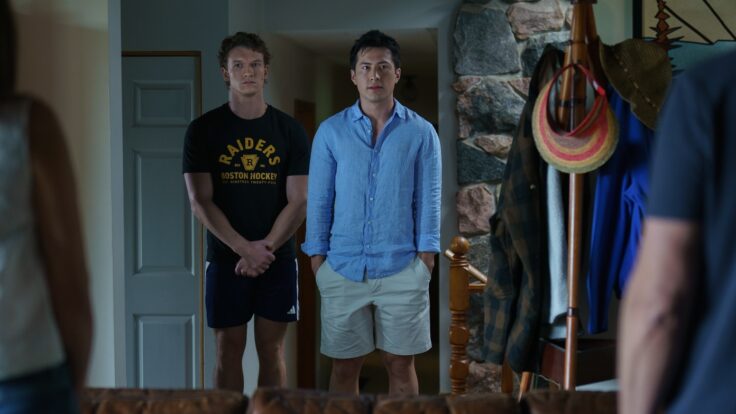
A Valentino changing room is the setting for a “crucial” scene in the most recent episode of The Idol. Enjoy? [W] |
|
|
Until Monday,
Lauren |
|
|
|
| FOUR STORIES WE’RE TALKING ABOUT |
|
|
|
|
|
 |
|
|
|
Need help? Review our FAQs
page or contact
us for assistance. For brand partnerships, email ads@puck.news.
|
|
You received this email because you signed up to receive emails from Puck, or as part of your Puck account associated with . To stop receiving this newsletter and/or manage all your email preferences, click here.
|
|
Puck is published by Heat Media LLC. 227 W 17th St New York, NY 10011.
|
|
|
|