{{ 'now' | timezone: 'America/New_York' | date: '%b %d, %Y' }} |
|
|
Hi, and welcome back to Line Sheet. Thank God Landman has returned.
In today’s
issue, Rachel “Rachel@puck.news” Strugatz deftly explains how The Estée Lauder Co.’s latest investment reflects a new M&A strategy. Up top, I’ve got the latest on the Prada-Versace deal (which still hasn’t closed!), some fashion-adjacent news from a Hollywood talent agency, and a mini report on the state of Frame.
Also:
Puck’s 2025 Guide to Mirth & Merriment is live, with contributions from many Line Sheet A- and B-listers (you can guess), including Gucci Westman, Karla Welch, Chris Black, Rhode’s Lauren Ratner, Cassandra Grey,
Linda Wells, Alison Roman, Alex Bigler, Warby Parker’s Dave Gilboa, and plenty more. I’m thrilled that all my recs made their way in, especially my favorite TV show of 2025, a Polish spy thriller. The whole thing is a real pleasure to comb through, even if you hate gifts. (I swear, those people exist.) Enjoy.
Mentioned in this issue: Versace,
Prada Group, Andrea Guerra, Lorenzo Bertelli, CAA, Beanstalk, Sydney Sweeney, Scooter Braun, The Estée Lauder Companies, New Incubation Ventures, Xinú, Dario Vitale, Le Labo, Byredo, L’Oréal, Sephora, and many more… |
Three Things You
Should Know…
|
- What
happens when the dust settles at Versace?: Every night, I pray that Prada Group’s $1.4 billion deal to acquire Versace will finally go through so I can really start writing about it. Last I heard, the deal was being held up by the Dubai regulatory commission, but that was a couple of weeks ago. This week, at the BoF Voices conference, Prada Group C.E.O. Andrea Guerra assured the audience that there was nothing to worry about, while acknowledging that it has taken
longer than presumed. In other words, maybe it could close over the next week or so.
Those comments aside, Guerra also dropped some interesting hints about what’s to come at Versace. He noted that Prada heir Lorenzo Bertelli will take an executive role at the company, but not as the C.E.O., at least not yet. (If all goes as planned, he’s widely expected to become the future group C.E.O.) There has also been plenty of speculation about how Versace
might be reorganized under the Prada Group on both the executive and creative sides. I don’t think anyone anticipated the overwhelmingly positive response to new Versace creative director Dario Vitale’s first collection, which I suspect disrupted some loosely drawn plans. “I don’t want to kill the patient while we cure it,” Guerra said. “At the beginning, stability is a very important word.” It’s going to be very fun to watch this all play out. - When nothing else is working: There was a lot of head-scratching in fashion circles this morning following the announcement that CAA’s brand management division was acquiring Beanstalk, a licensing agency that works with companies from the Met and the Ritz to Pampers and Tide. (Perhaps this is why there is a Tide-branded dry cleaner on Laurel Canyon Boulevard in Studio City?)
On one hand, it makes sense that the agency would want to own a business that
provides licensing services. Brand partnership divisions are becoming more and more important to Hollywood agencies, especially as their traditional markets are increasingly challenged. Meanwhile, all the agencies have made attempts to help their talents build full-on brands. I’ve heard stories about CAA, in particular, trying to launch (or relaunch) fashion brands by pairing an entertainment-side talent with a fashion designer, but nothing notable has come to fruition. (Also, where is
Sydney Sweeney’s lingerie line, Scooter Braun?)
And yet, the most surprising aspect of the Beanstalk acquisition is that it’s not exactly a hot agency. I’m guessing that there were some personal relationships behind the scenes. Plus, they’re veteran operators. But it will be interesting to see whether there’s a meaningful change to the cadence and quality of brand launches once Beanstalk is integrated. Meanwhile,
I’m not sure you heard, but UTA is now representing… Parmigiano Reggiano? (For product placements.)
|
|
|
A MESSAGE FROM OUR PARTNER |
|
|
- Frame’s
new frame: I went to a dinner at Chateau Marmont last night to celebrate the launch of the second iteration of Frame’s collaboration with Amelia Gray, the daughter of Lisa Rinna and Harry Hamlin, who is a model of the moment. Gray has a mix of the Southern California nepo-baby artificiality that Europeans fetishize, plus a European strangeness that Americans find exotic. Naturally, that has proven irresistible to the likes of
Frame, Ludovic de Saint Sernin, Valentino, and Swarovski—which have all put her in campaigns—plus a gazillion editors and stylists. Many, many other brands are vying to work with her, too.
Her zeitgeistiness makes her a natural fit for Frame’s intermittent-but-ongoing collaboration with models, from Karlie Kloss to Lara Stone to Imaan Hammam. The crowd reflected the times: Gray’s crew included Rinna, boyfriend Nicolai
Marciano, and sister Delilah Belle Hamlin, plus Cazzie David, Gabriella Karefa-Johnson, Stephen Galloway, and George Cortina (wearing a custom blue corduroy jacket from Anderson & Sheppard, because I know you want to know).
Of course, co-founder and former creative director Erik Torstensson was not present, given his exit from the company this summer following the
Weapons of Massenet Destruction scandal that we hope (or at least he hopes) to never speak of again. Investor Andrew Rosen was around, though, as was Frame co-founder and Skims C.E.O. Jens Grede. (I’m probably the only one who noticed that, though. Well, Kelly Sawyer Patricof and me.)
Frame has managed to evolve beyond jeans in a grown-up, scalable way, partly thanks to the installment of Nicolas Dreyfus as C.E.O. five
years ago. Dreyfus has now moved up a rank and oversees a suite of brands in Jens and Emma Grede’s holdco, Popular Culture—which includes Good American, The Elder Statesman, and Frame—while former Golden Goose executive Silvia Merati operates Frame day-to-day. One challenge with running a business out of Los Angeles is that you can get stuck with local yokel executives who don’t have the knowing mix of taste, speed, and incisiveness required to run a global
brand. Perhaps because they are European, the Gredes have managed to avoid that fate—Frame is now growing pretty fast thanks to increased store openings in fancy neighborhoods and a modernized product mix. Revenue is somewhere in the vicinity of $240 million and the company is “very profitable,” according to a source familiar with the figures. While that can be the peak for a denim brand, it’s just the start for a lifestyle brand.
|
|
|
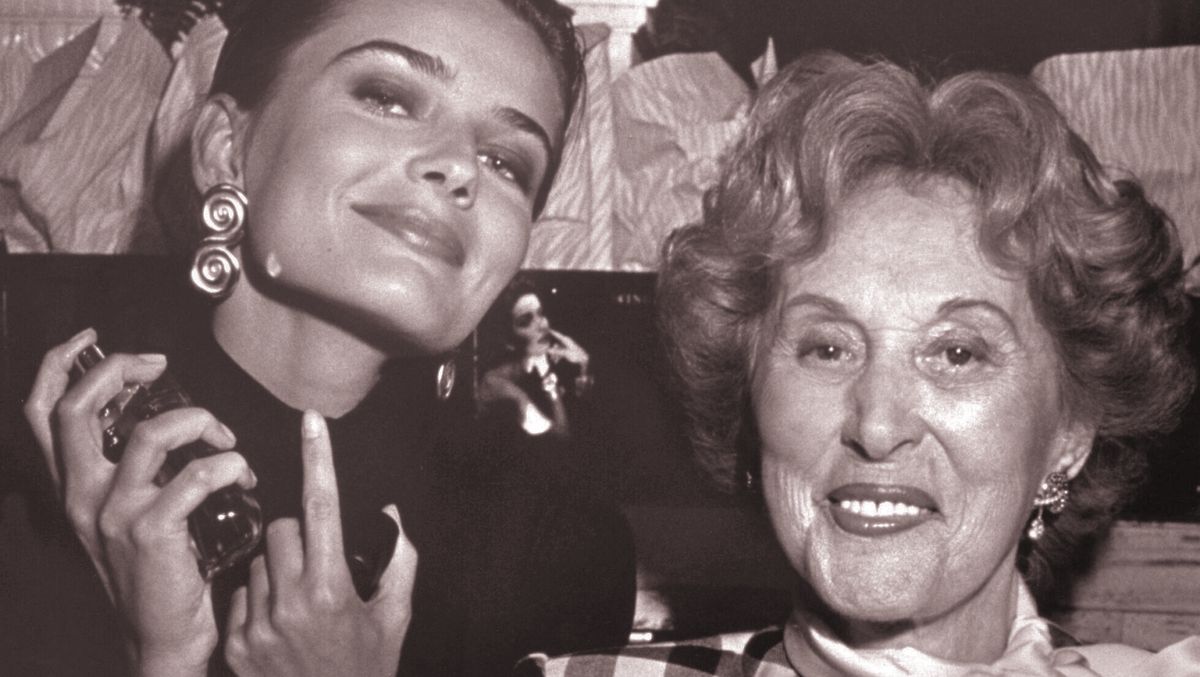
The Estée Lauder Companies’s latest niche fragrance investment has all the trappings of a
potential next big thing, but the deal raises the question: Why does the company keep ignoring the frothy middle market? |
|
|
Last week, The Estée Lauder Companies announced its new investment in Xinú, a very niche, high-end perfume
brand based in Mexico City. Until the announcement, I had never heard of it. But by a number of key metrics, Xinú has the necessary trappings to become the next big thing: The line is beautiful, it’s beloved by “fragrance obsessives,” and it’s still relatively unknown in the wider beauty community. (It’s pronounced “zhee-noo,” for the record.) The brand also operates multiple freestanding stores in its home market, and now it has some capital to play with.
The investment, a
former beauty executive told me, is part of ELC’s “Latin play,” which began when Lauder started shifting some of its focus to Mexico as “things started to turn with China.” This person added that the company has a major opportunity in Latin America: Mexico has an emerging fragrance scene, and it’s probably an easier market to penetrate than China or Korea. Just last month, the Estée Lauder brand launched on the Premium Beauty Store on Amazon.com.mx, a first step in what I can only
assume will be a larger rollout, similar to what we’ve seen with Amazon U.S. and Canada. |
|
|
A MESSAGE FROM OUR PARTNER |
|
|
In any case, the real question is whether ELC can transform Xinú into the next Le Labo, or Parfums
de Marly, or Byredo. A longtime fragrance executive reminded me that those brands “are all exceptions, not the rule,” but there are some parallels to Le Labo, which spent several years building a tight wholesale network before landing on Lauder’s radar. Similar to Le Labo, Xinú has a unique retail concept that feels more focused on “discovery” than a traditional store, and already has four outposts in key cities in Mexico. But a few sources suggested that Lauder’s investment might
simply represent a knee-jerk response to L’Oréal, which has made several, very public fragrance investments in local markets through its various venture arms and funds.
To be fair, I don’t think anyone internally has illusions of overtaking L’Oréal as the largest beauty company in the world, especially in fragrance, and especially given L’Oréal’s recent Kering Beauté acquisition. But Xinú probably isn’t going to become the next Le Labo. At this point, Lauder’s investments seem to
be less about trying to beat L’Oréal, and more about following the market, for better or worse. |
Obviously, everyone in beauty—conglomerates, investors, and even retailers––is trying to spot the
next big thing in fragrance, and get in early before it gets too expensive. But for whatever reason, Lauder always seems to miss the mark. Deciem and Le Labo aside, the company just doesn’t seem to have a feel for the zeitgeist.
To wit, the vehicle for many of Lauder’s fragrance investments, including Xinú, is New Incubation Ventures (NIV), its 4-year-old incubation arm and early-stage investment fund. (It’s likely that Lauder only put a few million into Xinú, the standard check
size for a brand at this stage.) But despite a few bright spots like Vyrao, many of the fund’s investments have been confusing—such as Faculty, a now-shuttered men’s grooming line that made nail polish, and the brand formerly known as Haeckels, a U.K.-based skincare line that was renamed Dulcie last week. Lauder’s involvement with Xinú doesn’t mean it will stop investing in the space, but there
are a handful of other global fragrance brands that could have been more interesting for NIV, including Amsterdam’s Fugazzi, and Room 1015 and Indult, two brands out of Paris. Ex Nihilo is another compelling option: It’s far too big for NIV, but it could be a perfect fit for Lauder when the company is ready to get back into M&A.
More to the point, I can’t help but wonder why Lauder doesn’t focus on a different segment of the fragrance market. Sure, luxury comprises the
largest mix of Lauder’s fragrance business, but many of perfume’s recent breakout stars have occupied a new “middle” tier: brands that are priced like their legacy designer counterparts (around $100) but feel like indie lines that typically cost $250 to $350.
Sephora, for example, has had success selling brands like Phlur, Kayali, Boy Smells, and Lore to younger customers who desire something cooler or different than whatever Valentino’s newest flanker may be. Meanwhile,
lines like Phlur and Kayali are seeing explosive growth. “I think Lauder is trying to do things the way they did them in the past,” another fragrance executive said. “It’s a very capital-intensive, slow game because you need to build the brand and distribution step by step. Maybe Lauder would argue that that’s the fast fashion of perfume, but it’s hard to ignore when you have companies going from zero to $100 million and $200 million in the category in a matter of years, and you’re
dealing in companies doing less than $5 million.”
Anyway, Lauder might still be operating in a defensive posture after Too Faced and Becca didn’t exactly work out as planned. (Le Labo, for its part, has scaled tremendously in the past decade, largely because ELC allowed it to remain as independent as possible.) “Maybe they’ve learned something about doing it better from the beginning. Xinú fits in well with Frédéric Malle and Le Labo, and maybe they’re looking for efficiencies
around brands like that,” a person with knowledge of Lauder’s business speculated. “Lauder may have some sort of redirect or expansion strategy for the brands they think Xinú fits in with nicely, and perhaps that’s why they went after a brand like that versus something that’s a little more established.” That’s one theory, at least. |
Until tomorrow,
Lauren
P.S.: We use affiliate links because we are a business. We may make
a couple bucks off them. |
|
|
Puck fashion correspondent Lauren Sherman and a rotating cast of industry insiders take you deep behind the scenes of this
multitrillion-dollar biz, from creative director switcheroos to M&A drama, D.T.C. downfalls, and magazine mishaps. Fashion People is an extension of Line Sheet, Lauren’s private email for Puck, where she tracks what’s happening beyond the press releases in fashion, beauty, and media. New episodes publish every Tuesday and Friday. |
|
|
Puck’s daily art market email, anchored by industry expert Marion Maneker, offers unparalleled access to the mega-auctions and
galleries, elite buyers and sellers, and the power players who run this opaque world. Wall Power also features Julie Brener Davich, a veteran of Christie’s and Sotheby’s, who provides unique insights into how the business really works. |
|
|
Need help? Review our
FAQ page or contact us for assistance. For brand partnerships, email ads@puck.news.
You received this email because you signed up to receive emails from Puck, or as part of your Puck account associated with {{customer.email}}. To stop receiving this newsletter and/or manage all your email preferences, click here. |
Puck is published by Heat Media LLC. 107 Greenwich St., New York, NY 10006 |
|
|
|